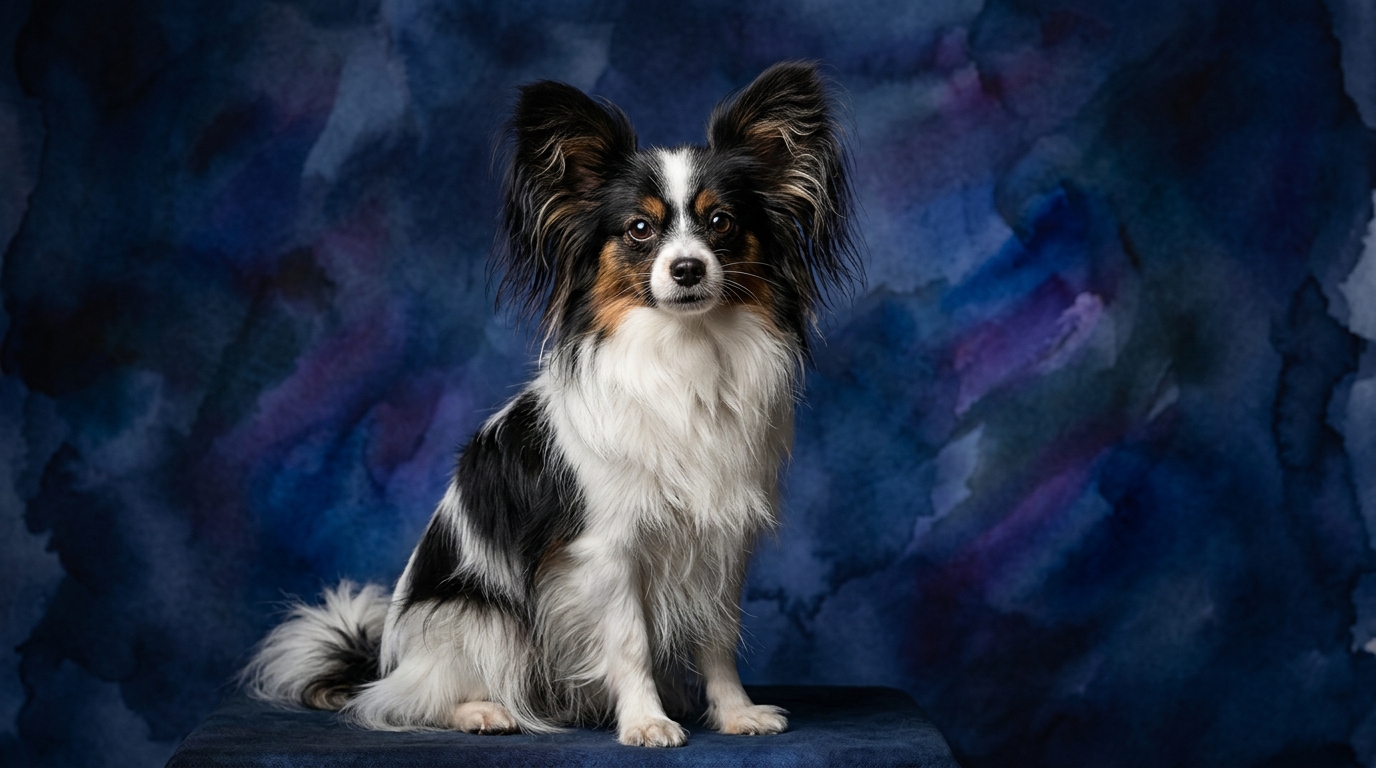
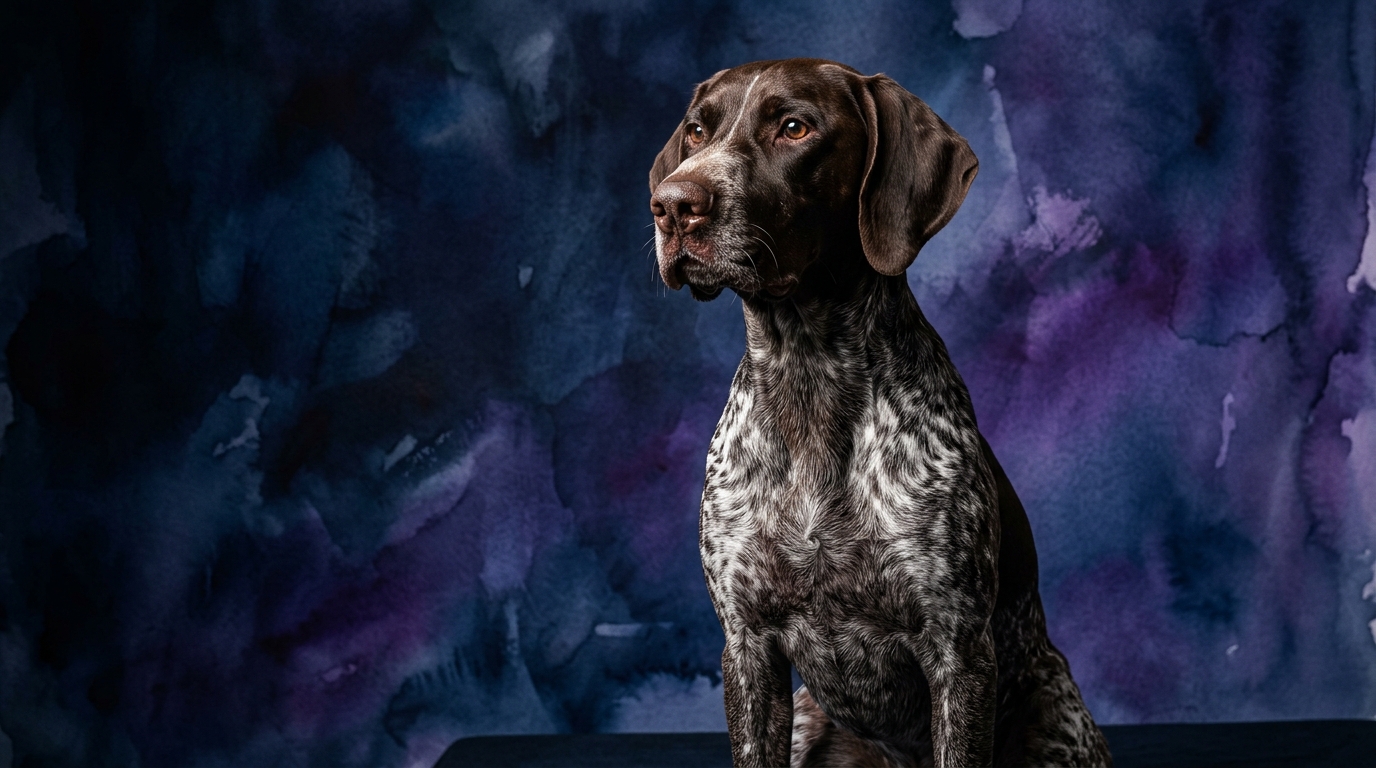
Side-by-Side IQ Profile
The Cosmic Pet IQ Lab's granular analysis reveals how the Papillon, ranking #8 on Coren's scale, and the German Shorthaired Pointer (GSP), at #17, navigate the world through distinct cognitive lenses. Both breeds register a perfect 5/5 in Problem Solving, indicating an exceptional capacity to independently deduce solutions to novel challenges, whether it's figuring out a puzzle toy or navigating a complex environment. The Papillon distinguishes itself with a 5/5 in Training Speed, suggesting a remarkably swift uptake of new commands and routines, complemented by an equally stellar 5/5 in Memory, ensuring these lessons endure. Their Social Intelligence stands at a robust 4/5, reflecting a solid understanding of human cues and inter-dog dynamics, while their Instinctive Drive is moderate at 3/5, indicating a less intense reliance on hardwired working behaviors.
In contrast, the German Shorthaired Pointer presents a profile optimized for its sporting heritage. While sharing the Papillon's 5/5 in Problem Solving, its Training Speed is a strong 4/5, indicating rapid learning, albeit perhaps not quite at the Papillon's lightning pace. The GSP's Social Intelligence matches the Papillon's at 4/5, highlighting their relational awareness. However, the GSP truly shines with a dominant 5/5 in Instinctive Drive, a testament to their profound genetic predisposition for hunting-related tasks like pointing, flushing, and retrieving. Their Memory scores a commendable 4/5, signifying good retention, though slightly less pronounced than the Papillon's photographic recall. These profiles underscore that intelligence manifests in diverse, purpose-driven ways across breeds.
Where Papillon Wins Cognitively
The Papillon’s cognitive advantages are most apparent in its superior scores for Training Speed and Memory, and its higher Coren ranking. A 5/5 in Training Speed means these dogs typically absorb new information and associate actions with commands with exceptional rapidity. This isn't merely about rote learning; it reflects an agile mind that quickly processes instructions and adapts behavior. For an owner, this translates into fewer repetitions needed to solidify a new skill, making advanced obedience or intricate trick training a more fluid and rewarding experience. This quick cognitive uptake contributes significantly to their overall reputation for being highly trainable companions in a variety of contexts beyond their toy group designation.
Furthermore, the Papillon's perfect 5/5 Memory score ensures that once a lesson is learned, it tends to stick. This robust recall isn't limited to commands; it extends to remembering people, places, and past experiences, allowing them to build a comprehensive mental map of their world. This enduring memory fosters consistency in behavior and makes revisiting previously learned skills remarkably efficient, often requiring minimal refreshers. Their higher Coren rank of #8, compared to the GSP's #17, suggests a broader cognitive versatility and an overall more consistent application of their mental faculties across a wider array of general learning scenarios, making them particularly adept at navigating complex social and home environments with minimal guidance once trained.
Where German Shorthaired Pointer Wins Cognitively
The German Shorthaired Pointer’s cognitive strengths are undeniably rooted in its formidable 5/5 Instinctive Drive. This isn't just about a physical urge to run; it represents a highly evolved cognitive framework dedicated to specific, complex tasks. This drive encompasses an extraordinary ability to process sensory information, particularly scent, with precision, coupled with an unwavering focus on a target. A GSP's mind is constantly scanning, analyzing, and strategizing in relation to its environment, especially when engaging with its natural hunting instincts. This deep-seated drive means they possess an innate understanding of patterns, tracking, and the sequence of actions required for successful pursuit and retrieval, often executing multi-stage tasks with remarkable autonomy and problem-solving within that framework.
While both breeds share a 5/5 in Problem Solving, the GSP's application of this skill is often heavily influenced by its instinctive drive. They excel at figuring out how to overcome obstacles to reach a 'prey' item, or how to efficiently cover ground to locate a scent. This intense, purpose-driven cognitive engagement makes them exceptional at activities like agility, field trials, or even complex scent work, where their mental and physical faculties are seamlessly integrated. Their robust memory (4/5) and training speed (4/5) complement this drive, allowing them to refine and perfect their innate abilities through structured training, transforming raw instinct into highly sophisticated, controlled performance. This cognitive predisposition makes them unparalleled partners for owners who can channel this powerful mental energy into productive outlets.
Which is Easier to Train and Why
When assessing which breed is "easier" to train, the nuance lies in the type of training and the owner's goals. The Papillon, with its 5/5 Training Speed and 5/5 Memory, generally offers a more straightforward training experience for general obedience, house manners, and complex trick learning. Their quick cognitive processing allows them to grasp new commands rapidly, and their excellent memory ensures these lessons stick, reducing the need for constant repetition. A Papillon is often eager to please, thriving on positive reinforcement, readily adapting to new routines, and demonstrating a clear understanding of expectations. Their lower instinctive drive (3/5) means fewer strong innate urges compete with the training process, leading to fewer distractions from environmental stimuli that might trigger a strong hunting response. This makes them an ideal candidate for diverse mental challenges and often a good fit for first-time dog owners.
The German Shorthaired Pointer, while possessing a strong 4/5 in Training Speed and 4/5 in Memory, presents a different kind of training challenge due to its powerful 5/5 Instinctive Drive. This drive, while a huge asset for field work, means a GSP's mind is often highly attuned to external stimuli like scents or movement. Training a GSP requires an owner who understands how to effectively channel and manage these strong natural urges rather than suppress them. For example, teaching a GSP a "stay" command in a field full of interesting smells will require more consistent, high-value reinforcement and proofing than with a Papillon, whose attention is less likely to be hijacked by a distant squirrel scent. While incredibly capable of learning, the GSP's training often involves more extensive proofing in distracting environments and requires a deeper commitment to providing adequate outlets for their inherent working tendencies to ensure focus and compliance in everyday settings.
Which Suits Active Owners vs Relaxed Owners
The distinction between the Papillon and the German Shorthaired Pointer becomes particularly clear when considering owner lifestyle and activity levels, largely influenced by their instinctive drives and physical capabilities. The Papillon, with its moderate 3/5 Instinctive Drive and smaller stature, can generally thrive with a wider range of owners, including those with a more relaxed lifestyle. While they certainly benefit from regular exercise and mental stimulation, their needs are not typically as intense or specialized as a working breed. A Papillon is often content with daily walks, indoor play, and engaging in puzzle toys or short training sessions, making them a suitable companion for apartment living or for individuals who prefer less physically demanding activities. Their high problem-solving and social intelligence mean they enjoy interacting with their human companions in various cognitive games, providing mental engagement without requiring extensive outdoor excursions.
Conversely, the German Shorthaired Pointer, defined by its commanding 5/5 Instinctive Drive and athletic build, is unequivocally suited for active owners. This breed requires substantial daily physical exercise that goes beyond a casual stroll; they thrive on activities like running, hiking, swimming, or engaging in demanding dog sports such as agility, flyball, or field trials. Their cognitive profile, particularly their problem-solving skills and memory, is often best utilized when paired with their physical prowess in structured, purpose-driven activities. Owners who can provide consistent, vigorous outlets for their GSP's boundless energy and strong working instincts will find a fulfilled and well-behaved companion. For a relaxed owner who cannot commit to several hours of dedicated physical and mental exercise daily, a GSP is likely to become bored, potentially leading to destructive behaviors or an inability to settle, as their deep-seated drives remain unaddressed.
The Verdict
Choose the Papillon if you seek a highly adaptable companion for varied intellectual pursuits and appreciate a rapid learning curve in a smaller package.
Opt for the German Shorthaired Pointer if you're an active individual who values a robust, driven partner capable of excelling in demanding, instinct-driven activities.
🧠 Find Your Pet's IQ Score
Our Pet IQ Lab assessment covers 25+ tests across 5 cognitive dimensions — personalized to your breed.
Take the Full IQ Test →Frequently Asked Questions
Do Papillons truly remember commands better than GSPs?
Yes, the Papillon's 5/5 memory score suggests a superior capacity for long-term retention of learned behaviors and experiences compared to the GSP's 4/5, making refresher training often less intensive.
How does instinctive drive impact a dog's daily life for these breeds?
A GSP's high instinctive drive means they naturally seek outlets for hunting-related behaviors, requiring owners to provide structured activities to prevent boredom or redirected urges, whereas a Papillon's lower drive allows for a broader range of less specialized mental engagements.
Despite different Coren ranks, both have 5/5 problem-solving; what does this imply?
This indicates both breeds possess excellent capacity for independent thought and overcoming obstacles, but the Papillon's higher Coren rank suggests a broader applicability or quicker processing of these skills across diverse situations, while the GSP applies theirs with intense focus on task-specific challenges.