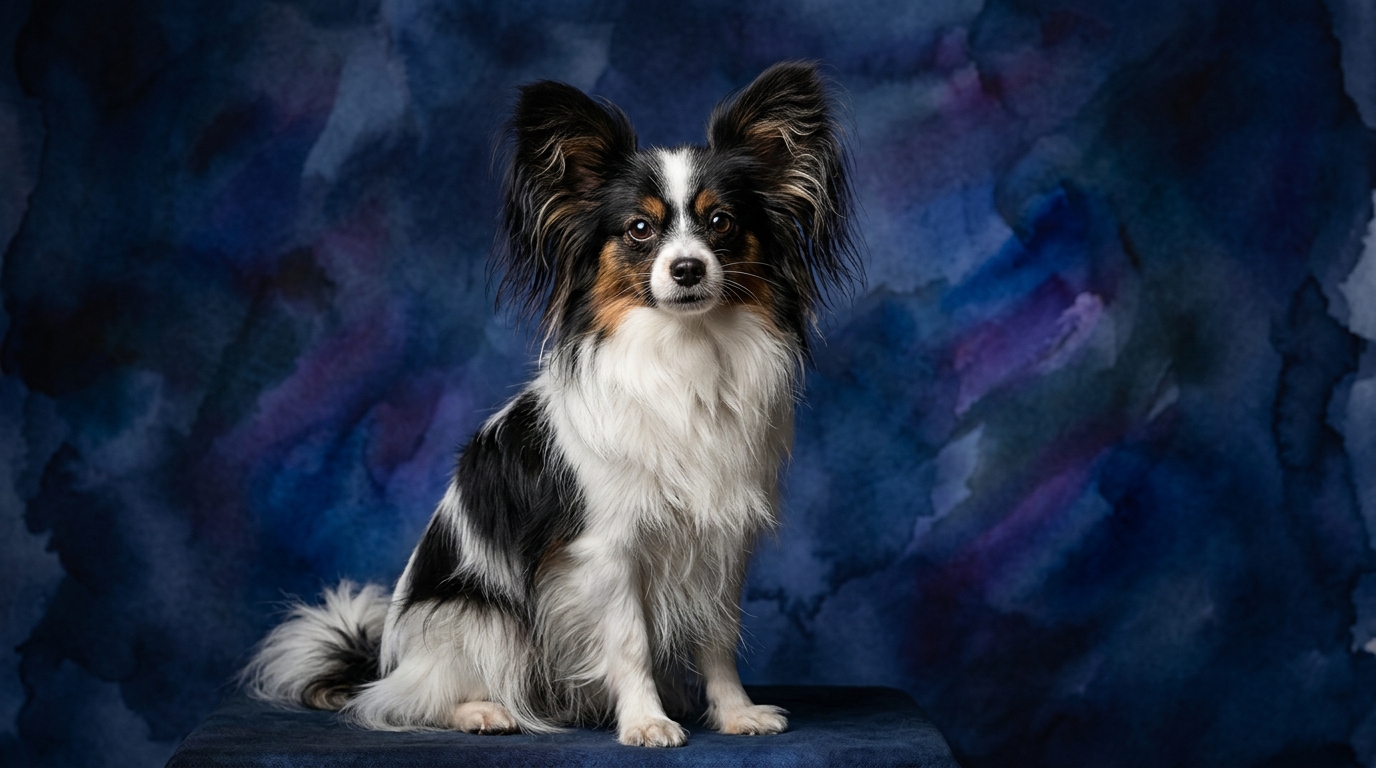
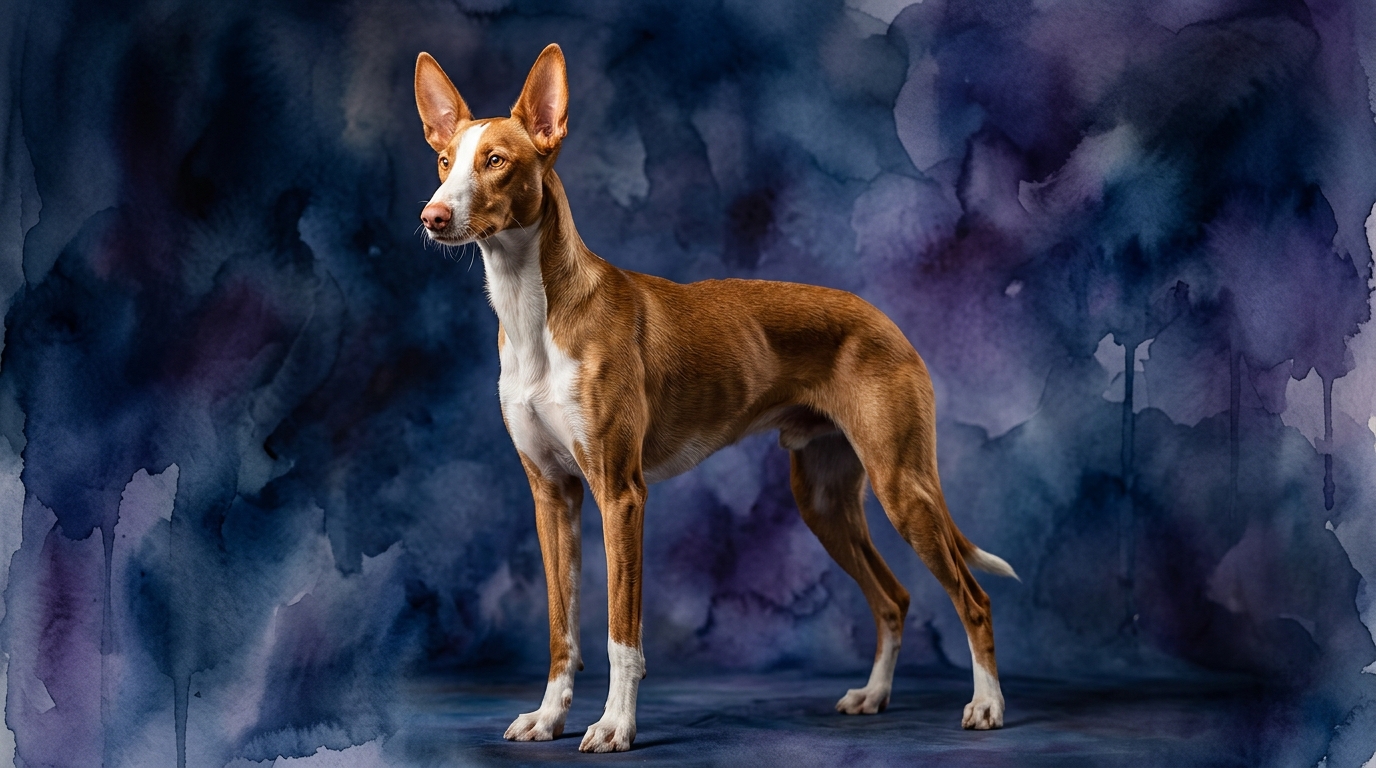
Side-by-Side IQ Profile: Papillon vs. Ibizan Hound
The Papillon, a breed often underestimated due to its delicate appearance, consistently demonstrates a remarkable cognitive capacity. Our Pet IQ Lab data assigns them a 5/5 for Problem Solving, indicating an exceptional ability to navigate complex challenges, figure out intricate puzzle toys, and adapt swiftly to novel situations. Their Training Speed also ranks at a perfect 5/5, reflecting their rapid assimilation of new commands and routines, often requiring minimal repetition. Social Intelligence, at 4/5, highlights their nuanced understanding of human cues and emotional states, making them highly responsive companions. Their Instinctive Drive scores 3/5, suggesting that while they possess natural dog behaviors, these are generally less dominant than in breeds bred for specific working roles, making them more amenable to human-directed tasks. Finally, their Memory is rated 5/5, signifying an impressive ability to retain learned information and experiences over extended periods, contributing to their consistent performance in various activities.
In contrast, the Ibizan Hound presents a distinct cognitive blueprint, tailored more for independent action than collaborative problem-solving. They receive a 3/5 for Problem Solving, meaning they may approach new challenges with a more direct, less analytical method, often relying on instinct rather than intricate strategizing. Their Training Speed also stands at 3/5, indicating that learning new commands requires consistent reinforcement and patience, as they are not as quick to connect actions with abstract human rewards. Social Intelligence, at 3/5, suggests they are generally affable but may not be as attuned to subtle human emotional shifts or as driven to please as some other breeds, preferring a more independent social dynamic. Their Instinctive Drive, also 3/5, is profoundly shaped by their sighthound heritage, manifesting as a strong prey drive and a profound desire to run and chase, which overrides many other impulses. Their Memory, rated 3/5, means they can recall information, but it may not be as robust or as readily accessible as in breeds with higher scores, potentially requiring more frequent refreshers for learned behaviors.
Where the Papillon Wins Cognitively
The Papillon's cognitive strengths lie in their exceptional mental agility and remarkable capacity for learning and retention. Their 5/5 Problem Solving score means they are adept at deciphering complex sequences, whether it's navigating an agility course or manipulating a treat-dispensing puzzle. This breed excels in scenarios where rapid comprehension and adaptive thinking are paramount. Coupled with a 5/5 Training Speed, Papillons absorb new commands and intricate tricks with impressive speed, often anticipating their handler's next instruction. This combination makes them formidable competitors in dog sports like obedience, rally, and flyball, where quick thinking and precise execution are rewarded. Furthermore, their 5/5 Memory ensures that these learned skills are not fleeting; once a Papillon masters a task, they tend to remember it reliably, making long-term training efforts highly rewarding and efficient. Their 4/5 Social Intelligence also gives them an edge in communication, allowing them to pick up on subtle human cues and tailor their responses accordingly, fostering a deep, empathetic bond.
Where the Ibizan Hound Wins Cognitively
While the Ibizan Hound's scores might appear lower across the board, their cognitive profile represents a specialized form of intelligence perfectly suited to their ancestral role. Their 'wins' are not in human-centric metrics but in their independent, sensory-driven approach to the world. Their 3/5 Instinctive Drive, while presenting training challenges, is a profound asset in their natural pursuit of prey. This drive translates into an unwavering focus on visual stimuli and a remarkable ability to process environmental cues relevant to hunting, allowing them to make split-second decisions in pursuit without requiring human direction. Their 3/5 Problem Solving, though lower than the Papillon's, means they are efficient at solving problems pertaining to their sighthound nature, such as strategizing the pursuit of a moving target or navigating varied terrain at speed. Their relative independence, stemming from a 3/5 Social Intelligence, means they are less prone to anxiety when left alone and possess a resilient self-reliance, which can be a distinct advantage for owners seeking a less clingy companion. They are less about performing for approval and more about intrinsic motivation, which is a cognitive strength in its own right.
Which Breed is Easier to Train and Why
Considering the Pet IQ Lab metrics, the Papillon is unequivocally the easier breed to train, primarily due to their superior Problem Solving, Training Speed, and Social Intelligence. A Papillon's 5/5 Training Speed means they connect commands with actions and rewards almost instantaneously, often picking up new tricks in just a few repetitions. Their 5/5 Problem Solving allows them to quickly understand the 'why' behind an exercise, enabling them to generalize learned behaviors to new contexts with ease. This is further enhanced by their 4/5 Social Intelligence, making them highly attentive to their handler's expressions, vocal tones, and body language, thereby facilitating clearer communication and a strong desire to cooperate. For instance, a Papillon will often anticipate a cue based on subtle shifts in human posture. In contrast, the Ibizan Hound, with 3/5 in all these areas, presents a different training dynamic. Their sighthound independence means they are often less motivated by pleasing their human and more by their own instincts or immediate environmental rewards. Training an Ibizan requires immense patience and consistency, as they may take longer to grasp concepts and might choose to ignore commands if a more compelling instinct, like chasing a squirrel, presents itself. Their training is often about convincing them that compliance is more rewarding than following their independent urges, a task that requires a deep understanding of their unique motivations and a less direct approach than with a Papillon.
Suitability for Active vs. Relaxed Owners
The cognitive profiles of these two breeds offer clear guidance on their suitability for different owner lifestyles. The Papillon, while small, possesses a vibrant intellect that thrives on engagement, making them surprisingly versatile. An active owner will find a Papillon eager to participate in dog sports, learning complex routines, and enjoying stimulating outings. Their strong Problem Solving and Memory mean they need mental challenges as much as physical activity, preventing boredom. However, their modest physical size also makes them adaptable to a more relaxed owner, provided that mental stimulation is consistently offered through puzzle toys, trick training, and interactive play within the home. They are content with indoor games and shorter walks if their minds are kept busy. The Ibizan Hound, conversely, is unequivocally suited for active owners. Their strong Instinctive Drive, rooted in their sighthound heritage, mandates significant physical exertion. These dogs are built for speed and endurance, requiring ample opportunities to run freely and safely in a securely fenced area. Their independent nature and lower scores in human-centric problem-solving and training speed mean they are not content to be couch potatoes; a relaxed owner would likely find an Ibizan Hound channeling their unspent energy into less desirable behaviors, such as independent exploration or chasing. Their contentment is deeply tied to fulfilling their physical and instinctual needs through vigorous activity, making them ideal companions for hikers, runners, or owners with large, secure outdoor spaces.
The Verdict
Choose a Papillon if you seek a highly trainable, mentally agile companion eager to engage in complex learning, dog sports, and a close, communicative bond, adaptable to various living situations with consistent mental enrichment.
Opt for an Ibizan Hound if you are an active owner who appreciates an independent, visually driven companion, committed to providing ample opportunities for vigorous exercise and understanding their unique sighthound instincts.
🧠 Find Your Pet's IQ Score
Our Pet IQ Lab assessment covers 25+ tests across 5 cognitive dimensions — personalized to your breed.
Take the Full IQ Test →Frequently Asked Questions
Are Papillons good at learning tricks?
Yes, Papillons excel at learning tricks due to their 5/5 Problem Solving and 5/5 Training Speed. They quickly grasp new concepts and enjoy the mental stimulation and attention that trick training provides, often mastering complex sequences with ease.
Do Ibizan Hounds have a strong prey drive?
Yes, Ibizan Hounds possess a significant prey drive, reflected in their 3/5 Instinctive Drive score, which is characteristic of sighthounds. This means they are highly motivated by visual stimuli and the instinct to chase, necessitating secure environments and careful management outdoors.
How do their social intelligence scores impact their interaction with families?
A Papillon's 4/5 Social Intelligence means they are generally very attuned to family members' moods and cues, fostering close, responsive bonds. An Ibizan Hound's 3/5 Social Intelligence suggests they are friendly but more independent, forming affectionate bonds on their own terms rather than constantly seeking human direction or emotional validation.