Side-by-Side IQ Profile: Papillon vs. Kerry Blue Terrier
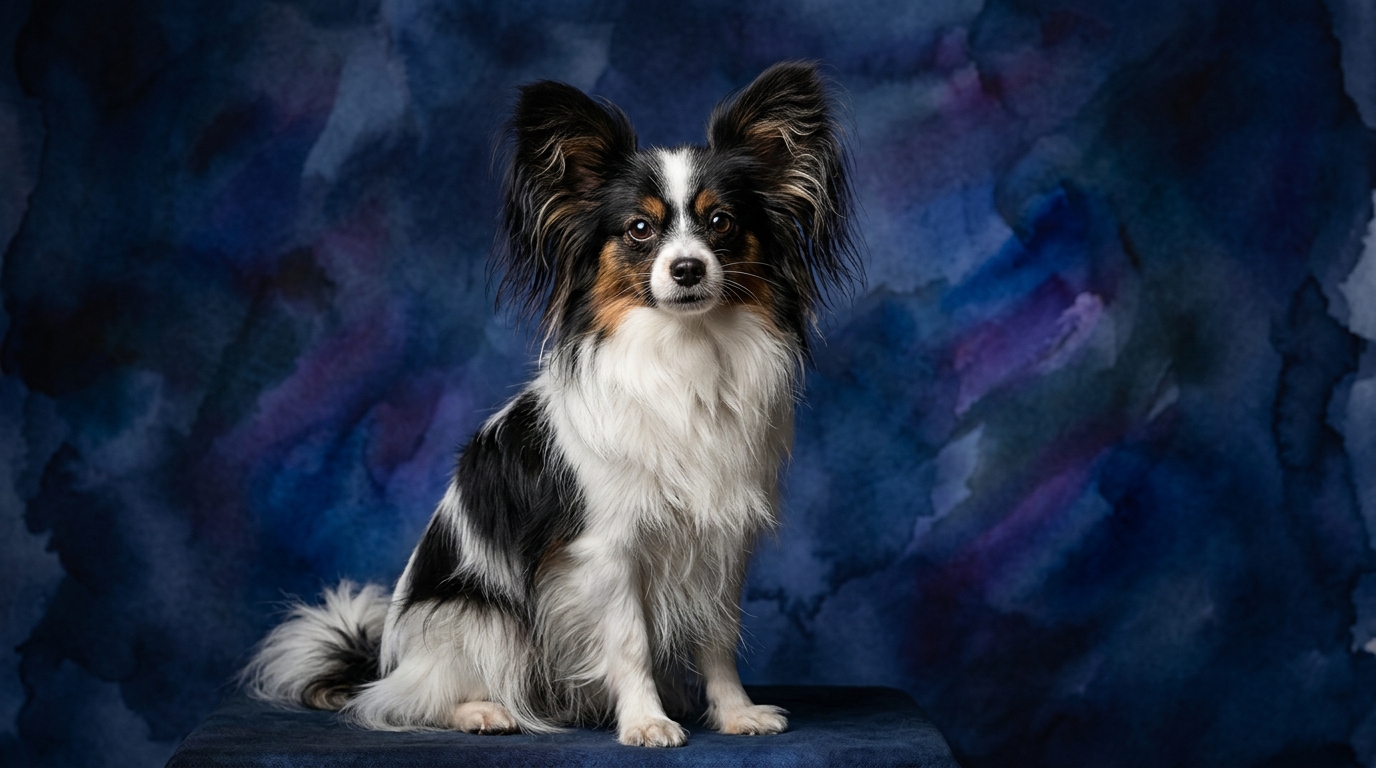
The Cosmic Pet Pet IQ Lab employs a five-dimensional framework to assess canine intelligence, offering a nuanced view beyond simple obedience. For the Papillon, a breed often celebrated for its mental agility, we see a profile highlighting its refined cognitive abilities. Its Problem Solving is rated 5/5, indicating an exceptional capacity to navigate complex puzzles and novel situations. Training Speed also stands at 5/5, reflecting its rapid grasp of new commands and routines. Social Intelligence is a strong 4/5, demonstrating a keen awareness of human emotional states and communication cues. Instinctive Drive is moderate at 3/5, suggesting a balanced interest in environmental exploration without being overly consumed by prey drive. Finally, Memory is an outstanding 5/5, allowing it to retain vast amounts of information and recall past experiences with precision.
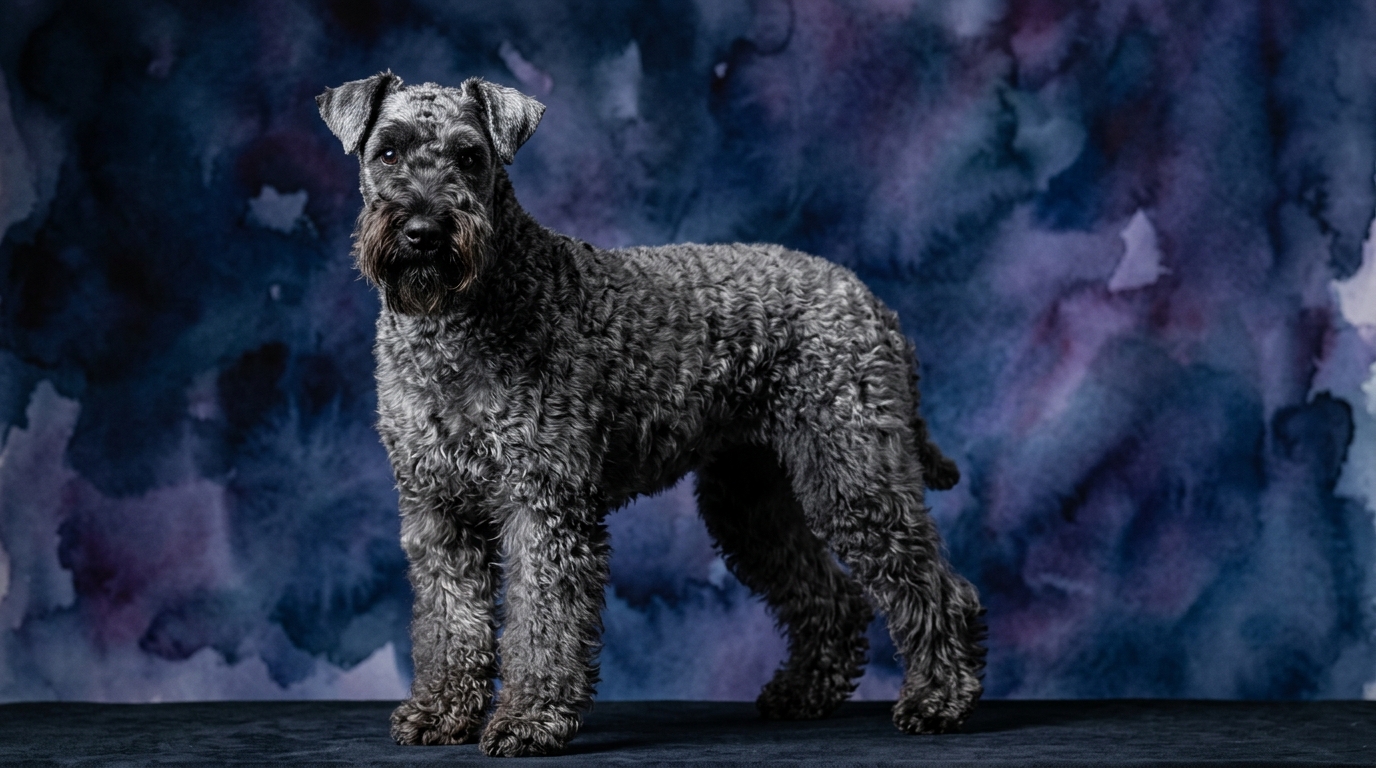
In contrast, the Kerry Blue Terrier presents a different set of cognitive strengths, reflective of its robust working heritage. Its Problem Solving is rated 3/5, indicating it can tackle challenges but might favor a more direct, persistent approach over intricate strategizing. Training Speed is also 3/5; while capable of learning, it often requires more repetition and consistent motivation than the Papillon. Social Intelligence stands at 3/5, suggesting it forms strong bonds but may not always interpret subtle human cues with the same finesse. Instinctive Drive is a balanced 3/5, a common trait for terriers that are alert and responsive to their environment without being overwhelmingly driven. Memory is similarly rated 3/5, meaning it learns and retains information effectively, though perhaps not with the instantaneous recall seen in breeds with higher scores.
Where the Papillon Wins Cognitively
The Papillon distinctly outperforms the Kerry Blue Terrier in several cognitive domains, particularly those involving abstract thought and rapid assimilation of new information. Its 5/5 rating in Problem Solving means it is adept at deciphering novel challenges quickly, often showing a strategic approach to puzzle toys or complex agility courses. This isn't just about trial and error; it's about making connections and applying previous learning to new scenarios with remarkable efficiency. Furthermore, the Papillon's superior Training Speed (5/5) allows it to pick up commands and routines almost instantaneously, making it a joy for owners interested in advanced obedience or trick training. Its 5/5 Memory ensures that once a lesson is learned, it is deeply ingrained, requiring minimal refreshers.
The Papillon's 4/5 Social Intelligence also gives it an edge in understanding and responding to human communication. They are keen observers of body language and vocal tone, making them highly responsive companions who often seem to anticipate their owner's wishes. This nuanced social awareness facilitates a smoother training process and fosters a particularly close, communicative bond. For tasks requiring precision, quick thinking, and a strong desire to collaborate on human-directed activities, the Papillon's cognitive profile is exceptionally well-suited, demonstrating a refined capacity for adaptive intelligence within a domestic setting.
Where the Kerry Blue Terrier Wins Cognitively
While the Kerry Blue Terrier’s IQ scores may appear lower than the Papillon's in some metrics, its cognitive strengths lie in areas reflecting its independent, tenacious terrier nature. The Kerry Blue's Problem Solving at 3/5, while not as rapid as the Papillon's, often manifests as persistent, robust engagement with a challenge. They might not solve a puzzle in the most elegant way, but their determination means they will often succeed through sheer grit and a willingness to physically manipulate their environment. This resilience in the face of obstacles is a distinct cognitive advantage when tasks demand more than just quick wit.
The Kerry Blue Terrier's Instinctive Drive at 3/5, paired with its physical prowess, contributes to a practical, real-world intelligence. Unlike the Papillon, which excels in human-directed tasks, the Kerry Blue possesses a self-reliant problem-solving capacity. They are capable of independent thought and action, which, while sometimes perceived as stubbornness in training, is a valuable asset in situations requiring a dog to make decisions without constant human input. This breed often excels in tasks that require a blend of physical courage, sensory investigation, and sustained effort, such as navigating complex outdoor environments or engaging in scent work where self-direction is key. Their cognitive 'wins' are less about speed of assimilation and more about steadfastness and practical application of their senses and physical abilities.
Which Is Easier to Train and Why
When it comes to ease of training, the Papillon holds a clear advantage, primarily due to its exceptional Training Speed (5/5) and Memory (5/5). These dogs are incredibly eager to please and quickly form associations between commands, actions, and rewards. Their high Social Intelligence (4/5) means they are attuned to their handler's cues, making them highly responsive to positive reinforcement methods. A Papillon often grasps a new command in just a few repetitions, and their strong memory ensures that once learned, it is rarely forgotten. Their toy breed nature generally translates to less independent stubbornness and a greater willingness to collaborate, making the training process feel more like a cooperative game than a challenge.
The Kerry Blue Terrier, with a Training Speed of 3/5 and Memory of 3/5, presents a different training experience. While certainly trainable, their terrier heritage imbues them with a more independent and sometimes opinionated streak. They can learn commands, but often require more patience, consistency, and a clear understanding of 'what's in it for them.' Their problem-solving might lead them to experiment with alternatives if the requested behavior isn't immediately rewarding. Handlers need to be firm, fair, and engaging, employing varied positive reinforcement techniques to maintain their interest. The Kerry Blue's training is a marathon, not a sprint, demanding dedication to harness their innate drive and focus it on desired behaviors, rather than relying on an inherent eagerness to comply.
Which Suits Active Owners vs. Relaxed Owners
The Papillon, despite its small stature, is far from a purely relaxed lap dog; it thrives on mental engagement and can suit owners who are mentally active rather than necessarily physically strenuous. Its high Problem Solving and Memory scores mean it needs regular intellectual stimulation, whether through learning new tricks, participating in dog sports like agility or rally obedience, or engaging with complex puzzle toys. Owners who enjoy teaching, interactive play, and consistent mental challenges will find the Papillon a delightful and responsive companion. While it enjoys walks and playtime, its primary need is for mental enrichment, making it adaptable to apartment living provided its mind is kept busy. A purely 'relaxed' owner who offers little mental stimulation might find a Papillon resorting to attention-seeking behaviors out of boredom.
The Kerry Blue Terrier, conversely, is best suited for active owners who can provide consistent physical exercise alongside mental stimulation. Its moderate Instinctive Drive and robust physical build mean it requires regular outlets for its energy, such as long walks, jogs, structured playtime, or engaging in dog sports like earthdog trials or flyball. A Kerry Blue needs to 'work' both its body and its mind to be content; simply having a large yard isn't enough without human interaction and purpose-driven activity. Owners who lead an active lifestyle and are prepared to channel the terrier's independent spirit into constructive activities will find a loyal and energetic partner. A truly 'relaxed' owner who cannot meet its exercise and engagement needs may struggle with a bored, potentially destructive, or overly boisterous Kerry Blue Terrier.
The Verdict: When to Choose Each Breed
The Verdict
Choose the Papillon if you seek a highly responsive, mentally agile companion eager to learn complex tasks, excel in dog sports, and form a deep, communicative social bond within a domestic setting.
Opt for the Kerry Blue Terrier if you are an active owner prepared to engage an independent, physically robust dog with consistent training, ample exercise, and opportunities for both physical and mental challenge that rewards persistence and self-reliance.
🧠 Find Your Pet's IQ Score
Our Pet IQ Lab assessment covers 25+ tests across 5 cognitive dimensions — personalized to your breed.
Take the Full IQ Test →Frequently Asked Questions
Is the Papillon's small size indicative of its cognitive abilities?
No, the Papillon defies stereotypes, ranking among the top breeds for obedience and adaptive intelligence. Its exceptional Problem Solving and Memory scores showcase that physical size doesn't limit mental prowess, making it a cognitive powerhouse in a compact form.
Why is the Kerry Blue Terrier not Coren-ranked?
Stanley Coren's rankings primarily focused on working and obedience intelligence, which sometimes undervalues breeds with strong independent streaks. The Kerry Blue Terrier, while capable, possesses a self-reliant terrier spirit that may not always align with the 'eager to please' metrics emphasized in those specific assessments, though they excel in practical problem-solving.
Does 'instinctive drive' mean a dog is less intelligent?
Not at all; instinctive drive indicates a predisposition towards certain natural behaviors like hunting or herding, which are forms of specialized intelligence crucial for a breed's original purpose. While a high drive might sometimes make a dog less inclined towards human-directed tasks, it signifies a different, often highly effective, type of cognitive strength.