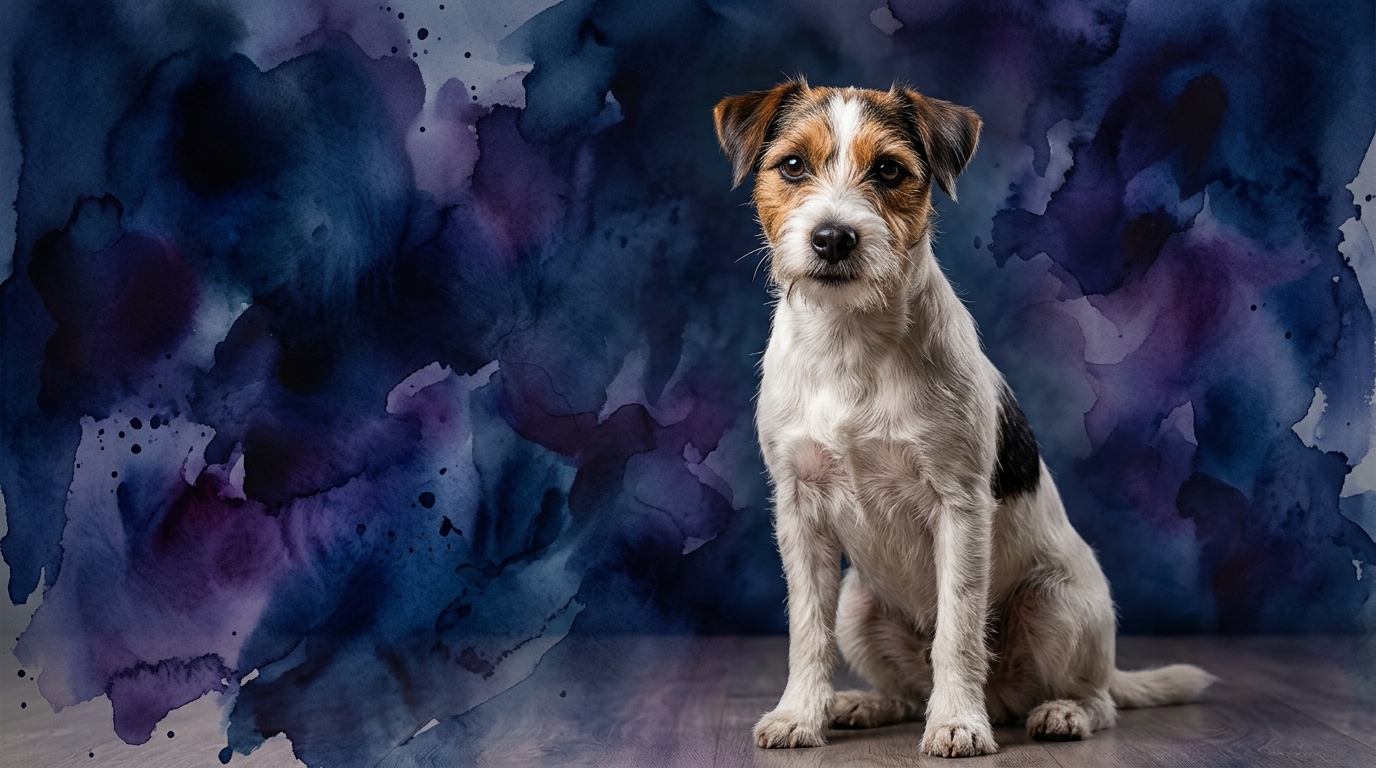
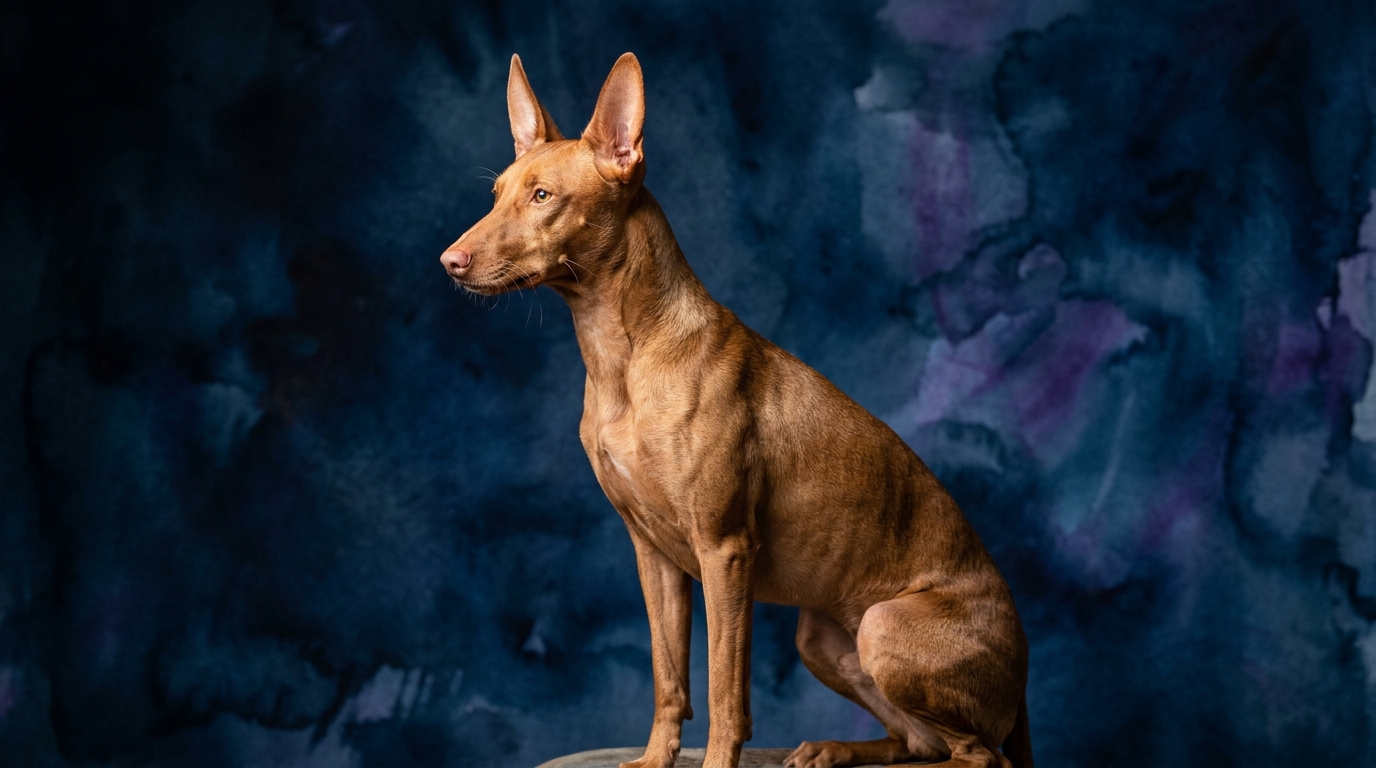
Side-by-Side Cognitive Profiles
The Cosmic Pet Pet IQ Lab assesses canine intelligence across five key dimensions, and for both the Parson Russell Terrier and the Pharaoh Hound, each category is rated at a solid 3/5. This 'average' score is not a limitation but rather a reflection of their balanced cognitive abilities, shaped by centuries of selective breeding for specific tasks. It signifies a capacity for learning and adaptation that is neither exceptionally facile nor particularly challenging, requiring consistent engagement and understanding from their human companions.
For the **Parson Russell Terrier**, a 3/5 in **Problem Solving** indicates a dog that can independently navigate complex situations, particularly those involving scent work or retrieving prey from tight spaces. Their tenacious nature means they will often persist until a solution is found, driven by their strong prey instinct. A **Training Speed** of 3/5 suggests they are capable of learning new commands and routines at a moderate pace, though their inherent independence means they require clear, consistent, and motivating instruction to comply. Their **Social Intelligence** at 3/5 reflects their ability to form strong bonds with their primary human family, understanding social cues within their pack, but they can be more reserved or assertive with strangers or other dogs. An **Instinctive Drive** of 3/5 highlights their pronounced desire to hunt, dig, and bark, a core aspect of their terrier heritage that drives much of their behavior. Finally, their **Memory** at 3/5 ensures they retain learned behaviors and social interactions effectively, remembering both positive and negative experiences, which contributes to their consistent responses to familiar stimuli.
The **Pharaoh Hound**, also scoring 3/5 across the board, interprets these metrics through a sighthound lens. Their **Problem Solving** at 3/5 is distinctly geared towards visual tracking and strategic pursuit in open environments, rapidly assessing distances and prey movements to execute a successful chase. This is less about intricate puzzle-solving and more about dynamic, real-time decision-making in pursuit. A **Training Speed** of 3/5 means they are receptive to learning but can be sensitive to harsh methods and may become bored with repetitive drills, often requiring creative engagement to maintain focus. Their **Social Intelligence** at 3/5 indicates they are deeply affectionate and playful with their chosen family, demonstrating clear understanding of familial dynamics, though they tend to be more aloof or cautious around unfamiliar people. Their **Instinctive Drive** of 3/5 is overwhelmingly expressed through their powerful impulse to chase anything that moves quickly and visually stimulates them, a hallmark of their sighthound purpose. Lastly, their **Memory** at 3/5 is adept at recalling routes, familiar landscapes, and the nuances of past experiences, allowing them to navigate environments and recognize patterns with a keen awareness.
Where Parson Russell Terrier Excels Cognitively
The Parson Russell Terrier's cognitive strengths are deeply rooted in its heritage as a working terrier. They excel in persistent, independent problem-solving in confined or complex environments. Their '3/5' in problem-solving manifests as a relentless determination to get to the source of a scent or to 'bolt' prey from a burrow. This isn't just brute force; it involves strategic maneuvering, assessing angles, and using their agile bodies to navigate obstacles. Owners often observe their Parson Russells methodically investigating every nook and cranny, demonstrating a focused mental stamina that few breeds can match when a task, particularly a scent-driven one, captures their attention. Their memory, also a 3/5, supports this by allowing them to recall successful strategies and persistent targets.
Where Pharaoh Hound Excels Cognitively
The Pharaoh Hound's cognitive prowess shines in open, expansive settings, leveraging its keen eyesight and incredible speed. Their '3/5' problem-solving score translates into superior spatial reasoning and predictive intelligence in a chase scenario. They can anticipate the movements of fast-moving objects, adjust their pursuit trajectory instantly, and make split-second decisions based on visual cues over long distances. This is a dynamic, fluid form of intelligence, less about logical deduction and more about intuitive, lightning-fast adaptation to a changing environment. Their memory (3/5) is particularly strong for recalling terrain, safe running paths, and the patterns of their visual prey, making them highly efficient hunters in their element.
Training: Understanding Their Distinct Motivations
Both breeds register a 3/5 for training speed, indicating neither is inherently 'easier' or 'harder' to train in a universal sense; rather, their motivations and sensitivities differ significantly. The Parson Russell Terrier's independent streak and strong instinctive drive can make training a test of patience and consistency. While they are capable of learning a wide range of commands and tricks, their terrier 'stubbornness' often means they will weigh the perceived value of compliance against their own desires, especially when a compelling scent or chase opportunity arises. Effective training for a Parson Russell relies heavily on positive reinforcement, engaging their natural curiosity, and making training feel like a collaborative game rather than a strict command-and-obey dynamic. Recall, in particular, requires intensive, consistent work due to their potent prey drive.
The Pharaoh Hound, despite the same 3/5 training speed, presents a different set of considerations. They are sensitive dogs, highly responsive to their owner's tone and body language, and can shut down if faced with harsh corrections. Repetitive drills can quickly bore them, leading to disengagement. Their sighthound nature means that a visual stimulus — a squirrel darting across the park, for example — can completely override any learned command, making off-leash reliability in unsecured areas a significant challenge. Successful training for a Pharaoh Hound involves gentle, positive methods, short and engaging sessions, and a focus on building a strong, trusting relationship where they genuinely desire to cooperate. Their 'social intelligence' of 3/5 means they respond well to a calm, consistent leader who understands their need for both affection and freedom to express their natural athleticism.
Matching Breeds to Lifestyles: Active vs. Relaxed Owners
Neither the Parson Russell Terrier nor the Pharaoh Hound are suited for truly 'relaxed' owners in the sense of minimal daily engagement; both require significant physical and mental stimulation, though the nature of that stimulation varies. The Parson Russell Terrier thrives with active owners who enjoy engaging in 'jobs' with their dog. This includes long, varied walks that allow for sniffing and exploration, earth dog trials, agility, obedience, or even just extensive playtime involving toys and puzzle feeders. They need an owner who can channel their high physical endurance and keen problem-solving into constructive activities, preventing boredom that can lead to destructive behaviors like excessive digging or barking. Their 3/5 instinctive drive means they need outlets for their terrier impulses.
The Pharaoh Hound, while capable of being calm and dignified indoors, demands owners who can provide ample opportunities for exhilarating physical exertion. These are sprinters, and their '3/5' instinctive drive translates into a powerful need to run at full speed in a safe, expansive area, such as a securely fenced yard, a private field, or a lure coursing event. Daily leash walks, while necessary, will not fully satisfy their inherent need for a flat-out run. They are less about sustained, busy activity and more about intense bursts of speed followed by periods of rest. An owner who appreciates their elegance and understands their need for open-field exercise will find a loyal and affectionate companion, but a sedentary lifestyle would be detrimental to their well-being.
The Verdict
Choose the Parson Russell Terrier if you're an active owner seeking a tenacious, engaging partner for diverse 'jobs' and mental challenges, ready to manage a spirited, independent intellect.
Opt for the Pharaoh Hound if you can provide extensive, secure spaces for exhilarating sprints and appreciate a sensitive, elegant companion who thrives on bursts of speed and quiet companionship.
🧠 Find Your Pet's IQ Score
Our Pet IQ Lab assessment covers 25+ tests across 5 cognitive dimensions — personalized to your breed.
Take the Full IQ Test →Frequently Asked Questions
Are Parson Russell Terriers good with children?
Parson Russell Terriers can be excellent family dogs, but their high energy and strong prey drive mean they do best with older, respectful children who understand how to interact with an active terrier. Supervision is always recommended, especially with younger children, to ensure positive interactions.
Do Pharaoh Hounds need a lot of grooming?
Pharaoh Hounds have a short, fine coat that is very low maintenance. They require minimal grooming, typically just a weekly brush to remove loose hair and occasional baths to keep them clean. Their elegant appearance is surprisingly easy to maintain.
Can either of these breeds live in an apartment?
While both breeds can adapt to apartment living, it's crucial that their significant exercise needs are met daily outside the apartment. A Parson Russell needs varied, engaging activities, while a Pharaoh Hound requires regular access to a safe, expansive area for running. Without adequate outlets, apartment living could lead to frustration and behavioral issues for either breed.