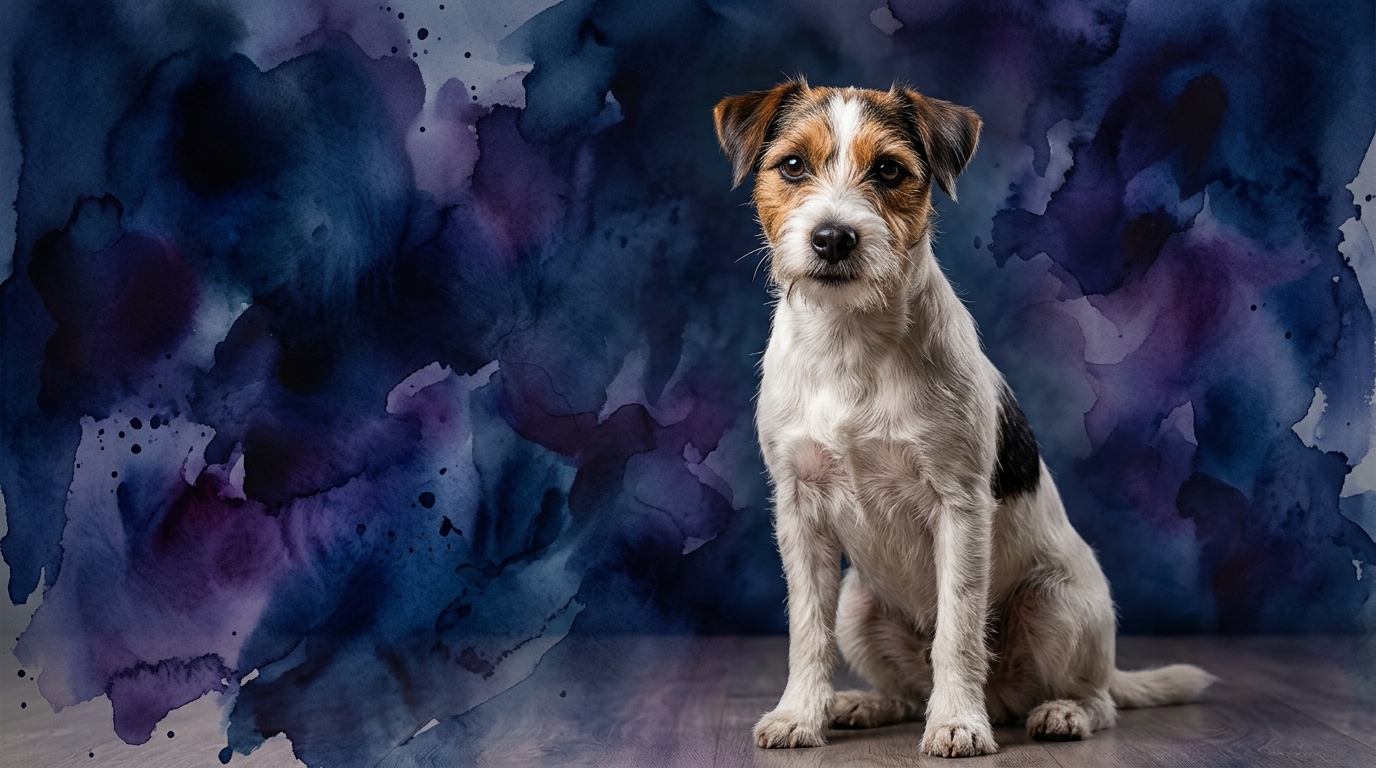

Side-by-Side IQ Profile: Parson Russell Terrier vs. Russian Toy
In The Cosmic Pet Pet IQ Lab, both the Parson Russell Terrier and the Russian Toy are assessed with a balanced 3 out of 5 across all five cognitive dimensions, indicating a moderate capacity in each area. This identical scoring highlights that while their foundational cognitive abilities are similar, the manifestation and practical application of these traits are profoundly influenced by their breed-specific temperaments and historical roles.
**Problem Solving (3/5):** For the Parson Russell Terrier, a 3/5 in problem-solving often manifests as persistent, independent thinking when pursuing a goal. Their solutions are typically action-oriented, driven by their terrier instinct to overcome physical obstacles through digging, strategic maneuvering, or exploring. They are adept at figuring out how to access a perceived "quarry" or a hidden toy with determined effort. In contrast, the Russian Toy's 3/5 in problem-solving is usually applied differently. They excel at using observational skills to understand household routines, manipulate social situations for comfort, or find clever, often charming, ways to gain attention or treats within their domestic setting. Their solutions are less about physical conquest and more about social or environmental navigation.
**Training Speed (3/5):** A 3/5 training speed for the Parson Russell Terrier indicates they grasp new commands at a moderate pace. However, their strong independent spirit and instinctive drives can sometimes make training a spirited endeavor; they may prioritize self-directed pursuits over compliance if something more stimulating arises. Effective training requires immense consistency, engaging methods, and high-value rewards to maintain their focus. The Russian Toy also scores 3/5 in training speed, suggesting a similar moderate learning pace. For this breed, their small size and potential for sensitivity mean they respond best to gentle, positive reinforcement. Their eagerness to please their trusted owner, combined with a lower distraction threshold from intense prey drives, often makes them receptive to learning in a calm, encouraging environment.
**Social Intelligence (3/5):** The Parson Russell Terrier’s 3/5 in social intelligence suggests a moderate ability to understand human cues and social dynamics. While perceptive to their owner's mood, they may also prioritize their own agenda, especially around other dogs or perceived prey. Their social understanding is often geared towards their role within their "pack," which can sometimes lead to assertive interactions if not well-socialized. Conversely, the Russian Toy’s 3/5 denotes a moderate capacity for social understanding that is typically highly attuned to their owner's emotions and body language. They often seek to provide comfort or solicit attention, with their social intelligence largely focusing on forming strong bonds with their immediate family and navigating home dynamics, though they can be reserved with strangers.
**Instinctive Drive (3/5):** For the Parson Russell Terrier, a 3/5 instinctive drive indicates a significant, albeit moderate, innate motivation. This manifests strongly in their prey drive, a desire to chase, dig, and explore, which is central to their identity and influences much of their behavior, requiring outlets like structured play or "earthdog" activities. For the Russian Toy, a 3/5 instinctive drive is less about traditional hunting and more about companionship and vigilance. Their drive might manifest as a strong desire for proximity to their people, a "watchdog" tendency to alert to new sounds, or playful energy mimicking the pursuit of small toys. They possess an inherent motivation for behaviors rooted in their history as companions and alert systems.
**Memory (3/5):** A 3/5 in memory suggests the Parson Russell Terrier retains information and learned behaviors moderately well. They remember commands and routines but may require consistent reinforcement, particularly when instincts tempt them to deviate. They also recall past experiences, both positive and negative, shaping their future reactions. Similarly, the Russian Toy’s 3/5 memory means they have a moderate capacity for recall. They remember training and household rules, as well as familiar people and places. Their memory contributes to their routine-oriented nature and ability to anticipate events, fostering security and well-being within their environment.
Where the Parson Russell Terrier Wins Cognitively
The Parson Russell Terrier's cognitive strengths lean into their physical tenacity and independent spirit, particularly in the application of their problem-solving and instinctive drive. While both breeds score 3/5 in problem-solving, the Parson's manifestation often involves a more robust, physical approach to challenges, demonstrating a drive to *overcome* obstacles rather than simply *navigate* them. This might mean figuring out how to scale a low fence to pursue a scent or persistently digging under an obstacle to reach a perceived target. Their instinctive drive, also 3/5, is channeled into purposeful, often physical, activities that require sustained focus and determination, making them adept at tasks demanding endurance and a singular objective. This isn't about superior raw intelligence, but a distinct *type* of cognitive application geared towards active, independent pursuit.
Where the Russian Toy Wins Cognitively
The Russian Toy's cognitive strengths shine in their nuanced social engagement and adaptability within a human-centric environment. Their 3/5 social intelligence often translates into a keen sensitivity to their owner's emotional state and subtle cues, allowing them to anticipate needs or offer comfort with remarkable precision. Unlike the Parson's outward-directed problem-solving, the Russian Toy's 3/5 in this dimension is frequently applied to social maneuvering, understanding household dynamics, and finding clever, often charming, ways to secure attention or preferred outcomes without overt physical exertion. Their memory (3/5) also supports their strong bond and routine orientation, making them highly responsive to familiar faces and environments and adept at navigating complex social relationships within their trusted circle.
Which is Easier to Train and Why
Despite both breeds scoring 3/5 in training speed, their underlying behavioral differences significantly impact the perceived ease of training. For the Parson Russell Terrier, training can be a spirited endeavor. Their strong instinctive drive (3/5), manifesting as intense curiosity and a high prey drive, often means they are more interested in their own agenda than strict obedience. Their independent problem-solving (3/5) can translate into a stubborn streak if they don't see the immediate benefit of a command or if a more exciting distraction presents itself. Training requires immense consistency, patience, and creative methods to make learning more engaging than chasing a perceived quarry or exploring. They learn, but they also *choose* when to apply that learning, making them less "easy" in the traditional sense.
The Russian Toy, conversely, tends to offer a more cooperative training experience, despite their identical 3/5 training speed. Their strong social intelligence (3/5) means they are often eager to please their beloved human and thrive on positive reinforcement and gentle guidance. They are less likely to be sidetracked by intense prey drives, as their instinctive drive (3/5) typically manifests as playful engagement rather than an all-consuming focus on external stimuli. While they can be sensitive and easily overwhelmed by harsh methods, their desire for connection and their generally calmer disposition make them more amenable to learning household manners and basic obedience, provided the environment is calm and encouraging. They are often perceived as "easier" because their compliance is more readily given, driven by a desire for companionship rather than an independent working ethic.
Which Suits Active Owners vs. Relaxed Owners
For active owners, the Parson Russell Terrier is an excellent match. Their 3/5 instinctive drive, manifesting as high energy, boundless curiosity, and a deep need for mental and physical engagement, makes them thrive on vigorous activity. They are suited for long walks, challenging games, agility courses, earthdog trials, or other sports that tap into their problem-solving and stamina. Their moderate social intelligence means they appreciate human companionship but also value their independent pursuits, fitting well into a lifestyle that offers both shared activity and space for individual exploration.
The Russian Toy is generally better suited for relaxed owners. While not entirely sedentary, their 3/5 instinctive drive is typically satisfied with regular, moderate walks, indoor play, and ample lap time. Their social intelligence (3/5) makes them highly focused on their human companions, preferring to be involved in daily family life, often from a comfortable perch. They are content with a more relaxed pace, valuing close proximity and gentle interaction over strenuous physical demands, making them ideal for owners who enjoy a calmer, more companion-focused lifestyle that prioritizes warmth and connection.
The Verdict
Choose the Parson Russell Terrier if you seek a spirited, tenacious companion for outdoor adventures and mental challenges, valuing independence and a working drive.
Choose the Russian Toy if you desire a sensitive, charming, and devoted companion who thrives on close human interaction and a gentler, more domestic pace of life.
🧠 Find Your Pet's IQ Score
Our Pet IQ Lab assessment covers 25+ tests across 5 cognitive dimensions — personalized to your breed.
Take the Full IQ Test →Frequently Asked Questions
Are Parson Russell Terriers stubborn during training?
Their 3/5 training speed is often challenged by their strong 3/5 instinctive drive and independent problem-solving; this terrier tenacity can be perceived as stubbornness if they're not adequately motivated or engaged with consistent, positive reinforcement.
How do Russian Toys apply their 3/5 problem-solving?
Russian Toys typically use their problem-solving skills to navigate social situations, understand routines, or find clever ways to gain comfort or attention within their domestic environment, rather than through overt physical conquest or independent exploration.
Do both breeds require a lot of exercise?
While both have a 3/5 instinctive drive, the Parson Russell Terrier requires significantly more vigorous physical and mental exercise to satisfy their working heritage, whereas the Russian Toy's needs are generally met with moderate walks and indoor play, prioritizing companionship.