Side-by-Side IQ Profile: Unpacking Identical Scores
While both the Parson Russell Terrier and the Saluki register a 3/5 across all five measured cognitive dimensions, their expressions of these abilities are shaped profoundly by their ancestral roles and physical attributes. Understanding these subtle differences is key to appreciating their unique mental landscapes.
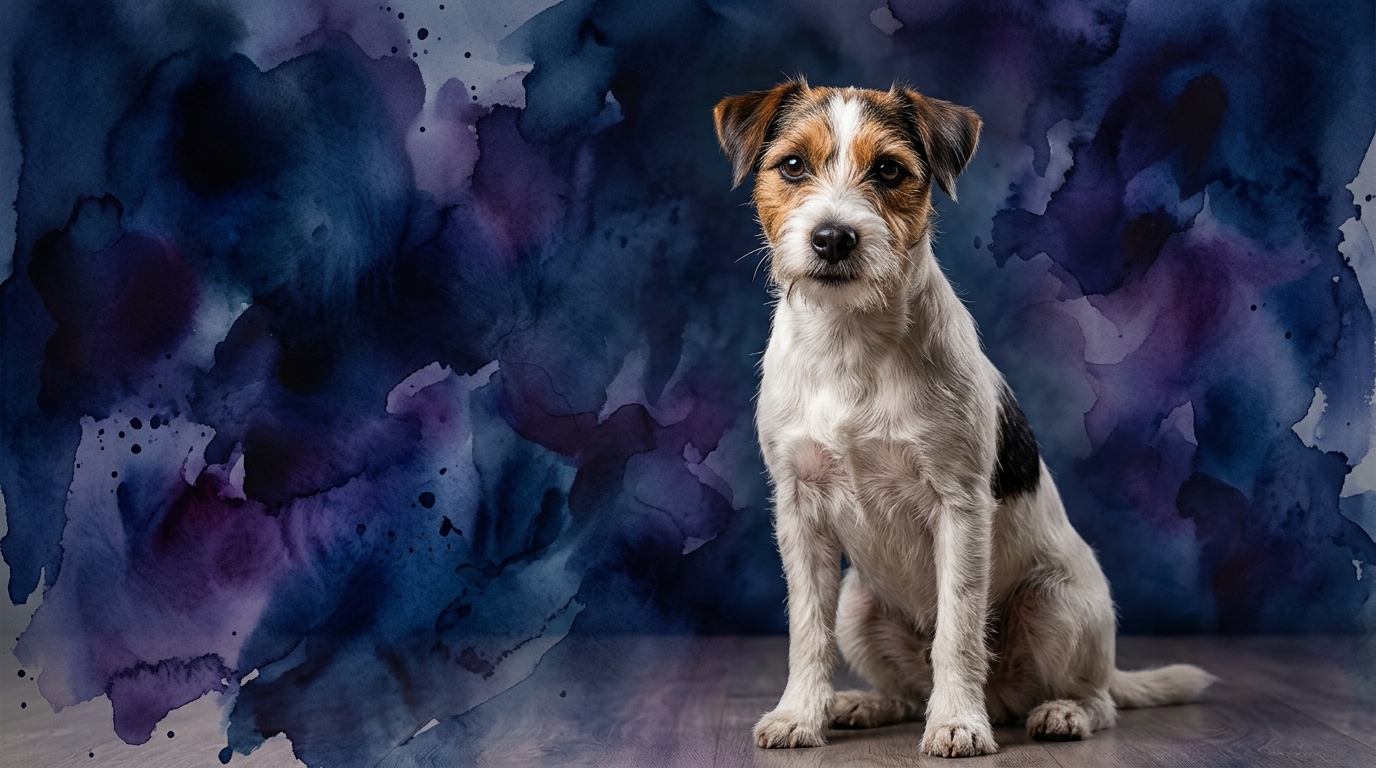
For the Parson Russell Terrier, Problem Solving at 3/5 manifests as a determined, often physical, approach to overcoming obstacles. Their terrier heritage means they are adept at figuring out how to get to things, whether it's a hidden toy or an elusive scent, often employing a trial-and-error strategy with persistence. Training Speed at 3/5 indicates they are capable learners, but their independent spirit means consistency and engaging methods are crucial; they learn quickly when motivated, but their own agenda can sometimes override compliance. Social Intelligence, also 3/5, shows they are responsive to human cues and can form strong bonds, though their assertiveness can mean they're not always looking for consensus. Their Instinctive Drive, a robust 3/5, is centered around prey drive, digging, and exploration, propelling them to investigate every interesting smell or rustle. Finally, Memory at 3/5 allows them to retain commands and routines, but they are equally adept at remembering where that squirrel buried its nut or which path leads to an exciting adventure.
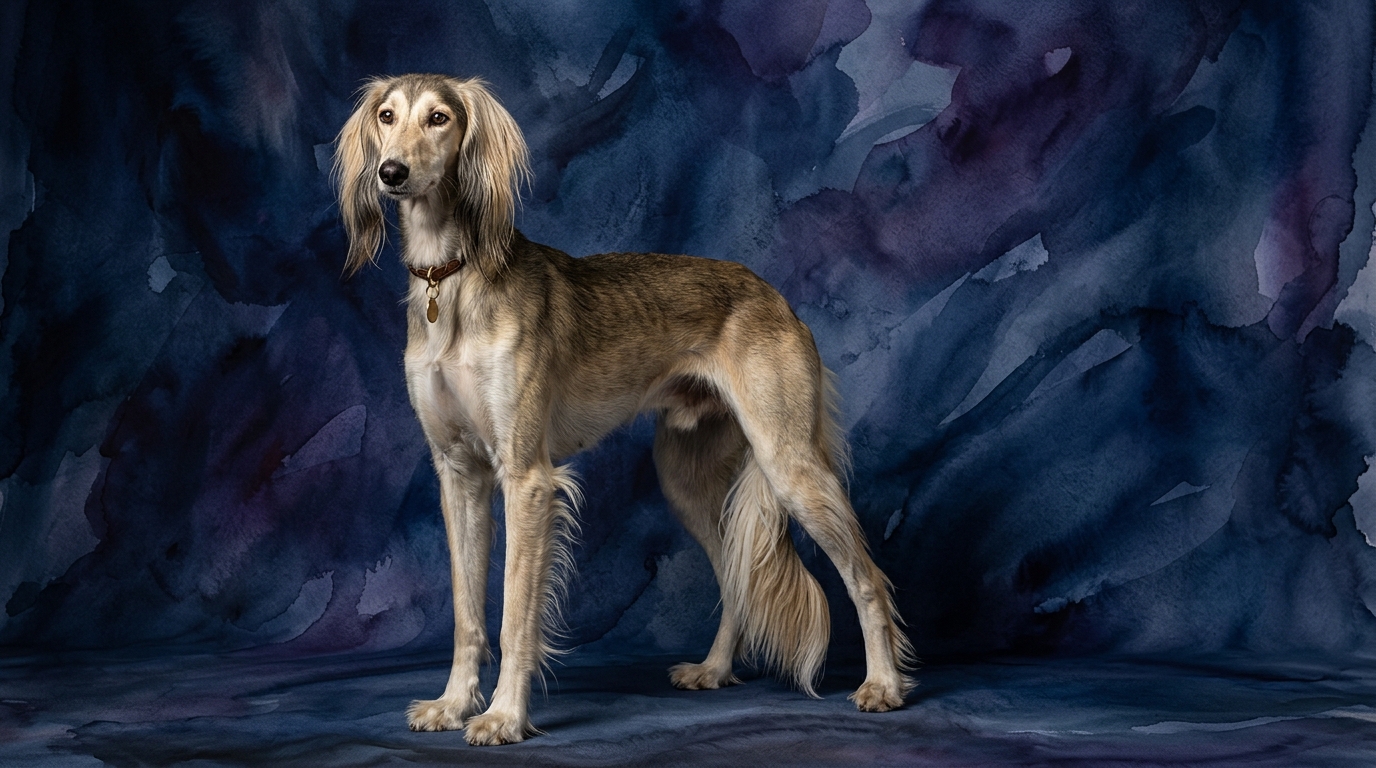
The Saluki, in contrast, interprets its 3/5 scores through the lens of a sighthound. Their Problem Solving at 3/5 often involves spatial reasoning and strategy related to pursuit; they may not manipulate objects like a terrier, but they excel at anticipating movement and finding the most efficient path to a distant target. Training Speed at 3/5 reflects their capacity to grasp concepts quickly, but their sensitive and sometimes aloof nature means training must be gentle, positive, and highly motivating; they learn but might choose not to perform if the reward isn't compelling or the pressure is too high. Social Intelligence at 3/5 describes a breed that forms deep, often exclusive bonds with their family, displaying a quiet understanding and sensitivity, though they can be reserved or indifferent towards strangers. Their Instinctive Drive, also 3/5, is overwhelmingly focused on sight-hunting, characterized by an explosive chase reflex and a need for expansive, open spaces to run. Their Memory at 3/5 is strong for familiar people, places, and learned routines, particularly those associated with their sighthound pursuits, recalling terrain and quarry with impressive accuracy.
Where the Parson Russell Terrier Wins Cognitively
The Parson Russell Terrier’s cognitive strengths shine in scenarios demanding tenacity and adaptable problem-solving. Their terrier drive grants them an edge in tasks requiring persistent effort, such as figuring out a complex puzzle feeder or navigating an agility course with multiple obstacles. Where a Saluki might observe and then execute, the Parson Russell is more likely to dive in, experiment, and adjust their approach on the fly, demonstrating a practical, hands-on intelligence.
Their cognitive profile also lends itself to situations where a quick, reactive response is needed, combined with an ability to shift focus rapidly. This makes them particularly adept at dog sports like earthdog trials or flyball, where their ingrained prey drive and physical agility merge with their ability to process and react to changing environmental cues. The Parson Russell Terrier excels in environments where their active mind can be engaged in a variety of challenging, object-oriented tasks, often outmaneuvering their counterparts through sheer determination and a willingness to try unconventional solutions.
Where the Saluki Wins Cognitively
The Saluki’s cognitive advantages are most evident in situations that call for long-distance observation, spatial awareness, and an almost poetic grace in execution. Their sighthound heritage means they possess an unparalleled ability to spot and track moving objects from afar, demonstrating a sophisticated visual processing capability that can be astonishing. This makes them exceptional at lure coursing or any activity requiring a sustained, focused pursuit based on visual cues.
Furthermore, the Saluki often exhibits a serene, almost philosophical intelligence in their social interactions, particularly within their trusted circle. While they might not be boisterously expressive, their capacity for deep, quiet bonding and their sensitivity to their owner's moods reveal a subtle social acumen. They can excel in tasks that demand patience and an elegant, precise execution once they understand the objective, often showing a quiet self-possession that contrasts sharply with the terrier's energetic approach.
Which is Easier to Train and Why
Despite both breeds scoring 3/5 in training speed, the practical experience of training them can feel quite different due to their underlying behavioral blueprints. The Parson Russell Terrier's assertive nature and high instinctive drive mean that while they learn quickly, they often require a firm yet fair hand, coupled with highly engaging and varied training sessions to prevent boredom and maintain focus. Their independent streak means they can be prone to making their own decisions if not consistently guided, requiring an owner who enjoys a spirited challenge and can channel their terrier enthusiasm productively.
The Saluki, conversely, demands a training approach rooted in gentle persuasion and positive reinforcement. Their sensitive disposition means harsh corrections can cause them to 'shut down' or become evasive, making progress difficult. While they absorb information readily, their training is often a matter of convincing them that compliance is a worthwhile endeavor, requiring patience, understanding, and a deep appreciation for their independent, sometimes aloof, character. Consistency is key for both, but the methods and the owner's temperament for success diverge significantly: one thrives on structured engagement, the other on respectful collaboration.
Which Suits Active Owners vs. Relaxed Owners
The choice between a Parson Russell Terrier and a Saluki often comes down to an owner's lifestyle and their preferred level of interaction. The Parson Russell Terrier is an ideal companion for active owners who enjoy a dynamic lifestyle filled with outdoor adventures, dog sports, and a constant stream of mental and physical engagement. Their zest for life and robust energy levels mean they thrive with owners who are prepared to dedicate significant time to exercise, training, and playful interaction, making them unsuitable for a truly relaxed, sedentary household.
The Saluki, while requiring bursts of intense exercise in secure environments, can be surprisingly calm and reserved indoors, making them suitable for owners who appreciate a quieter, more elegant companion. They are not content to be couch potatoes but prefer a routine that includes vigorous sprints followed by long periods of relaxed companionship. This makes them a better fit for owners who can provide secure, expansive areas for running but also value a serene presence at home, rather than constant, boisterous activity.
The Verdict: When to Choose Each
The Verdict
Choose the Parson Russell Terrier if you seek an energetic, determined companion for active pursuits and complex problem-solving, thriving on consistent engagement and a spirited challenge. They are best for owners who enjoy a dog with a robust personality and an unwavering drive to explore and achieve.
Opt for the Saluki if you appreciate a graceful, sensitive companion who excels in observational tasks and requires dedicated opportunities for swift, expansive running. They are suited for owners who can provide secure open spaces and value a deep, quiet bond over constant, high-energy interaction.
🧠 Find Your Pet's IQ Score
Our Pet IQ Lab assessment covers 25+ tests across 5 cognitive dimensions — personalized to your breed.
Take the Full IQ Test →Frequently Asked Questions
Do Parson Russell Terriers get along with other pets?
Parson Russell Terriers, with their strong prey drive, may require careful socialization when introduced to smaller pets like cats or rodents. While they can coexist, their natural instincts mean supervision and training are essential to ensure harmonious living.
Are Salukis good with children?
Salukis can be gentle and patient with children, especially those within their immediate family, but their reserved nature means they prefer calm interactions. They thrive in homes where children understand how to interact respectfully with a sensitive and sometimes aloof companion.
Which breed requires more grooming?
The Parson Russell Terrier, with its dense double coat, requires regular brushing and occasional hand-stripping to maintain coat health and minimize shedding. The Saluki, typically having a shorter, silky coat, generally requires less intensive grooming, primarily consisting of regular brushing to keep their fur sleek and free of tangles.