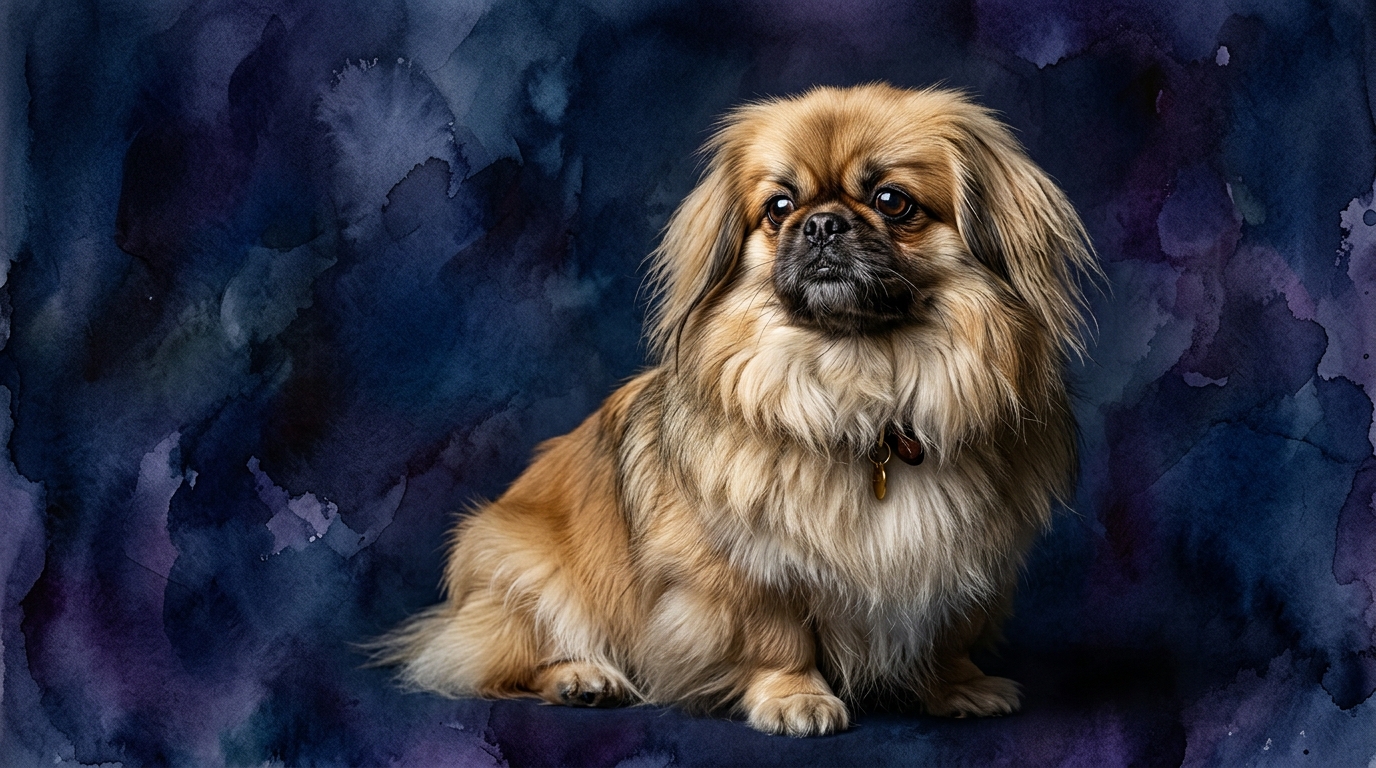
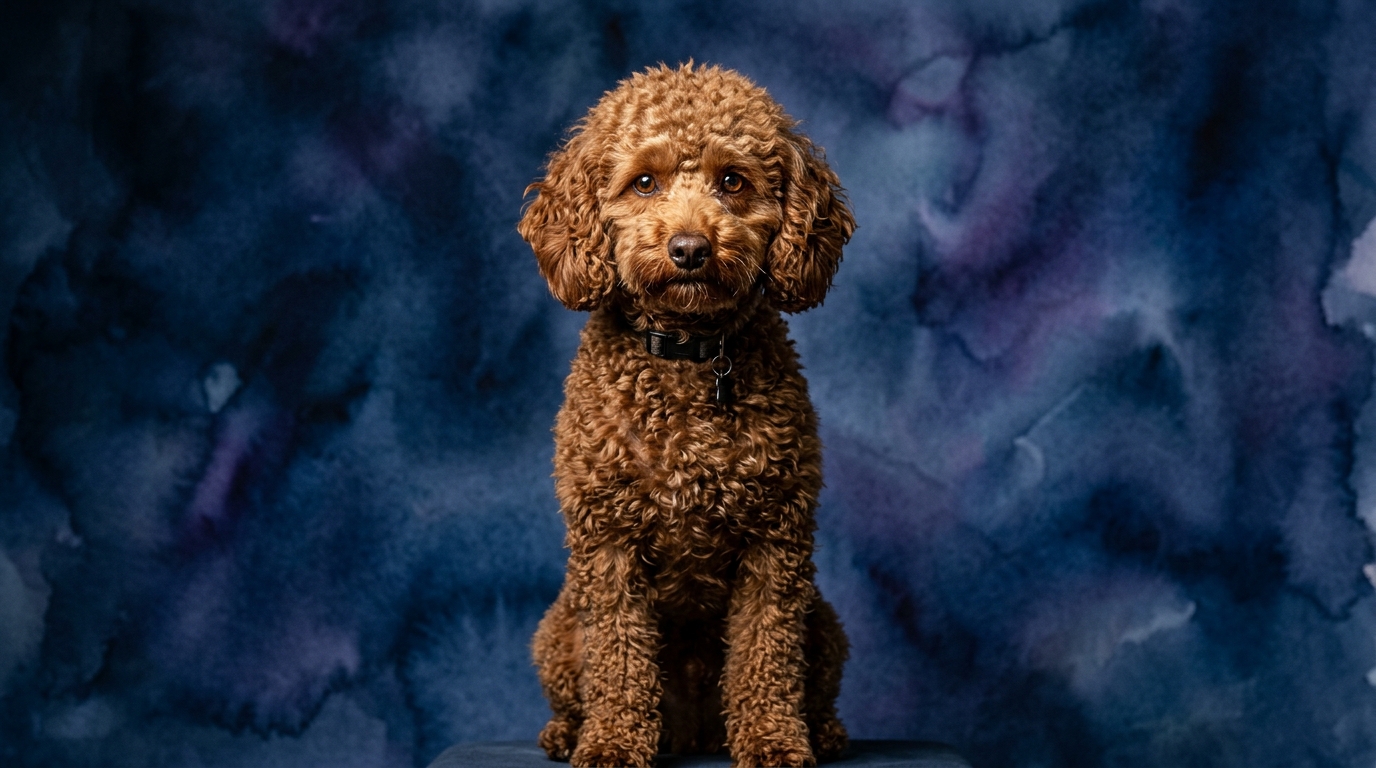
Side-by-Side IQ Profile: Pekingese vs. Miniature Poodle
The Cosmic Pet Pet IQ Lab employs five key dimensions to assess canine intelligence, offering a detailed look beyond general impressions. These scores help paint a clear picture of each breed's cognitive strengths and how they interact with their environment and human companions.
The Pekingese, with a Coren rank of #77, exhibits a balanced yet moderate cognitive profile. Their Problem Solving is rated 3/5, indicating they are capable of navigating familiar challenges but less inclined to tackle complex, novel puzzles independently. Training Speed also stands at 3/5, meaning they absorb commands at a steady pace, requiring consistent and patient repetition to solidify new behaviors. Social Intelligence is 3/5, reflecting their ability to read human cues and form bonds, though often with a reserved and selective nature. An Instinctive Drive of 3/5 suggests moderate inherent motivations, such as companionship or territorial awareness, without strong predispositions towards specialized tasks like hunting or herding. Finally, their Memory is 3/5, allowing them to retain learned information and routines adequately, though not with exceptional recall over extended periods or a vast array of tasks.
In stark contrast, the Miniature Poodle, holding an impressive Coren rank of #2, demonstrates a significantly more advanced cognitive capacity across several dimensions. Their Problem Solving is a remarkable 5/5, showcasing an exceptional aptitude for analyzing and resolving complex situations, often displaying ingenuity in finding solutions to environmental challenges. Training Speed also scores a perfect 5/5, meaning they grasp new commands and concepts with astonishing rapidity, frequently mastering new skills after only a few repetitions. Their Social Intelligence is 3/5, similar to the Pekingese, indicating a solid capacity for understanding human emotions and social dynamics, fostering strong, adaptable connections. Instinctive Drive is likewise 3/5, exhibiting moderate natural motivations that are highly adaptable, making them suitable for various roles from companionship to performance without overwhelming specialized instincts. Crucially, their Memory is 5/5, denoting a formidable capacity for recall, enabling them to retain a vast repertoire of commands, routines, and experiences over extensive durations, contributing to their exceptional trainability.
Where the Pekingese Wins Cognitively
While the Pekingese doesn't outscore the Miniature Poodle in raw cognitive metrics, their unique profile presents distinct advantages for specific owners and lifestyles, which can be considered a cognitive 'win' in application. Their moderate Problem Solving (3/5) means they are generally content with a predictable and comfortable environment, less inclined to invent complex mischief out of boredom, a trait that can be highly valued by owners seeking a less mentally demanding companion.
The Pekingese's balanced cognitive needs, with 3/5 scores across the board, mean they are not driven by an intense desire for constant mental stimulation or complex work. This sufficiency allows them to thrive in a home environment focused on comfort, quiet observation, and affectionate companionship rather than rigorous cognitive engagement. For owners who prioritize a calm, self-sufficient presence over a dog needing constant tasks, the Pekingese's cognitive makeup excels at providing just that, making them perfectly suited for a relaxed, appreciative lifestyle where their discerning nature is a prized attribute.
Where the Miniature Poodle Wins Cognitively
The Miniature Poodle's cognitive strengths are undeniably pronounced, making them stand out in areas requiring sharp mental agility and adaptability. Their Problem Solving score of 5/5 indicates a profound ability to understand and manipulate their environment, often observed figuring out how to open gates, retrieve hidden objects, or navigate intricate pathways with ease. This active engagement with their surroundings makes them natural strategists.
Furthermore, a Training Speed of 5/5 means Miniature Poodles absorb new commands and routines with impressive rapidity, making them exceptionally responsive to structured learning, advanced obedience, and intricate sequences. Coupled with their 5/5 Memory, once a concept is learned, it is deeply ingrained, allowing for reliable recall and the building of an extensive behavioral repertoire. These attributes make the Miniature Poodle a prime candidate for complex dog sports, advanced training, and engaging in dynamic, interactive activities that continually challenge their sharp and eager minds, demonstrating a clear cognitive advantage in learning and application.
Which is Easier to Train and Why
Based on The Cosmic Pet Pet IQ Lab data, the Miniature Poodle is significantly easier to train than the Pekingese, a difference rooted deeply in their cognitive profiles. The Poodle's Training Speed is rated 5/5, meaning they grasp new commands and behaviors with remarkable quickness, often requiring only a few repetitions to solidify a concept. This rapid acquisition of knowledge, combined with their 5/5 Memory score, ensures they not only learn fast but also retain that learning over extended periods, making advanced training and consistent behavior much more achievable and less time-consuming. Their high Coren rank (#2) further underscores their exceptional capacity for learning and responsiveness to human instruction.
In contrast, the Pekingese, with a Training Speed of 3/5 and Memory of 3/5, requires considerably more patience, consistency, and positive reinforcement during training sessions. While they are certainly capable of learning, the process is slower, and they may need more frequent refreshers to maintain learned behaviors and recall commands reliably. Their moderate Instinctive Drive (3/5) means they aren't inherently motivated to perform complex tasks, and their independent nature, while charming, can sometimes be interpreted as stubbornness in a training context. Owners of a Pekingese must be prepared for a more gradual progression, focusing on shorter, engaging sessions and celebrating smaller successes, understanding that their cognitive makeup prioritizes contemplation over rapid compliance, making the training journey a marathon rather than a sprint.
Which Suits Active Owners vs. Relaxed Owners
For active owners seeking a canine partner for sports, advanced training, or frequent interactive mental challenges, the Miniature Poodle is the ideal choice. Their 5/5 Problem Solving and Memory, coupled with a 5/5 Training Speed, mean they thrive on mental engagement and physical activity that stimulates their sharp minds. They excel in agility, obedience, rally, and even as service animals, requiring a lifestyle that provides ample opportunities to utilize their cognitive abilities. An under-stimulated Miniature Poodle may invent its own 'problems' to solve, which can manifest as unwanted behaviors like excessive barking, digging, or destructive chewing, making them unsuitable for owners who cannot commit to their substantial mental exercise needs.
Conversely, the Pekingese is exceptionally well-suited for relaxed owners who appreciate a more independent and less demanding companion. Their moderate scores across all cognitive dimensions (3/5) indicate they are content with a comfortable, predictable routine and do not require constant mental stimulation or rigorous physical exercise to prevent boredom. While they enjoy companionship and gentle interaction, they are not driven by an intense need to perform or solve complex puzzles. A Pekingese's cognitive profile makes them an ideal match for individuals or families seeking a calm, affectionate presence that will happily share a sofa and enjoy leisurely strolls, without the need for extensive training regimens or demanding cognitive tasks, perfectly complementing a quiet, appreciative home environment.
The Verdict
Opt for a Pekingese if you desire a serene, independent companion who thrives in a relaxed home environment and requires moderate mental engagement, appreciating comfort over constant challenge.
Select a Miniature Poodle if you are an active owner eager for a highly trainable, mentally agile partner for dog sports, advanced obedience, or consistent cognitive challenges and intellectual stimulation.
🧠 Find Your Pet's IQ Score
Our Pet IQ Lab assessment covers 25+ tests across 5 cognitive dimensions — personalized to your breed.
Take the Full IQ Test →Frequently Asked Questions
Do Pekingese learn tricks?
Yes, Pekingese can learn tricks, but their training speed (3/5) means it will take more time and consistent, patient effort compared to breeds with higher scores. Owners should focus on positive reinforcement and short, engaging sessions.
Are Miniature Poodles good for first-time dog owners?
Miniature Poodles can be excellent for first-time owners who are committed to providing consistent training and mental stimulation. Their high intelligence makes them receptive learners, but also means they require engagement to prevent boredom and potential behavioral issues.
How do their social intelligence scores compare?
Both Pekingese and Miniature Poodles have a social intelligence score of 3/5, indicating they are equally capable of understanding human cues and forming bonds. However, the Pekingese tends to be more selective in their social circle, while the Poodle is generally more adaptable and outgoing.