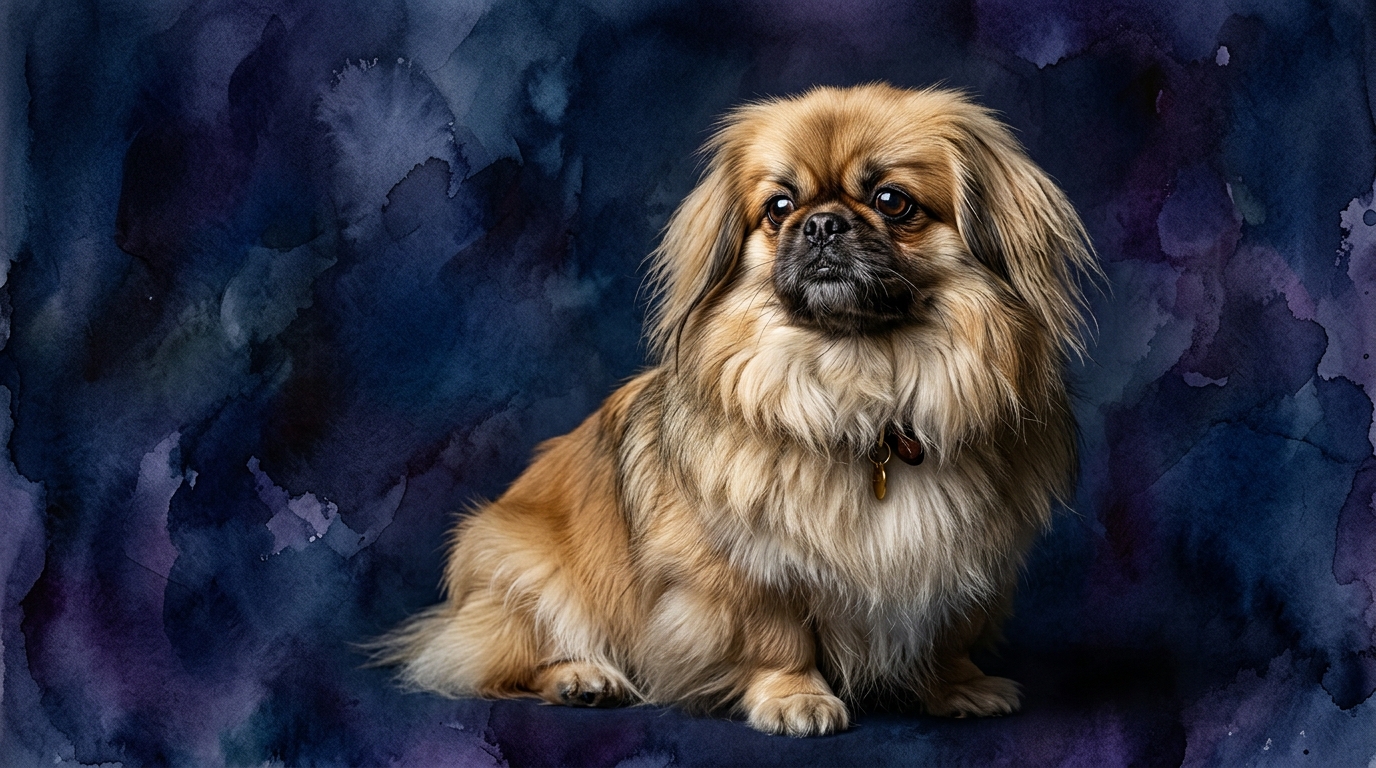

Side-by-Side Cognitive Profile: Pekingese vs. Russian Toy
The Cosmic Pet Pet IQ Lab assesses five key dimensions of canine intelligence, and interestingly, both the Pekingese and the Russian Toy score a consistent 3/5 across all categories. For the Pekingese, a breed with a long history as companions to Chinese royalty, this 3/5 in problem-solving often manifests as a cleverness in navigating their indoor environment, particularly in finding the most comfortable resting spots or subtly influencing human behavior to achieve their desired outcomes, such as securing more attention or a favorite treat. Their training speed, also 3/5, reflects an average capacity to learn new commands, though their independent spirit means compliance can be a matter of choice rather than automatic response. Social intelligence at 3/5 suggests they are perceptive of human moods and household dynamics, often using this understanding to maintain their dignified position within the family.
The Pekingese's instinctive drive, rated 3/5, typically involves a moderate territorial awareness and a protective instinct towards their chosen humans, sometimes expressed through alert barking. Their memory, also 3/5, indicates a solid ability to recall routines, learned behaviors, and past interactions, ensuring they remember who provides the best cuddles or where the forbidden snacks are stored. While the Russian Toy lacks a Coren ranking due to its more recent development and less widespread recognition, its Pet IQ Lab scores mirror those of the Pekingese. For the lively Russian Toy, a 3/5 in problem-solving often translates into an aptitude for interactive games, figuring out how to retrieve toys from under furniture, or quickly adapting to new play scenarios. Their training speed of 3/5, combined with an eager-to-please temperament, can make them appear quite responsive to positive reinforcement, quickly grasping new tricks and commands in engaging sessions.
A 3/5 in social intelligence for the Russian Toy highlights their keen awareness of human emotions and social cues, which they frequently leverage to initiate play or seek affection, making them highly engaging companions. Their instinctive drive, also 3/5, often manifests as a lively curiosity, a noticeable prey drive for small moving objects or toys, and a general alertness that makes them excellent little watchdogs. Finally, a 3/5 in memory ensures the Russian Toy effectively retains information about their environment, learned behaviors, and social interactions, allowing them to quickly learn household rules and remember favorite people or places for walks. Despite identical scores, the *application* of these cognitive strengths differs considerably between the two breeds due to their distinct temperaments and historical roles.
Where the Pekingese Demonstrates Unique Cognitive Strengths
While both breeds share the same numerical IQ profile, the Pekingese often showcases its cognitive abilities in a more subtle, observational manner. Their ancient lineage as pampered companions to royalty has fostered a particular kind of social perception. A Pekingese excels at reading the room, understanding the intricate social dynamics of their human household without needing overt instruction. They demonstrate a sophisticated understanding of boundaries and personal space, often choosing to engage on their own terms rather than constantly seeking interaction. This manifests as a refined social intelligence, where they can subtly manipulate situations for their comfort or advantage, such as strategically placing themselves for maximum sun exposure or securing the prime lap spot.
Furthermore, their problem-solving skills, while not always applied to complex puzzles, are evident in their ability to orchestrate their environment. A Pekingese might cleverly use their surroundings to create a fortress of pillows, or figure out the precise time of day their human is most susceptible to a treat request. This self-directed application of their cognitive abilities, combined with their inherent dignity, allows them to thrive in environments where they can observe, assess, and then act with a purpose that aligns with their comfort and perceived regal status. They possess a patient, almost stoic approach to problem-solving, waiting for the opportune moment rather than rushing in.
Where the Russian Toy Excels Cognitively
In contrast, the Russian Toy's cognitive strengths lean towards a more active and adaptable application of their intelligence. Their lively and curious nature means their 3/5 problem-solving often shines in dynamic scenarios. They are quick to figure out new games, master agility-style challenges, or navigate novel environments with enthusiasm. This breed demonstrates a remarkable ability to process new information rapidly and adjust their behavior accordingly, making them highly responsive to changes in routine or environment. Their alertness and quick reflexes are not just physical attributes; they reflect a cognitive processing speed that allows them to react swiftly to stimuli, whether it's a dropped toy or a new visitor.
The Russian Toy's social intelligence, while numerically the same as the Pekingese, is often expressed through a more overt desire for interaction and bonding. They are adept at charming their way into human hearts, quickly learning what behaviors elicit positive responses like praise or playtime. Their memory, combined with this social drive, means they quickly associate specific cues with rewards and form strong, lasting connections. This makes them particularly adept at engaging in interactive training and play, where their cognitive skills are constantly challenged and rewarded in a dynamic, social context. They thrive on engagement and demonstrate a keen interest in participating actively with their humans.
Training Dynamics: Pekingese vs. Russian Toy
Both breeds hold a 3/5 rating for training speed, indicating an average capacity to learn. However, the *experience* of training each can differ significantly due to their inherent temperaments. The Pekingese, with its independent and sometimes stubborn streak, requires a patient and consistent approach. They respond best when training feels like a suggestion rather than a demand, and when high-value rewards make the effort worthwhile from their perspective. Their strong sense of self means they often weigh the benefit of compliance against their desire for autonomy. Trainers must understand that a Pekingese might *know* a command but choose not to perform it if they don't see the immediate advantage. Success with a Pekingese often comes from making training a positive, low-pressure experience that respects their dignified nature, focusing on shaping desired behaviors rather than forceful commands.
The Russian Toy, conversely, often approaches training with an eager-to-please attitude and a playful spirit, which can make them feel 'easier' to train despite the identical 3/5 speed rating. Their desire for interaction and their quick, alert nature means they are often more focused on their handler and receptive to direction. Positive reinforcement, short and engaging sessions, and incorporating play into training are highly effective with Russian Toys. They enjoy the mental stimulation and the social interaction that training provides, making them enthusiastic participants. While they learn at an average pace, their willingness to engage and inherent cheerfulness can make the training process feel more fluid and rewarding for the owner, even for novice handlers.
Suitability for Active vs. Relaxed Owners
The distinct temperaments and cognitive applications of these breeds make them suited for different types of households. The Pekingese, with its regal composure and preference for comfort, typically thrives with more relaxed owners who appreciate a quiet, dignified companion. Their problem-solving skills are often applied to optimizing their home environment for maximum comfort, and their social intelligence to observing and subtly interacting with their family. While they enjoy short, leisurely strolls, extensive physical activity is not a primary requirement. Owners who enjoy a serene home life, appreciate a dog with an independent spirit, and are content with a companion who offers affection on their own terms will find a Pekingese a wonderful fit. They are excellent for apartment living and can be quite content as long as they have a comfortable spot and their human nearby.
The Russian Toy, in contrast, is an ideal companion for more active owners who can provide consistent mental and physical stimulation. Their lively problem-solving abilities and quick reflexes mean they thrive on interactive games, puzzle toys, and opportunities for exploration. Owners who enjoy engaging in training, playing fetch, or even participating in dog sports like agility or obedience at a casual level will find the Russian Toy a joyful and enthusiastic partner. Their social intelligence and eagerness to please mean they flourish with owners who are keen to involve them in daily activities and provide plenty of positive social interaction. They adapt well to various living situations but truly shine when their owners are proactive in providing outlets for their energy and sharp minds.
The Verdict
Choose the Pekingese if you appreciate a dignified, independent companion who excels at subtle social observation and thrives in a calm, predictable home environment.
Opt for the Russian Toy if you seek an active, eager-to-please companion who loves interactive play, adapts quickly, and flourishes with consistent mental and physical engagement.
🧠 Find Your Pet's IQ Score
Our Pet IQ Lab assessment covers 25+ tests across 5 cognitive dimensions — personalized to your breed.
Take the Full IQ Test →Frequently Asked Questions
Do Pekingese or Russian Toys learn tricks faster?
Both breeds have a 3/5 training speed, meaning they learn at an average pace. However, Russian Toys often appear to learn faster due to their eagerness to please and playful nature, making them more enthusiastic participants in training sessions. Pekingese, while capable, may require more motivation and patience from their owner.
Which breed is better for first-time dog owners?
The Russian Toy might be slightly more forgiving for first-time owners due to their generally more eager-to-please disposition and responsiveness to positive reinforcement. The Pekingese's independent and sometimes stubborn nature can be more challenging for those new to dog training, requiring a deeper understanding of canine communication and patience.
Are these breeds good at puzzle toys?
The Russian Toy's active problem-solving and curiosity make them particularly well-suited for puzzle toys, enjoying the mental challenge and reward. While a Pekingese can engage with puzzle toys, their interest might be more selective, often preferring comfort or observational activities over active, sustained engagement with such items.