
Side-by-side IQ profile
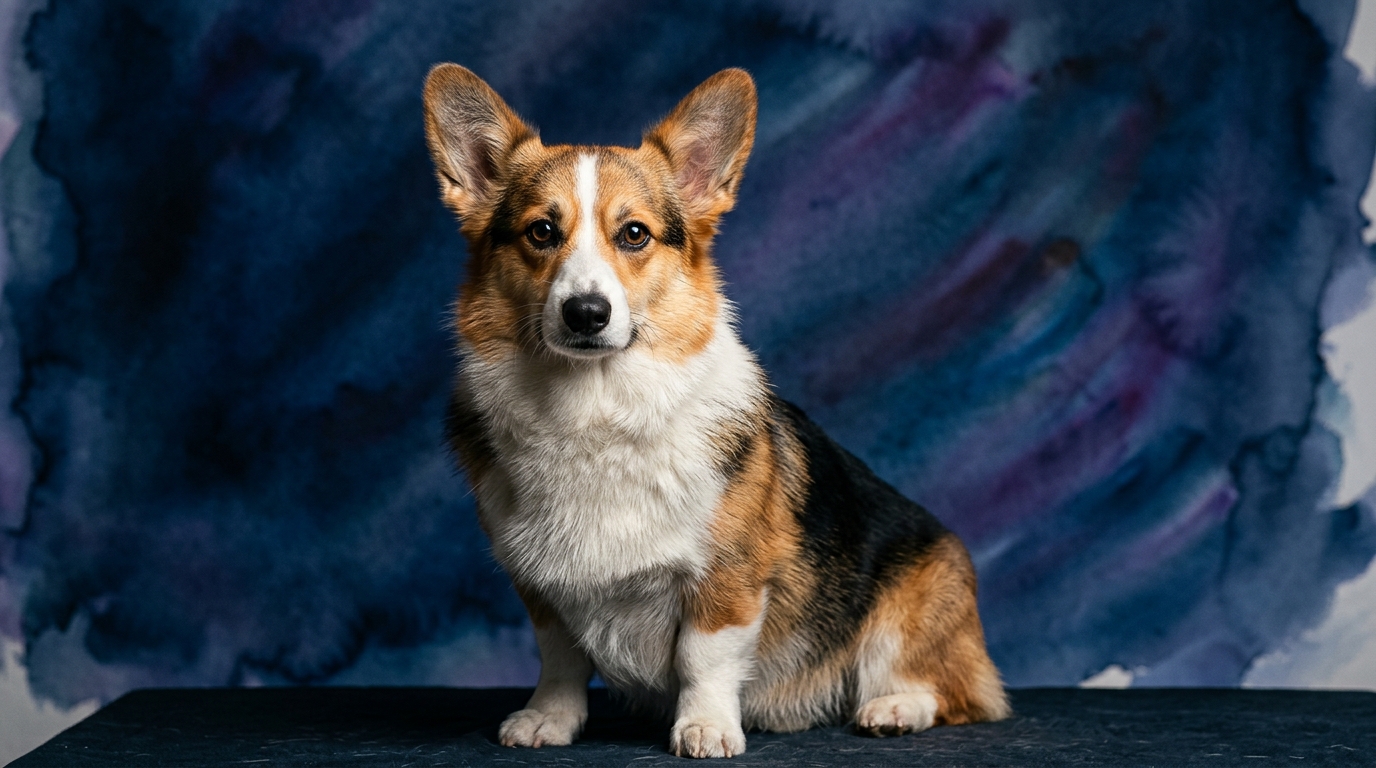
Pembroke Welsh Corgi: This herding breed, famously ranked #11 by Stanley Coren for working and obedience intelligence, demonstrates a remarkably sharp mind across several dimensions pertinent to its historical role. Its Problem Solving is rated 4/5, indicating a significant aptitude for independently navigating complex environments, discerning patterns, and devising solutions, which was crucial for managing livestock with minimal direct instruction. Training Speed shines at an exceptional 5/5, reflecting its innate eagerness to learn and retain commands rapidly, making it extraordinarily responsive to instruction and adaptable to new tasks. Social Intelligence also scores 4/5, suggesting a nuanced understanding of human cues, intentions, and intricate pack dynamics, vital for cooperative work within a family or working environment. An Instinctive Drive of 5/5 underscores its strong inherent motivation for tasks, particularly herding, but also translates into a zest for play and mental challenges, while Memory at 4/5 ensures it retains learned behaviors, complex sequences, and environmental information effectively over time.
Boerboel: Originating as a formidable farm guardian in South Africa, the Boerboel exhibits a more consistent, albeit moderately rated, cognitive profile across the board, with all five dimensions assessed at 3/5. Its Problem Solving at 3/5 indicates a practical, rather than abstract, capacity for solutions, often involving direct action related to its protective duties, such as identifying and responding to territorial intrusions. Training Speed at 3/5 suggests it learns at a moderate, steady pace, requiring consistent, patient, and firm reinforcement to establish commands, rather than the rapid uptake seen in some breeds. Social Intelligence at 3/5 means it can interpret basic social signals and form strong bonds with its family but might not pick up on subtle human nuances or appreciate overtures from strangers as readily as more socially agile breeds. An Instinctive Drive of 3/5 points to a steady, focused motivation, particularly in guarding roles, rather than a high-energy zest for varied activities, manifesting as a calm, watchful vigilance. Memory at 3/5 indicates a reliable recall of established routines, commands, and critical information about its home and family, but perhaps with a slightly longer retention curve for intricate, multi-step sequences.
Where Pembroke Welsh Corgi wins cognitively
The Pembroke Welsh Corgi's cognitive strengths are particularly evident in its superior scores for Training Speed (5/5) and Instinctive Drive (5/5), coupled with strong Problem Solving (4/5). This breed excels in quickly grasping new commands and executing them with enthusiasm, a direct remnant of its herding lineage where rapid response to handler signals and independent decision-making were paramount for controlling livestock. Their Problem Solving allows them to independently assess situations, such as figuring out how to open a cabinet latch, navigating a complex agility course, or devising an alternative path around an unexpected obstacle. This adaptability makes them highly adept at navigating diverse domestic challenges and excelling in various dog sports. Furthermore, their Social Intelligence (4/5) means they are often remarkably attuned to their human companions' moods, intentions, and subtle non-verbal cues, fostering a highly communicative and responsive partnership that feels deeply connected. This combination of traits makes them quick learners and proactive participants in their daily lives.
Where Boerboel wins cognitively
While the Boerboel's consistent scores of 3/5 across all cognitive dimensions might not suggest 'flashy' intelligence, these traits represent a robust, reliable cognitive framework perfectly suited to its historical role as a steadfast guardian. Its Problem Solving (3/5) manifests as a steady, practical approach to its environment, such as methodically identifying and responding to perceived threats within its territory rather than engaging in complex, abstract thought. The Boerboel's Instinctive Drive (3/5) is less about high-energy, varied tasks and more about unwavering vigilance, protection, and a deep sense of responsibility, meaning it maintains a consistent, focused presence on its duties without easily becoming distracted or overstimulated by external stimuli. Its Memory (3/5) is entirely sufficient for retaining critical information about its home, family members, established routines, and potential intruders, ensuring it reliably remembers boundaries and specific commands. This breed's cognitive strengths lie in its unwavering steadiness, its ability to make deliberate, measured decisions in high-stakes situations, and its profound, consistent commitment to its protective role, rather than quick, showy intellectual displays. Its intelligence is rooted in practical application and reliability.
Which is easier to train and why
Based on their cognitive profiles, the Pembroke Welsh Corgi is demonstrably easier to train due to its 5/5 Training Speed and 4/5 Problem Solving. Corgis absorb new information rapidly and are often eager to please, making them highly receptive to positive reinforcement methods. Their strong instinctive drive means they are motivated by tasks and challenges, readily engaging in training sessions. For instance, teaching a Corgi a new trick might involve a few repetitions before they grasp the concept, and their memory helps solidify the learning quickly. In contrast, the Boerboel’s 3/5 Training Speed suggests a more deliberate learning process. While capable of learning, they require consistent, patient, and firm guidance, often needing more repetitions to internalize commands. Their protective instincts mean early and thorough socialization is crucial, and training must establish clear leadership to manage their significant physical presence and territorial nature effectively. A Boerboel might require more structured, repetitive sessions to achieve the same level of obedience a Corgi reaches more quickly.
Which suits active owners vs relaxed owners
The Pembroke Welsh Corgi, with its 5/5 Instinctive Drive and 4/5 Problem Solving, is better suited for active owners who can provide consistent mental and physical stimulation. This breed thrives on having a 'job,' whether it's participating in dog sports, learning new tricks, or engaging in long, stimulating walks. Their intelligence demands regular engagement to prevent boredom and potential destructive behaviors. A relaxed owner might find a Corgi's boundless energy and need for activity overwhelming. The Boerboel, while a large and powerful dog, suits a different kind of owner. Its 3/5 Instinctive Drive and 3/5 Problem Solving indicate a more laid-back, watchful demeanor once its exercise needs are met. While it requires daily walks and mental engagement to maintain its physical and mental health, its primary 'activity' is often patrolling its territory and guarding its family. A relaxed owner who appreciates a calm, steady presence and can dedicate time to structured walks and consistent training will find the Boerboel a fitting companion, understanding that its physical needs are significant but its mental stimulation is more about purpose than constant varied activity.
The Verdict
Choose the Pembroke Welsh Corgi if you seek a highly trainable, mentally agile companion eager to engage in diverse activities and respond quickly to your cues. Its quick learning and strong drive make it ideal for active households desiring a partner in dog sports or complex training.
Opt for the Boerboel if you value a steady, protective presence with a deliberate approach to learning and a calm, watchful demeanor. This breed suits owners committed to consistent, firm training and who appreciate a loyal guardian whose cognitive strengths lie in unwavering purpose.
🧠 Find Your Pet's IQ Score
Our Pet IQ Lab assessment covers 25+ tests across 5 cognitive dimensions — personalized to your breed.
Take the Full IQ Test →Frequently Asked Questions
Are Pembroke Welsh Corgis prone to stubbornness given their high drive?
While Corgis possess a strong instinctive drive and problem-solving ability, which can sometimes appear as independence, it's more often a manifestation of their intelligence seeking engagement. Consistent, positive training channels this drive constructively, preventing perceived stubbornness by providing ample mental stimulation and clear expectations.
Is a Boerboel suitable for a first-time dog owner?
A Boerboel's cognitive profile, with 3/5 scores across the board, indicates a need for confident, experienced handling and consistent training to manage its size and protective instincts effectively. Its steady learning pace and strong territorial drive generally make it a challenging choice for first-time dog owners who may lack the experience to establish clear leadership.
How do their problem-solving skills differ in a home environment?
A Corgi (4/5 problem solving) might figure out how to open a child-proof gate or cleverly manipulate you for treats, demonstrating adaptable, creative solutions. A Boerboel (3/5 problem solving) would more likely apply its intelligence to practical tasks like assessing a new visitor's threat level or consistently adhering to established boundaries within its territory.