Side-by-Side IQ Profile: Poodle (Standard) vs. Pembroke Welsh Corgi
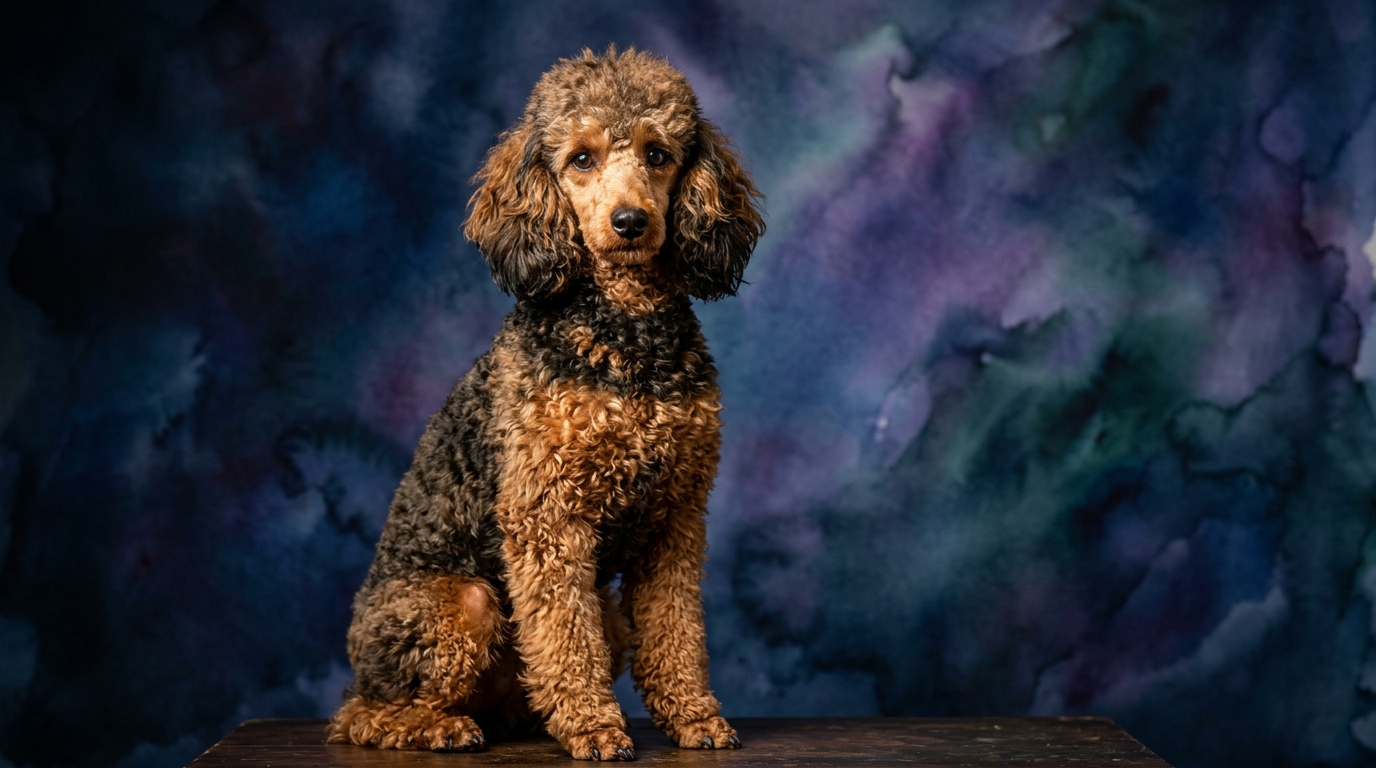
The Cosmic Pet Pet IQ Lab employs a five-dimensional framework to assess canine intelligence, offering a nuanced understanding of each breed's cognitive architecture. For the Standard Poodle, a Coren rank #2 breed, its profile indicates a robust mental capacity across the board. Its Problem Solving is rated 5/5, reflecting an exceptional ability to analyze situations, devise multi-step solutions, and grasp abstract concepts, making them adept at complex tasks like opening latches or executing intricate agility sequences. Training Speed also stands at a perfect 5/5, signifying their rapid assimilation of new commands and routines, often requiring very few repetitions to achieve mastery. Social Intelligence, another 5/5 attribute, highlights their profound understanding of human communication, emotional states, and social cues, enabling deep empathetic connections and adaptability in various social settings. While their Instinctive Drive is a commendable 4/5, it manifests less as raw predatory or herding impulse and more as a drive for engagement, retrieving, and learning-based activities. Finally, their Memory is rated 5/5, allowing them to retain vast amounts of learned information, commands, and past experiences over extended periods, contributing to their consistency in performance.
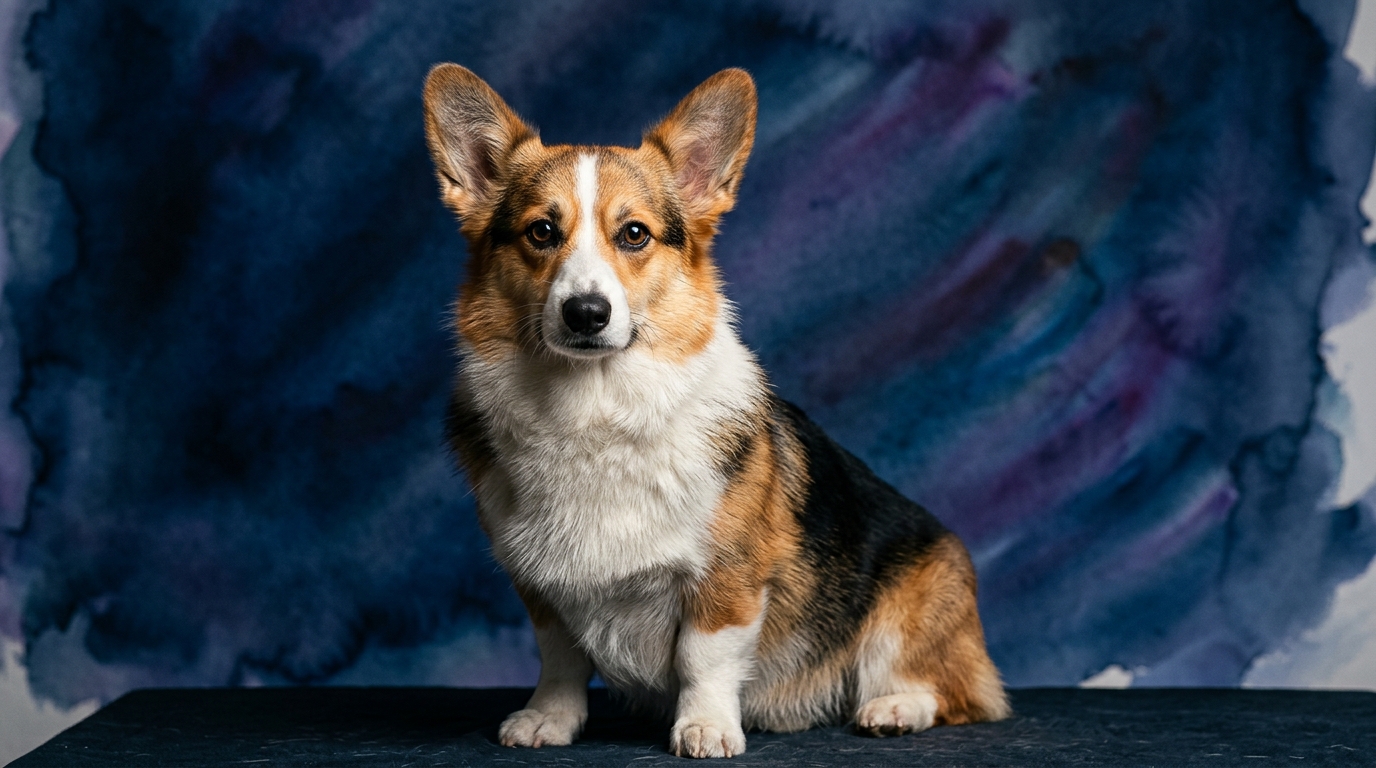
In contrast, the Pembroke Welsh Corgi, with a Coren rank #11, presents a cognitive profile shaped by its working heritage. Its Problem Solving is rated 4/5, indicating a strong capacity for practical, goal-oriented solutions, particularly when motivated by a desired outcome or navigating their environment, though perhaps less inclined towards abstract conceptualization than the Poodle. Their Training Speed matches the Poodle at 5/5, demonstrating their quick uptake of commands and responsiveness to clear, consistent instruction, often driven by their desire to work and earn rewards. Social Intelligence for the Corgi is 4/5; they are attentive to their family and can be perceptive, but their independent working spirit might occasionally lead them to prioritize their own 'agenda' or task over purely social cues. Where the Corgi truly excels is in Instinctive Drive, rated 5/5. This reflects their powerful herding impulse, an innate desire to gather, control movement, and manage their surroundings, often expressed through 'nipping' at heels or patrolling the home. Their Memory is 4/5, meaning they reliably recall routines, commands, and significant experiences, though very complex or infrequently used sequences might require more regular reinforcement than with a Poodle.
Where the Standard Poodle Wins Cognitively
The Standard Poodle's cognitive strengths shine particularly bright in areas demanding advanced conceptual understanding and nuanced social interaction. Their superior Problem Solving (5/5) allows them to excel in complex, multi-stage tasks that require abstract thought, such as learning intricate scent discrimination, mastering advanced obedience routines with multiple conditional cues, or even understanding propositional phrases. This aptitude extends to their remarkable adaptability; they can generalize learned behaviors to new situations with impressive efficiency, making them versatile candidates for diverse roles from therapy work to competitive dog sports. Furthermore, their perfect 5/5 Social Intelligence gives them an unparalleled ability to interpret human body language, tone of voice, and emotional states. This deep social awareness fosters a profound partnership, enabling them to anticipate owner needs and respond with remarkable empathy, making them particularly receptive to subtle handler cues and capable of forming exceptionally strong, communicative bonds.
Where the Pembroke Welsh Corgi Wins Cognitively
The Pembroke Welsh Corgi's cognitive victories are rooted in its robust Instinctive Drive (5/5) and its practical application of Problem Solving (4/5). Their powerful herding instinct isn't just about moving livestock; it translates into a tenacious, resourceful approach to daily life. Corgis demonstrate superior cognitive application when it comes to navigating their environment to achieve a goal, such as strategically positioning themselves to 'manage' household activities, finding clever ways to access a coveted toy, or persistently working to get their owner's attention. This drive imbues them with a focused determination that, when channeled, makes them incredibly effective at tasks requiring persistence and independent decision-making. Their cognitive strength lies in their ability to assess a situation through the lens of their working heritage, quickly identifying obstacles and implementing solutions that serve their innate purpose, often with a bold and unwavering spirit that belies their size.
Which Is Easier to Train and Why
When evaluating ease of training, both breeds boast a 5/5 Training Speed, meaning they learn new commands quickly. However, the underlying cognitive mechanisms and behavioral tendencies influence the overall training experience. The Standard Poodle often presents as 'easier' due to its perfect 5/5 Social Intelligence and Problem Solving. They are inherently keen to understand and cooperate, quickly grasping what is expected of them and generalizing rules across different contexts. Their eagerness to please and reduced likelihood of independent 'agenda-setting' means they are generally more compliant and receptive to a wide range of training methods, including positive reinforcement and clicker training, often requiring fewer repetitions and less redirection.
The Pembroke Welsh Corgi, while equally fast at learning commands, can pose a different kind of training challenge due to its powerful 5/5 Instinctive Drive. This drive, while a cognitive asset, can manifest as a strong-willed independence or a propensity to follow their herding instincts (e.g., nipping at heels, barking to 'gather' family members). Training a Corgi requires consistent, clear, and engaging methods that respect and channel their working spirit. They respond exceptionally well to reward-based training and thrive when given a 'job' or an outlet for their instincts, such as herding games or agility. While they learn quickly, owners must be prepared to manage their tenacity and provide appropriate mental and physical stimulation to prevent their inherent drives from becoming behavioral challenges.
Which Suits Active Owners vs. Relaxed Owners
The choice between a Standard Poodle and a Pembroke Welsh Corgi also hinges on an owner's lifestyle and their capacity to meet specific cognitive and physical needs. Standard Poodles, with their high Problem Solving and Social Intelligence, thrive with active owners who enjoy engaging in mentally stimulating activities like advanced obedience, agility, scent work, or even complex trick training. They require consistent mental exercise to prevent boredom and will flourish with an owner who views training as an ongoing partnership. While they can adapt to periods of relaxation, their cognitive needs are substantial, meaning a truly 'relaxed' owner who provides minimal mental engagement might find their Poodle becoming restless or developing undesirable behaviors. They are best suited for owners who are committed to ongoing learning and enrichment.
Pembroke Welsh Corgis, driven by their strong Instinctive Drive and practical Problem Solving, are best suited for owners who can provide consistent physical activity and mental challenges that satisfy their herding heritage. This means owners who enjoy daily walks, structured play, or even dabbling in dog sports like herding trials or rally obedience. While their short legs might suggest otherwise, Corgis are robust working dogs who need regular opportunities to expend energy and feel like they have a purpose. A truly 'relaxed' owner who cannot meet these needs might find a Corgi becoming bored, vocal, or resorting to their herding instincts on family members. They suit active owners who appreciate a dog with a strong personality and a desire to be involved in household 'management,' providing ample opportunities for both physical and mental engagement.
The Verdict
Choose a Standard Poodle if you seek a deeply communicative partner for advanced training, complex problem-solving, and a versatile companion who excels in diverse roles requiring cognitive flexibility and social attunement.
Opt for a Pembroke Welsh Corgi if you desire a tenacious, resourceful companion with a strong working spirit, thriving on purpose-driven activities and owners who can channel their innate herding drives into productive engagement.
🧠 Find Your Pet's IQ Score
Our Pet IQ Lab assessment covers 25+ tests across 5 cognitive dimensions — personalized to your breed.
Take the Full IQ Test →Frequently Asked Questions
Do Corgis bark a lot due to their intelligence?
Corgis can be quite vocal, and this often stems from their strong Instinctive Drive (5/5) and their role as herding dogs, where barking helps manage livestock. Their practical Problem Solving (4/5) means they effectively use barking to alert, communicate, or 'herd' family members, rather than it being a direct indicator of general intelligence level. With proper training and channeling of their drives, excessive barking can be managed.
Are Standard Poodles good for first-time dog owners?
Standard Poodles can be an excellent choice for first-time dog owners due to their exceptional Training Speed (5/5) and high Social Intelligence (5/5). They are eager to please, quick to learn, and highly responsive to human cues, making the training process smoother. However, their significant cognitive needs mean a first-time owner must be committed to providing consistent mental stimulation and engagement.
How does Coren rank #2 vs #11 translate to daily life for these breeds?
The Coren ranks are benchmarks for 'working and obedience intelligence,' reflecting how quickly a breed learns new commands. A Poodle's #2 rank suggests it will typically grasp new commands in fewer repetitions than a Corgi at #11. In daily life, this means a Poodle might pick up complex routines or adapt to new rules with less effort, while a Corgi, though still quick to learn (5/5 Training Speed), might require slightly more consistent reinforcement or motivation tailored to its strong instinctive drives for equally challenging tasks.