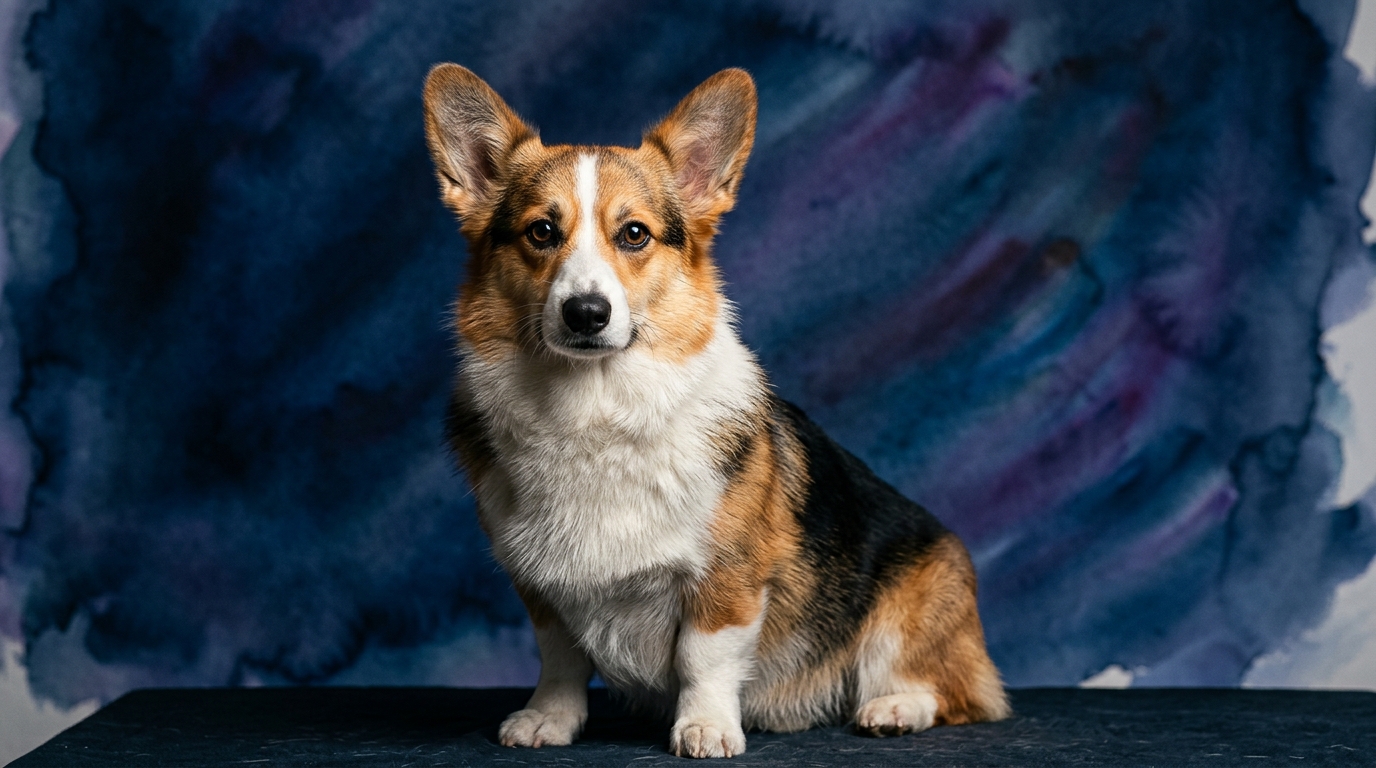
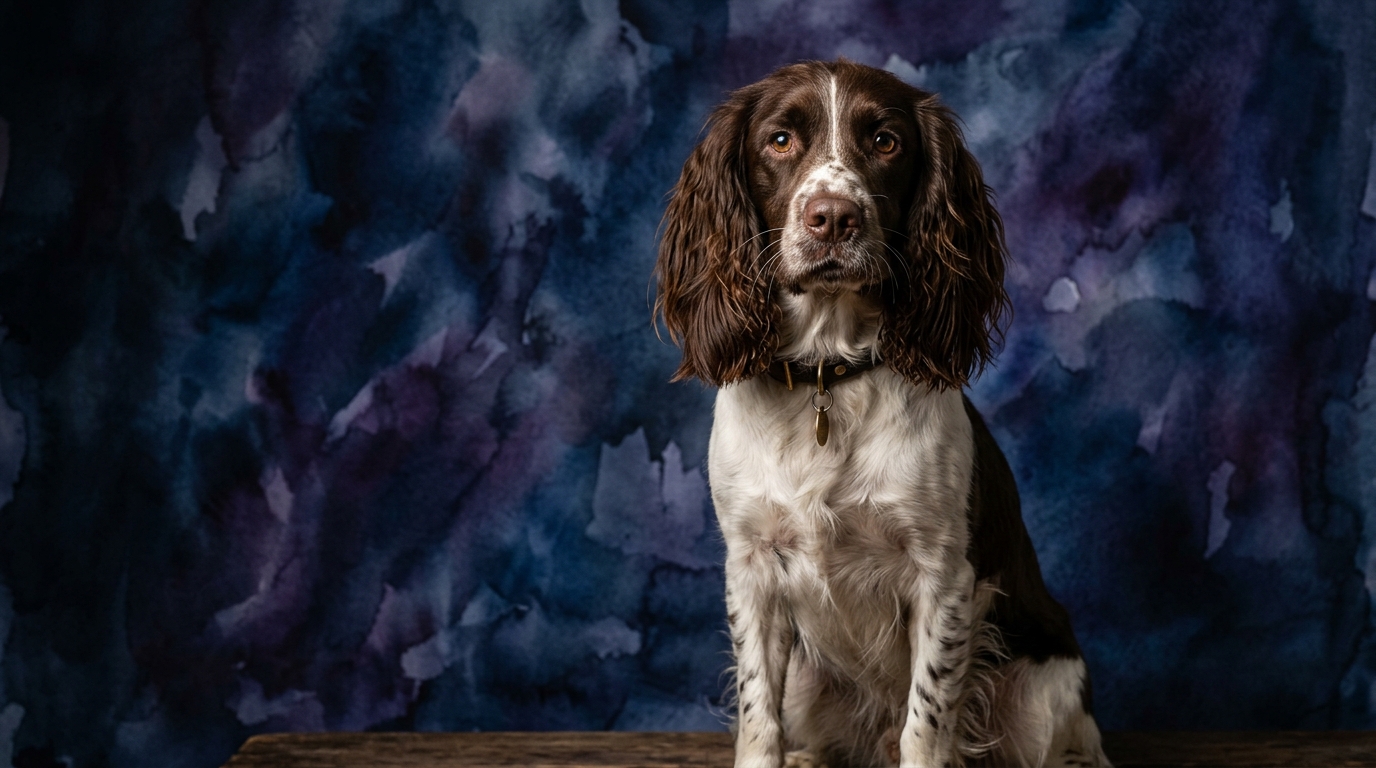
Side-by-Side IQ Profile: Herding Wit vs. Sporting Acuity
The Cosmic Pet Pet IQ Lab assesses canine intelligence across five key dimensions, and both the Pembroke Welsh Corgi (PWC) and the English Springer Spaniel (ESS) demonstrate significant cognitive prowess. The PWC, a Herding breed, holds a Coren rank of #11, while the ESS, a Sporting breed, ranks closely at #13.
For the Pembroke Welsh Corgi, Problem Solving registers at 4/5. This reflects their historical role in managing livestock, often nipping at heels to direct movement, requiring quick, on-the-spot decisions to control an unpredictable herd. Their Training Speed is an exceptional 5/5, a testament to their eagerness to learn and respond to handler cues for effective herding. Social Intelligence, at 4/5, indicates their ability to understand and react to human and animal social signals, crucial for cooperative work. An Instinctive Drive of 5/5 is directly tied to their strong herding impulses and persistent nature. Finally, Memory at 4/5 allows them to recall routines, commands, and the layout of their territory, essential for effective livestock management.
The English Springer Spaniel also scores highly across the board. Their Problem Solving is 4/5, demonstrated in their ability to navigate varied terrain, locate hidden game, and retrieve efficiently, often requiring creative solutions in complex environments. Training Speed is 5/5, mirroring the Corgi’s aptitude, reflecting their capacity to quickly grasp intricate commands vital for field work, such as 'stay,' 'fetch,' and 'heel' under distraction. Social Intelligence for the ESS is 4/5, underscoring their cooperative nature and strong bond with their human hunting partners. An Instinctive Drive of 5/5 is fueled by their powerful scenting abilities and innate desire to flush and retrieve game. Their Memory, also 4/5, is critical for remembering the location of fallen birds, navigating back to a handler, and recalling complex sequences of commands during a hunt.
Where the Pembroke Welsh Corgi Excels Cognitively
The Pembroke Welsh Corgi’s cognitive strengths often manifest in their capacity for strategic manipulation of their environment and companions, a direct echo of their herding ancestry. Their problem-solving, while rated similarly to the Springer, often involves more direct 'management' of situations. A Corgi might quickly figure out how to 'herd' family members into a specific room, or how to subtly demand attention by strategically placing themselves. Their 4/5 problem-solving frequently involves assessing social dynamics and using their presence to influence outcomes. For instance, they might quickly learn which family member is most susceptible to their charm for extra treats, or how to 'block' a path to initiate play.
Their instinctual drive, rated 5/5, translates into a persistent and focused approach to tasks they deem important, even if those tasks are simply 'collecting' all the toys in one pile. This focused determination, combined with their 5/5 training speed, means they can master complex obedience routines or trick training with remarkable swiftness, especially when the training taps into their desire for control and direction. They are particularly adept at understanding and responding to subtle body language cues, allowing them to anticipate human intentions and react proactively, a skill refined from anticipating livestock movements.
Where the English Springer Spaniel Excels Cognitively
The English Springer Spaniel's cognitive prowess truly shines in tasks requiring sustained focus, sensory discrimination, and collaborative effort. Their 4/5 problem-solving often involves intricate navigation and sensory integration. For example, an ESS can track a scent trail over varied terrain, mentally mapping out the path and ignoring distractions, a complex cognitive feat. This requires not just identifying a scent but understanding its directionality and age, then formulating a plan to follow it to its source. Their 5/5 instinctive drive is deeply rooted in their desire to work as a team with their human, making them exceptional at cooperative tasks where precision and sustained effort are key, such as advanced scent detection or complex agility courses.
Their 4/5 memory is particularly robust for spatial awareness and sequential commands. An ESS can remember the precise location where game fell, even after a long chase, and can execute a series of commands in a specific order, demonstrating strong working memory and recall. This makes them outstanding candidates for multi-stage tasks in dog sports like field trials or competitive obedience. Their social intelligence, also 4/5, is geared towards understanding and responding to a handler's subtle signals during active work, fostering a seamless partnership in dynamic environments.
Which Is Easier to Train and Why?
Both breeds achieve a perfect 5/5 in Training Speed, indicating they are quick to grasp new commands and concepts. However, the 'ease' of training can differ based on an owner's approach and the specific behaviors desired. Pembroke Welsh Corgis, with their herding instinct, often possess a strong desire to 'manage' their environment, which can sometimes manifest as stubbornness if they don't perceive the value in a command. They thrive on clear, consistent direction and enjoy tasks that give them a sense of purpose or control. Their quick learning means they can pick up bad habits just as fast as good ones, so consistency is paramount. They respond exceptionally well to positive reinforcement and mental challenges that engage their clever minds, making them excellent candidates for trick training or complex obedience routines.
English Springer Spaniels, while equally fast learners, bring a different dynamic to training. Their 5/5 instinctive drive is heavily oriented towards partnership and working collaboratively. They typically exhibit a strong 'will to please' their handler, making them highly responsive to guidance. This inherent desire to cooperate often translates into less resistance during training sessions compared to the Corgi’s occasional independent streak. Springers excel in activities that leverage their natural athleticism and scenting abilities, such as retrieving, agility, or scent work. Their high energy and enthusiasm mean training sessions should be engaging, varied, and incorporate plenty of physical activity to keep their minds and bodies stimulated and receptive to learning.
Active Owners vs. Relaxed Owners: Finding the Right Cognitive Match
Choosing between a Pembroke Welsh Corgi and an English Springer Spaniel largely depends on an owner's lifestyle and how they prefer to engage with a cognitively active dog. For owners seeking a companion that fits into a moderately active lifestyle with plenty of mental engagement, the Pembroke Welsh Corgi can be an excellent fit. While they enjoy walks and playtime, their exercise needs are generally less demanding than a Springer's. Their cognitive engagement thrives on puzzle toys, learning new tricks, and participating in dog sports like obedience or rally. They are adept at adapting to various living situations, provided their clever minds are consistently challenged and they receive sufficient interaction to prevent boredom, which can lead to inventive, but undesirable, behaviors.
Conversely, the English Springer Spaniel is unequivocally suited for highly active owners who embrace outdoor adventures and can commit to extensive physical and mental stimulation. Their 5/5 instinctive drive and high energy levels demand regular, vigorous exercise, such as long hikes, runs, or dedicated sessions of fetch. Cognitively, they thrive when given a 'job' to do, whether it's participating in agility, competitive obedience, field trials, or even just long scent walks. A relaxed owner who cannot meet these needs might find a Springer Spaniel exhibiting restless or destructive behaviors, as their formidable cognitive and physical capacities require consistent outlets.
The Verdict: When to Choose Each Breed
The Verdict
Choose the Pembroke Welsh Corgi if you appreciate a clever, sometimes assertive companion who thrives on mental puzzles and moderate physical activity, fitting well into a home where consistent training and intellectual engagement are prioritized over extensive outdoor adventures.
Opt for the English Springer Spaniel if you lead a highly active lifestyle, enjoy outdoor pursuits, and seek a cooperative, energetic partner who excels in sports, scent work, and requires substantial physical exertion alongside dedicated mental tasks.
🧠 Find Your Pet's IQ Score
Our Pet IQ Lab assessment covers 25+ tests across 5 cognitive dimensions — personalized to your breed.
Take the Full IQ Test →Frequently Asked Questions
Are Corgis good at problem-solving games?
Yes, Corgis excel at problem-solving games, scoring 4/5 in this dimension. Their herding background means they enjoy tasks that require them to strategize and manipulate objects or situations, making puzzle toys and interactive challenges highly engaging for them.
Do Springer Spaniels require a lot of mental stimulation?
Absolutely. With a 4/5 in problem-solving and a 5/5 in instinctive drive, English Springer Spaniels need significant mental stimulation to prevent boredom. Activities like scent work, agility, and complex training routines are crucial for their cognitive well-being.
Which breed adapts better to apartment living, considering their intelligence?
The Pembroke Welsh Corgi generally adapts better to apartment living due to their smaller size and more moderate exercise requirements. However, their 4/5 problem-solving and 5/5 instinctive drive mean they still require consistent mental challenges and engagement within that smaller space to prevent boredom-induced behaviors.