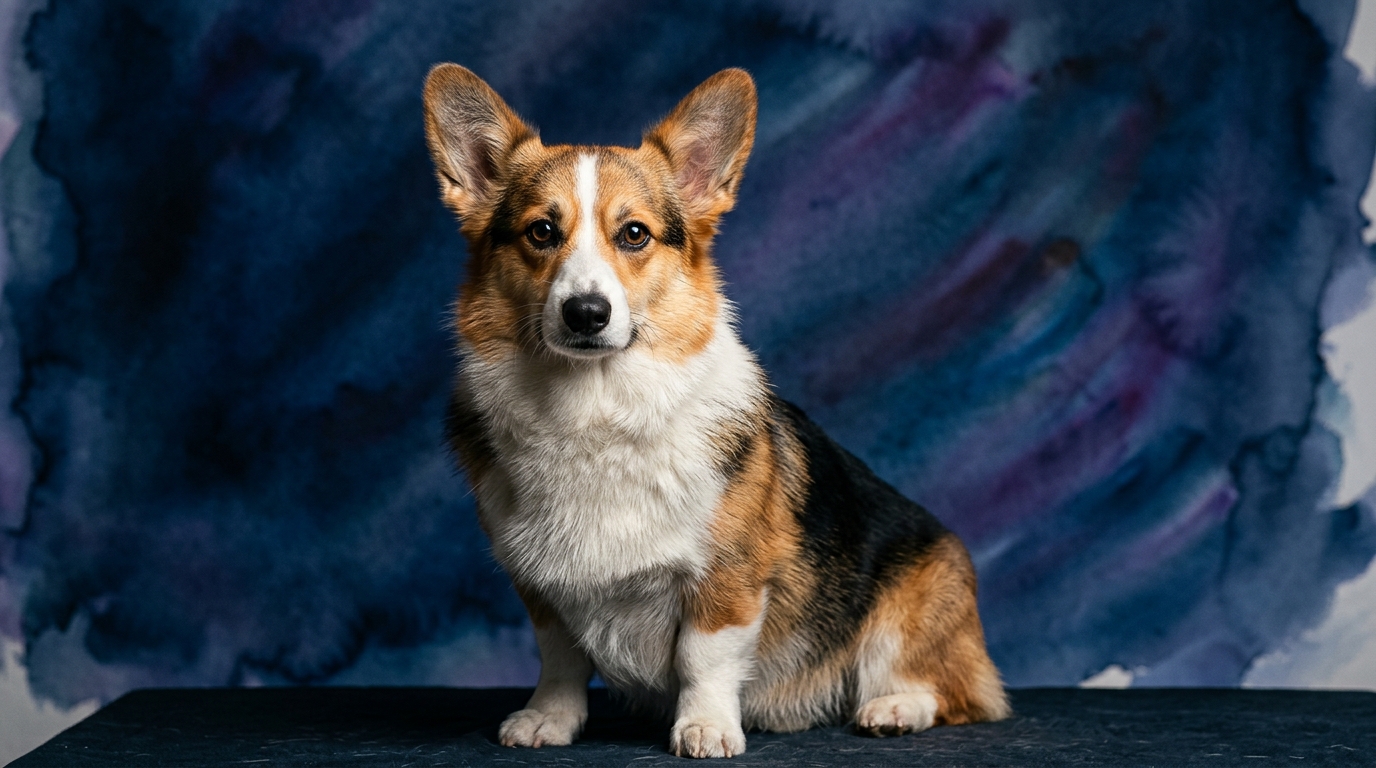

Side-by-Side IQ Profile: Corgi vs. English Toy Spaniel
The Pembroke Welsh Corgi, a breed with a Coren rank of #11, demonstrates a cognitive profile optimized for its demanding herding heritage. Our lab’s data shows its Problem Solving at 4/5, indicating an adeptness at navigating complex environments and figuring out solutions to obstacles. Their Training Speed is an impressive 5/5, reflecting a quick grasp of new commands and routines, often needing only a few repetitions to solidify a behavior. Social Intelligence stands at 4/5, signifying a strong capacity for interpreting human intentions and collaborating effectively. Instructive Drive is rated 5/5, revealing a profound urge to herd, chase, and control movement, a trait deeply ingrained from their working past. Finally, their Memory is 4/5, demonstrating strong recall for routes, commands, and learned sequences, beneficial for remembering complex herding patterns or household rules.
In contrast, the English Toy Spaniel, not listed in Coren’s rankings, exhibits a cognitive makeup tailored for companionship. Our metrics assign its Problem Solving at 3/5, suggesting capability for moderate challenges like finding hidden treats, but perhaps less inclination for intricate, multi-step puzzles. Training Speed is 3/5, meaning they learn at a steady pace, requiring consistent and patient repetition to master new commands. Their Social Intelligence is also 3/5, indicating a general aptitude for connecting with human companions and understanding basic cues, with a focus on intimate interaction. Instructive Drive is 3/5, showing a moderate drive for play and companionship, less focused on specific work-related instincts. Lastly, their Memory is 3/5, possessing adequate recall for routines, familiar faces, and basic commands, but potentially less retention for complex or infrequently reinforced lessons.
Where Pembroke Welsh Corgi Wins Cognitively
The Pembroke Welsh Corgi's herding background provides distinct cognitive advantages, particularly in areas demanding independent thought and rapid response. Their 4/5 Problem Solving score means they excel at assessing dynamic situations, like maneuvering livestock or navigating a new environment, a skill honed by generations of active work. This contrasts with the English Toy Spaniel’s 3/5, where the emphasis wasn't historically on overcoming complex environmental challenges.
Furthermore, the Corgi's 5/5 Training Speed is a significant cognitive win, allowing them to internalize new commands and complex sequences with remarkable efficiency. This quick learning curve, coupled with their 4/5 Memory, means they retain lessons effectively over time, making advanced obedience or trick training a more fluid process. Their 5/5 Instructive Drive fuels their engagement, providing an intrinsic motivation to participate in tasks, a trait less pronounced in the English Toy Spaniel.
The Corgi’s 4/5 Social Intelligence, while numerically similar to the English Toy Spaniel’s 3/5, manifests differently. For the Corgi, it's about collaborative intelligence – understanding human direction to achieve a shared goal, such as moving a flock. This makes them highly attuned to a handler's subtle cues in a working or training context, a crucial cognitive asset for a breed designed for partnership in demanding tasks.
Where English Toy Spaniel Wins Cognitively
While the English Toy Spaniel's scores may be numerically lower in our lab’s metrics, their cognitive profile offers distinct advantages for owners seeking a specific type of companion. Their moderate 3/5 Instructive Drive is a significant cognitive win for a tranquil home environment. Unlike breeds with intense working drives, they are less predisposed to exhibit high-energy behaviors that require constant redirection, translating to a naturally calmer presence and a reduced need for intense daily mental and physical outlets.
The English Toy Spaniel’s Social Intelligence, rated at 3/5, is specifically tuned for intimate companionship, making it a cognitive strength in its intended role. This means they are acutely responsive to subtle emotional cues within their immediate human family, fostering deep, personal bonds without the demand for collaborative tasks or assertive interaction. Their cognitive focus is on providing comfort and emotional support, integrating seamlessly into a companion role.
Additionally, their 3/5 Problem Solving and Memory scores, while not indicative of a working dog's aptitude, translate to a less demanding cognitive presence. They are less likely to 'outsmart' their owners by figuring out how to open doors or raid pantries, making them easier to manage for those who prefer a more straightforward and less challenging canine companion. This allows for a relaxed household dynamic where complex problem-solving isn't a daily necessity.
Which Is Easier to Train and Why
Based on our IQ metrics, the Pembroke Welsh Corgi, with its 5/5 Training Speed, is demonstrably easier to train compared to the English Toy Spaniel’s 3/5. Corgis were historically bred to take direction, learn quickly, and execute commands precisely in a dynamic herding environment. Their high instinctive drive (5/5) means they are intrinsically motivated by tasks and thrive on having a purpose, which makes them highly receptive to training and eager to engage in learning sessions.
Corgis typically pick up new commands in fewer repetitions and generalize learned behaviors faster across different situations. Their strong memory (4/5) ensures that once a lesson is learned, it is retained effectively, leading to more consistent performance. This cognitive predisposition for rapid learning and retention, combined with a desire to work alongside their handler, makes the Corgi a highly rewarding and efficient training partner.
The English Toy Spaniel, while capable of learning, requires more patience and consistent repetition due to its 3/5 Training Speed. Their lower instinctive drive means they might not be as intrinsically motivated by complex tasks or intense training sessions, often preferring comfort and affection over 'work.' Training for an English Toy Spaniel needs to be gentle, positive, and focused on building a bond, using high-value rewards to maintain their interest, rather than demanding precision or rapid assimilation of commands.
Which Suits Active Owners vs. Relaxed Owners
For owners with an active lifestyle and a desire for an engaging canine partner, the Pembroke Welsh Corgi is an excellent match. Their high instinctive drive (5/5) and problem-solving abilities (4/5) demand regular mental and physical engagement to prevent boredom and potential behavioral issues. They thrive on activities that challenge their intellect and utilize their inherent working drive, such as obedience training, agility, herding games, or extensive daily walks and hikes.
Corgi owners should be prepared to provide structured training, puzzle toys, and consistent activity to satisfy their breed's cognitive needs. They are a partner for those who enjoy having a dog involved in their daily adventures and are willing to dedicate time to channeling their keen intelligence and energy into productive outlets. A Corgi will happily accompany an owner on long walks or participate in canine sports, offering enthusiastic participation.
Conversely, the English Toy Spaniel is ideally suited for relaxed owners seeking a calm, affectionate companion. Their moderate instinctive drive (3/5) and problem-solving skills (3/5) mean they are content with a less intense activity regimen. Gentle walks, ample lap time, and indoor play sessions are typically sufficient to meet their exercise and mental stimulation needs. They are excellent for individuals or families who prefer a quiet home environment and prioritize companionship over rigorous activity, fitting seamlessly into a more sedentary lifestyle without demanding constant engagement or redirection.
The Verdict
Choose the Pembroke Welsh Corgi if you seek an engaging, quick-witted partner eager to learn and participate in varied activities, thriving with consistent mental stimulation and physical outlets in an active household.
Opt for the English Toy Spaniel if you desire a tranquil, affectionate companion content with a relaxed pace and minimal demands for intense mental engagement, making them ideal for quiet homes.
🧠 Find Your Pet's IQ Score
Our Pet IQ Lab assessment covers 25+ tests across 5 cognitive dimensions — personalized to your breed.
Take the Full IQ Test →Frequently Asked Questions
Do Corgis need a lot of mental stimulation?
Yes, Corgis, with their 4/5 problem-solving and 5/5 instinctive drive, require significant mental engagement to prevent boredom and destructive behaviors. Daily puzzle toys, training sessions, and interactive games are crucial for their well-being and cognitive fulfillment.
Are English Toy Spaniels difficult to train?
While their training speed is 3/5, English Toy Spaniels are not inherently difficult; they simply require more patience and consistency than some higher-drive breeds. Positive reinforcement, gentle guidance, and short, fun sessions work best to engage their moderate instinctive drive and ensure successful learning.
How do their social intelligence scores impact family life?
Corgis (4/5 social intelligence) are highly attuned to family dynamics and collaborative work, often trying to 'herd' family members or direct interactions. English Toy Spaniels (3/5 social intelligence) are more focused on intimate, personal bonding, providing comforting companionship without the same level of assertive interaction or need for collaborative tasks, prioritizing emotional connection.