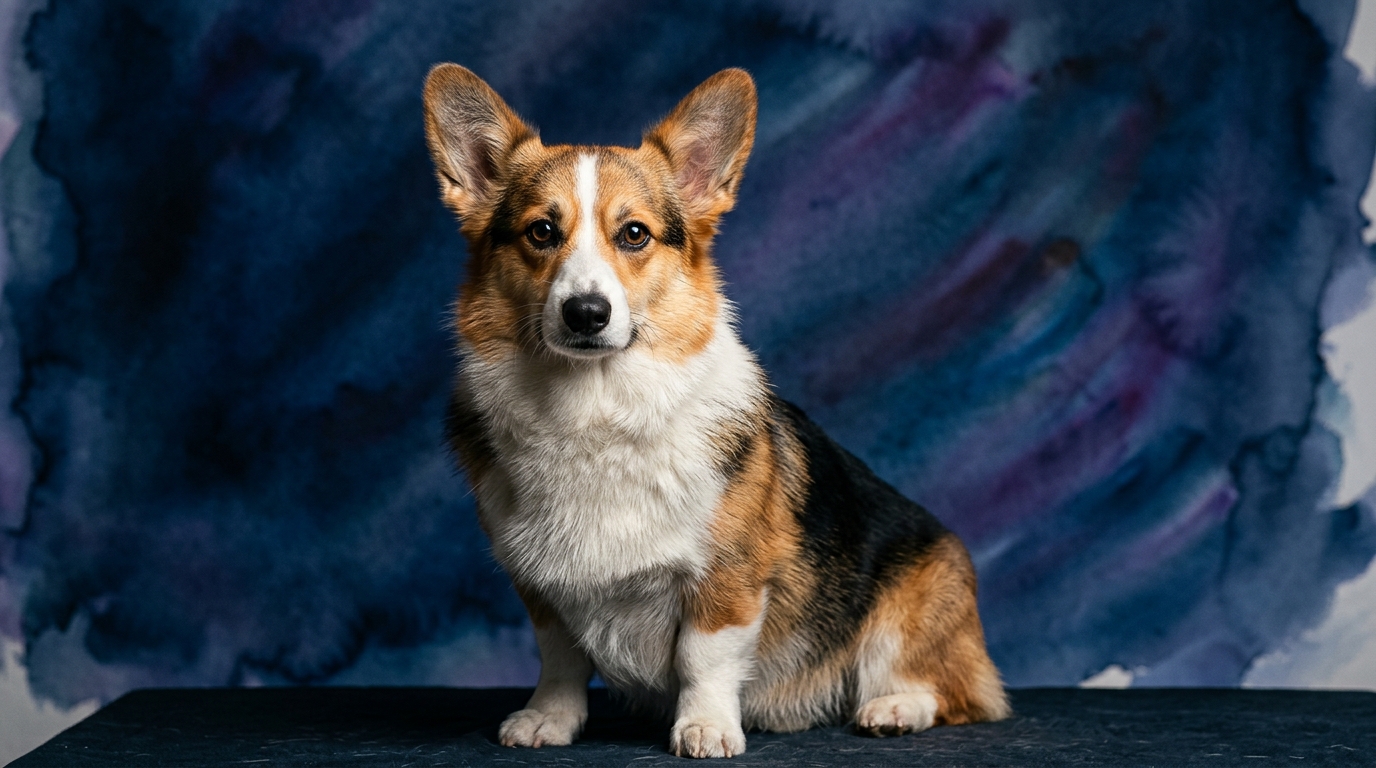
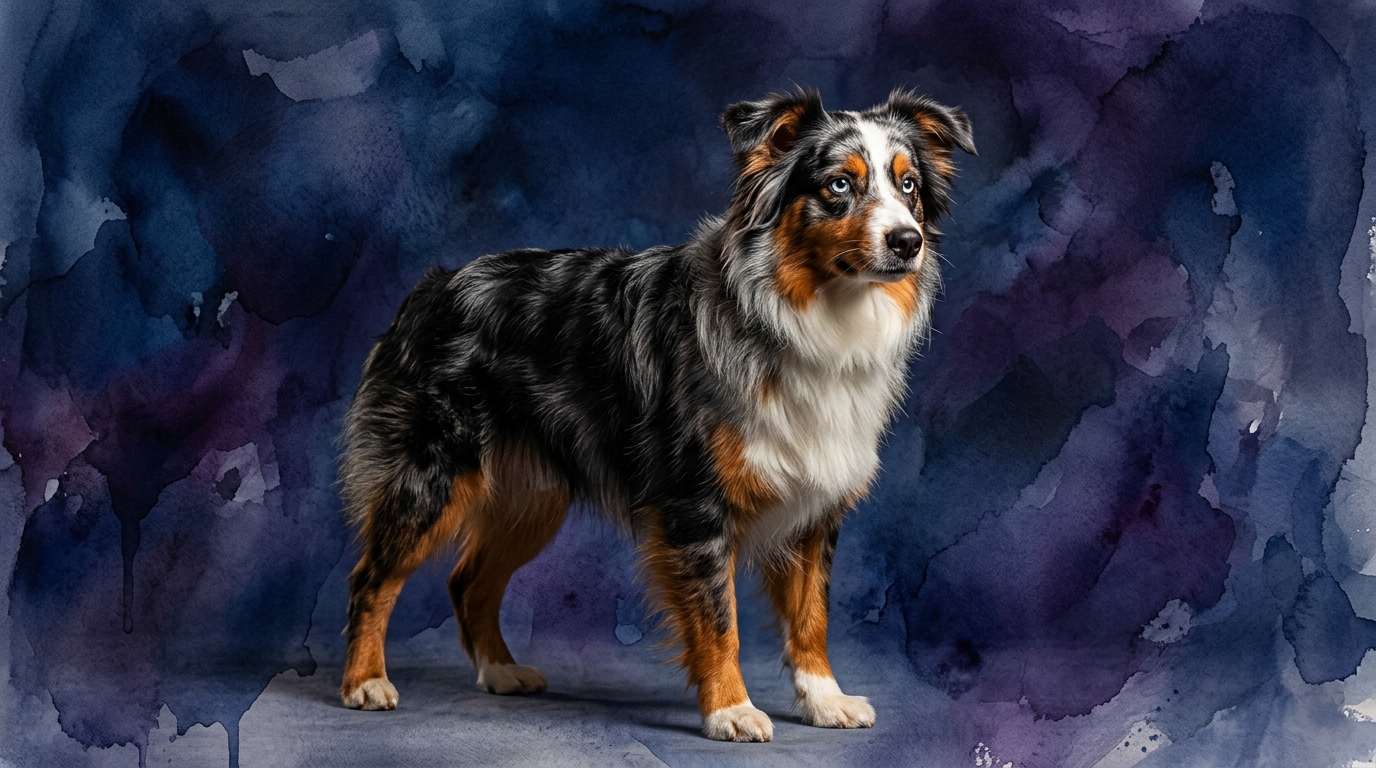
Side-by-Side Cognitive Profiles
The Cosmic Pet Pet IQ Lab provides a unique lens through which to examine the specific cognitive strengths of each breed across five key dimensions. This detailed breakdown moves beyond general observations, offering insights into how these dogs process information, learn, and interact.
The Pembroke Welsh Corgi, a breed with a Coren rank of #11, demonstrates a profile of sharp cognitive capabilities: Problem Solving (4/5), Training Speed (5/5), Social Intelligence (4/5), Instinctive Drive (5/5), and Memory (4/5). These scores paint a picture of a dog that is quick to learn, adept at navigating challenges, and deeply connected to its environment and human companions.
In contrast, the Miniature American Shepherd, while not Coren-ranked, presents a consistent and balanced cognitive profile: Problem Solving (3/5), Training Speed (3/5), Social Intelligence (3/5), Instinctive Drive (3/5), and Memory (3/5). These steady scores suggest a dog with reliable mental faculties, capable of performing tasks effectively without necessarily seeking constant novelty or exhibiting extreme intensity in any single cognitive area.
Where Pembroke Welsh Corgi Excels Cognitively
The Pembroke Welsh Corgi demonstrates a distinct cognitive edge in several areas, largely thanks to its top-tier training speed (5/5). This breed absorbs new commands and routines with remarkable efficiency, often requiring minimal repetition before a concept is cemented. Their problem-solving capacity (4/5) means they are adept at navigating complex environments or figuring out how to access desired objects, often employing a clever, trial-and-error approach that can surprise owners. This cognitive agility allows them to excel in advanced obedience, trick training, and even canine sports that demand quick thinking and adaptation.
Furthermore, their powerful instinctive drive (5/5) means they possess an innate understanding of movement and control, translating into a natural aptitude for tasks that involve managing space or directing others, even if it's just herding family members. Their social intelligence (4/5) also provides them with a nuanced understanding of human emotions and intentions, enabling them to form deep, responsive bonds and adjust their behavior to suit the social atmosphere. This combination of quick learning, effective problem-solving, and strong drive makes them highly responsive to consistent, engaging training.
Where Miniature American Shepherd Excels Cognitively
While the Miniature American Shepherd's cognitive profile scores moderately across the board (3/5), these steady aptitudes can translate into unique advantages for certain owners and lifestyles. Their consistent problem-solving ability, while not as pioneering as the Corgi's, means they approach challenges with a reliable, methodical demeanor, often preferring to master established solutions rather than constantly seeking novel ones. This can make them less prone to overthinking or becoming frustrated by repetitive tasks, fostering a dependable work ethic.
Their moderate instinctive drive (3/5) is particularly beneficial in a companion setting, as it means their herding instincts are present but generally more manageable and less overwhelming than in breeds with a stronger drive. This often results in a dog less likely to incessantly 'herd' children or other pets, requiring less rigorous instinct management. Similarly, their social intelligence (3/5) allows them to connect well with their human families without necessarily demanding the same level of complex social interaction or exhibiting the subtle manipulation that can sometimes accompany higher scores. They offer a straightforward, earnest companionship, valuing clear communication and consistent routines, which can be a calming influence in a busy household.
Training Dynamics: Which is Easier?
When considering ease of training, the Pembroke Welsh Corgi holds a clear advantage, primarily due to its exceptional training speed (5/5). Corgis typically pick up new commands and behaviors with remarkable quickness, making the initial stages of training highly rewarding. Their strong problem-solving skills (4/5) mean they can extrapolate from learned behaviors and adapt to new situations rapidly, often understanding the 'why' behind a command faster. However, their equally strong instinctive drive (5/5) means that while they learn quickly, owners must be diligent in channeling this drive appropriately, otherwise, it can manifest as persistent herding of feet or nipping.
For the Miniature American Shepherd, training proceeds at a more measured pace (3/5 training speed). They are certainly trainable and eager to please, but they typically require more repetitions and consistent reinforcement to solidify new commands. Their moderate instinctive drive (3/5) means that while they benefit from mental stimulation, their herding tendencies are generally less intense, potentially making them less prone to challenging instinct-driven behaviors in a typical home environment. The Corgi's quick wit makes training sessions often feel like a rapid-fire exchange, while the Mini American Shepherd thrives on a patient, steady approach, building skills incrementally.
Matching Canine Minds to Lifestyles
For active owners seeking a canine partner for diverse activities, the Pembroke Welsh Corgi's cognitive profile aligns well. Their high problem-solving capacity and training speed make them excellent candidates for agility, obedience trials, rally, and even scent work, where quick thinking and rapid learning are prized. Their strong instinctive drive, when channeled positively, translates into a tireless enthusiasm for engagement and tasks, demanding consistent mental and physical stimulation. They thrive on having a 'job' and can become restless or mischievous if under-stimulated, requiring an owner who can consistently provide novel challenges and structured activity.
Conversely, for owners who appreciate a more relaxed, yet still engaged, companion, the Miniature American Shepherd presents a compelling choice. While they certainly enjoy activity and benefit from regular exercise, their moderate instinctive drive and more measured cognitive pace mean they are often content with structured daily walks, play sessions, and moderate training. They tend to be less demanding of constant novelty and intense mental gymnastics, making them a good fit for families who can provide consistent interaction without needing to invent complex daily challenges. Their steady temperament, rooted in their balanced cognitive scores, makes them adaptable to varying energy levels within a household, offering companionship that is both present and not overwhelmingly intense.
The Verdict
Choose a Pembroke Welsh Corgi if you are an engaged owner seeking a quick-witted, highly trainable companion eager for mental challenges and capable of mastering complex tasks rapidly.
Choose a Miniature American Shepherd if you prefer a steady, amenable partner who learns reliably with patience and offers a balanced level of engagement without constant demand for intense cognitive novelty.
🧠 Find Your Pet's IQ Score
Our Pet IQ Lab assessment covers 25+ tests across 5 cognitive dimensions — personalized to your breed.
Take the Full IQ Test →Frequently Asked Questions
Are Pembroke Welsh Corgis prone to behavioral issues due to their intelligence?
Corgis' high problem-solving and instinctive drive mean they require consistent mental stimulation and appropriate outlets for their herding tendencies. Without these, they can become bored and develop undesirable behaviors like excessive barking or nipping, not due to 'bad' intelligence, but due to unfulfilled cognitive needs.
How do Miniature American Shepherds generally interact with children or other pets?
Miniature American Shepherds, with their moderate social intelligence and instinctive drive, tend to be gentle and adaptable with children and other pets, especially with proper socialization. Their less intense herding instinct often means they are less likely to 'manage' or nip at family members compared to breeds with higher drives, making them generally good family companions.
Do Miniature American Shepherds need extensive mental exercise despite their moderate IQ scores?
While Miniature American Shepherds may not demand the same level of intense, novel cognitive challenges as a Corgi, they still benefit significantly from regular mental stimulation. Consistent training, puzzle toys, and engaging play sessions are crucial to keep their minds active and prevent boredom, ensuring a well-adjusted companion.