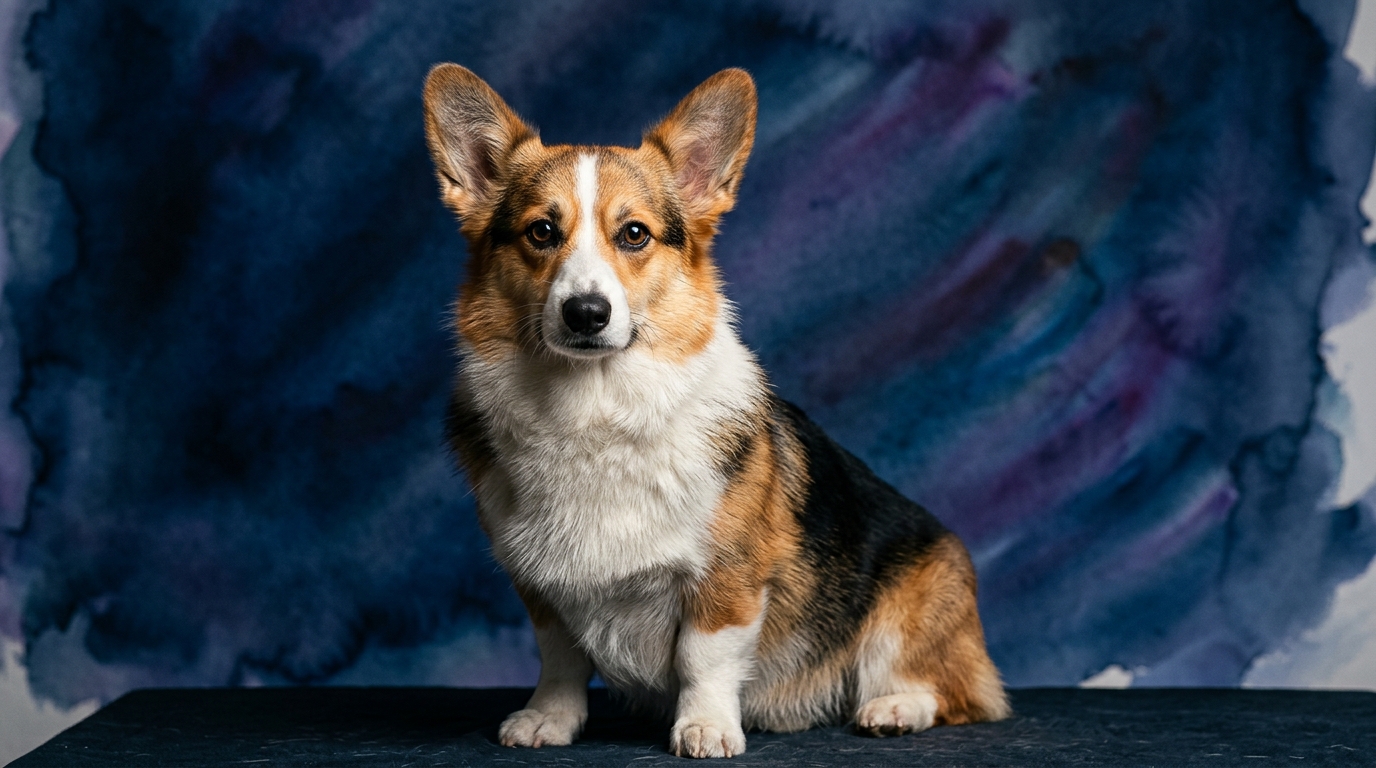

Side-by-Side IQ Profile: Corgi vs. Coonhound
The Cosmic Pet Pet IQ Lab assesses canine intelligence across five key dimensions, providing a nuanced view beyond simple obedience. For the Pembroke Welsh Corgi, a breed Coren-ranked #11, these scores reflect a heritage of cooperative herding and quick thinking.
Pembroke Welsh Corgi IQ Breakdown:
Problem Solving (4/5): These small herders demonstrate a keen ability to navigate complex environments and devise solutions, such as figuring out how to get to a desired object or bypass an obstacle. Their herding background honed a quick wit for outmaneuvering livestock.
Training Speed (5/5): Corgis absorb new commands and routines with remarkable rapidity, often requiring fewer repetitions than many other breeds. Their eagerness to engage with their human counterparts and their food motivation contribute to this swift learning curve.
Social Intelligence (4/5): Highly attuned to human emotions and social dynamics, Pembroke Welsh Corgis excel at reading cues and adjusting their behavior accordingly. They form deep bonds and often seek to be involved in family activities, though their herding instincts can sometimes manifest as bossy interactions.
Instinctive Drive (5/5): The Corgi's powerful herding instinct is its defining cognitive trait, driving behaviors like nipping at heels, rounding up family members or pets, and maintaining vigilance over their territory. This deep-seated drive requires consistent mental and physical outlets.
Memory (4/5): They possess a robust memory for commands, learned behaviors, and routines, allowing them to retain training over long periods and recall specific people or places with ease. This strong recall supports their high trainability.
The Redbone Coonhound, a breed not Coren-ranked, presents a different cognitive landscape, shaped by centuries of independent scent work and endurance.
Redbone Coonhound IQ Breakdown:
Problem Solving (3/5): Redbone Coonhounds approach problem-solving with a focus on their primary drive: scent. While adept at tracking and navigating complex terrains based on odor, they may show less inclination or aptitude for abstract puzzles or human-centric problem-solving tasks.
Training Speed (3/5): Learning for a Redbone Coonhound can be a more deliberate process. They are capable of learning commands, but their attention is frequently drawn by environmental scents, requiring significant patience, repetition, and high-value rewards to maintain focus during training sessions.
Social Intelligence (3/5): Redbones are generally amiable and form strong bonds with their families, but their social intelligence is often secondary to their sensory world. They might not be as finely tuned to subtle human social cues as some other breeds, often prioritizing an interesting scent over direct human interaction.
Instinctive Drive (3/5): The Redbone Coonhound's instinctive drive is overwhelmingly centered on scent work. Their powerful noses compel them to trail, bay, and pursue, often to the exclusion of other stimuli. This drive is a fundamental aspect of their cognitive makeup and needs appropriate channeling.
Memory (3/5): Their memory is particularly strong for scent trails and familiar hunting grounds. For commands and learned behaviors, consistent reinforcement is key, as their powerful olfactory distractions can sometimes overshadow recall of less intrinsically motivating tasks.
Where Pembroke Welsh Corgi Wins Cognitively
The Pembroke Welsh Corgi's cognitive strengths lie firmly in areas demanding quick analytical thinking and responsiveness to human direction. Their 4/5 problem-solving score reflects an ability to quickly assess and adapt to novel situations, often devising clever ways to achieve goals, be it navigating an agility course or outsmarting a food puzzle. This is complemented by their 5/5 training speed, indicating an exceptional capacity for absorbing and retaining commands, making them highly receptive to complex training sequences and new tricks. Their higher social intelligence (4/5) means they are generally more attuned to human moods and intentions, fostering a cooperative learning environment. Furthermore, their superior memory (4/5) ensures that once a behavior is learned, it is likely to stick, contributing to their consistent performance in various tasks.
Where Redbone Coonhound Wins Cognitively
While the Redbone Coonhound's overall IQ scores are lower in human-centric metrics, their cognitive prowess shines brilliantly within their specialized domain: scent work and endurance. Their instinctive drive, though rated 3/5 in a general context, represents an unparalleled dedication to trailing and hunting, a complex cognitive task involving intricate scent discrimination, spatial reasoning over vast distances, and sustained focus under challenging conditions. This isn't about solving a puzzle box, but rather solving the 'puzzle' of a faint, winding scent trail over miles of varied terrain. Their memory, also rated 3/5, is exceptionally strong for environmental cues related to scent, allowing them to recall specific trails or hunting patterns with remarkable accuracy, a feat that often goes unrecognized in standard intelligence tests. Their persistence and unwavering focus once on a scent are cognitive strengths that few breeds can match.
Which is Easier to Train and Why
Between these two breeds, the Pembroke Welsh Corgi is undeniably easier to train, primarily due to its higher scores in training speed (5/5), problem-solving (4/5), and social intelligence (4/5). Corgis possess a strong desire to please their owners and are highly motivated by praise and treats, making them quick learners who eagerly engage in training sessions. Their herding background instilled a readiness to respond to commands and work in cooperation with a handler. They grasp new concepts rapidly and retain them effectively, allowing for the progression to more advanced commands and activities without excessive repetition.
In contrast, the Redbone Coonhound, with its 3/5 ratings across the board for problem-solving, training speed, and social intelligence, presents a greater training challenge. Their powerful scent drive is often a significant distraction, pulling their focus away from the handler and towards environmental odors. This requires a trainer to be exceptionally patient, consistent, and creative in making training more engaging than the allure of a fresh trail. While they can learn, their independent nature and single-minded focus on scent mean they often require more repetitions and a highly stimulating reward system to solidify commands, especially in distracting environments. For instance, teaching a reliable recall to a Corgi is typically a much smoother process than teaching it to a Redbone Coonhound who has picked up an interesting scent.
Active Owners vs. Relaxed Owners: A Cognitive Match
For active owners seeking a highly engaged and trainable companion, the Pembroke Welsh Corgi often proves an excellent match. Their high instinctive drive (5/5) and problem-solving skills (4/5) mean they thrive on structured activities like agility, obedience, and herding trials. They require consistent mental stimulation and physical activity to prevent boredom-induced behaviors. Owners who enjoy teaching tricks, participating in dog sports, or simply having a dog that is always ready for a new challenge will appreciate the Corgi's zest for engagement.
Conversely, while Redbone Coonhounds are incredibly active outdoors, their activity profile is specific. They are best suited for owners with an 'active hunter' or 'active explorer' mindset rather than a 'structured athlete' mindset. Their 3/5 instinctive drive is profoundly tied to tracking, making them ideal for individuals who enjoy long hikes, scent work, or even hunting. A relaxed owner who prefers quiet evenings might find a Redbone challenging, as their need for extensive outdoor exploration and scent-driven activity is non-negotiable for their well-being. They are not typically suited for a sedentary lifestyle, even if they appear calm indoors; their mental and physical needs are met through exploring the world with their nose.
The Verdict
Choose the Pembroke Welsh Corgi if you seek a highly trainable, socially astute companion eager for structured learning, dog sports, and a strong partnership in daily life. They thrive with owners who provide consistent mental challenges and appreciate a dog that is deeply involved in family dynamics.
Opt for the Redbone Coonhound if you are an owner who embraces the outdoors, is patient with training, and can provide ample opportunities for scent work, long explorations, and the fulfillment of their natural trailing instincts. They are loyal companions for those who understand their independent, scent-driven nature.
🧠 Find Your Pet's IQ Score
Our Pet IQ Lab assessment covers 25+ tests across 5 cognitive dimensions — personalized to your breed.
Take the Full IQ Test →Frequently Asked Questions
Are Redbone Coonhounds difficult to train because of their scent drive?
Redbone Coonhounds can be more challenging to train due to their powerful, often overwhelming, scent drive. They require significant patience, consistency, and high-value rewards to keep their focus on the handler rather than environmental odors, especially in new or stimulating environments.
Do Pembroke Welsh Corgis bark a lot due to their herding instincts?
Yes, Pembroke Welsh Corgis often exhibit alert barking as a manifestation of their strong herding and territorial instincts. They are prone to vocalizing to warn their 'flock' (family) of perceived intruders or unusual occurrences, which can be managed with consistent training.
Which breed is better for a first-time dog owner?
The Pembroke Welsh Corgi, with its higher training speed and social intelligence, is generally a more suitable choice for a first-time dog owner willing to commit to consistent training and mental stimulation. The Redbone Coonhound's specialized needs and independent nature often require more experienced handling.