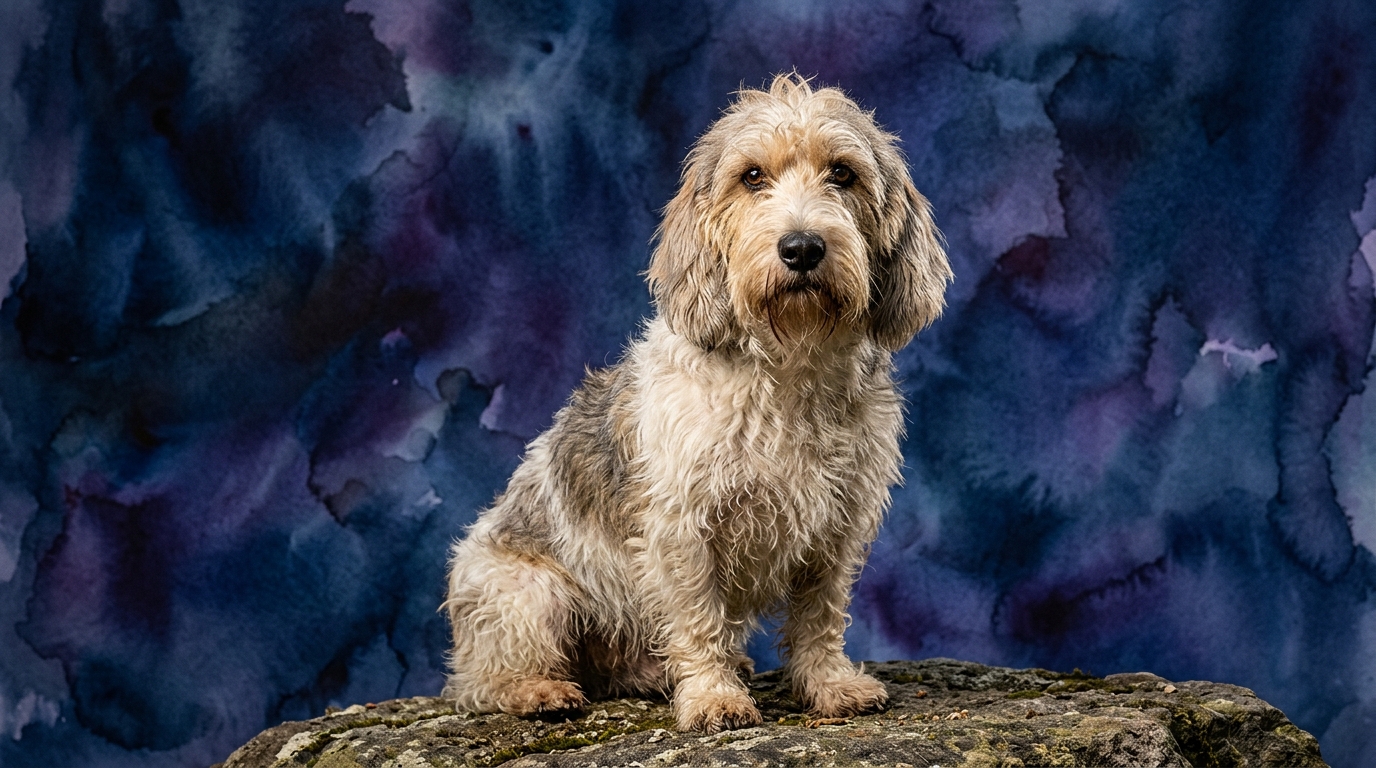

Side-by-Side IQ Profile: Hound vs. Toy Cognition
For the Petit Basset Griffon Vendéen (PBGV), a problem-solving score of 3/5 manifests as a persistent, independent approach to overcoming obstacles in pursuit of a scent. They excel at navigating varied terrain, figuring out how to bypass fallen logs or dense brush to stay on a trail, relying on their nose to guide their strategy rather than human input. Their training speed (3/5) indicates consistent learning but requires engaging methods that cater to their hound instincts; repetitive drills without a clear 'why' from their perspective might be met with cheerful indifference, but tasks linked to scent work or exploration can accelerate learning. Social intelligence (3/5) is often directed towards their 'pack,' which historically included other hounds and their human companions, allowing them to understand social hierarchies and group dynamics, though they might prioritize an interesting smell over subtle human emotional cues in a distracting environment. The PBGV's instinctive drive (3/5) is heavily weighted towards scent trailing and hunting, making their drive to follow a compelling odor powerful and often overriding other motivations, fueling their curiosity and exploration. Their memory (3/5) is robust for tracking routes, recognizing familiar scents, and recalling where interesting things were found, particularly those associated with their hunting instincts.
Conversely, for the English Toy Spaniel (ETS), a problem-solving score of 3/5 often involves navigating the complexities of human interaction to achieve comfort or attention. They might figure out how to manipulate a blanket for the perfect nest, or how to subtly nudge a hand for a pet, using their charm and observation to get their needs met within a domestic setting. Their training speed (3/5) means they learn at a steady pace, often motivated by positive reinforcement and the desire to please their primary human; they are sensitive to tone and body language, which can aid in their learning process. The ETS's social intelligence (3/5) is acutely tuned to their human companions, making them adept at reading subtle shifts in mood, anticipating routines, and providing comfort or seeking interaction based on their interpretation of human cues, with their world revolving around their people. Their instinctive drive (3/5) is predominantly centered on companionship and comfort, with a strong instinct to be close to their human, to seek warmth and security, and to engage in gentle interaction. An ETS's memory (3/5) is exceptional for routines, the location of favored comfort spots, and the specific habits and preferences of their human family members, making them masters of their domestic environment.
Where the Petit Basset Griffon Vendéen Wins Cognitively
The Petit Basset Griffon Vendéen truly shines in cognitive tasks demanding independent thought and perseverance in sensory exploration. Their hound heritage bestows upon them an unparalleled ability to process and prioritize olfactory information, allowing them to follow complex scent trails with unwavering focus. This isn't just about 'smelling things'; it's about constructing a mental map of an environment based purely on scent, discerning individual tracks within a tapestry of odors, and using this information to navigate and achieve a specific goal, often without direct human guidance.
Their problem-solving in this domain involves strategic decision-making in the field, such as choosing the most likely path a quarry would take or bypassing obstacles while maintaining the trail. This specialized cognitive strength makes them adept at activities like tracking, barn hunt, or simply exploring a new environment with purpose, demonstrating a unique form of applied intelligence rooted deeply in their instincts.
Where the English Toy Spaniel Wins Cognitively
Conversely, the English Toy Spaniel demonstrates a distinct cognitive advantage in the realm of social and emotional intelligence, particularly within the human-canine bond. While a PBGV interprets the world through its nose, an ETS processes it through the lens of human interaction, showing a profound capacity for emotional resonance and anticipation. They excel at reading micro-expressions, subtle shifts in posture, and vocal inflections, allowing them to predict human moods and desires with remarkable accuracy.
This translates into a nuanced problem-solving ability focused on domestic harmony: knowing when to offer a comforting presence, when to invite play, or how to subtly signal their own needs. Their memory for routines and personal preferences isn't just rote learning; it's a sophisticated understanding of the rhythm of their human family, enabling them to integrate seamlessly and become truly intuitive companions. This specialized social cognition allows them to excel in roles requiring close companionship and emotional support, showcasing a different, yet equally valuable, form of intelligence.
Which is Easier to Train and Why?
Given both breeds score 3/5 in training speed, neither is inherently 'easier' in a universal sense, but their trainability differs significantly based on motivational drivers and the owner's approach. The Petit Basset Griffon Vendéen, with its strong instinctive drive for scent, requires training methods that tap into its natural curiosity and desire to explore. They learn quickly when tasks are framed as a 'hunt' or a 'discovery,' but can be easily distracted by compelling outdoor scents, requiring an owner with patience and a consistent, engaging strategy. Their independence means they might question a command if they don't see the immediate relevance, demanding an owner who understands how to make training a partnership.
The English Toy Spaniel, on the other hand, often appears more 'eager to please,' making them seem more straightforward to train in a typical home environment. Their high social intelligence and desire for companionship mean they are highly responsive to human praise and positive reinforcement. However, their sensitivity means harsh corrections are counterproductive, and their charm can sometimes lead to them 'training' their owners if boundaries aren't clear. While less prone to external distractions like a scent trail, they can be distracted by their own desire for attention or comfort. Ultimately, the 'easier' breed depends on the owner's willingness to adapt their training style: one caters to an independent explorer, the other to a sensitive, human-focused companion.
Active Owners vs. Relaxed Owners: Cognitive Fit
When considering lifestyle compatibility, the cognitive profiles of these two breeds paint distinct pictures for prospective owners. The Petit Basset Griffon Vendéen, fueled by its robust instinctive drive and problem-solving geared towards exploration, thrives with active individuals or families who embrace outdoor adventures. They require regular, vigorous exercise that engages both their bodies and their keen noses, such as long hikes, off-leash exploration in secure areas, or participation in scent work and tracking sports. An owner who understands and caters to their need for purposeful activity will find a happy, fulfilled PBGV, preventing boredom-driven behaviors.
In stark contrast, the English Toy Spaniel is the quintessential companion for more relaxed, home-centric lifestyles. Their cognitive strengths lie in social interaction and comfort, making them perfectly content with shorter, leisurely walks and ample indoor cuddle time. They flourish in environments where they can be close to their human companions, observing and participating in the daily rhythms of the home. While they enjoy gentle play, their exercise needs are modest, making them an ideal fit for individuals or families seeking a devoted lap dog who finds intellectual stimulation in the nuances of human companionship rather than strenuous outdoor pursuits.
The Verdict
Choose the Petit Basset Griffon Vendéen if you're an active individual or family seeking an independent, curious companion who will eagerly join you on outdoor adventures and thrives when given opportunities to explore with its nose and mind. They are best suited for homes that appreciate a dog with a strong, purposeful drive and are prepared to engage them in stimulating activities beyond basic walks.
Opt for the English Toy Spaniel if you desire a devoted, sensitive companion whose world revolves around human interaction and domestic comfort, thriving on close companionship and a calmer, more predictable home environment. They are an excellent choice for those seeking a charming lap dog who offers profound emotional connection and finds their greatest joy in being an integral, cherished part of the family.
🧠 Find Your Pet's IQ Score
Our Pet IQ Lab assessment covers 25+ tests across 5 cognitive dimensions — personalized to your breed.
Take the Full IQ Test →Frequently Asked Questions
Do Petit Basset Griffon Vendéens get along with other pets?
Yes, PBGVs generally have good social intelligence and can coexist peacefully with other dogs, especially if raised together or properly introduced. Their pack mentality often makes them amenable to living with canine companions, though their strong prey drive means careful introductions are necessary with smaller, non-canine pets.
Are English Toy Spaniels good with children?
English Toy Spaniels can be wonderful with older, considerate children who understand how to interact gently with a small, sensitive dog. Their social intelligence allows them to form strong bonds, but their delicate size and preference for calm environments mean they might not thrive in boisterous households with very young children.
How much grooming does a Petit Basset Griffon Vendéen require?
The PBGV's shaggy, rough coat requires regular grooming, including weekly brushing to prevent matting and occasional hand-stripping to maintain its texture and health. Their ears also need frequent cleaning to prevent infections due to their floppy nature, making consistent grooming a necessary part of their care routine.