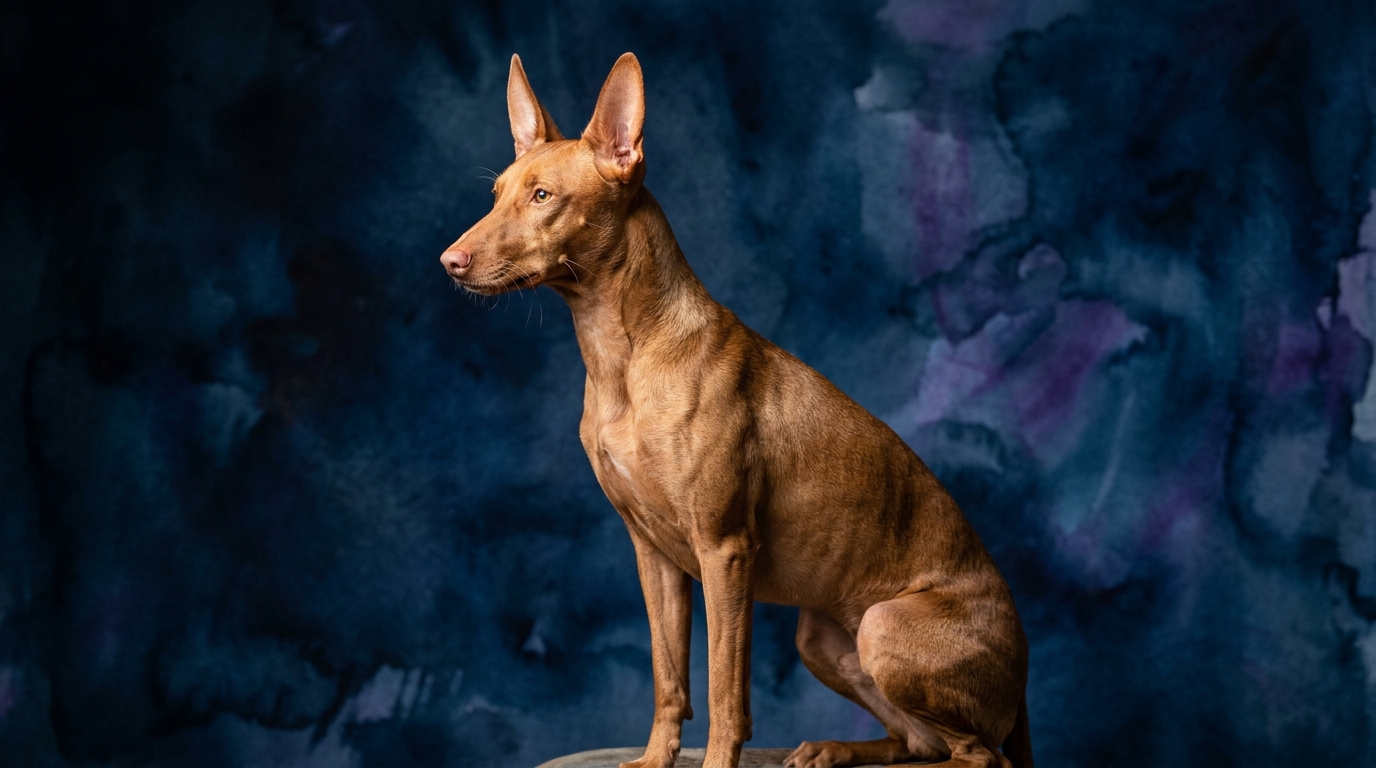
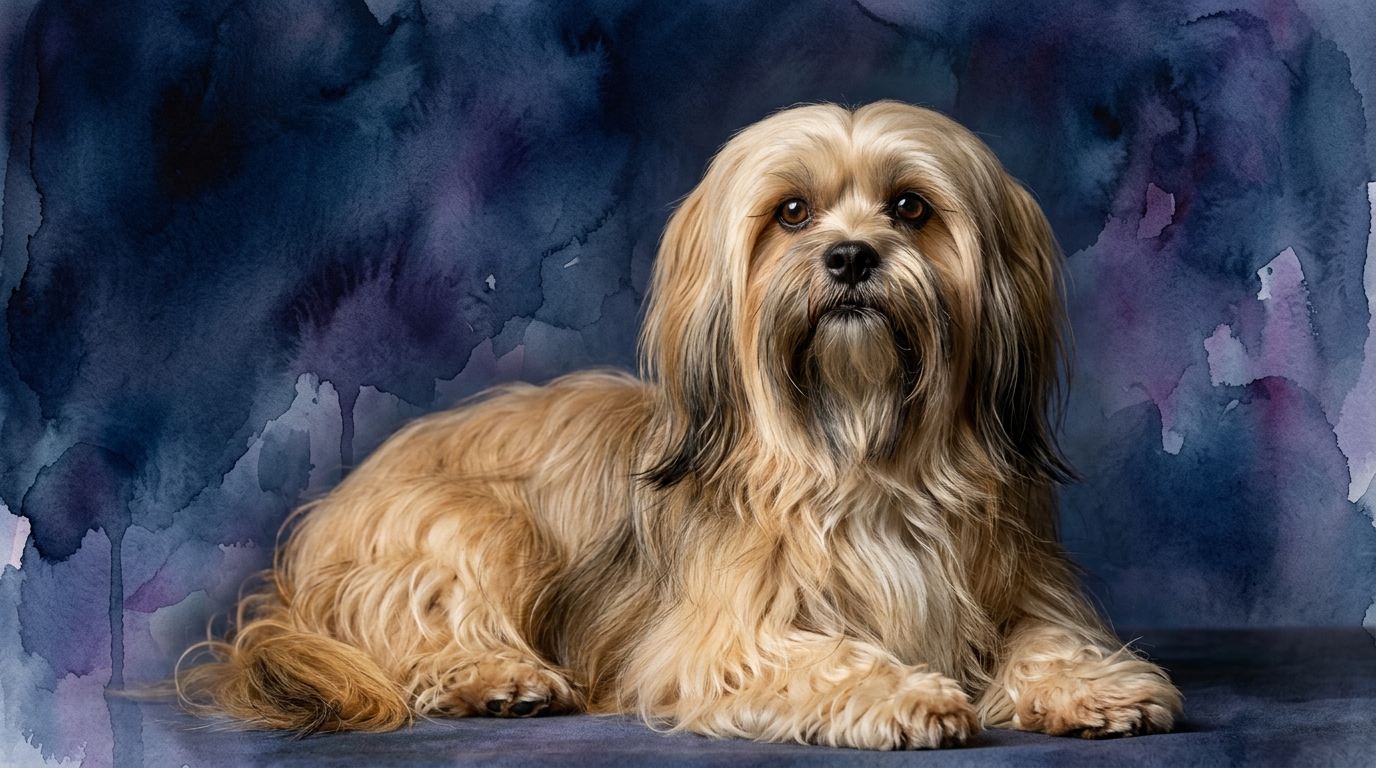
Side-by-side IQ profile
The Cosmic Pet Pet IQ Lab evaluates canine intelligence across five critical dimensions, each scored on a scale of 1 to 5. While both the Pharaoh Hound and the Lhasa Apso register a consistent 3/5 across the board, the application and expression of this capacity are profoundly influenced by their distinct breed natures.
**Problem Solving (3/5):** For the Pharaoh Hound, a 3/5 in problem-solving often translates to resourceful independence, particularly when navigating environments or pursuing stimuli. This breed might devise creative solutions to overcome physical barriers or outmaneuver perceived “prey,” often demonstrating an intuitive, trial-and-error approach honed by centuries of hunting. Their problem-solving tends to be externally focused and driven by instinct. In contrast, the Lhasa Apso's 3/5 problem-solving capacity frequently manifests as cleverness within a domestic context. They might figure out how to gain access to desired items, manipulate routines for their benefit, or persistently work towards a goal like securing a comfortable spot or attracting owner attention. Their solutions are often rooted in observation of human behavior and a desire for comfort or control.
**Training Speed (3/5):** A 3/5 in training speed indicates a moderate capacity for learning new commands and routines. For the Pharaoh Hound, this speed can be influenced by their independent nature and strong instinctive drives. They are capable of learning, but their focus might be easily diverted by environmental stimuli, meaning trainers need patience and engaging methods to maintain their attention. Repetition and reward-based training are effective, but progress may not be linear. The Lhasa Apso also scores 3/5, suggesting they can learn at a reasonable pace. However, their training speed is often tempered by a willful streak and a discerning attitude. They may choose to comply based on their assessment of the command's value or their bond with the trainer, rather than automatic obedience. Consistency and positive reinforcement are vital to overcome their inherent independence.
**Social Intelligence (3/5):** A 3/5 in social intelligence suggests an average ability to understand and respond to social cues from humans and other animals. The Pharaoh Hound typically exhibits a more reserved social intelligence; they form deep bonds with their family but can be aloof with strangers. Their understanding of social dynamics often revolves around pack hierarchy within their immediate family and an awareness of potential threats or opportunities in their environment. They read intentions, but their responses are often measured and cautious, not overtly effusive. The Lhasa Apso's 3/5 social intelligence is often expressed through their nuanced understanding of household dynamics and their role as a watchful companion. They are adept at discerning moods and routines, using this information to navigate their social world. While loyal to their inner circle, they are famously discerning with outsiders, often displaying a keen ability to differentiate between welcomed guests and perceived intruders, reflecting their ancient guardian heritage.
**Instinctive Drive (3/5):** A 3/5 in instinctive drive points to a notable, but not overwhelming, presence of breed-specific natural behaviors. For the Pharaoh Hound, this score predominantly reflects their powerful sighthound instincts. Their drive to chase, observe movement, and explore with their nose is a significant part of their being, influencing their play, exercise needs, and environmental interactions. This drive is a core aspect of their identity and must be managed constructively. The Lhasa Apso's 3/5 instinctive drive leans heavily into their historical role as a sentinel. Their drive to alert, observe, and protect their territory and family is pronounced. This manifests as vigilance, territorial barking, and a strong sense of ownership over their space and people. While not a hunting drive, it is a potent force shaping their behavior and interactions.
**Memory (3/5):** A 3/5 in memory indicates a solid capacity to retain learned behaviors, routines, and experiences. The Pharaoh Hound's memory is robust for routines and significant events, especially those related to their environment or hunting. They remember specific paths, the locations of interesting scents, and the patterns of their daily exercise. This memory aids their independent exploration and ability to navigate varied terrains. For the Lhasa Apso, a 3/5 memory means they recall household rules, preferred sleeping spots, and the habits of their human companions with precision. They also remember past interactions, both positive and negative, which influences their future responses to people and situations. Their memory contributes to their consistent companionship and their ability to adapt to established domestic rhythms.
Where Pharaoh Hound wins cognitively
While both breeds share identical numerical scores, the Pharaoh Hound's cognitive strengths shine particularly in contexts demanding independent observation and swift, instinctive action. Their ancestral role as a sighthound means their 3/5 problem-solving and memory are especially geared towards spatial awareness and visual tracking. They excel at quickly assessing open environments, remembering complex routes, and making rapid decisions based on visual stimuli, skills that are less central to the Lhasa Apso's domestic focus. This breed's instinctive drive, although rated 3/5, is acutely tuned to environmental changes and movement, giving them an edge in tasks requiring sustained focus on a moving target over vast distances.
Where Lhasa Apso wins cognitively
The Lhasa Apso, despite identical numerical scores, demonstrates a distinct cognitive advantage in understanding and navigating complex human social structures and domestic environments. Their 3/5 social intelligence is highly refined for discerning subtle cues within a household, allowing them to anticipate routines, understand family dynamics, and even manipulate situations to their advantage – a skill less developed in the more independent Pharaoh Hound. Their 3/5 problem-solving is often applied to securing comfort or attention within the home, showing a cleverness rooted in their companion-guard heritage. Furthermore, the Lhasa Apso's Coren ranking of #68, while specific to working and obedience intelligence, suggests a cognitive aptitude for learning and performing human-directed tasks that typically exceeds the Pharaoh Hound's more independent working style, even if their foundational IQ scores are similar.
Which is easier to train and why
When considering ease of training, the practical differences between these breeds become apparent, despite their matching 3/5 training speed scores. The Pharaoh Hound, with its strong instinctive drive and independent nature, often requires a trainer who understands their sighthound motivations. Their attention can be easily captured by external stimuli, making consistent focus challenging. Training sessions must be engaging, often incorporating elements of chase or discovery to hold their interest, and they respond best to positive reinforcement that feels rewarding from their perspective.
The Lhasa Apso, while also possessing a degree of independence and stubbornness, often proves more amenable to traditional obedience training within a domestic setting. Their desire for companionship and involvement with their chosen family can be a strong motivator. While they may not always obey instantly, their social intelligence allows them to grasp human expectations, and their memory helps them retain commands. They respond well to consistent, positive reinforcement and thrive on routine, making them more predictable in a structured training environment compared to the Pharaoh Hound's more free-spirited approach. Therefore, for most owners seeking obedience in a home context, the Lhasa Apso may present fewer perceived challenges, even if both require dedicated effort.
Which suits active owners vs relaxed owners
The Pharaoh Hound is unequivocally suited for active owners. Their strong instinctive drive and background as a hunting dog mean they require significant daily exercise, including opportunities for vigorous running in a secure area. They thrive on mental stimulation that engages their keen senses, such as lure coursing or scent work. An owner who enjoys outdoor activities, long walks, and provides ample space for exploration will find this breed a fulfilling companion. Their reserved social intelligence means they are not always seeking constant physical interaction but appreciate a shared activity.
Conversely, the Lhasa Apso generally fits more relaxed owners, though they are far from sedentary. While they enjoy daily walks and playtime, their exercise requirements are moderate compared to the Pharaoh Hound. Their roots as palace guardians mean they are content with a more settled indoor lifestyle, provided they receive consistent mental engagement through play, training, and interaction with their family. They appreciate routine and a comfortable home environment, making them an excellent choice for individuals or families who desire a watchful, loyal companion without the demands of an intensely athletic breed.
The Verdict
Choose the Pharaoh Hound if you are an active, outdoors-oriented individual or family seeking an elegant, independent companion for adventures, long runs, and engaging in activities that satisfy their sighthound instincts.
Opt for the Lhasa Apso if you prefer a loyal, watchful companion suited for a more settled domestic life, where consistent routine, indoor companionship, and a discerning guardian are highly valued.
🧠 Find Your Pet's IQ Score
Our Pet IQ Lab assessment covers 25+ tests across 5 cognitive dimensions — personalized to your breed.
Take the Full IQ Test →Frequently Asked Questions
Do Pharaoh Hounds and Lhasa Apsos learn at the same rate, given their 3/5 training speed?
While both breeds score 3/5 in training speed, the manner in which they learn and the challenges they present differ. Pharaoh Hounds can be distracted by their strong prey drive, requiring patience and engaging, game-like training. Lhasa Apsos, though sometimes willful, are often more focused on human interaction and can learn obedience within a structured domestic routine more readily.
How does the Pharaoh Hound's 3/5 social intelligence differ from the Lhasa Apso's?
The Pharaoh Hound's 3/5 social intelligence is often expressed through reserved loyalty to family and cautious observation of strangers, rooted in their independent nature. The Lhasa Apso's 3/5 social intelligence is more geared towards discerning household dynamics and roles, making them adept at understanding family routines and acting as a discerning guardian.
Can a Lhasa Apso be as active as a Pharaoh Hound?
Generally, no. While Lhasa Apsos enjoy daily walks and playtime, their physical stamina and drive for intense, sustained activity are significantly lower than the Pharaoh Hound's. Pharaoh Hounds are built for speed and endurance over long distances, requiring a much more active lifestyle than the Lhasa Apso.