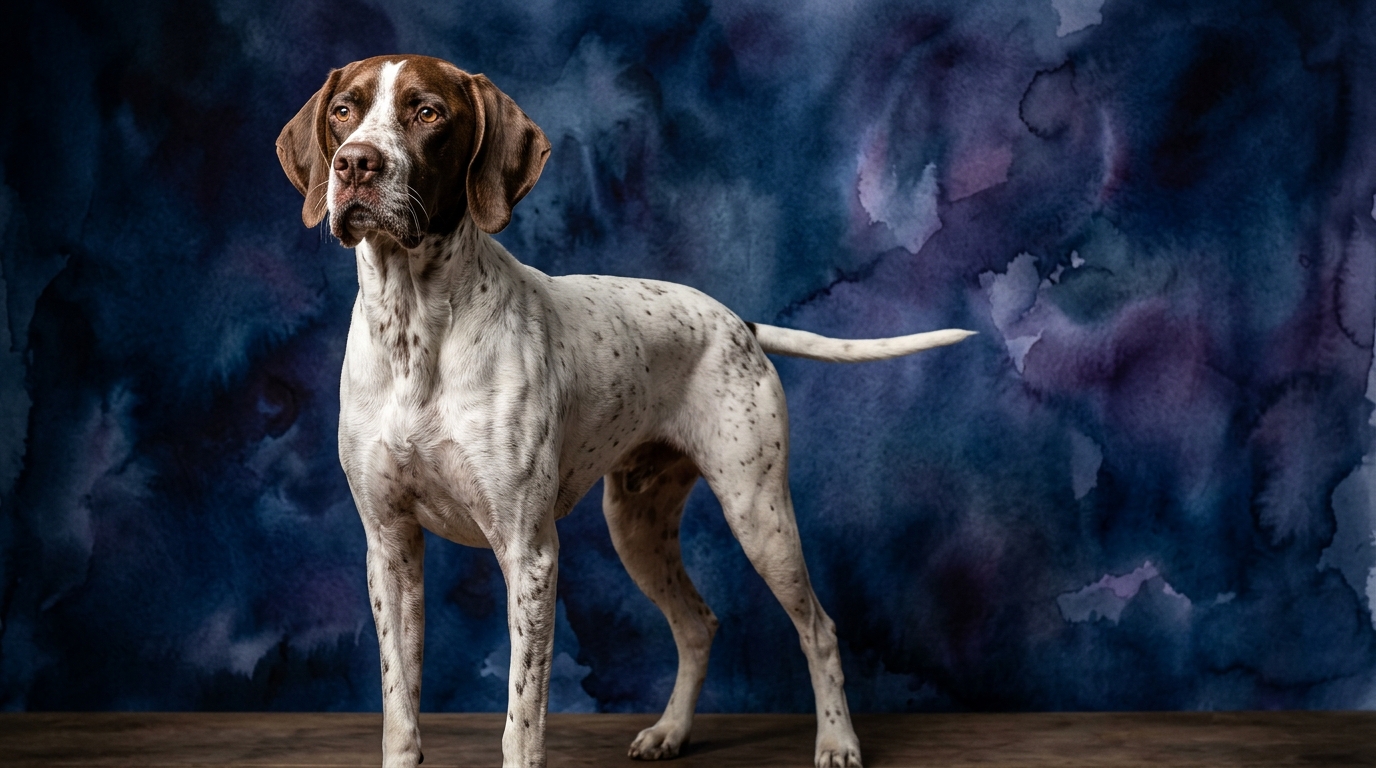
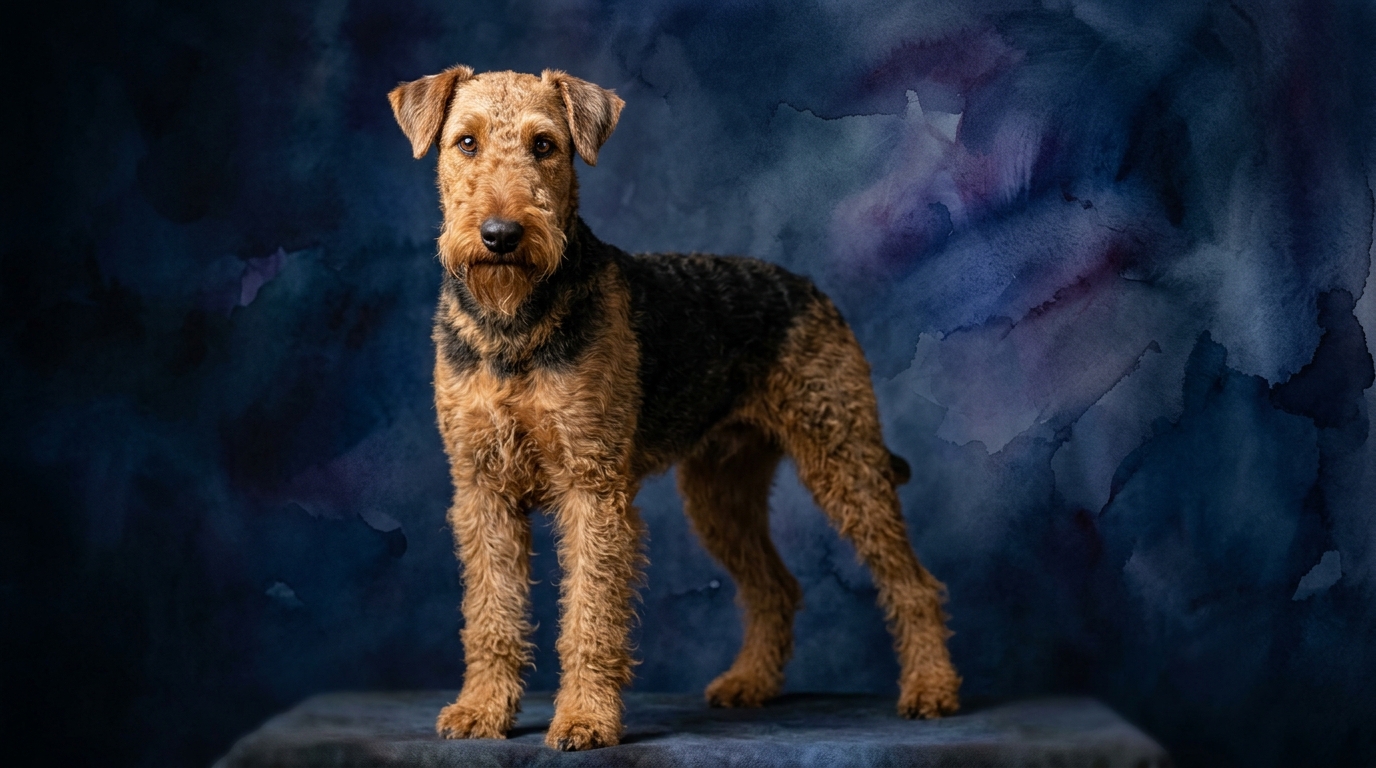
Side-by-Side IQ Profile: Pointer vs. Airedale Terrier
The Pointer, a quintessential Sporting dog, exhibits a mental framework finely tuned for its purpose. Their Problem Solving is rated 3/5, indicating a capacity for navigating complex environmental cues, particularly scent trails, and making efficient, task-oriented decisions in the field rather than abstract puzzle-solving. Training Speed for the Pointer is 3/5; they respond well to clear, consistent instruction, especially when it aligns with their natural pointing and retrieving instincts, requiring patient repetition for tasks outside their core competencies. Social Intelligence stands at 3/5, reflecting their ability to cooperate with handlers and form strong family bonds, understanding the dynamics of their human pack. Their Instinctive Drive, also 3/5, is a powerful, focused urge to hunt and range, channeled into a disciplined search pattern. Memory for a Pointer is 3/5, allowing them to retain learned routes, scent patterns, and commands effectively, crucial for reliable performance in varied terrains.
In contrast, the Airedale Terrier, the 'King of Terriers' and ranked #29 by Coren, presents a more broadly adaptive cognitive profile. Their Problem Solving is rated 4/5, demonstrating a notable capacity for independent thought and creative solutions, often figuring out how to overcome obstacles to achieve their goals. Training Speed is 4/5; they grasp new concepts and commands with impressive rapidity, often needing fewer repetitions than many breeds. However, this quick learning is tempered by a strong independent streak, meaning they learn *what* to do quickly, but may choose *when* to comply. Their Social Intelligence is 3/5, indicating good engagement with people and adaptability to various social settings, with an observant nature towards their environment and handlers. The Airedale's Instinctive Drive is 3/5, encompassing a strong prey drive and a determined persistence, fueling their tenacious and investigative nature. Memory for the Airedale Terrier is 4/5, reflecting strong retention of learned behaviors, commands, and environmental details, allowing them to apply past lessons to new situations with greater success.
Where the Pointer Excels Cognitively
The Pointer's cognitive strengths lie in their specialized, highly focused intelligence for field work. While their scores might appear numerically lower in some areas compared to the Airedale, their 3/5 ratings represent a finely honed efficiency within their specific domain. Their problem-solving, for instance, is not about abstract puzzles, but about effectively dissecting complex scent information and terrain, making precise, real-time decisions that lead to locating game. This focused problem-solving is unparalleled in its context, allowing them to cover vast areas methodically and reliably. Their instinctive drive, also 3/5, is not a wild, unbridled energy but a controlled, persistent urge that allows them to remain steadfast in their search for hours, exhibiting remarkable stamina and concentration.
Furthermore, the Pointer's social intelligence (3/5) is uniquely geared towards a cooperative hunting partnership. They excel at reading their handler's cues, anticipating movements, and working in seamless tandem, making them exceptional partners in the field. This level of synchronized effort requires a specific type of social understanding that prioritizes collaboration towards a shared goal. Their memory (3/5) is particularly strong for patterns, routes, and scent profiles, allowing them to recall locations of past finds or efficiently work a grid pattern across a field. In essence, where the Pointer wins is in its unwavering, specialized cognitive application, demonstrating a profound understanding and execution of its ancestral role with elegant precision and reliability.
Where the Airedale Terrier Shines Cognitively
The Airedale Terrier demonstrates a broader, more versatile cognitive toolkit, with higher scores in several key areas. Their 4/5 Problem Solving capacity is a standout, reflecting their terrier heritage of independent action and resourceful thinking. Airedales are adept at navigating novel situations, often devising creative and sometimes surprising solutions to challenges, whether it's figuring out how to open a gate or retrieve a toy from an inaccessible spot. This inherent ingenuity means they are less likely to give up when faced with an obstacle, preferring to experiment until they achieve their objective. This adaptability makes them highly capable in a variety of roles beyond their original vermin control.
Their Training Speed (4/5) is another significant advantage. Airedales pick up new commands and complex routines rapidly, often requiring fewer repetitions than many breeds. This quick uptake makes them exciting to train, as they can progress through lessons at a brisk pace. Coupled with their 4/5 Memory, they retain these learned behaviors and solutions for extended periods, building a substantial repertoire of knowledge and skills. This robust memory also contributes to their problem-solving, as they can recall past successful strategies and apply them to new, similar challenges. The Airedale's cognitive edge lies in their combination of quick learning, strong retention, and independent, resourceful thinking, allowing them to adapt and excel across a wider range of mental tasks.
Which is Easier to Train and Why?
When considering ease of training, the distinction between the Pointer's specialized focus and the Airedale's independent versatility becomes clear. The Pointer, with a Training Speed of 3/5, is responsive and eager to please, especially when training aligns with their natural instincts for pointing and retrieving. They thrive on positive reinforcement and consistent methods, learning commands efficiently when the motivation is clear and related to their innate drives. However, their intense focus on scent and prey can make training for non-hunting related tasks or in distracting environments more challenging, requiring patience and creative methods to maintain engagement. They might not exhibit the same eagerness for repetitive, non-instinctual drills, but they are generally cooperative if the handler provides clear direction and a positive learning environment.
The Airedale Terrier, boasting a Training Speed of 4/5, learns new concepts rapidly, often impressing owners with their quick grasp of commands. However, their independent problem-solving (4/5) and innate terrier tenacity mean that 'easy to train' doesn't always translate to 'easy to control.' Airedales are thinkers; they might learn a command quickly but then weigh whether complying is in their best interest at that moment. This independence requires a confident, consistent, and engaging trainer who can make learning fun and mentally stimulating, preventing boredom. If training becomes monotonous or lacks perceived value, the Airedale is more likely to become 'stubborn' or seek their own entertainment. Their memory (4/5) ensures they remember what they've learned, but their strong will means they require a handler who can consistently motivate and manage their clever, self-assured nature, making them a greater challenge for some.
Suitability for Active vs. Relaxed Owners
Both the Pointer and the Airedale Terrier are breeds that thrive with active owners, though their needs manifest differently. The Pointer, while possessing a moderate instinctive drive (3/5), is bred for endurance and covering vast distances in the field. Owners must be prepared to provide significant physical exercise, such as long runs, hikes, or engaging in field sports, to satisfy their natural ranging instincts. A Pointer that doesn't receive adequate physical exertion can become restless or develop undesirable behaviors. However, once their physical needs are met, Pointers are generally calm and relaxed indoors, making them suitable for active owners who enjoy regular outdoor adventures but also appreciate a quiet companion at home. Their mental stimulation often comes from scent work or 'hunting' games, rather than complex puzzles.
The Airedale Terrier, with their robust problem-solving (4/5) and strong instinctive drive (3/5), also demands substantial physical and mental stimulation. They are not merely content with a long walk; they need varied activities that challenge their intellect and provide an outlet for their independent, tenacious nature. Owners who enjoy agility, obedience, hiking, or even just consistent, engaging play sessions will find the Airedale a willing participant. A bored Airedale is a creative Airedale, and their problem-solving skills might be directed towards less desirable activities if not properly channeled. Therefore, Airedales are best suited for active owners who are committed to providing both rigorous exercise and consistent mental engagement, and who appreciate a clever, sometimes mischievous companion. Neither breed is ideal for truly relaxed or sedentary owners who cannot dedicate time to their exercise and enrichment needs.
The Verdict: When to Choose Each Breed
The Verdict
Choose a Pointer if you seek a cooperative, elegant companion for field sports or appreciate a dog with exceptional focus and stamina for specific tasks, and you can provide ample physical exercise. They are a loyal partner for those who value tradition and a deep connection in their chosen activity.
Opt for an Airedale Terrier if you enjoy a challenge, value an independent thinker with a quick wit, and can provide consistent, engaging training and varied activities. They thrive with owners who appreciate a dog that thinks for itself and is up for any adventure you can devise.
🧠 Find Your Pet's IQ Score
Our Pet IQ Lab assessment covers 25+ tests across 5 cognitive dimensions — personalized to your breed.
Take the Full IQ Test →Frequently Asked Questions
Is the Pointer easily distracted by scents during training?
Yes, their instinctive drive for scent work is strong, making focus on other tasks challenging, especially outdoors. Training in controlled environments and using their drive as a reward for completion can be effective strategies to manage this.
Do Airedale Terriers get along with other pets?
Their strong prey drive and independent nature mean early and thorough socialization is crucial for harmonious living with other pets. They can coexist, but careful introductions and consistent supervision are often necessary to ensure peace.
Which breed is better for first-time dog owners?
Neither breed is typically recommended for completely novice owners due to their specific needs and strong characters. However, a dedicated first-timer willing to learn about a Pointer's field focus might find them slightly more manageable than an Airedale, who requires a more experienced hand to navigate their independent problem-solving and spirited nature.