
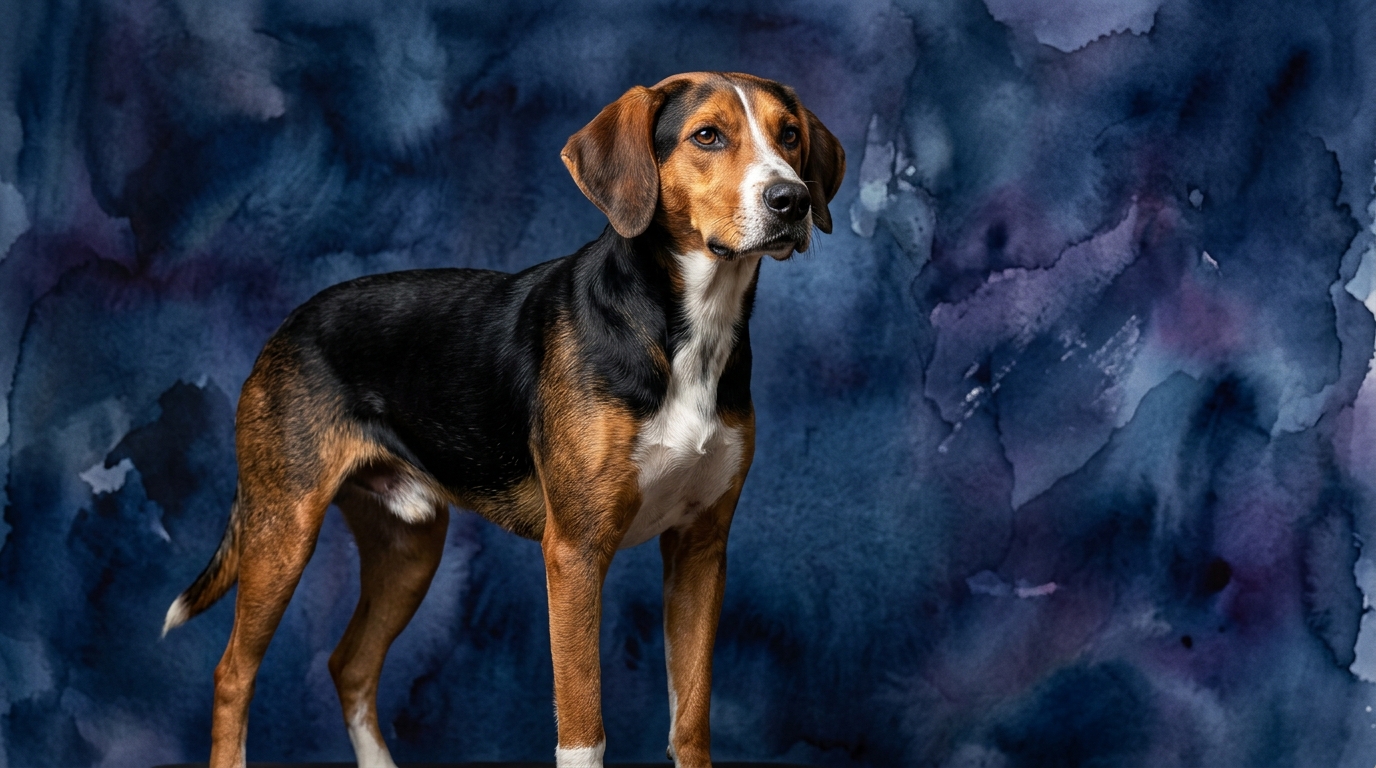
Side-by-Side IQ Profile: Unpacking Identical Scores
At first glance, the IQ profiles of the Pointer and the American Foxhound appear identical: Problem Solving 3/5, Training Speed 3/5, Social Intelligence 3/5, Instinctive Drive 3/5, and Memory 3/5. This uniformity, however, does not imply identical minds, but rather similar cognitive potential expressed through different behavioral lenses shaped by centuries of selective breeding for distinct purposes.
For the Pointer, a Sporting dog, its 3/5 scores reflect a balanced intellect geared towards cooperative hunting. Its problem-solving involves efficiently locating game and anticipating handler cues in diverse environments. Its training speed indicates a consistent ability to learn complex field commands, while its social intelligence fosters a strong partnership with its human. The instinctive drive is channeled into focused scenting and pointing, and its memory serves the recall of commands and field locations.
Conversely, the American Foxhound, a Hound breed, interprets these same scores through the prism of independent, pack-oriented hunting. Its problem-solving is about autonomously navigating vast terrains to track a elusive scent. Training speed, though moderate, is often challenged by its overwhelming prey drive. Social intelligence is primarily directed towards intricate pack dynamics, and its powerful instinctive drive is for relentless, long-distance pursuit. Its memory is exceptional for recalling complex scent trails and geographical features during a chase.
Thus, while the raw cognitive 'horsepower' might be similar, the 'software' or application of that intelligence is profoundly different between these two breeds, making a deeper dive essential.
Where the Pointer Wins Cognitively
The Pointer's cognitive strengths distinctly favor cooperative intelligence and directed task execution. Pointers excel at understanding and executing complex sequences of commands from a human partner, a direct result of their gun dog heritage. Their problem-solving (3/5) often manifests as efficient, goal-oriented actions within a structured environment, such as quartering a field systematically to locate game, demonstrating a capacity for methodical thinking under human guidance.
Their memory (3/5) is particularly strong for recalling specific training cues and the parameters of a hunt, allowing them to adapt quickly to handler signals and retrieve precisely. This directed focus, when paired with their social intelligence (3/5), enables them to anticipate human intentions and adjust their behavior accordingly, making them highly responsive partners in a working capacity. They are adept at discerning subtle human body language and vocal inflections, translating these into appropriate actions.
The Pointer's training speed (3/5), while not top-tier, is consistently applied to tasks that require precision and immediate response, distinguishing it from breeds whose learning might be more sporadic or less focused on human-directed outcomes. They are adept at filtering distractions to maintain attention on the task at hand, a valuable cognitive trait for their original purpose of finding and pointing game without breaking concentration.
Where the American Foxhound Wins Cognitively
The American Foxhound’s cognitive strengths lie in independent, sustained problem-solving, particularly when driven by its powerful instinctive drive (3/5) for scent. Its problem-solving (3/5) is less about human direction and more about autonomously navigating complex environments to follow a faint scent trail, requiring immense persistence, endurance, and decision-making on the fly without constant human input. This breed's intellect excels in self-directed pursuit.
Their memory (3/5) is exceptionally tuned to recalling scent patterns and geographical layouts encountered during a long chase, allowing them to re-establish a lost trail or navigate back to their pack over vast distances. This is a specialized form of memory crucial for their endurance hunting role. This breed's social intelligence (3/5) is primarily geared towards intricate pack dynamics, understanding the roles and communication within a group of hounds, which is a different facet of social cognition than human-centric cooperation.
The American Foxhound's training speed (3/5) is significant for tasks that align with its natural hunting behaviors, such as learning to differentiate specific scents or enduring long runs. However, their strong independent streak and single-minded focus on a scent often mean they prioritize their instinctive drive over immediate human commands, showcasing a robust, self-directed cognitive style rather than an inherent desire to please a handler. They learn what they deem important for the hunt with great efficiency.
Which is Easier to Train and Why
Despite identical 'training speed 3/5' scores, the Pointer is generally perceived as easier to train for obedience and domestic life due to its biddable nature and historical role requiring close cooperation with a human hunter. Pointers are typically eager to please and find satisfaction in performing tasks correctly for their handler, which translates to a more straightforward training experience for command-response learning.
The American Foxhound, while capable of learning, presents a greater training challenge due to its profound independence and overwhelming instinctive drive (3/5). Once a Foxhound catches a compelling scent, its focus becomes singular, and recalling it can be exceptionally difficult, overriding learned commands. Their problem-solving (3/5) in training often involves finding ways to pursue their instincts, rather than adhering strictly to human directives, making consistency a significant hurdle.
Successful training for an American Foxhound requires immense patience, consistency, and a deep understanding of positive reinforcement to make desired behaviors more rewarding than the allure of the trail. While both breeds learn, the Pointer's inherent desire for partnership makes its training process feel more collaborative and less like a constant negotiation against powerful, deeply ingrained instincts.
Which Suits Active Owners vs. Relaxed Owners
Both breeds require a substantial amount of activity, making them unsuitable for truly relaxed or sedentary owners. However, their ideal activity types and home environments differ significantly. The Pointer, while energetic, thrives on structured exercise that often involves human interaction, like retrieving games, advanced obedience, or field work, and can settle reasonably well indoors after sufficient physical and mental stimulation.
The American Foxhound demands an exceptionally active lifestyle, characterized by long, sustained runs or vigorous scent work. Their inherent need to roam and follow scents means they require highly secure outdoor spaces and owners committed to providing extensive daily exercise, often for hours. Their independent nature and propensity for vocalization also make them less suited for apartment living or owners who prefer quiet, low-key companionship.
An active owner for a Pointer might enjoy daily jogs, hiking, or dog sports, integrating the dog into their active hobbies with a focus on partnership. An active owner for an American Foxhound must be prepared for a dog that needs to 'hunt' (even if it's just scent games) for hours, cover vast distances, and will constantly test boundaries if its formidable energy and instinctive drives are not adequately managed.
The Verdict
Choose the Pointer if you seek a highly cooperative canine partner for field work or dog sports, valuing responsiveness and a strong desire to work alongside you. Its cognitive strengths shine in structured tasks where human-dog teamwork is paramount.
Opt for the American Foxhound if you are an exceptionally active individual who appreciates a dog with profound independence, relentless drive, and a captivating focus on scent work, prepared for the unique training challenges this entails. Its intelligence is best expressed in autonomous, sustained pursuit.
🧠 Find Your Pet's IQ Score
Our Pet IQ Lab assessment covers 25+ tests across 5 cognitive dimensions — personalized to your breed.
Take the Full IQ Test →Frequently Asked Questions
Do Pointers and American Foxhounds learn at the exact same rate?
While both breeds score 3/5 for training speed, their application of learning differs. Pointers generally learn human-directed commands more readily due to their cooperative nature, whereas Foxhounds learn, but their strong scent drive often overrides immediate obedience, requiring more consistent reinforcement.
How do their social intelligence scores of 3/5 manifest differently?
A Pointer's social intelligence often translates to keen attentiveness to its human handler's cues and desires, fostering strong partnership. An American Foxhound's social intelligence is more rooted in understanding pack dynamics and communication among other hounds, making them effective within a group but potentially less focused on individual human direction.
Which breed is better for a first-time dog owner?
The Pointer, with its more biddable nature and eagerness to please, is generally a more manageable choice for a first-time dog owner who can meet its exercise needs. The American Foxhound's intense independence and potent scent drive can be overwhelming for those inexperienced with strong-willed working breeds.