Side-by-Side Cognitive Profiles: A Deeper Look
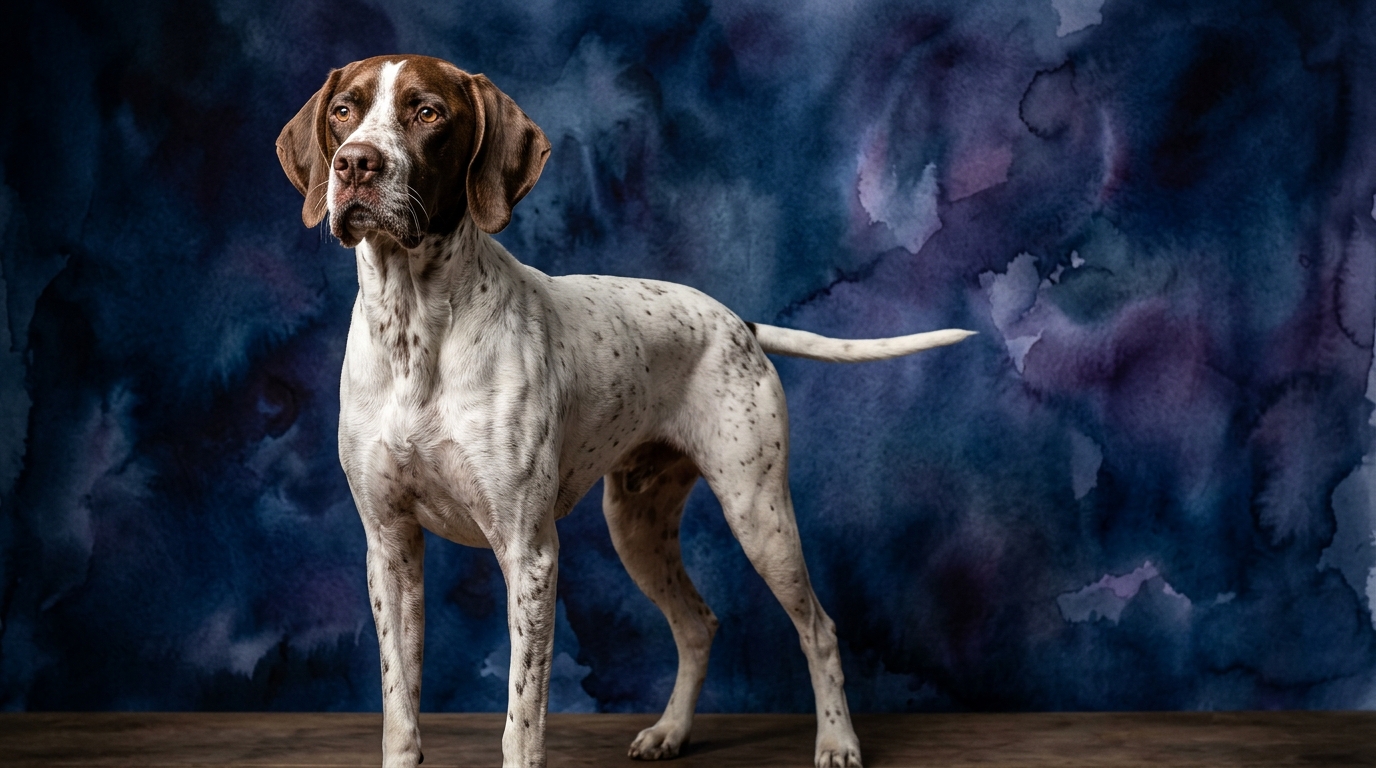
For the Cosmic Pet Pet IQ Lab, we evaluate canine intelligence across five key dimensions. The Pointer, a distinguished sporting dog, registers a balanced profile: Problem Solving 3/5, Training Speed 3/5, Social Intelligence 3/5, Instinctive Drive 3/5, and Memory 3/5. This suggests a dog capable of independent thought in its working domain, learning at a steady pace, and possessing an adequate awareness of its social environment and strong natural instincts for its purpose.
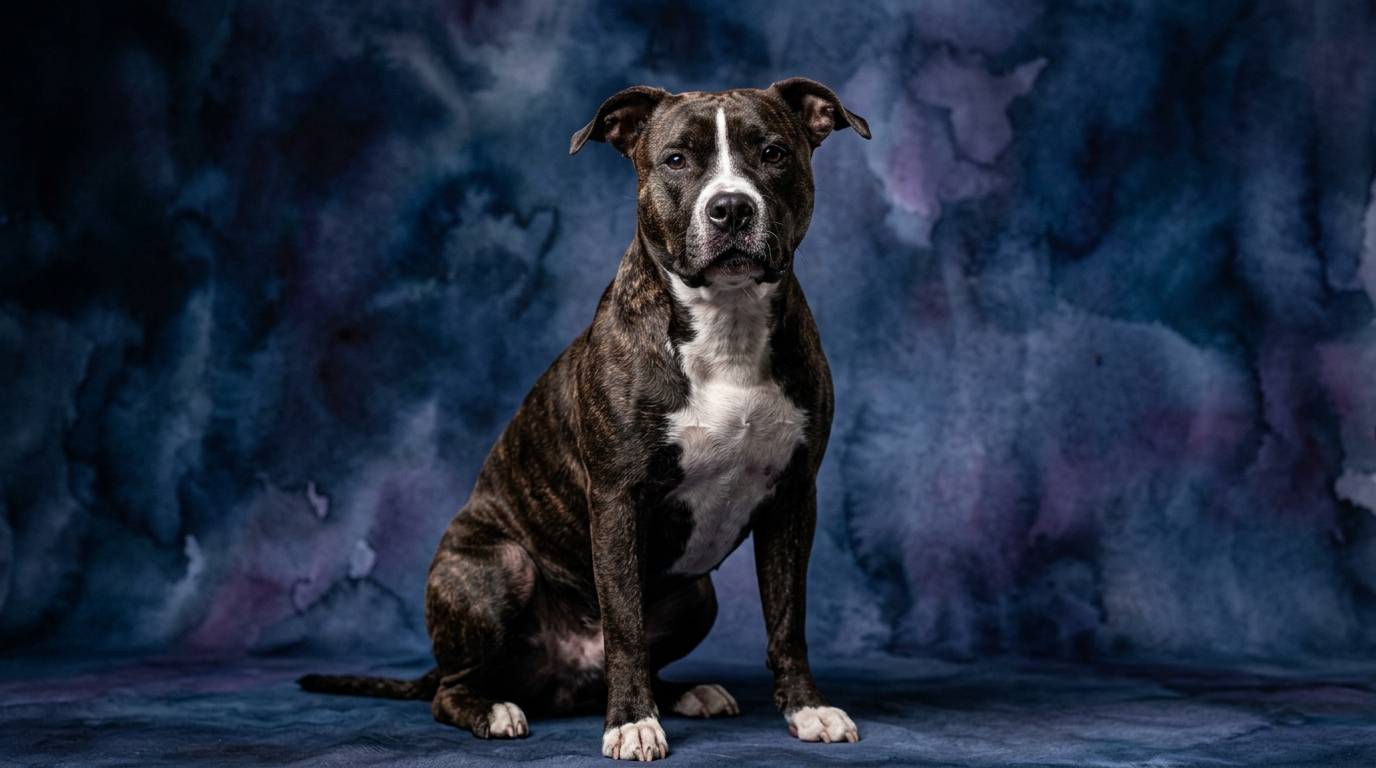
In contrast, the American Staffordshire Terrier, a resilient terrier breed, shows a similar foundational intelligence in several areas: Problem Solving 3/5, Training Speed 3/5, Social Intelligence 3/5, and Instinctive Drive 3/5. However, it distinguishes itself with a higher Memory score of 4/5. This breed is also recognized by Stanley Coren's ranking system, placing #48, indicating an “average working/obedience intelligence” that implies solid trainability and comprehension in structured settings.
Where the Pointer's Cognition Shines
The Pointer's cognitive advantages are deeply rooted in its heritage as a bird dog, requiring a specific kind of field intelligence. Its 3/5 in problem-solving is finely tuned for locating game, navigating diverse terrains, and making independent decisions about scent trails. This isn't about opening latches, but rather about intricate environmental interpretation and strategic planning in the pursuit of prey. Its 3/5 in instinctive drive is a powerful, focused impetus to hunt, guiding its intelligence towards its primary function. While its social intelligence is 3/5, within a hunting partnership, this translates to a remarkable ability to read subtle cues from a handler at a distance, demonstrating a cooperative intelligence vital for successful retrieves and points. The Pointer's balanced memory (3/5) is sufficient for retaining hunting patterns and commands, enabling consistent performance in repetitive field tasks.
Where the American Staffordshire Terrier Demonstrates Cognitive Edge
The American Staffordshire Terrier showcases its cognitive strengths through a different lens, primarily marked by its superior memory. With a 4/5 rating in memory, the AmStaff demonstrates a remarkable capacity to retain learned commands, routines, and experiences over time, making consistent training efforts particularly rewarding. This robust memory also contributes to its Coren rank of #48, reflecting a reliable ability to learn and execute obedience tasks. Its 3/5 in problem-solving often manifests as a determined approach to overcoming physical obstacles, whether figuring out how to access a coveted toy or navigating a complex environment. The AmStaff’s 3/5 social intelligence often translates into a keen awareness of its family members' moods and a strong desire for interaction, fostering deep bonds. Its instinctive drive (3/5) is channelled into tenacity and a robust play drive, which can be effectively utilized in various dog sports and enrichment activities.
Ease of Training: A Behavioral Comparison
When considering which breed might be easier to train, both the Pointer and the American Staffordshire Terrier score 3/5 in Training Speed, suggesting they learn at a comparable pace. However, their specific behavioral tendencies and cognitive strengths influence the training process differently. The Pointer's strong instinctive drive for hunting means that while it learns quickly, its focus can be easily diverted by environmental stimuli, particularly scents. Training a Pointer often involves channeling its prey drive into desired behaviors, requiring patience and consistency to overcome its natural inclination to follow its nose. For example, a Pointer might grasp "stay" quickly in a quiet room, but maintaining that command in a field with bird scent requires significant reinforcement and impulse control training.
The American Staffordshire Terrier, with its 3/5 training speed but superior 4/5 memory, benefits from clear, consistent instruction. Once an AmStaff learns a command, it is likely to retain it well. Their inherent tenacity, a facet of their instinctive drive, means they can be persistent, which is a double-edged sword: it can make them excellent at problem-solving tasks, but also stubborn if they've decided on a course of action. Effective training for an AmStaff often leverages their desire to please their human companions and their robust play drive, using positive reinforcement and engaging activities to maintain focus. Their social intelligence also makes them highly responsive to their handler's emotional state, aiding in the training bond.
Matching Breeds to Owner Lifestyles
The cognitive profiles of the Pointer and the American Staffordshire Terrier align with distinct owner lifestyles. The Pointer, with its balanced cognitive scores and strong field instincts, is an ideal companion for active owners who enjoy outdoor pursuits like hiking, running, or participating in dog sports such as agility or field trials. Its problem-solving and instinctive drive are best engaged in environments where it can explore, scent, and work alongside its human. Owners who appreciate a dog with a degree of independent thought, capable of covering vast distances with purpose, will find the Pointer an excellent match. Its social intelligence, while not overtly demonstrative, allows for a strong working partnership, making it less suitable for a purely relaxed, sedentary lifestyle where its mental and physical needs might go unfulfilled.
Conversely, the American Staffordshire Terrier, with its impressive memory and strong social intelligence, thrives with owners who value close companionship and consistent engagement. While certainly an active breed, its cognitive strengths are well-suited to owners who enjoy structured activities, puzzle toys, and consistent training that reinforces good habits. Its tenacious problem-solving means it appreciates mental challenges within the home or yard. AmStaffs can adapt to a more relaxed pace provided their foundational needs for exercise and mental stimulation are met, making them suitable for owners who enjoy a mix of active outings and relaxed home life, as long as they are committed to channeling the breed's drive and intelligence productively.
The Verdict
Select a Pointer if you're an active outdoor enthusiast seeking a cooperative, independent-minded canine partner for field activities, long runs, or demanding exploration, appreciating its focused instinct and nuanced field intelligence.
Opt for an American Staffordshire Terrier if you desire a loyal, tenacious companion with excellent memory and a strong desire to engage in structured training and mental challenges, suitable for a dynamic home life with consistent interaction.
🧠 Find Your Pet's IQ Score
Our Pet IQ Lab assessment covers 25+ tests across 5 cognitive dimensions — personalized to your breed.
Take the Full IQ Test →Frequently Asked Questions
Does the Pointer's lower memory score impact its trainability?
While the Pointer's memory is rated 3/5 compared to the AmStaff's 4/5, it doesn't significantly hinder its trainability. Pointers learn at a steady pace and effectively retain commands relevant to their working roles, though consistent reinforcement is beneficial. Their intelligence is geared more towards on-the-spot environmental processing and instinctual application.
How does the AmStaff's Coren rank of #48 translate to daily life?
An AmStaff's Coren rank of #48 indicates it typically understands new commands after 25-40 repetitions and obeys the first command 50% of the time or better. In daily life, this means they are capable learners who respond well to consistent training and clear communication, making them reliable companions once behaviors are established. Their strong memory further reinforces this.
Which breed is better for a first-time dog owner?
Neither breed is typically recommended for entirely novice owners without prior research and commitment, but the American Staffordshire Terrier might be slightly more adaptable due to its strong desire to please and excellent memory, given consistent positive training. Pointers require an owner who understands and can channel their strong hunting instincts effectively, which can be a learning curve for newcomers.