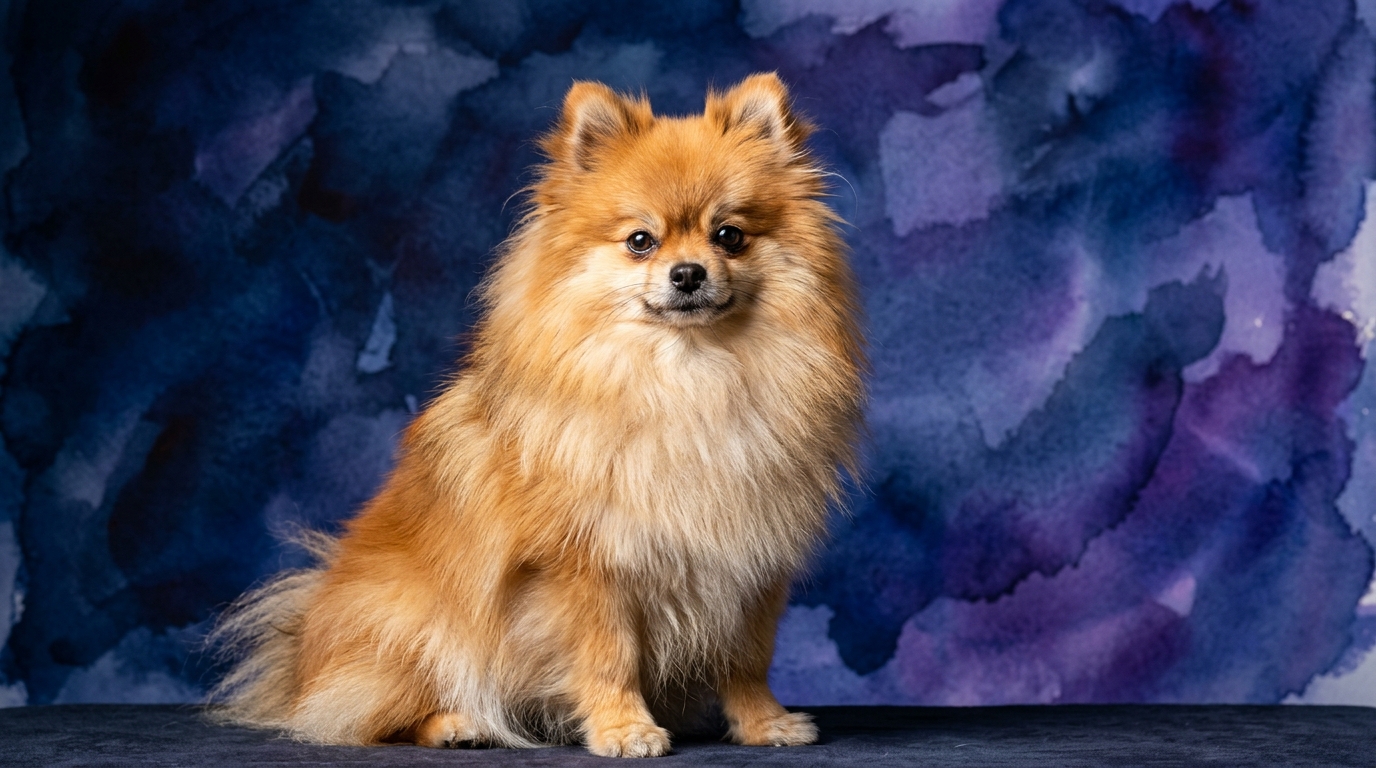
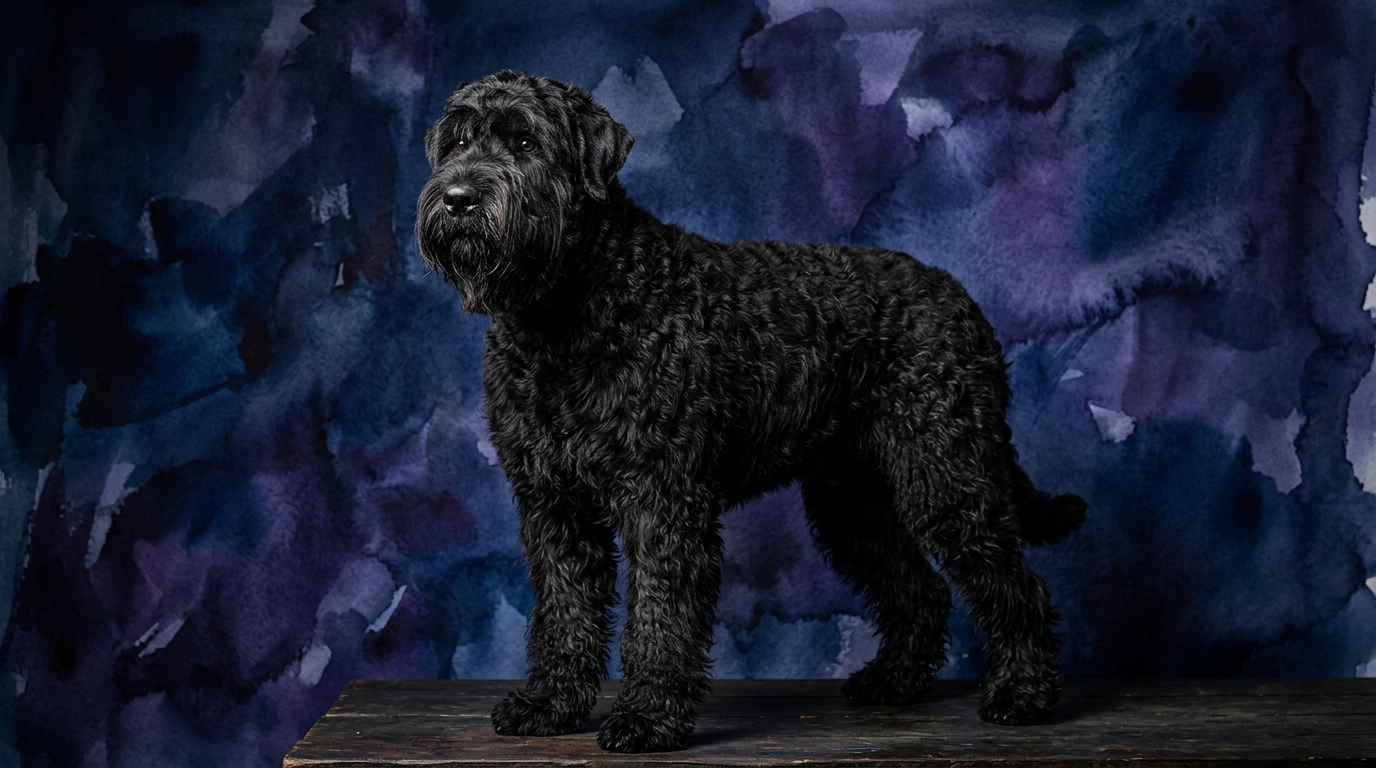
Side-by-Side IQ Profile: Pomeranian vs. Black Russian Terrier
At The Cosmic Pet Pet IQ Lab, we assess canine intelligence across five key dimensions, offering a nuanced view beyond simple obedience. The Pomeranian, a lively Toy breed, holds a respectable Coren rank of #23, indicating a well-rounded cognitive capacity. The Black Russian Terrier, a powerful Working breed, while not Coren-ranked, presents a distinct set of mental attributes.
For the Pomeranian, Problem Solving is rated 4/5, reflecting their cleverness in navigating their environment and devising solutions, such as retrieving a hidden toy or figuring out how to open a cabinet. Their Training Speed is also 4/5, meaning they typically grasp new commands and routines with impressive alacrity, making them quick studies in various disciplines. Social Intelligence stands at 4/5, as these small companions often display a keen understanding of human emotions and social cues, integrating seamlessly into family dynamics. Their Instinctive Drive is 3/5, primarily manifesting as a vigilant watchdog tendency and a strong drive for companionship rather than complex working tasks. Finally, their Memory is rated 4/5, indicating a solid retention of learned commands, routines, and specific associations over time.
The Black Russian Terrier presents a different cognitive landscape. Their Problem Solving is rated 3/5, approaching challenges with a more deliberate, methodical mindset, often requiring more structured input to find solutions. Training Speed is 3/5, meaning they are capable learners but typically absorb commands at a steady, rather than rapid, pace, often needing more consistency and repetition. Social Intelligence is 3/5; while deeply bonded with their families, their social acumen can be more reserved, especially with strangers, requiring careful introduction and socialization. Their Instinctive Drive is 3/5, rooted in their origins as military dogs, manifesting as a strong protective instinct and a robust work ethic, which needs careful direction. Their Memory is also 3/5, retaining information effectively for established routines and commands, but potentially benefiting from more frequent reinforcement for less common tasks.
Where the Pomeranian Wins Cognitively
The Pomeranian's cognitive strengths truly shine in areas demanding agility of thought and nuanced social interaction. With a Problem Solving score of 4/5, Poms frequently demonstrate remarkable ingenuity, such as devising clever routes to bypass obstacles or retrieving desired items from seemingly inaccessible places through calculated maneuvers. This quick-thinking ability allows them to adapt rapidly to new household dynamics or unexpected situations.
Their higher Training Speed (4/5) means Pomeranians typically pick up new tricks and obedience commands with fewer repetitions than many breeds. This makes them exceptionally rewarding partners for owners interested in canine sports like agility or freestyle, where rapid learning and responsiveness are paramount. Furthermore, their superior Social Intelligence (4/5) allows them to keenly observe and respond to human emotional states, often offering comfort or seeking interaction at opportune moments, demonstrating a subtle yet profound understanding of family dynamics. A Pomeranian might notice a shift in your mood and offer a comforting nudge, showcasing a level of emotional attunement that is a distinct cognitive advantage.
Where the Black Russian Terrier Wins Cognitively
While the Pomeranian excels in mental nimbleness, the Black Russian Terrier's cognitive profile emphasizes a different kind of strength: sustained focus, methodical application, and unwavering resolve, particularly in roles requiring a sturdy temperament. Although their individual IQ scores are generally rated 3/5 across the board, their sheer physical presence and inherent protective instincts frame their cognitive output uniquely.
A BRT's Instinctive Drive, though also rated 3/5, is channeled into a profound sense of duty and loyalty, making them steadfast guardians who methodically assess situations rather than reacting impulsively. Their problem-solving, while more deliberate, is often tied to resourcefulness in real-world scenarios, like patiently tracking a scent or navigating complex terrain during a patrol, relying on endurance and a calm, unwavering resolve. This methodical cognitive processing, coupled with their imposing physical capabilities, means they excel in tasks demanding consistency, deep concentration, and a commitment to perceived duties, rather than quick-fire mental acrobatics.
Which is Easier to Train and Why
Based on their respective cognitive profiles, the Pomeranian generally offers an easier and faster training experience due to its higher scores in Training Speed (4/5) and Memory (4/5). Poms tend to absorb new commands and routines with enthusiasm, often requiring fewer repetitions before a behavior is solidified. Their strong social intelligence also means they are often more attuned to their trainer's cues and desires, making them eager to please and quick to respond to positive reinforcement. For instance, a Pomeranian might master 'sit' in a handful of sessions, responding to subtle hand signals with ease.
In contrast, the Black Russian Terrier, with its 3/5 Training Speed, typically requires more consistent, longer practice sessions to achieve the same level of mastery. Their independent nature and strong will, a common trait in working breeds, means trainers must establish clear boundaries and leadership from the outset. While both breeds are capable of learning, the Pomeranian's natural inclination towards engagement and quicker mental processing makes the initial stages of training feel more fluid and less demanding of prolonged patience and assertive guidance.
Which Suits Active Owners vs. Relaxed Owners
The choice between a Pomeranian and a Black Russian Terrier based on owner lifestyle largely hinges on the nature of 'activity' and 'relaxation.' A Pomeranian, despite its small stature, suits owners who are active in the sense of regular engagement, interactive play, and mental stimulation. Their 4/5 Problem Solving and Social Intelligence mean they thrive on varied activities like puzzle toys, learning new tricks, and being included in social outings. They are ideal for owners who enjoy consistent, albeit less physically demanding, interaction and who appreciate a dog that is always ready for a game or a cuddle on the couch, provided their mental needs are met.
Conversely, the Black Russian Terrier, with its origins as a working dog, is better suited for truly active owners who can provide substantial physical exercise and consistent mental challenges. Their inherent drive, even at 3/5, combined with their size and strength, demands structured activities like long walks, obedience trials, or even protection work. Relaxed owners might find the BRT's need for consistent engagement, training, and robust exercise overwhelming, whereas a Pomeranian can adapt more readily to a quieter home, provided its social and mental needs are met through focused interaction rather than extensive physical exertion.
The Verdict
For those seeking a clever, engaging companion who learns quickly and offers nuanced social interaction, the Pomeranian is an excellent choice.
If your lifestyle demands a steadfast, powerful guardian with a methodical approach to tasks and you're prepared for significant training commitment, the Black Russian Terrier will be a deeply rewarding partner.
🧠 Find Your Pet's IQ Score
Our Pet IQ Lab assessment covers 25+ tests across 5 cognitive dimensions — personalized to your breed.
Take the Full IQ Test →Frequently Asked Questions
Are Pomeranians prone to barking due to their intelligence?
Pomeranians, with their 4/5 Social Intelligence and 3/5 Instinctive Drive as watchdogs, can be prone to barking if not properly socialized and trained. Their awareness of their surroundings and desire to alert their family often manifests as vocalization, which owners can manage through consistent positive reinforcement and redirection.
Does the Black Russian Terrier's lower IQ ranking mean it's harder to train?
Not necessarily "harder," but it implies a different training approach. A BRT's 3/5 Training Speed means they require more repetition and consistency than a Pomeranian. Their independent nature also means trainers need to be patient, firm, and utilize clear, positive reinforcement to build a strong working relationship.
How do their memory scores impact daily life with these breeds?
A Pomeranian's 4/5 memory means they recall routines and commands reliably, making daily interactions smooth once behaviors are established. A Black Russian Terrier's 3/5 memory suggests that while they remember, consistent reinforcement of commands and routines is beneficial to maintain sharpness and prevent slippage, particularly with less frequently practiced tasks.