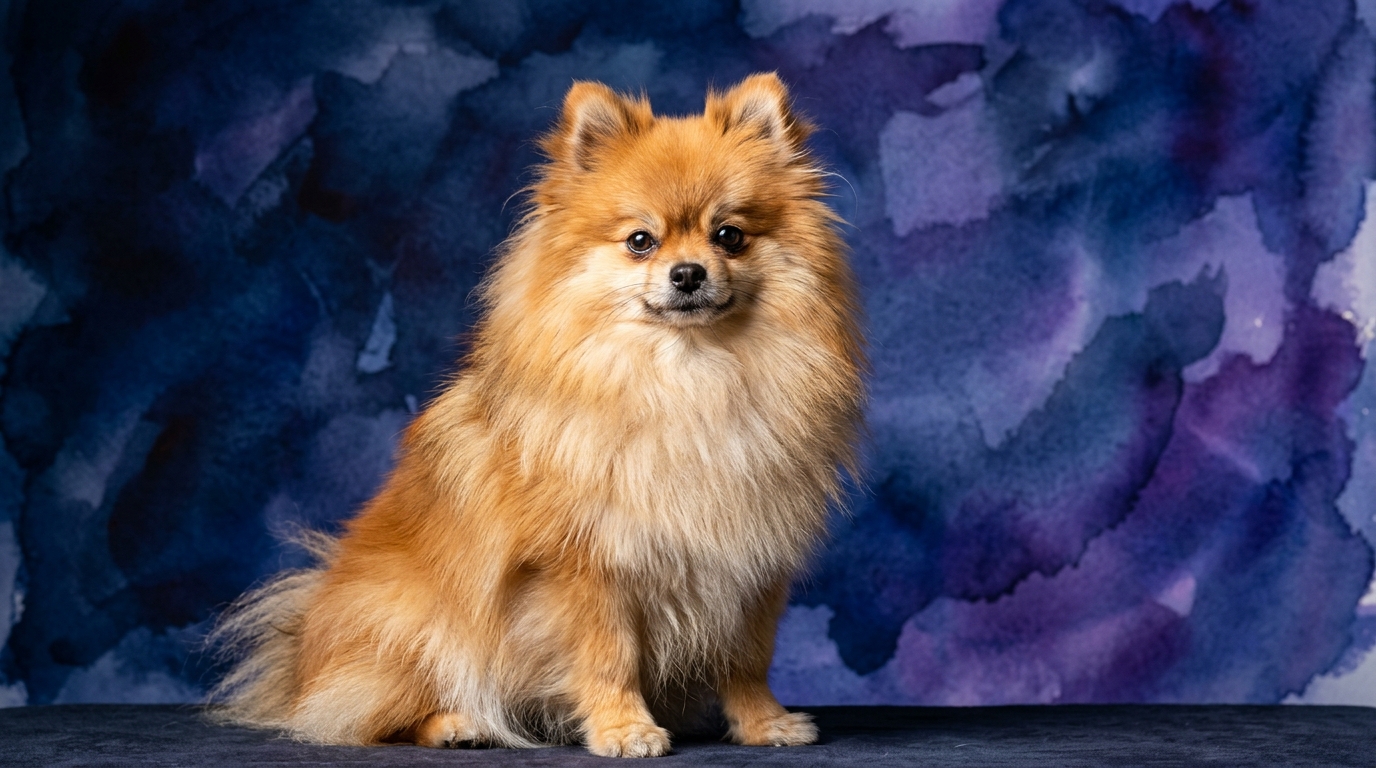
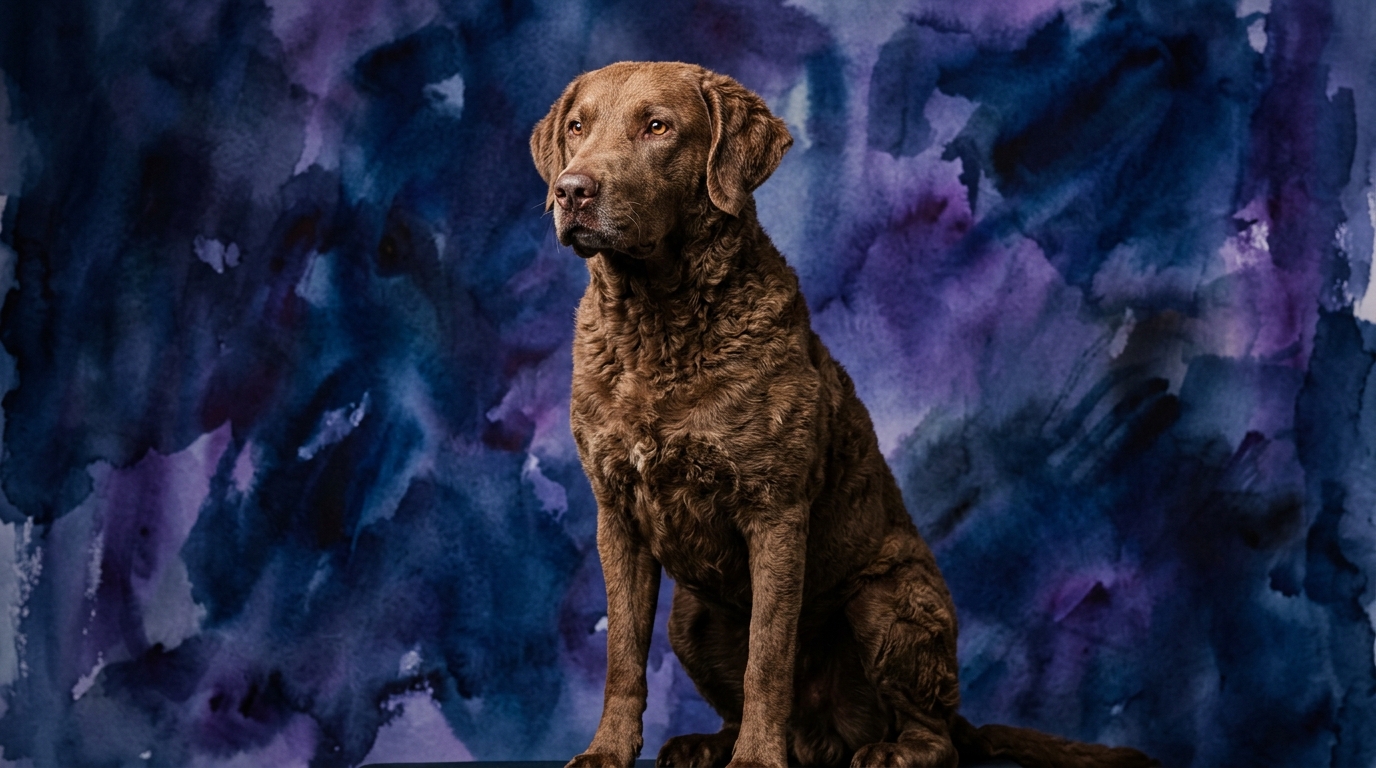
Side-by-Side Cognitive Profiles: Pomeranian vs. Chesapeake Bay Retriever
The Cosmic Pet Pet IQ Lab employs a multi-dimensional approach to assess canine intelligence, looking beyond simple obedience to understand a breed's full cognitive spectrum. For the Pomeranian, a breed known for its spirited demeanor, we observe a consistent strength across most metrics. Their Problem Solving score of 4/5 indicates a capacity for figuring out novel situations and navigating complex environments, often leveraging their surroundings creatively. Training Speed, also at 4/5, suggests they pick up new commands and routines with relative ease, responding well to consistent instruction. A standout feature is their Social Intelligence, rated at 4/5, reflecting a keen ability to interpret human cues, adapt to social dynamics, and form strong communicative bonds. Instinctive Drive, at 3/5, points to a moderate level of inherent behaviors like chasing or guarding, which can be channeled but may require guidance. Finally, their Memory, scoring 4/5, ensures they retain learned information and experiences effectively, building upon past lessons.
Turning to the Chesapeake Bay Retriever, a powerful Sporting breed, we find a cognitive profile optimized for their demanding working roles. Their Problem Solving ability matches the Pomeranian's at 4/5, indicating a similar aptitude for overcoming obstacles and strategizing, particularly in task-oriented scenarios. Training Speed also aligns at 4/5, demonstrating a readiness to learn and execute commands, crucial for complex field work. However, their Social Intelligence registers at 3/5, suggesting they might be more independent or less overtly focused on human emotional states compared to the Pomeranian, though still capable of forming deep connections. Instinctive Drive is also 3/5, reflecting a strong, but not overwhelming, propensity for behaviors tied to their retrieving heritage, such as marking and carrying. Their Memory, like the Pomeranian's, is rated 4/5, allowing them to recall intricate sequences, locations, and learned behaviors vital for their working capacity.
Where the Pomeranian Shines Cognitively
The Pomeranian's distinct cognitive advantage lies in its superior Social Intelligence, rated 4/5 compared to the Chesapeake Bay Retriever's 3/5. This higher score translates into a more nuanced understanding of human emotions and social dynamics. A Pomeranian is often quicker to pick up on subtle changes in tone, body language, and household routines, making them exceptionally adaptable companions in diverse social settings. They tend to excel at reading their owners' moods, often adjusting their own behavior to seek comfort, provide affection, or engage in play. This heightened social awareness contributes to their ability to integrate seamlessly into family life, often becoming adept at charming guests or understanding when to be quiet and when to be playful, a skill less pronounced in breeds with a more independent social focus.
Where the Chesapeake Bay Retriever Excels Cognitively
While both breeds share a 4/5 rating in Problem Solving and Memory, the Chesapeake Bay Retriever's application of these cognitive strengths is uniquely tailored to its heritage. Their problem-solving prowess often manifests in practical, goal-oriented ways, such as figuring out the most efficient path to retrieve an object in varied terrain or navigating complex scent trails. This isn't just about raw intelligence, but how it's integrated with their physical endurance and strong instinctive drive (3/5) for retrieving. Their robust memory and problem-solving skills make them adept at remembering multiple fall locations for birds or executing multi-step commands in distracting environments, skills that are less central to the Pomeranian's typical lifestyle. The Chessie's cognitive strengths are deeply intertwined with their capacity for sustained, focused work in challenging outdoor conditions.
Training Dynamics: Which is Easier to Train?
Despite both breeds scoring 4/5 in Training Speed, the Pomeranian generally presents as easier to train for the average owner, primarily due to their higher Social Intelligence. A Pomeranian's eagerness to interact and understand human cues (4/5 Social Intelligence) often translates into a stronger desire to please and a quicker response to verbal and non-verbal commands. They are typically more attuned to their trainer's feedback, making positive reinforcement highly effective and reducing potential stubbornness. Their smaller size also means less physical resistance during training sessions.
The Chesapeake Bay Retriever, while equally capable of learning quickly (4/5 Training Speed), may require a more experienced and consistent hand. Their 3/5 Social Intelligence suggests a more independent nature; they are capable, but might prioritize their own instincts or perceived tasks over immediate human directives, especially if not properly motivated. Their strong instinctive drive (3/5), while valuable for their working role, can sometimes make them single-minded and potentially less flexible to redirection during training. While they learn commands efficiently, ensuring consistent compliance often involves a deeper understanding of their drive and a firmer, yet fair, training approach.
Lifestyle Suitability: Active Owners vs. Relaxed Owners
For relaxed owners seeking a companion that fits seamlessly into a less demanding routine, the Pomeranian is often the more suitable choice. Their high Social Intelligence (4/5) and adaptable nature allow them to thrive in various home environments, from apartments to larger houses, without requiring extensive physical exertion. While they enjoy play and short walks, their cognitive engagement often comes from social interaction, puzzle toys, and learning new tricks within the home. They are content to be close companions, offering affectionate interaction and readily adapting to a calm household rhythm. Their smaller size and general ease of management make them ideal for those who prefer indoor activities or shorter, less intense outdoor adventures.
Conversely, the Chesapeake Bay Retriever is unequivocally better suited for active owners who can provide consistent, structured engagement. Their problem-solving abilities and robust memory, combined with their physical capabilities, demand outlets that go beyond simple walks. These dogs thrive when given a 'job,' whether it's retrieving, scent work, agility, or extensive hikes and swims. An owner who can channel their instinctive drive (3/5) into productive activities will see the Chessie's cognitive strengths truly flourish. Without sufficient mental and physical stimulation, a Chesapeake Bay Retriever can become bored and potentially destructive, making them a poor fit for a purely relaxed, sedentary lifestyle. They need an owner who appreciates and can facilitate their working dog heritage.
The Verdict
Choose the Pomeranian if you prioritize a highly socially attuned companion for an adaptable indoor lifestyle, valuing their quick learning and affectionate nature.
Opt for the Chesapeake Bay Retriever if you are an active owner seeking a resilient, task-oriented partner for outdoor adventures and structured training challenges.
🧠 Find Your Pet's IQ Score
Our Pet IQ Lab assessment covers 25+ tests across 5 cognitive dimensions — personalized to your breed.
Take the Full IQ Test →Frequently Asked Questions
Are Pomeranians good at learning tricks?
Yes, Pomeranians excel at learning tricks due to their 4/5 Training Speed and 4/5 Memory. Their high Social Intelligence also means they are often motivated by human interaction and praise, making them eager participants in trick training sessions.
Do Chesapeake Bay Retrievers require a lot of mental stimulation?
Absolutely. Chesapeake Bay Retrievers possess strong Problem Solving (4/5) and Memory (4/5) capabilities, coupled with an strong instinctive drive for work. They require consistent mental challenges such as complex retrieves, scent games, or obedience training to prevent boredom and maintain their cognitive well-being.
Which breed is better for first-time dog owners?
For most first-time dog owners, the Pomeranian is often a more manageable choice due to their smaller size, higher social intelligence, and generally lower exercise requirements. The Chesapeake Bay Retriever's independence and demanding need for activity can be more challenging for those new to dog ownership.