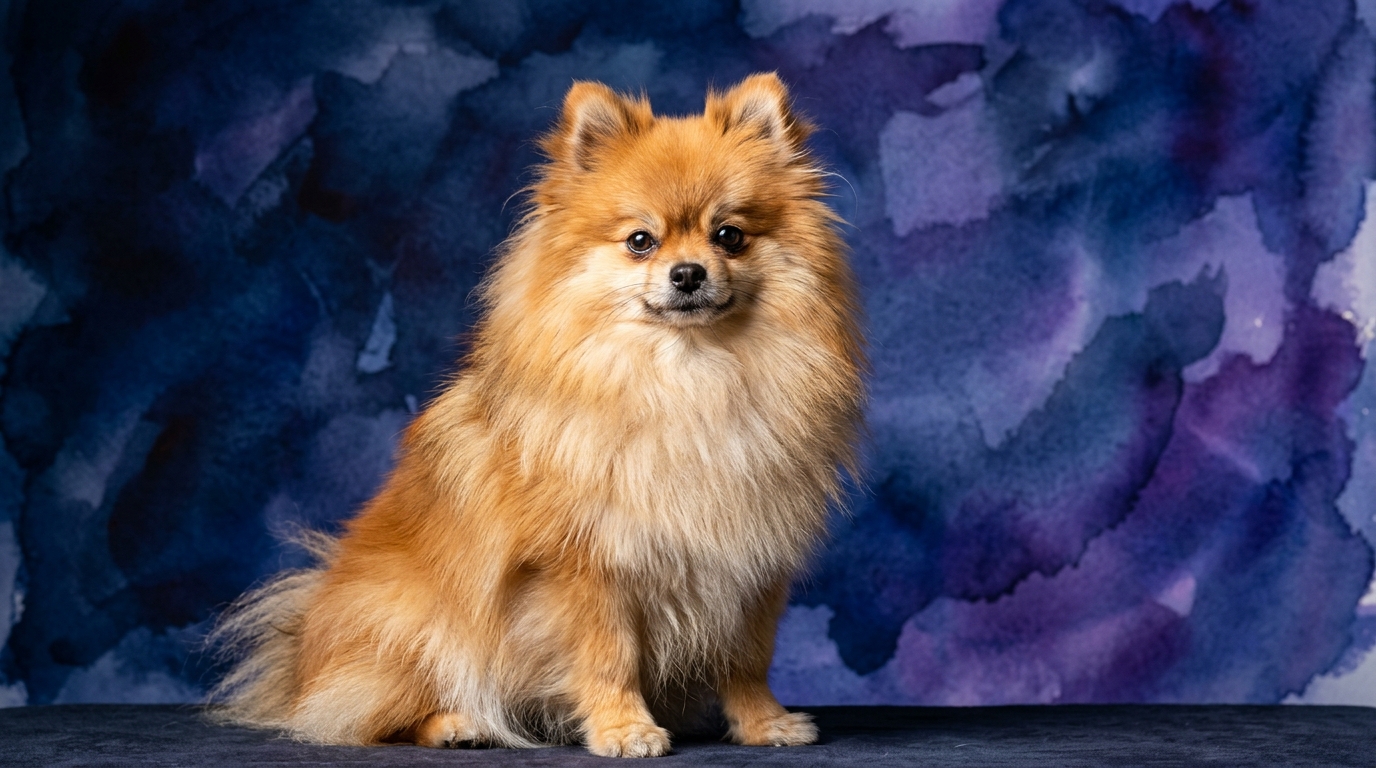
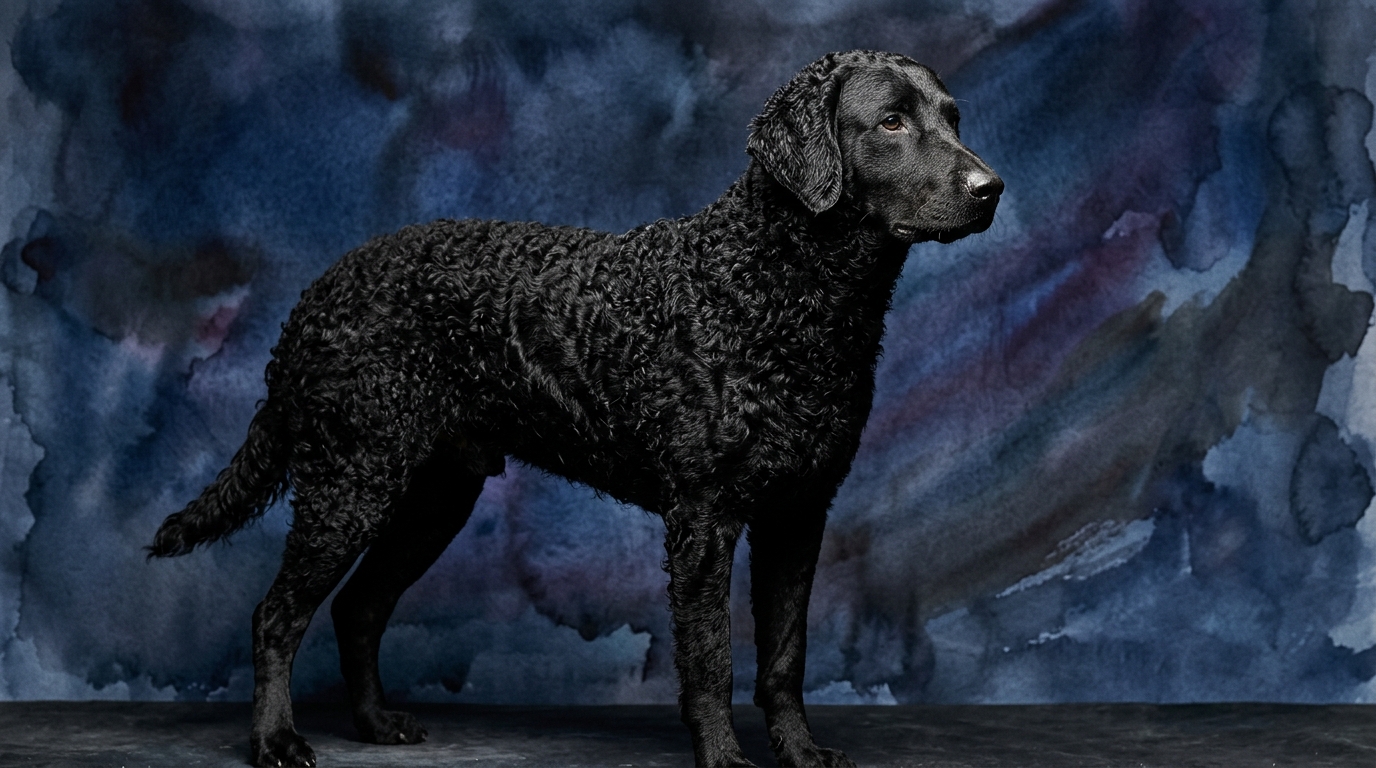
Side-by-Side IQ Profile: Pomeranian vs. Curly-Coated Retriever
The Pomeranian, ranking an impressive #23 on the Coren intelligence scale, presents a well-rounded cognitive profile. In our Pet IQ Lab assessment, this breed scores 4/5 for Problem Solving, indicating a quick aptitude for navigating novel situations and puzzle-solving. Their Training Speed also stands at a robust 4/5, suggesting they grasp new commands and routines with efficiency. Social Intelligence is another strong suit at 4/5, reflecting their keen ability to interpret human cues and adapt to social contexts. Their Instinctive Drive is measured at 3/5, a moderate level that can be channeled effectively, while Memory is excellent at 4/5, allowing them to retain information and learned behaviors reliably.
The Curly-Coated Retriever, positioned at #41 on the Coren scale, demonstrates a cognitive makeup optimized for its working heritage. Their Problem Solving ability is rated at 3/5, indicating a practical, task-oriented approach to challenges. Training Speed is also 3/5, meaning they are capable learners, though they may require more consistent repetition than some faster-paced breeds. Social Intelligence registers at 3/5, suggesting they form strong bonds and understand social hierarchies, albeit with a degree of independence. Their Instinctive Drive, crucial for their retrieving tasks, is a solid 3/5, reflecting their natural inclination to work. Notably, their Memory matches the Pomeranian's at an excellent 4/5, a vital trait for remembering complex retrieves and field commands.
Where the Pomeranian Wins Cognitively
In several key cognitive dimensions, the Pomeranian demonstrates a noticeable advantage, particularly in areas reflecting adaptability and rapid learning. Their superior Problem Solving score of 4/5, compared to the Curly-Coated Retriever's 3/5, means Pomeranians often figure out household puzzles or navigate new environments with greater ingenuity. For example, a Pomeranian is more likely to quickly devise a strategy to access a favorite toy hidden under furniture or to understand the mechanics of a new treat dispenser without extensive guidance.
Furthermore, the Pomeranian's higher Training Speed (4/5 vs. 3/5) indicates they are typically quicker to pick up new commands and behavioral cues. This isn't just about simple obedience; it extends to complex tricks or adapting to new household rules with fewer repetitions. Their elevated Social Intelligence (4/5 vs. 3/5) also provides a distinct edge, allowing them to more readily interpret subtle human body language and vocal inflections, leading to more nuanced and responsive interactions. This makes them exceptionally attuned companions, often anticipating their owner's moods or desires with striking accuracy, which contributes to their reputation as highly engaging and responsive companions in a domestic setting.
Where the Curly-Coated Retriever's Cognitive Strengths Shine
While the Curly-Coated Retriever's overall Coren rank is lower, their cognitive profile is expertly tailored for their specialized role, highlighting areas where their intelligence is uniquely applied. Both breeds share an impressive Memory score of 4/5, but for the Curly-Coated Retriever, this robust memory is critical for retaining complex sequences of commands in a field environment, recalling precise locations of fallen game, or remembering intricate scent trails over varied terrain. This isn't just about remembering a trick; it's about practical, sequential memory essential for their working heritage.
Their Instinctive Drive, rated at 3/5, while numerically matching the Pomeranian, manifests as a strong, purposeful drive for retrieving and working alongside a handler in challenging outdoor conditions. This drive fuels their persistence and focus on a task, even when faced with distractions or adverse weather. Their Problem Solving at 3/5, though lower than the Pomeranian's, is highly functional for their specific purpose. It translates into an ability to independently assess and navigate obstacles during a retrieve, such as finding the best path through dense cover or across water, rather than relying solely on handler direction. This demonstrates a practical, context-specific intelligence that is invaluable in their sporting role, emphasizing resilience and self-reliance in the field.
Which is Easier to Train and Why
Based on our Pet IQ Lab assessments, the Pomeranian generally presents as an easier dog to train, primarily due to its higher scores in Training Speed (4/5), Problem Solving (4/5), and Social Intelligence (4/5). Their quick grasp of new concepts means fewer repetitions are often needed to solidify a command or behavior. For instance, house-training a Pomeranian might progress more rapidly because they are quicker to associate going outdoors with positive reinforcement and understand human expectations. Their social intelligence also makes them highly attentive to their trainer, eager to please and responsive to subtle cues, which can make training sessions feel more fluid and rewarding.
The Curly-Coated Retriever, with scores of 3/5 across these dimensions, is certainly trainable but may require a more patient and consistent approach. Their training speed suggests they will learn, but perhaps not with the same immediate flash of understanding as a Pomeranian. Their strong instinctive drive, while excellent for their intended work, can sometimes lead to independent decision-making in training if not properly channeled. For example, during recall training, a Curly-Coated Retriever might be more prone to following an interesting scent or visual stimulus, requiring more consistent reinforcement and distraction management than a Pomeranian, whose social intelligence often keeps their focus more tightly on their human companion.
Which Suits Active Owners vs. Relaxed Owners
The choice between a Pomeranian and a Curly-Coated Retriever heavily depends on an owner's lifestyle and activity level. The Pomeranian, despite its moderate Instinctive Drive (3/5), is physically a small dog, meaning its exercise requirements are generally met with regular walks, indoor play, and mental stimulation through training or puzzle toys. Their high social intelligence and adaptability make them excellent companions for more relaxed owners who enjoy consistent interaction and companionship without needing extensive outdoor adventures. They thrive in environments where they are central to family life and can engage in regular, moderate activity.
Conversely, the Curly-Coated Retriever, a robust sporting breed, is unequivocally suited for active owners. While its Instinctive Drive is rated similarly at 3/5, this drive manifests as a strong need for purposeful physical activity, such as retrieving, swimming, running, or participating in dog sports. Their cognitive profile, though not as high in general problem-solving, is geared towards sustained effort and focus in working scenarios. A Curly-Coated Retriever requires significant daily exercise, both physical and mental, to prevent boredom and destructive behaviors. Owners who enjoy hiking, running, or are involved in dog sports will find the Curly-Coated Retriever a highly capable and enthusiastic partner, thriving on tasks that engage their natural retrieving instincts and stamina.
The Verdict
Choose the Pomeranian if you seek a highly responsive, quick-learning companion eager for social interaction and adaptable to a more moderate activity level.
Opt for the Curly-Coated Retriever if you lead an active lifestyle and desire a resilient, task-oriented partner who excels in outdoor pursuits and purposeful work.
🧠 Find Your Pet's IQ Score
Our Pet IQ Lab assessment covers 25+ tests across 5 cognitive dimensions — personalized to your breed.
Take the Full IQ Test →Frequently Asked Questions
Do Pomeranians truly have better problem-solving skills than Curly-Coated Retrievers?
Based on Pet IQ Lab assessments, Pomeranians score 4/5 for Problem Solving compared to the Curly-Coated Retriever's 3/5. This suggests Pomeranians tend to figure out novel situations or puzzles with greater speed and ingenuity in typical domestic contexts, often showing more creative solutions to everyday challenges.
Is the Curly-Coated Retriever's memory as good as a Pomeranian's?
Yes, both the Pomeranian and the Curly-Coated Retriever score an excellent 4/5 for Memory in our assessments. This indicates both breeds possess a strong capacity to retain information and learned behaviors, crucial for their respective roles, whether it's remembering complex tricks or field commands and retrieve locations.
How does social intelligence differ between these two breeds?
The Pomeranian scores higher in Social Intelligence (4/5) compared to the Curly-Coated Retriever (3/5). This means Pomeranians are generally more attuned to human emotions and social cues, making them highly interactive and responsive companions, while Curly-Coated Retrievers, though affectionate, may display a slightly more independent social demeanor.