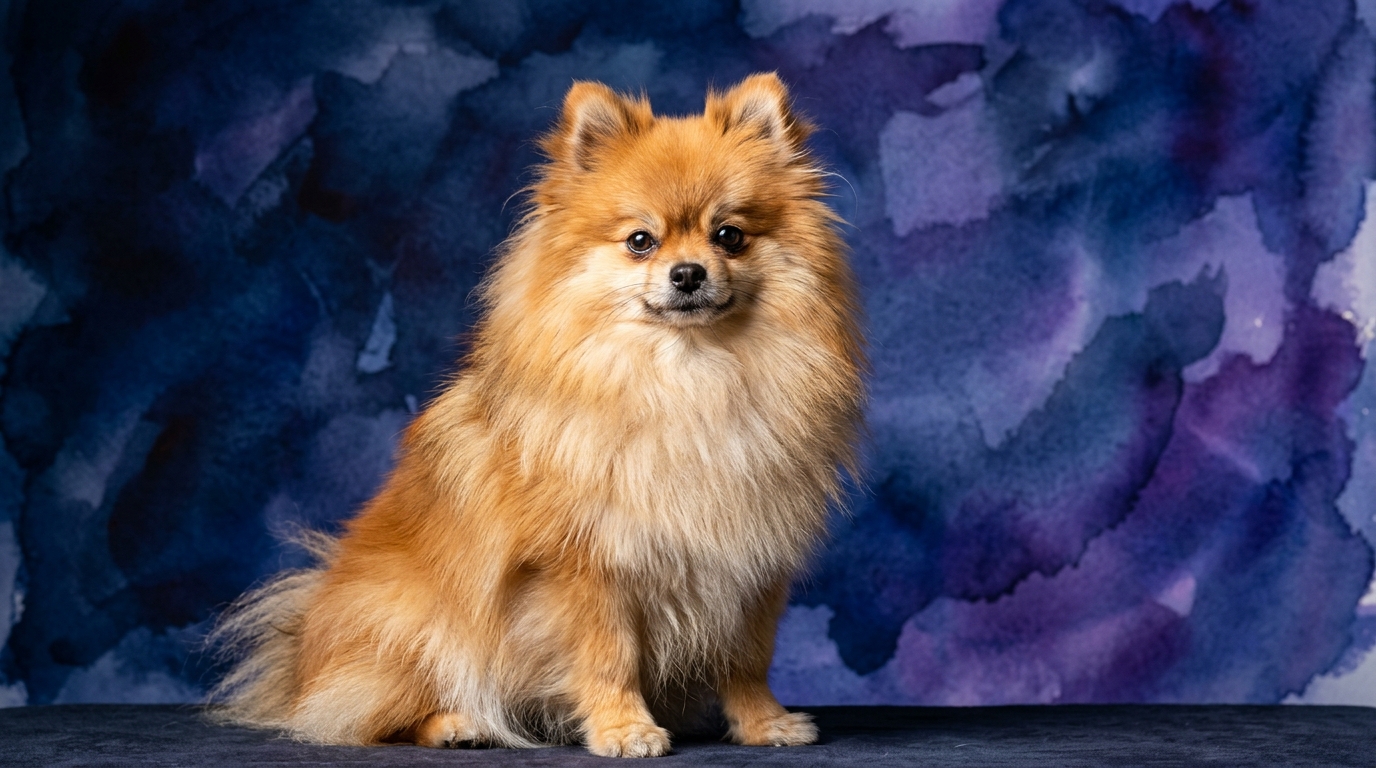
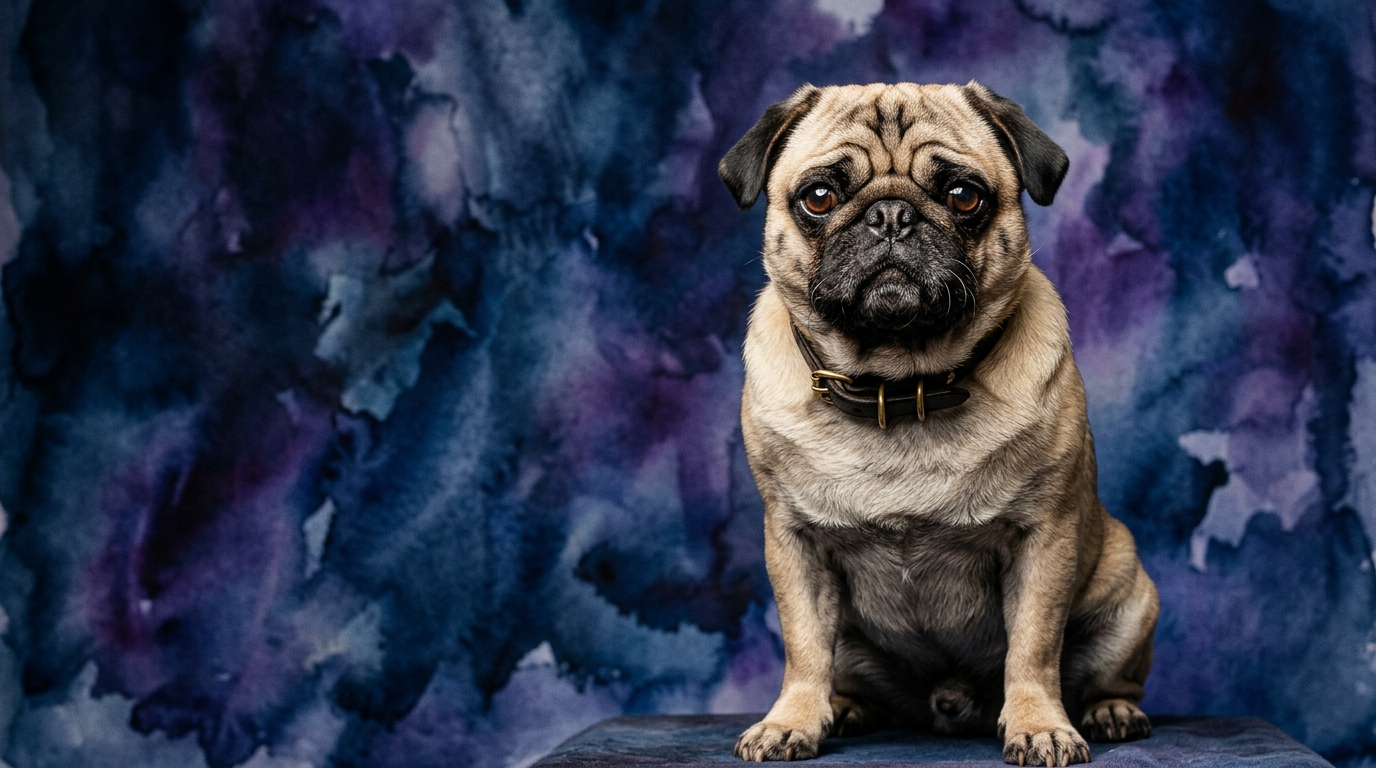
Side-by-Side Cognitive Profiles: Pomeranian vs. Pug
The Cosmic Pet Pet IQ Lab evaluates canine intelligence across five key dimensions, providing a nuanced understanding of each breed's cognitive strengths. For the Pomeranian, ranked #23 by Coren, we observe a profile suggesting a sharp, engaged mind. Their Problem Solving is rated 4/5, indicating an aptitude for figuring out novel situations and navigating complex environments. Training Speed also scores 4/5, highlighting their capacity to quickly grasp and retain new commands and routines. Social Intelligence for Pomeranians stands at 4/5, meaning they are generally adept at reading human cues and interacting appropriately within social structures. Their Instinctive Drive is 3/5, a moderate score suggesting a balanced influence of inherent breed-specific behaviors, while their Memory, at 4/5, points to a strong ability to recall past experiences and learned information.
In contrast, the Pug, with a Coren rank of #57, presents a cognitive profile that leans heavily into their companionable nature. Their Problem Solving is rated 2/5, suggesting they may take longer to independently resolve new challenges or require more guidance. Training Speed also scores 2/5, indicating that while trainable, they might require more repetition and patience to master new commands. Where Pugs truly shine is in Social Intelligence, earning a perfect 5/5; this reflects an exceptional ability to connect with humans and other animals, interpret social signals, and thrive on interaction. Their Instinctive Drive is 2/5, indicating a lower inclination towards complex, instinct-driven tasks. Finally, their Memory is 3/5, a solid score that allows them to recall familiar routines and people, though perhaps less detail-oriented than a Pomeranian.
Where the Pomeranian Excels Cognitively
The Pomeranian's cognitive strengths are evident in their higher scores across multiple domains, painting a picture of a mentally agile companion. Their Problem Solving at 4/5 means they are not merely following instructions but actively engaging with their environment to find solutions. This might manifest as quickly figuring out how to retrieve a toy stuck under furniture, mastering complex puzzle feeders, or even understanding how to manipulate objects to achieve a desired outcome, like nudging a door open. This inherent curiosity and drive to understand their surroundings make them excellent candidates for advanced obedience, agility, and even trick training.
Furthermore, the Pomeranian's 4/5 Training Speed is a significant advantage. They form associations rapidly between commands and actions, making the learning process efficient and rewarding for both dog and owner. This quick uptake extends beyond basic commands; they are capable of learning intricate sequences and adapting to new rules with relative ease. Their strong Memory (4/5) reinforces this, ensuring that once a lesson is learned, it tends to stick. Owners often observe Pomeranians recalling commands and routines even after extended breaks, demonstrating a robust cognitive retention that contributes to their overall trainability and adaptability in various situations.
Where the Pug Shines Cognitively
While the Pomeranian excels in areas of independent problem-solving and rapid learning, the Pug's unique cognitive brilliance lies squarely in their Social Intelligence, scoring a remarkable 5/5. This isn't just about being friendly; it's about an exceptional capacity to understand and respond to the emotional states and intentions of humans and other animals. Pugs are masters of non-verbal communication, often reading subtle shifts in tone or body language to adapt their behavior, making them remarkably empathetic and intuitive companions.
Their high social intelligence means Pugs often navigate complex social dynamics with grace, easily integrating into multi-pet households or adapting to new people. They seem to inherently understand how to elicit affection and attention, using their charm and expressive faces to communicate their needs and desires effectively. This makes them profoundly connected to their families, thriving on interaction and providing unparalleled emotional support. While their Instinctive Drive is lower (2/5), suggesting less inclination for complex hunting or herding tasks, this often translates into a more focused social drive, making them devoted companions who prioritize human connection above all else.
Training Dynamics: Pomeranian vs. Pug
When considering ease of training, the data from The Cosmic Pet Pet IQ Lab clearly points to the Pomeranian as the quicker learner. With a Training Speed of 4/5 and Problem Solving at 4/5, Pomeranians typically pick up new commands and behaviors with impressive speed. They are eager to please and enjoy the mental engagement that training provides, often thriving on consistent, positive reinforcement sessions. Their ability to quickly associate verbal cues with actions means that basic obedience can be established relatively swiftly, and they are excellent candidates for more advanced tasks like agility, trick training, or even canine sports.
Pugs, on the other hand, with a Training Speed of 2/5 and Problem Solving at 2/5, often require a more patient and persistent approach. This isn't to say Pugs are untrainable; rather, they may take more repetitions to solidify a new command and might be more easily distracted by their environment or their desire for human interaction. Their lower instinctive drive also means they might not have the same inherent motivation for task-oriented training. Successful Pug training often leverages their strong social intelligence and desire for attention, using praise, affection, and high-value treats as powerful motivators. Owners should be prepared for a slower, more deliberate training journey, focusing on consistency and making it an enjoyable bonding experience rather than a rigorous intellectual challenge.
Matching Breeds to Lifestyles: Active vs. Relaxed Owners
The cognitive profiles of the Pomeranian and Pug offer clear indicators for matching them with suitable owner lifestyles. For active owners who enjoy engaging their pets in various activities and intellectual pursuits, the Pomeranian is an excellent fit. Their higher Problem Solving (4/5) and Training Speed (4/5) mean they thrive on mental stimulation, enjoying puzzle toys, learning new tricks, and participating in dog sports. Their moderate Instinctive Drive (3/5) suggests they have a natural inclination for exploration and play, making them suitable companions for walks, hikes, and active outings. They are generally adaptable and can keep up with a dynamic household that values both physical exercise and mental enrichment.
Conversely, for relaxed owners seeking a devoted, low-key companion, the Pug's cognitive makeup aligns perfectly. Their exceptional Social Intelligence (5/5) means they are happiest when interacting with their human family, thriving on cuddles, companionship, and shared quiet moments. Their lower Problem Solving (2/5) and Instinctive Drive (2/5) indicate they are generally less demanding in terms of mental and physical exertion. While they enjoy short walks and playtime, their primary joy comes from simply being near their people. Pugs are content to be lap dogs, happy to observe the world from a comfortable perch, making them ideal for individuals or families with a more relaxed pace of life who prioritize affectionate companionship over high-octane activities.
The Verdict
Opt for a Pomeranian if you seek an engaging companion eager for mental challenges, quick to learn complex routines, and requiring consistent stimulation to thrive.
Select a Pug if your priority is an exceptionally social and affectionate companion who excels at charming interactions and prefers a more relaxed, companionship-focused lifestyle.
🧠 Find Your Pet's IQ Score
Our Pet IQ Lab assessment covers 25+ tests across 5 cognitive dimensions — personalized to your breed.
Take the Full IQ Test →Frequently Asked Questions
Do Pomeranians require more mental stimulation than Pugs?
Yes, Pomeranians, with higher problem-solving and training speed scores, generally benefit from more engaging activities and puzzles to keep their minds sharp and prevent boredom-related behaviors. Pugs are typically content with less intense mental exertion, preferring social interaction.
Is it harder to socialize a Pug or a Pomeranian?
Based on their social intelligence scores, Pugs typically demonstrate a natural ease in social situations, often readily befriending new people and other animals, making their socialization relatively straightforward. Pomeranians are also social but may require a bit more structured introduction.
Which breed is better for first-time dog owners?
The choice depends on the owner's lifestyle; a Pomeranian's quick learning and higher energy suit those prepared for consistent training, while a Pug's relaxed demeanor and strong social drive might be more forgiving for a first-time owner seeking a less demanding intellectual companion.