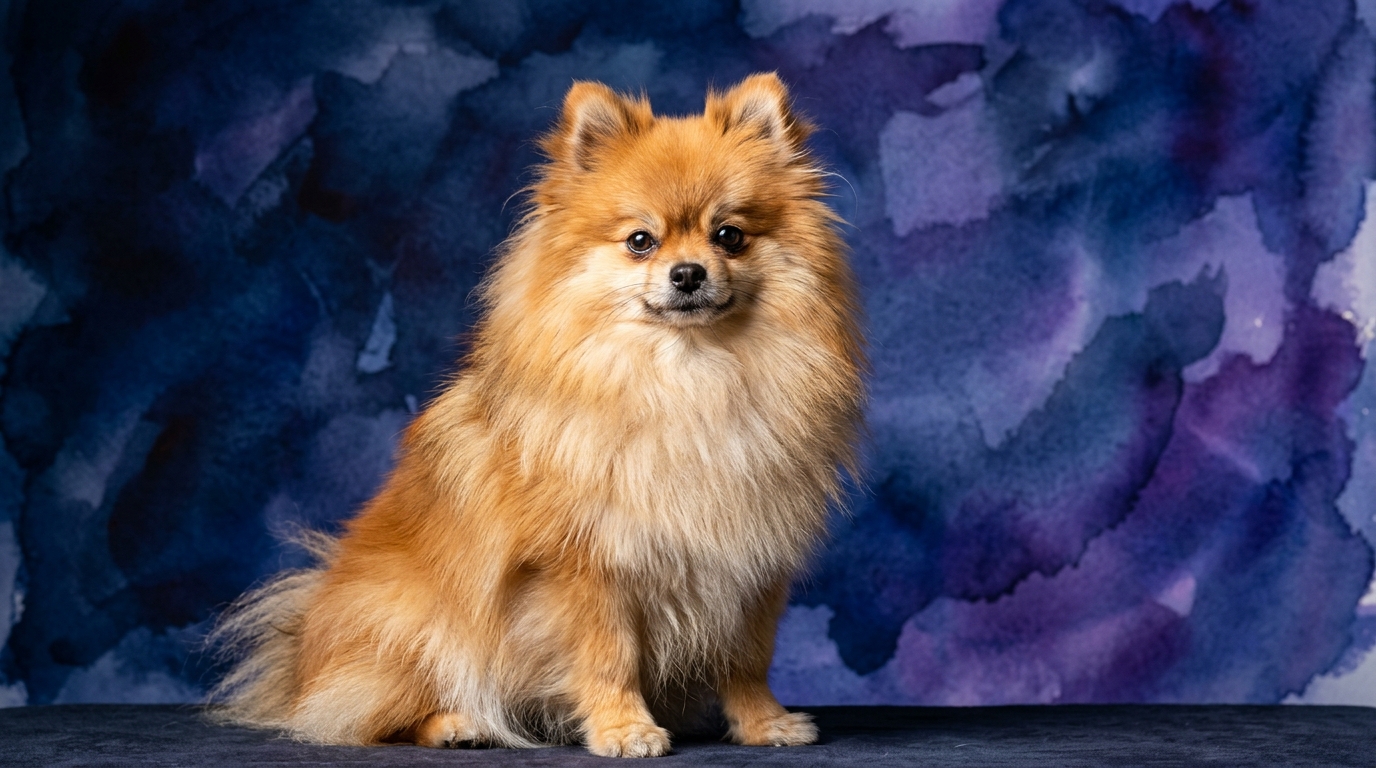
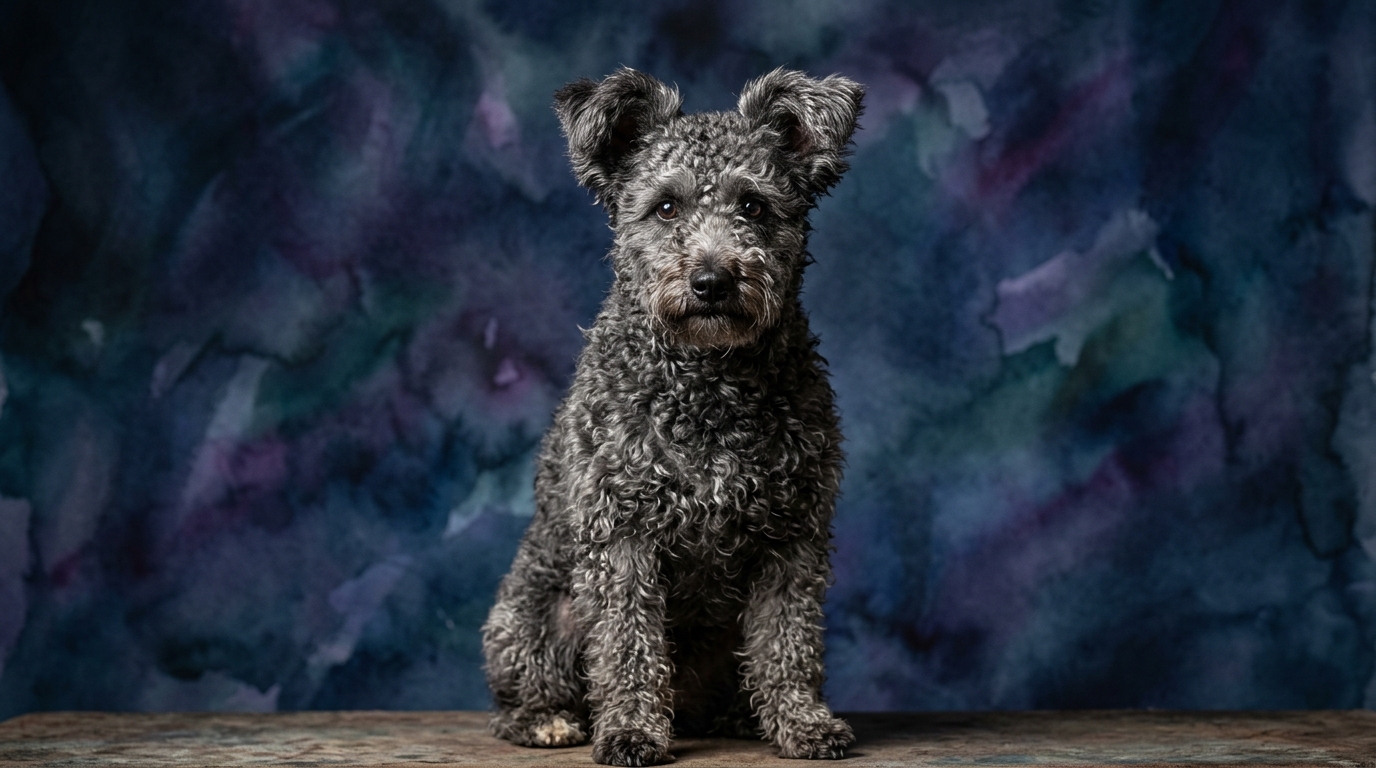
Side-by-Side IQ Profile: Pomeranian vs. Pumi
The Cosmic Pet Pet IQ Lab assesses canine intelligence across five crucial dimensions, offering a detailed look at the mental strengths of each breed. For the Pomeranian, a Toy breed, we observe a robust cognitive profile. Its Problem Solving ability is rated 4/5, indicating a strong capacity for independent thought and navigating novel situations effectively. Training Speed also scores 4/5, suggesting a quick grasp of new commands and routines, often eager to engage in learning activities. Social Intelligence for the Pomeranian is 4/5, reflecting a keen awareness of human emotions and social cues, making them highly attuned companions. Its Instinctive Drive stands at 3/5, manifesting typically as alertness and a desire to be involved in household activities rather than a strong working drive. Finally, the Pomeranian's Memory is rated 4/5, allowing it to retain learned behaviors and recall past experiences with considerable accuracy.
The Pumi, a Herding breed, presents a different yet equally compelling cognitive blueprint. Its Problem Solving ability is rated 3/5, indicating competence in resolving challenges, albeit potentially requiring more guidance than the Pomeranian. Training Speed for the Pumi is 3/5, meaning it learns at a steady pace, capable of mastering complex tasks with consistent effort. Its Social Intelligence is also 3/5, reflecting an ability to form strong bonds and work cooperatively, particularly within a task-oriented context. The Pumi's Instinctive Drive is 3/5, mirroring the Pomeranian's score numerically, but its nature is distinctly rooted in its herding heritage, involving a strong impulse to gather and manage. Its Memory is rated 3/5, allowing it to recall information and experiences reliably, though perhaps not with the same immediate recall as a Pomeranian.
Where the Pomeranian Wins Cognitively
The Pomeranian consistently demonstrates higher scores in several key cognitive dimensions, giving it a distinct edge in certain areas. With a 4/5 in Problem Solving, the Pomeranian often shows a more spontaneous ability to figure things out, whether it's opening a cabinet door or devising a strategy to retrieve a toy from under furniture. This often translates into a quick wit and adaptability in new environments. Its 4/5 Training Speed score means it generally picks up new commands and tricks with fewer repetitions, making early socialization and obedience training a relatively smooth process. They often seem to anticipate what you want them to do.
Furthermore, the Pomeranian's 4/5 Social Intelligence is a significant advantage in a companion role. They are highly perceptive of human moods and intentions, often reacting empathetically or seeking to engage when they sense an opportunity for interaction. This makes them exceptionally responsive to subtle cues and excellent at integrating into family dynamics. Their superior Memory (4/5) reinforces both their training speed and social acumen, allowing them to consistently apply learned behaviors and recall specific interactions, fostering a strong, predictable bond with their owners.
Where the Pumi Excels Cognitively
While the Pumi's numerical scores in problem-solving, training speed, social intelligence, and memory are a point below the Pomeranian's, its instinctive drive, rated at 3/5, holds a unique and powerful character. Unlike the Pomeranian's drive, which often manifests as alertness and a desire to be involved in domestic life, the Pumi's instinctive drive is deeply rooted in its herding heritage. This means its cognitive strengths lie in its ability to independently assess and react to dynamic situations, such as managing livestock or navigating complex outdoor environments. This type of applied, independent problem-solving, though not reflected as a higher 'problem solving' score in general, is a distinct cognitive advantage when facing real-world, fast-paced challenges that require quick, agile decision-making without constant human direction.
The Pumi’s cognitive profile, even with numerically lower scores, points to a different kind of mental resilience and focus. Its social intelligence, while rated 3/5, is geared towards working cooperatively with a handler in a task-oriented manner, rather than purely companionship. This suggests a dog capable of focused partnership in activities, valuing a clear job and direction. Its memory and problem-solving, at 3/5, are robust enough to recall complex sequences of actions and adapt within a working context, making it particularly suited for dog sports or activities that leverage its natural herding instincts and require sustained mental engagement.
Which Is Easier to Train and Why?
Based on the Cosmic Pet Pet IQ Lab scores, the Pomeranian, with its 4/5 Training Speed and 4/5 Problem Solving, generally presents as the easier breed to train. Their eagerness to please, combined with a quick grasp of new concepts, means they often respond well to positive reinforcement and pick up basic obedience commands rapidly. Pomeranians are typically motivated by praise and treats, and their strong social intelligence allows them to readily understand what their human expects, leading to faster learning curves in structured training environments. They often enjoy the mental stimulation of learning new tricks and performing for their owners, which further accelerates the training process.
The Pumi, with 3/5 in both Training Speed and Problem Solving, requires a more patient and consistent approach. While capable of learning complex tasks, their herding background means they possess a strong independent streak and a working drive that needs appropriate channeling. They might not respond with the same immediate enthusiasm as a Pomeranian, often needing clear, consistent direction and a handler who understands how to leverage their natural instincts. Training a Pumi often benefits from incorporating activities that mimic their herding purpose, providing an outlet for their cognitive energy and making the learning process more engaging for them, even if it takes more repetitions to solidify a command.
Suitability for Active vs. Relaxed Owners
The cognitive profiles of the Pomeranian and Pumi point to clear differences in their suitability for various owner lifestyles. The Pomeranian, with its higher social intelligence and strong memory, combined with a moderate instinctive drive (3/5), often thrives with owners who can provide consistent companionship and mental engagement through interactive play and short training sessions. They are adaptable to apartment living and can be content with moderate daily exercise, such as walks and indoor games. Their cognitive strengths make them excellent companions for relaxed owners who appreciate a perceptive, affectionate, and relatively easy-to-train dog that enjoys being at the center of family life without demanding extensive physical exertion.
In contrast, the Pumi's cognitive makeup, particularly its 3/5 instinctive drive rooted in herding, makes it far better suited for active owners. This breed possesses significant mental and physical energy that needs a constructive outlet. Owners who engage in dog sports like agility, flyball, or herding trials will find the Pumi's problem-solving and training speed, though rated 3/5, are perfectly adequate for mastering complex sequences, especially when their innate drive is harnessed. A Pumi needs a 'job' to feel fulfilled, making it an ideal companion for individuals or families with an active, outdoor lifestyle who can provide consistent mental challenges and plenty of exercise, preventing boredom and potential behavioral issues that arise from unchanneled cognitive energy.
The Verdict
Choose a Pomeranian if you seek a highly perceptive, quick-learning companion who thrives on social interaction and gentle mental challenges, fitting well into a more relaxed household.
Opt for a Pumi if you're an active owner seeking a task-oriented partner, ready to engage in dog sports or working activities that channel its independent problem-solving and strong herding drive.
🧠 Find Your Pet's IQ Score
Our Pet IQ Lab assessment covers 25+ tests across 5 cognitive dimensions — personalized to your breed.
Take the Full IQ Test →Frequently Asked Questions
Do Pomeranians require a lot of mental stimulation?
Yes, despite their small size, Pomeranians benefit significantly from regular mental stimulation. Their 4/5 problem-solving and memory scores mean they enjoy learning tricks, puzzle toys, and interactive games to keep their minds sharp and engaged, preventing boredom.
How does the Pumi's herding instinct affect its trainability?
The Pumi's 3/5 instinctive drive, rooted in herding, can make training more complex as they possess an independent nature and a strong desire to 'work.' Training is most effective when it leverages this drive, providing them with tasks and activities that fulfill their cognitive need to manage and control.
Which breed is better for first-time dog owners?
For first-time dog owners, the Pomeranian is generally a more forgiving choice due to its higher training speed and social intelligence. Their eagerness to please and adaptability make the learning process for both dog and owner relatively smoother, compared to the Pumi's more demanding cognitive and physical needs.