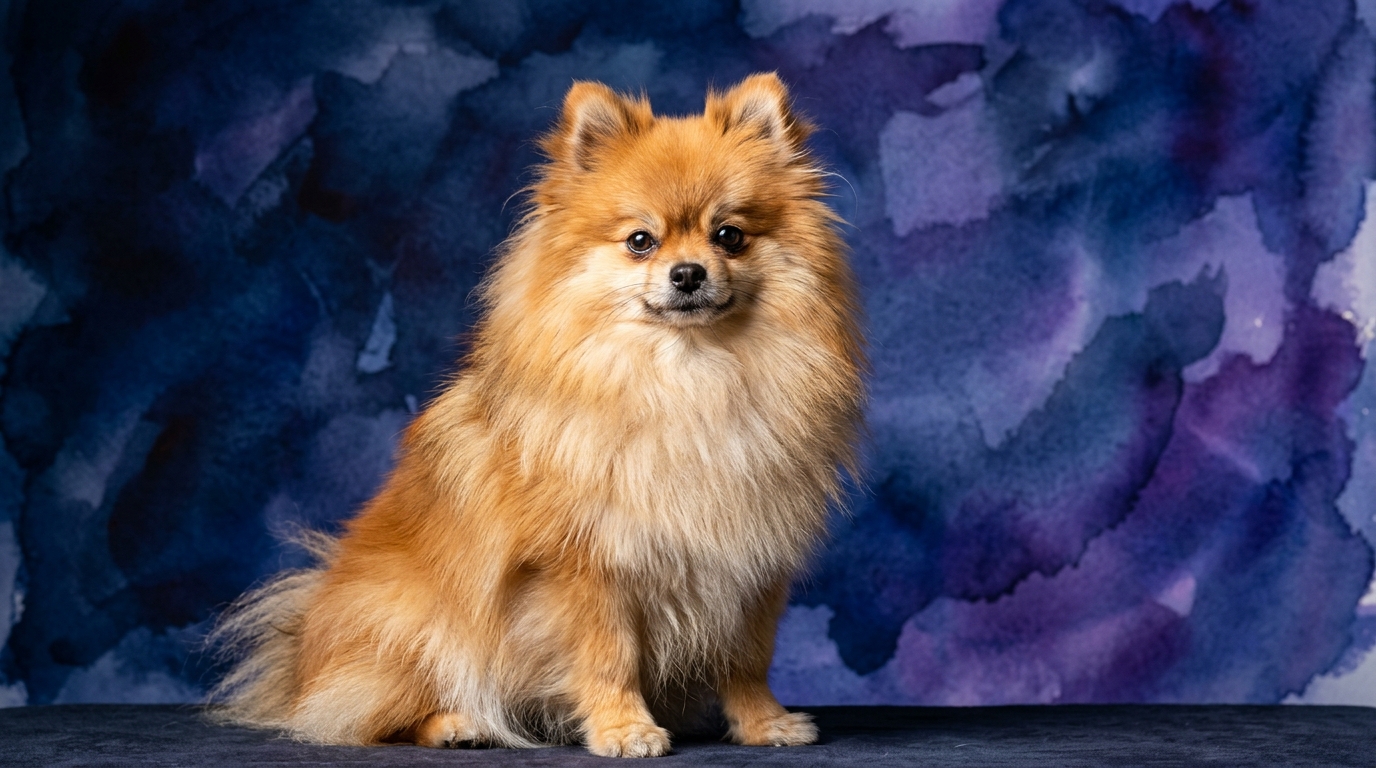

Side-by-Side IQ Profile: Pipsqueak vs. Dynamo
The Pomeranian, a spirited toy breed, consistently demonstrates a sharp intellect, earning it a notable Coren rank of #23 among canine breeds. Our Pet IQ Lab data reflects this with a strong 4/5 in Problem Solving, indicating their adeptness at navigating novel situations and figuring out how things work, from opening treat containers to understanding complex household dynamics. Their Training Speed also scores an impressive 4/5, suggesting they grasp new commands and routines with remarkable alacrity. Social Intelligence, another key metric, is rated 4/5 for Pomeranians, highlighting their keen awareness of human emotions and social cues, often making them highly attuned companions. Memory stands at a solid 4/5, enabling them to retain learned behaviors and recognize people or places over extended periods. Instinctive Drive, while present, registers at 3/5, manifesting typically as curiosity or a playful desire to explore, rather than a strong working compulsion.
In contrast, the Rat Terrier, a compact and energetic terrier, presents a more uniform cognitive profile, though it is not Coren-ranked. Our Pet IQ Lab assessment shows a consistent 3/5 across all five dimensions. Their Problem Solving ability, rated 3/5, indicates a solid capacity to tackle challenges, often employing persistence and practical approaches to overcome obstacles. Training Speed at 3/5 means they are perfectly capable of learning, though they may require more consistent repetition and engaging methods compared to faster learners. Social Intelligence, also at 3/5, suggests they are aware of their human companions but might be less overtly expressive or attuned to subtle emotional shifts than some breeds, often preferring a more direct interaction style. Memory, at 3/5, is reliable for retaining essential commands and routines, though perhaps not for recalling intricate details over very long stretches. Their Instinctive Drive, matching the Pomeranian at 3/5, is distinctly channeled towards their heritage of hunting and pursuit, often displaying focused tenacity when engaged in activities that mimic their ancestral tasks.
Where the Pomeranian Wins Cognitively
The Pomeranian's cognitive strengths distinctly shine in areas requiring quick mental processing and social finesse. Their 4/5 Problem Solving score means they often outmaneuver the Rat Terrier in scenarios demanding creative solutions or understanding abstract concepts. For instance, a Pomeranian might more quickly discern how to manipulate a complex puzzle toy or figure out a novel way to get attention, demonstrating a flexible and inventive mind. This quick apprehension translates directly into their superior Training Speed (4/5 versus the Rat Terrier's 3/5), allowing them to pick up new tricks and commands in fewer repetitions, making early obedience and advanced trick training a smoother, often more rewarding process. They excel in environments where rapid adaptation and understanding of new rules are beneficial.
Furthermore, the Pomeranian's higher Social Intelligence (4/5) gives them an edge in interpreting human communication and emotional states. They often seem to anticipate their owner's moods or desires, responding with appropriate gestures like a comforting nudge or a playful invitation. This heightened social awareness, coupled with their strong memory (4/5), makes them particularly adept at remembering specific human interactions, preferred routines, and the intricacies of family dynamics. They are more likely to remember a particular person's preferences or a specific sequence of events that leads to a desired outcome, making them exceptional at navigating complex social landscapes within a home.
Where the Rat Terrier Wins Cognitively
While the Rat Terrier's individual cognitive scores of 3/5 across the board might not outpace the Pomeranian's higher marks, its unique strength lies in the cohesive and tenacious application of these traits, particularly its unwavering Instinctive Drive (3/5). This breed excels in tasks demanding sustained focus and physical engagement, where its Problem Solving (3/5) is applied with persistent determination rather than quick, socially-oriented cleverness. For instance, a Rat Terrier's ability to methodically work through a scent trail or persistently engage with a challenging puzzle toy, driven by its innate purpose, showcases a practical, enduring cognitive resilience that is perfectly suited for working roles.
Their consistent Memory (3/5) and Training Speed (3/5), while not top-tier, are perfectly adequate for mastering complex sequences necessary for agility or earth dog trials, provided the motivation aligns with their breed's inherent drive. This breed's cognitive profile is less about dazzling displays of quick wit and more about reliable, consistent application of intelligence towards a goal, making it an exceptional choice for specific, task-oriented pursuits where patience and a strong work ethic are valued. Their moderate social intelligence can also be an asset in working contexts, allowing them to remain focused on a task without excessive distraction from human interaction.
Which is Easier to Train and Why
Based on our Pet IQ Lab metrics, the Pomeranian (Training Speed 4/5) will generally be easier to train than the Rat Terrier (Training Speed 3/5). The Pomeranian's higher score in Training Speed, coupled with its superior Social Intelligence (4/5), means they typically pick up new commands and behaviors in fewer repetitions. They are often eager to please and highly responsive to positive reinforcement, quickly associating actions with rewards and human approval. This responsiveness stems from their keen ability to read human cues and their strong desire for social interaction, making them highly motivated to comply with training requests. For instance, house-training or teaching basic obedience commands often progresses rapidly with a Pomeranians due to their fast learning curve and attentiveness to their owner’s reactions.
The Rat Terrier, while certainly trainable, requires a more consistent and engaging approach. Their 3/5 Training Speed indicates they will learn, but perhaps not with the same lightning pace as a Pomeranian. Their inherent terrier nature, which includes an independent streak and a strong focus on their instinctive drives, means trainers must be particularly adept at maintaining their interest and making training sessions feel like a rewarding game or a purposeful activity. Behavioral differences often observed include a Rat Terrier's tendency to follow its nose or investigate surroundings even during a training session, requiring more effort from the trainer to redirect and maintain focus. While they can master complex tasks, it often requires more patience, creativity, and a willingness to tap into their innate drive to keep them engaged and learning effectively.
Which Suits Active Owners vs. Relaxed Owners
For owners seeking a companion that can adapt to a more relaxed lifestyle, with bursts of playful activity, the Pomeranian is often a suitable choice. While they possess a moderate Instinctive Drive (3/5) and enjoy mental stimulation, their exercise needs can often be met with indoor play, short walks, and puzzle toys. Their high Social Intelligence (4/5) and eagerness to engage with their human family make them ideal for owners who enjoy frequent interaction, cuddles, and companionship. They thrive in environments where they are central to family activities, even if those activities are primarily lounging on the couch or engaging in quiet play. However, their sharp minds still require regular mental engagement to prevent boredom.
Conversely, the Rat Terrier is better suited for active owners who can provide consistent outlets for their robust energy and focused cognitive traits. Their consistent 3/5 in Instinctive Drive, coupled with their breed heritage, means they possess a strong desire for purposeful activity, whether it's long walks, hiking, agility training, or engaging in scent work. Owners who enjoy regular outdoor adventures or structured dog sports will find a Rat Terrier to be an enthusiastic and capable partner. Their cognitive profile, while not scoring higher, is geared towards practical application and persistence, meaning they benefit greatly from challenges that engage both their body and mind. A relaxed owner might find it challenging to adequately fulfill a Rat Terrier's need for activity, potentially leading to boredom-induced behaviors.
The Verdict: When to Choose Each
The Verdict
Choose the Pomeranian if you prioritize a highly socially intelligent, quick-learning companion eager for mental games and close interaction within a varied lifestyle. They excel in environments where their sharp wit and social awareness can truly shine.
Opt for the Rat Terrier if you are an active owner seeking a tenacious, focused partner for structured activities and outdoor adventures, valuing consistent effort and practical problem-solving in a canine companion.
🧠 Find Your Pet's IQ Score
Our Pet IQ Lab assessment covers 25+ tests across 5 cognitive dimensions — personalized to your breed.
Take the Full IQ Test →Frequently Asked Questions
Do Pomeranians bark more due to their intelligence?
Pomeranians' keen social intelligence and problem-solving abilities can contribute to their vocal nature. They might bark to alert owners, express desires, or communicate effectively, using their cognitive skills to get their message across.
Can a Rat Terrier learn complex tricks despite its 3/5 training speed?
Absolutely. While their training speed is 3/5, Rat Terriers possess a solid memory and instinctive drive that allows them to master complex tricks and sequences. Success hinges on consistent, engaging training methods that tap into their tenacity and purposeful nature.
Which breed is better for first-time dog owners based on IQ?
For first-time owners, the Pomeranian's higher training speed and social intelligence might make the initial learning curve smoother, as they often respond quickly to guidance. However, a Rat Terrier could also suit a dedicated first-time owner willing to commit to consistent, engaging training and ample exercise.