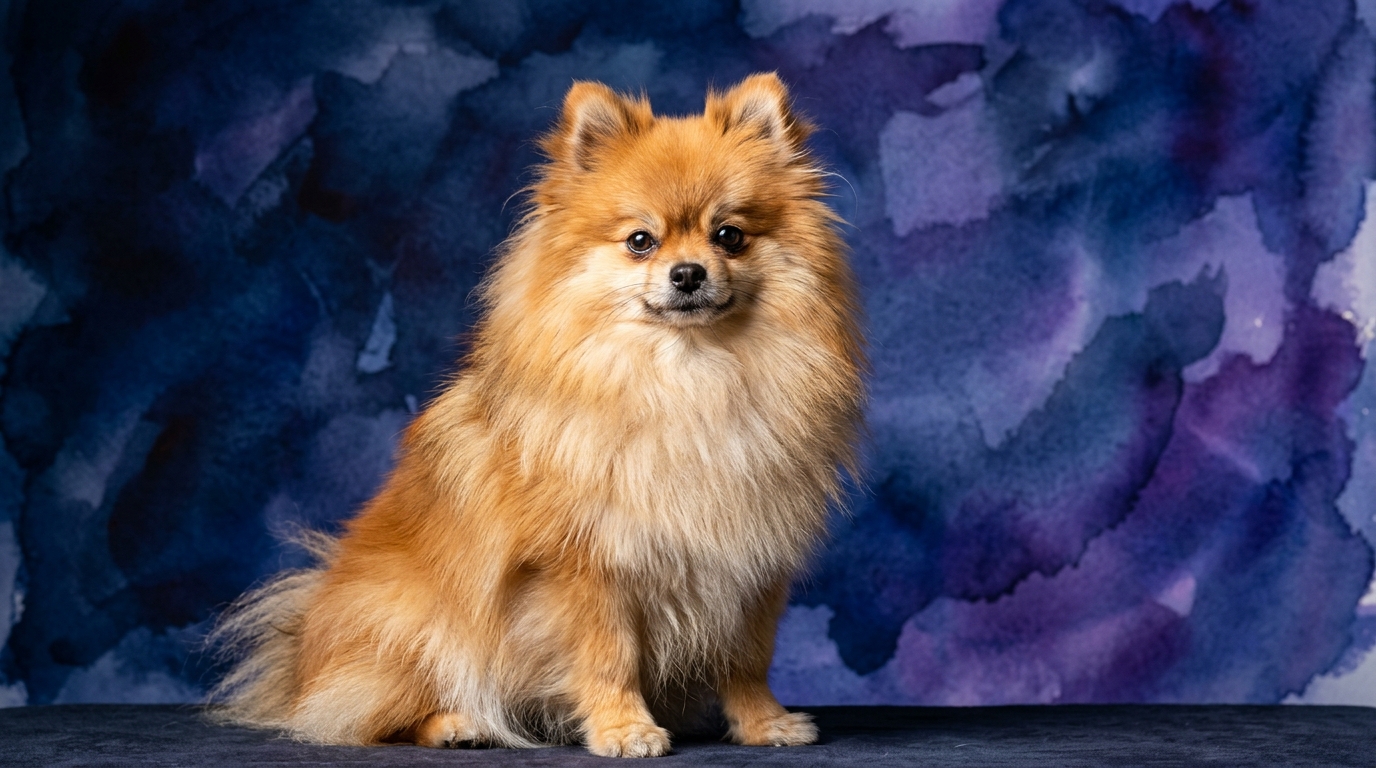

Side-by-Side IQ Profile: Pomeranian vs. Welsh Springer Spaniel
At The Cosmic Pet Pet IQ Lab, we evaluate canine intelligence across five key dimensions. For both the Pomeranian and the Welsh Springer Spaniel, their Problem Solving score stands at 4/5, indicating a solid capacity for navigating novel situations and figuring out solutions to environmental puzzles. This suggests they can learn complex tasks, understand cause-and-effect, and adapt well to changing routines. For a Pomeranian, this might manifest in cleverly opening treat containers or finding ways to get attention, while for a Welsh Springer Spaniel, it could involve strategizing to retrieve a toy from a difficult spot or understanding multi-step commands during training exercises.
Both breeds also exhibit a commendable pace in acquiring new commands and behaviors, scoring 4/5 in Training Speed. This indicates they grasp new instructions readily and form associations between cues and actions efficiently. Their attentiveness during training sessions allows them to absorb lessons quickly, making them generally responsive students, capable of mastering a wide array of behaviors with consistent guidance.
A key distinction emerges in Social Intelligence. The Pomeranian scores 4/5, suggesting a heightened ability to interpret human cues, understand social hierarchies within a household, and respond empathetically to emotions. They are often adept at reading body language and vocal tones, making them highly attuned companions. The Welsh Springer Spaniel, with a 3/5, still possesses good social awareness but might be slightly less finely tuned to subtle human emotional shifts or complex social dynamics, focusing more on task-oriented interactions rather than purely social nuances.
Regarding Instinctive Drive, both breeds share a moderate level of inherent, hardwired behaviors, scoring 3/5. For the Pomeranian, this might include a protective instinct despite their size, or a drive to bark at perceived threats. For the Welsh Springer Spaniel, this manifests as a drive to follow scents, retrieve, or patrol, reflecting their sporting heritage. A 3/5 score means these drives are present and can be channeled, but they are not overwhelming to the point of being difficult to manage without proper guidance.
Finally, both breeds demonstrate strong recall abilities, remembering commands, routines, and experiences over extended periods, earning a 4/5 in Memory. This cognitive strength aids in consistent training, as they are less likely to forget previously learned behaviors. For the Pomeranian, this means remembering where treats are hidden or specific people, while for the Welsh Springer Spaniel, it reinforces complex hunting patterns or multi-stage obedience tasks.
Where the Pomeranian Wins Cognitively
The Pomeranian's primary cognitive advantage lies in its superior Social Intelligence, scoring 4/5 compared to the Welsh Springer Spaniel's 3/5. This enhanced capacity allows Pomeranians to excel at interpreting human emotions, understanding subtle social cues, and forming deeply empathetic bonds. They often anticipate their owner's moods, respond sensitively to changes in household dynamics, and adapt their behavior to maintain harmony, making them exceptionally perceptive companions. This acute social awareness also contributes to their effectiveness as therapy dogs, where reading human distress or comfort cues is paramount. Furthermore, their higher Coren rank (#23 vs #31) broadly indicates a more advanced overall working and obedience intelligence, suggesting a greater capacity for understanding and executing commands within a structured environment.
Where the Welsh Springer Spaniel Wins Cognitively
While the raw IQ scores show more similarities than stark differences, the Welsh Springer Spaniel's cognitive strengths are particularly well-suited to its original purpose. With Problem Solving and Training Speed both at 4/5, alongside a solid Instinctive Drive of 3/5, the Welsh Springer Spaniel demonstrates a robust and practical intelligence. Their cognitive profile makes them highly effective in tasks requiring sustained focus, independent decision-making within a framework (like tracking or retrieving), and consistent application of learned skills in dynamic outdoor environments. While their social intelligence is slightly lower, it does not detract from their ability to form strong working partnerships built on clear communication and task execution, proving their mental fortitude in demanding roles.
Which is Easier to Train and Why
Given that both breeds score an identical 4/5 in Training Speed, they are both relatively quick learners, readily grasping new commands and routines. However, the Pomeranian's higher Social Intelligence (4/5) can provide a slight edge in certain training contexts, particularly those requiring nuanced communication and emotional responsiveness. A Pomeranian is often more attuned to the trainer's subtle body language and vocal inflections, potentially leading to faster adjustments during complex behavioral shaping. For instance, house-training might progress rapidly as they are quick to understand approval or disapproval cues.
The Welsh Springer Spaniel, while equally quick to learn commands, might benefit more from a direct, consistent, and task-oriented approach, focusing on the mechanics of the command rather than emotional subtleties. For instance, teaching a complex retrieve sequence might be equally fast for both, but the Pomeranian might pick up on the trainer's frustration or excitement more readily, influencing their motivation. Their similar Instinctive Drive (3/5) means neither is excessively distracted by innate urges, making focus achievable for both with proper engagement and motivation.
Which Suits Active Owners vs. Relaxed Owners
The choice between these two breeds often hinges on lifestyle and activity levels, despite their similar Instinctive Drive scores. The Welsh Springer Spaniel, a Sporting breed, typically possesses a higher energy output and a greater need for physical and mental stimulation rooted in its heritage, even with a 3/5 Instinctive Drive score. They thrive with active owners who can provide daily vigorous exercise, opportunities for scent work, retrieving games, or participation in dog sports like agility or field trials. A relaxed owner might find it challenging to meet their need for engagement, potentially leading to boredom-induced behaviors and a less fulfilled canine companion.
The Pomeranian, while spirited and playful, has a lower overall physical demand due to its size and Toy group classification. Their 3/5 Instinctive Drive manifests more as curiosity and interaction rather than a constant need for strenuous activity. They are often content with daily walks, indoor play, and plenty of social interaction, making them well-suited for relaxed owners who enjoy companionship and mental engagement without requiring extensive outdoor adventures. Their cognitive profile allows them to be stimulated through interactive toys and learning new tricks within a home setting.
The Verdict
Choose a Pomeranian if you seek a highly perceptive, emotionally attuned companion who thrives on social interaction and sophisticated communication, fitting well into a home environment that values companionship and mental engagement over strenuous physical activity.
Opt for a Welsh Springer Spaniel if you are an active individual or family seeking a diligent, trainable partner for outdoor adventures, dog sports, or tasks requiring sustained focus and a moderate drive, offering a robust blend of trainability and working aptitude.
🧠 Find Your Pet's IQ Score
Our Pet IQ Lab assessment covers 25+ tests across 5 cognitive dimensions — personalized to your breed.
Take the Full IQ Test →Frequently Asked Questions
Does the Coren rank difference between Pomeranian (#23) and Welsh Springer Spaniel (#31) significantly impact their trainability?
While Coren rank offers a general indicator of working and obedience intelligence, both breeds score identically in our specific Training Speed metric (4/5). This suggests both are very capable of learning commands quickly, though the Pomeranian's higher social intelligence might make them more responsive to subtle trainer cues, influencing perceived ease.
How does the social intelligence difference (Pomeranian 4/5 vs WSS 3/5) manifest in daily life?
A Pomeranian with 4/5 social intelligence is often more adept at reading human emotions and social situations, making them exceptionally perceptive and empathetic companions. A Welsh Springer Spaniel, at 3/5, is still socially aware but might be more direct and less sensitive to nuanced emotional shifts, focusing more on clear communication and task-oriented interactions rather than emotional subtleties.
Are both breeds suitable for first-time dog owners?
Both breeds possess strong cognitive attributes that make them trainable, with 4/5 scores in Problem Solving, Training Speed, and Memory. However, the Welsh Springer Spaniel's higher energy and need for consistent exercise may present a greater challenge for first-time owners compared to the Pomeranian's more adaptable activity requirements, making the Pomeranian often a more approachable choice for novices.