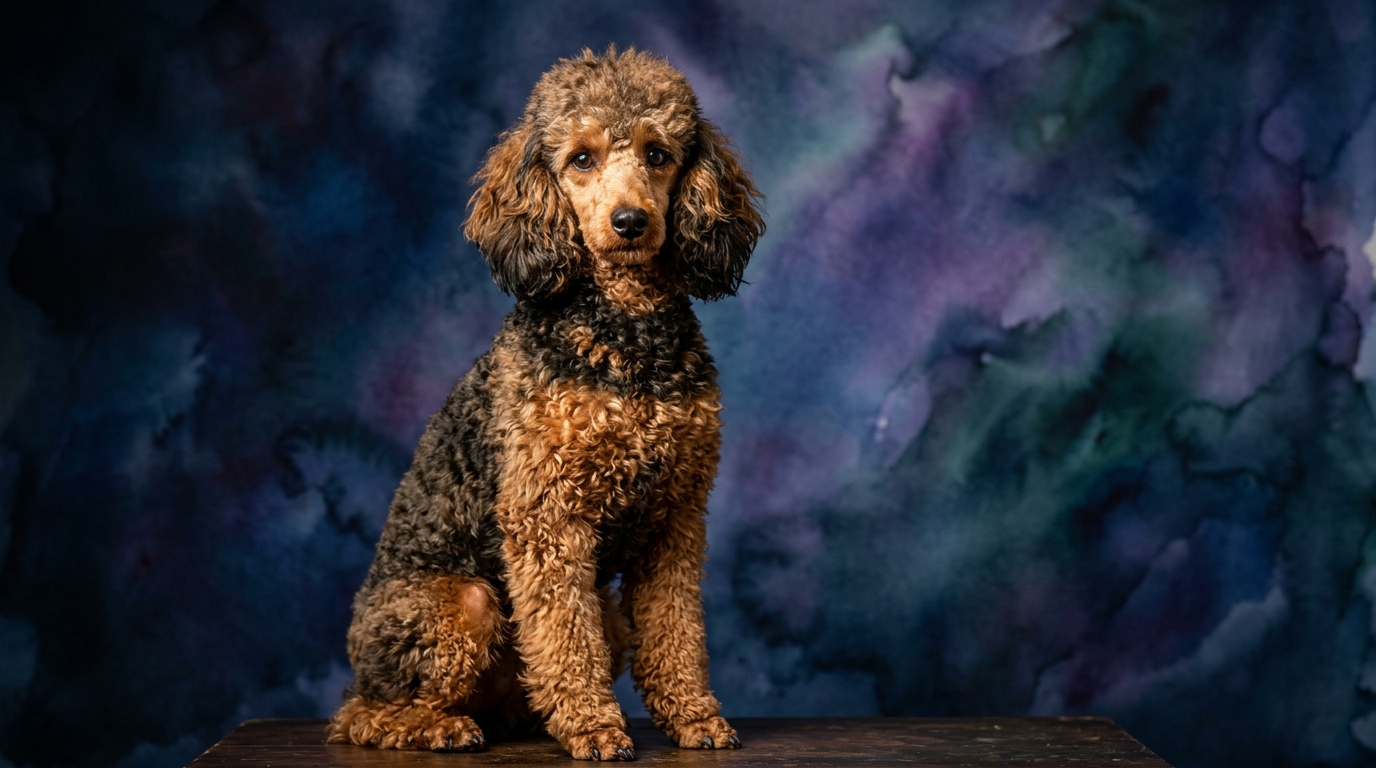
Side-by-Side IQ Profile: Standard Poodle
**Problem Solving (5/5):** Standard Poodles demonstrate an exceptional capacity for abstract thought, adeptly strategizing to overcome novel obstacles and understanding multi-step tasks that require genuine comprehension of cause-and-effect rather than mere rote learning. **Training Speed (5/5):** They exhibit rapid acquisition of new commands and complex routines, often needing remarkably few repetitions to grasp expectations and eagerly engage in learning sessions. **Social Intelligence (5/5):** Possessing a profound understanding of human emotions, intentions, and subtle social cues, they are highly attuned to their handlers, capable of complex communication, and form deep, adaptable bonds across various social settings. **Instinctive Drive (4/5):** While they have a history of working and a strong retrieve drive, their primary intrinsic motivation is often geared towards companionship and interaction, rather than intense, specific instinctual tasks like herding or guarding, making their purpose often handler-focused. **Memory (5/5):** Their outstanding retention of learned behaviors, commands, and past experiences allows for consistent performance and long-term recall of even the most intricate sequences.
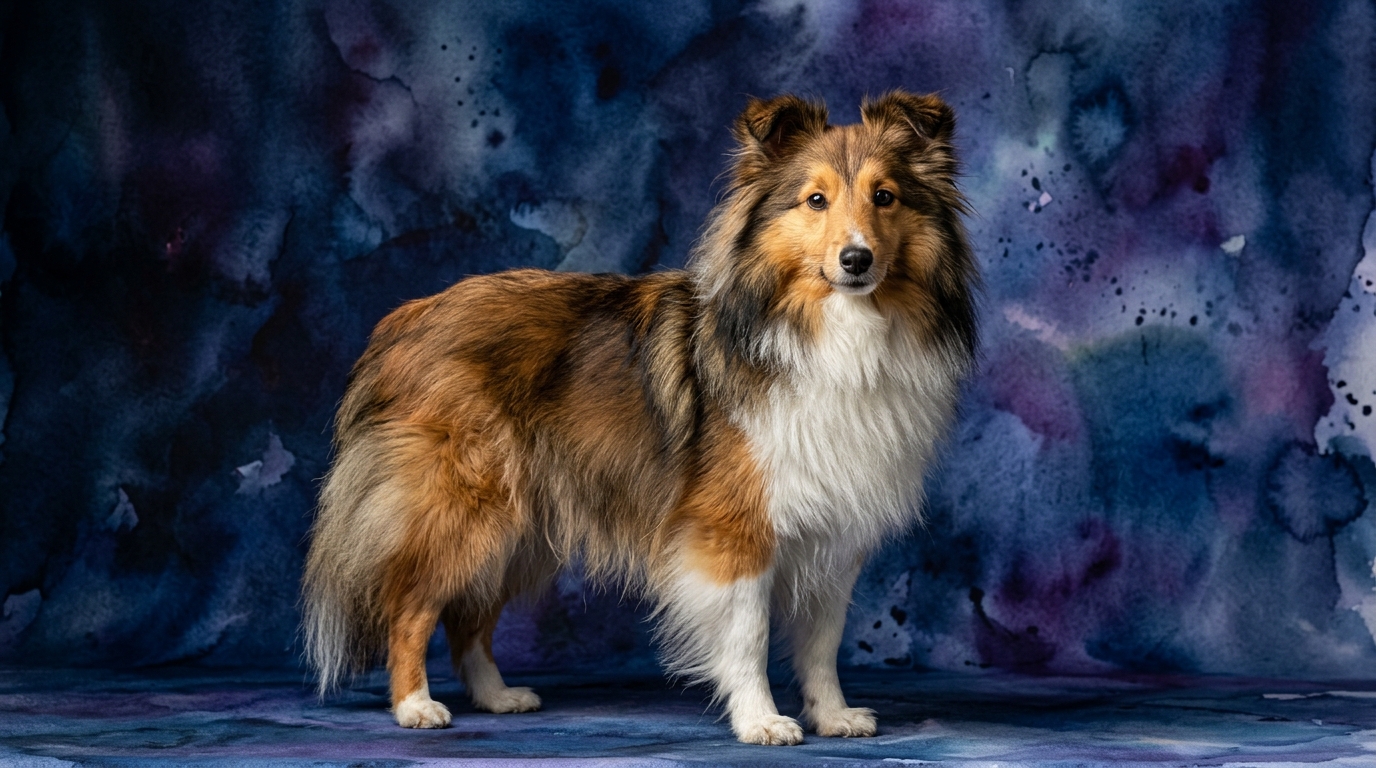
Side-by-Side IQ Profile: Shetland Sheepdog
**Problem Solving (4/5):** Shetland Sheepdogs are proficient at solving practical, often spatially-oriented problems, particularly those related to managing movement or navigating environments, with their problem-solving often rooted in their herding instincts, focusing on efficiency and control. **Training Speed (5/5):** They are equally swift in learning commands and routines, demonstrating an intrinsic eagerness to please and a quick mental uptake, which allows them to excel in obedience and agility. **Social Intelligence (4/5):** Responsive to human cues and forming close bonds within their family unit, they show empathy and understanding, though they can be more reserved or discerning with strangers, indicating a focused social sphere compared to the Poodle's broader adaptability. **Instinctive Drive (5/5):** They possess an exceptionally strong herding drive, manifesting as a deep-seated desire to gather, control, and manage movement, even in the absence of actual livestock, making this drive a core component of their cognitive processing and behavior. **Memory (5/5):** Their excellent memory for commands, complex routines, and the layout of their environment is crucial for executing intricate herding tasks and ensuring consistent, precise performance in various dog sports.
Where the Standard Poodle Wins Cognitively
The Standard Poodle’s cognitive strengths truly shine in areas demanding abstract reasoning and versatile social understanding. Their 5/5 Problem Solving isn’t just about learning tricks; it signifies a superior ability to generalize concepts, understand abstract rules, and devise novel solutions without direct prior experience, such as figuring out a complex puzzle or chaining together multiple learned actions for a new outcome. This goes beyond simple conditioning, indicating genuine insight and adaptable thinking. Furthermore, their 5/5 Social Intelligence grants them a broader, more nuanced understanding of diverse social contexts and human interactions, making them exceptionally adaptable to various environments and people, often picking up on subtle cues from strangers more readily than many other breeds. This comprehensive social acumen contributes to their success as therapy or service dogs, where reading human emotion in varied situations is paramount. Their intelligence is also less tied to a singular overriding instinct, allowing their cognitive abilities to be applied across a wider spectrum of tasks and learning domains, from complex trick training to advanced service work, with less internal conflict from a dominant innate drive.
Where the Shetland Sheepdog Wins Cognitively
The Shetland Sheepdog's cognitive prowess is deeply intertwined with its powerful intrinsic motivation. Their 5/5 Instinctive Drive isn't merely a behavioral trait but a fundamental cognitive framework, enabling them to excel at tasks requiring strategic movement, precise spatial awareness, and predictive behavior related to managing the flow and positioning of others. This manifests as exceptional precision in agility courses, an innate ability to "read" livestock (or even human family members), and a natural aptitude for complex, pattern-based tasks. This cognitive integration of drive allows for remarkable focus and efficiency in task execution. Driven by this strong instinct, Shelties often exhibit exceptional focus and precision when engaged in activities that tap into their herding heritage. This sustained cognitive focus facilitates meticulous execution of commands, particularly in demanding obedience and agility routines where speed must be combined with exactness, ensuring they maintain attention on a task until completion. Moreover, their herding background imbues them with a keen environmental awareness, particularly concerning the movement and positioning of individuals or objects within their space. This translates to an acute sensitivity to their surroundings, making them vigilant watchdogs and highly adept at navigating complex or changing physical environments with grace and foresight.
Which is Easier to Train and Why
While both breeds boast an impressive 5/5 Training Speed, the concept of "easier to train" often hinges on the specific training goals and the handler's experience, given their distinct cognitive profiles. The Standard Poodle, with its 5/5 Problem Solving and 5/5 Social Intelligence, is remarkably adaptable to diverse training methods and objectives. They possess a strong intrinsic desire to please and will actively try to understand and anticipate their handler's wishes, even if instructions are not perfectly clear, thanks to their adaptable problem-solving skills. Their relatively lower Instinctive Drive (4/5) means they typically present fewer powerful, innate behaviors that need redirection or management during training, making them exceptionally pliable for abstract commands or non-instinctive tasks. They are often less prone to independent decision-making driven by ingrained instincts during a training session, preferring to collaborate. Conversely, the Shetland Sheepdog's 5/5 Training Speed is coupled with an equally strong 5/5 Instinctive Drive. This means they learn commands swiftly, but their potent herding drive can be a double-edged sword. While it provides immense motivation for activities like agility or obedience that mimic herding patterns, it can also manifest as behaviors such as nipping at heels, circling, or attempting to "herd" children or other pets. Training a Sheltie often involves skillfully channeling or redirecting this powerful, deeply ingrained drive, which requires a handler who understands and can effectively work *with* it rather than against it. They might learn a command quickly, but then apply it through the lens of their herding instinct, necessitating more specific guidance to ensure the desired outcome. Therefore, for a novice owner or someone seeking a dog primarily for general companionship and basic obedience without specific sport aspirations, the **Standard Poodle** might feel "easier" due to their broad cognitive adaptability and fewer pronounced instinctive behaviors to manage. For an owner keen on dog sports or who appreciates working with and shaping a strong intrinsic drive, the **Shetland Sheepdog** is equally trainable, but benefits from a more nuanced, drive-aware approach.
Which Suits Active Owners vs. Relaxed Owners
Both the Standard Poodle and the Shetland Sheepdog are breeds that thrive on engagement, making neither truly suited for a genuinely "relaxed" owner who seeks minimal interaction or mental stimulation for their canine companion. Both require substantial mental and physical activity to prevent boredom and potential behavioral issues. For **active owners**, both breeds can be excellent matches, albeit with different activity preferences. The Standard Poodle, with its exceptional problem-solving and social intelligence, excels in advanced obedience, agility, trick training, and even demanding service work. They appreciate novelty and thoroughly enjoy engaging with their owners in a wide variety of activities, from long walks and hikes to complex puzzle toys, with their energy often directed towards interaction and learning new things. The Shetland Sheepdog also requires significant physical and mental exercise, but this is often more intrinsically tied to their powerful herding drive. They are outstanding in dog sports like agility, obedience, rally, and herding trials, where their instinctive behaviors can be channeled into structured, purposeful activities. An active owner for a Sheltie is typically someone prepared to engage in focused, often repetitive, and physically demanding activities that satisfy their deep-seated drive. If "relaxed" implies a slightly less regimented routine, the **Standard Poodle** might adapt marginally better, provided they still receive ample intellectual challenges and social interaction. Their high social intelligence means they are often content simply being with their people, even if the activity isn't always rigorous, as long as they feel involved and mentally engaged. Conversely, a **Shetland Sheepdog** would likely become restless, potentially exhibiting excessive barking, destructive behaviors, or persistent herding attempts if their strong drives are not adequately addressed through regular, purposeful activity, making them less suitable for genuinely passive lifestyles.
The Verdict
When you seek a versatile companion capable of profound abstract learning, broad social adaptability, and a willingness to engage in a wide array of mental challenges, especially if you value a dog whose intelligence is less tethered to a specific innate drive and prioritizes collaborative interaction, choose the Standard Poodle.
When you appreciate a dog whose intellect is powerfully integrated with a strong, purposeful drive, excelling in tasks requiring precision, focus, and strategic movement, and you are prepared to understand and channel their herding instincts into structured, engaging activities, choose the Shetland Sheepdog.
🧠 Find Your Pet's IQ Score
Our Pet IQ Lab assessment covers 25+ tests across 5 cognitive dimensions — personalized to your breed.
Take the Full IQ Test →Frequently Asked Questions
Are Standard Poodles prone to separation anxiety due to their high social intelligence?
Standard Poodles, with their exceptional social intelligence and strong bonds to their families, can indeed develop separation anxiety if not properly habituated to alone time early on. Their deep connection with their owners means they thrive on consistent interaction and can struggle when left without sufficient mental or social stimulation.
How does a Shetland Sheepdog's instinctive drive manifest in a home environment without livestock?
In a home without livestock, a Shetland Sheepdog's strong instinctive drive often manifests as a desire to "herd" family members, children, or other pets, sometimes by circling or gently nipping at heels to direct movement. This drive also contributes to their natural alertness, making them excellent watchdogs, and their need for structured activities that mimic herding, such as agility or rally.
Do Standard Poodles require more grooming than Shetland Sheepdogs, and does this impact their care?
Yes, Standard Poodles typically require more intensive grooming due to their continuously growing, non-shedding coat, needing regular professional clipping every 4-6 weeks to prevent painful matting and maintain skin health. Shetland Sheepdogs have a dense double coat that sheds and requires regular brushing to manage loose hair, but generally demands less frequent and less costly professional intervention than a Poodle's coat, significantly impacting the time and financial commitment to their care.