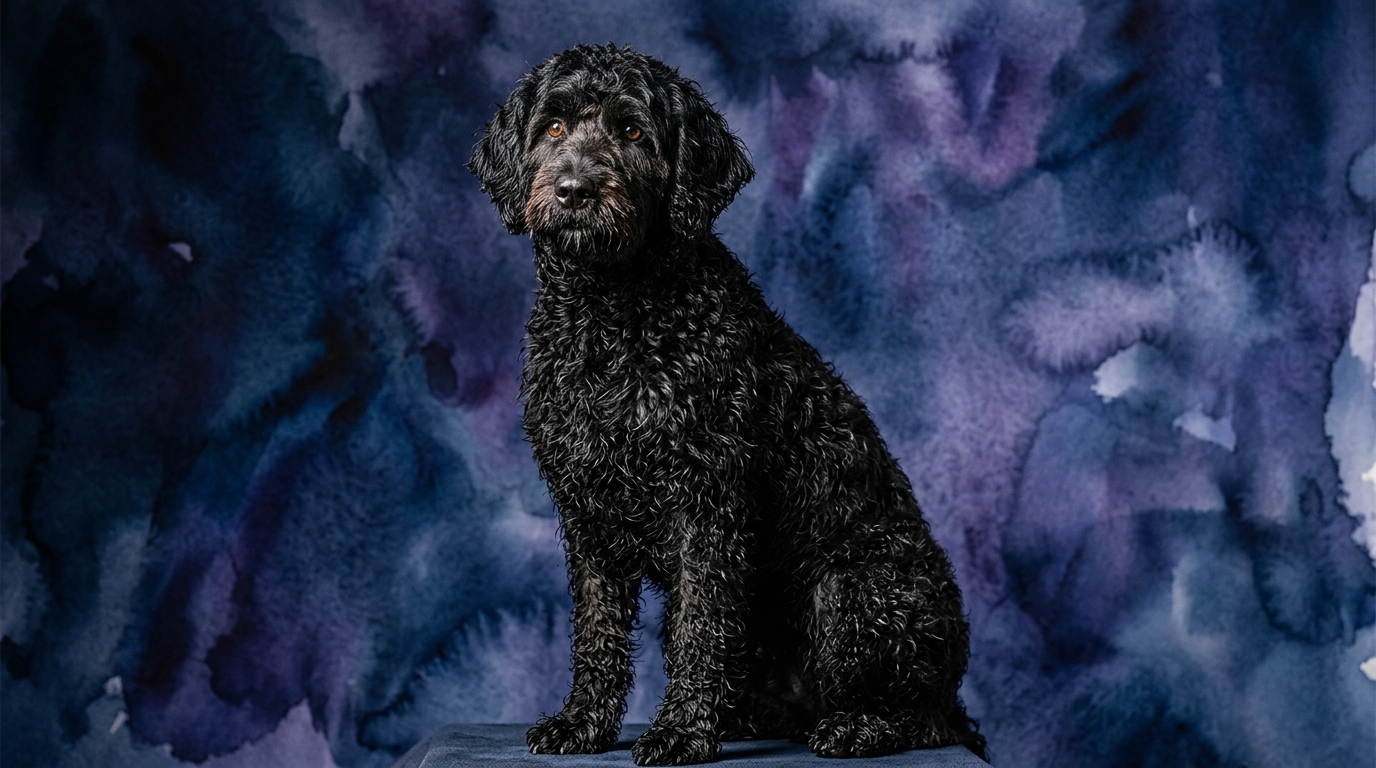
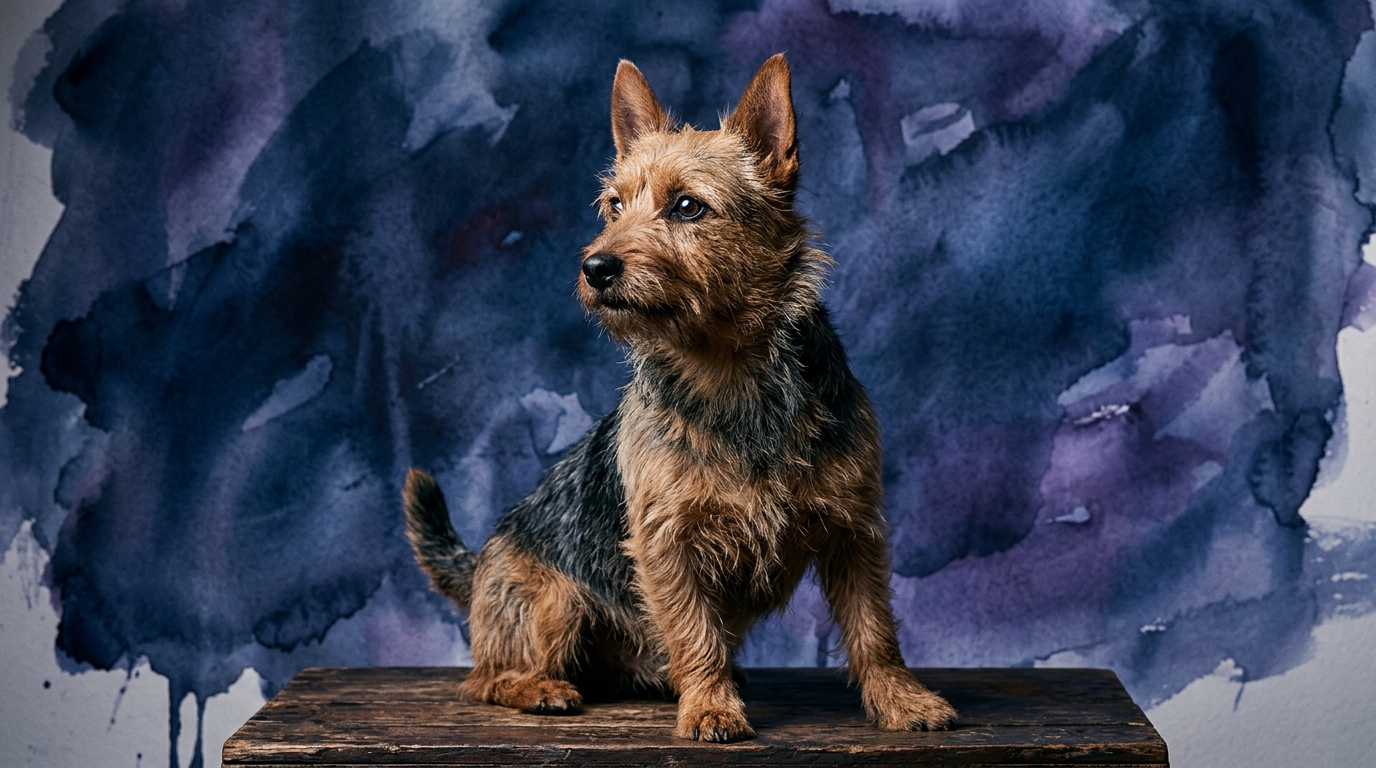
Side-by-Side Cognitive Profiles
The Cosmic Pet Pet IQ Lab assesses canine intelligence across five critical dimensions, each rated on a scale of 1 to 5. Intriguingly, both the Portuguese Water Dog (PWD) and the Australian Terrier (AT) register a consistent 3/5 across all categories. This numerical parity, however, belies the distinct ways these breeds apply their cognitive abilities, shaped by centuries of selective breeding for specific tasks.
**Problem Solving (3/5):** A '3' in problem-solving indicates a dog capable of navigating moderately complex challenges, often requiring a few attempts or some guidance to find a solution. For the PWD, this might involve figuring out how to retrieve an object from a tricky water current or manipulating a latch to access a desired area. Their solutions often reflect a methodical, task-oriented approach, leveraging their physical capabilities and handler focus. The Australian Terrier, conversely, might exhibit its 3/5 problem-solving by creatively extracting a 'vermin' toy from a tight space, or independently figuring out how to get to a perceived scent source. Their approach tends to be more tenacious and driven by instinctual curiosity, often with a trial-and-error method that values persistence.
**Training Speed (3/5):** A score of 3/5 suggests a moderate learning pace, meaning these breeds generally grasp new commands and routines with consistent repetition and positive reinforcement, typically requiring a fair number of repetitions to achieve fluency. The PWD, as a working breed, often demonstrates an eagerness to cooperate with its handler, making structured training sessions generally productive. While they learn at a moderate pace, their desire to engage and perform can make the process feel smooth for a dedicated owner. The Australian Terrier, while certainly capable of learning, may present a more independent streak during training. Their 3/5 speed is evident, but success often hinges on making sessions highly engaging and rewarding to capture their sometimes-distractible terrier focus, requiring patience to work through their self-directed nature.
**Social Intelligence (3/5):** This dimension reflects a dog's ability to understand and respond to social cues from humans and other animals. A 3/5 indicates a good, but not exceptional, capacity for social awareness. The PWD's social intelligence often manifests as a strong bond with its family and an attentiveness to its handler's moods and intentions, crucial for a working partner. They typically integrate well into family dynamics and can read human body language effectively. The Australian Terrier's social intelligence, while also a 3/5, can be expressed with a more discerning or selective nature. They form deep attachments to their inner circle and can be quite perceptive of their family's emotions, but may be more reserved or wary with strangers or unfamiliar dogs, reflecting their historical role as a guardian and independent worker.
**Instinctive Drive (3/5):** A '3' in instinctive drive points to a breed possessing noticeable, but manageable, natural predispositions for specific behaviors. For the PWD, this includes a strong drive for retrieving, swimming, and an inherent desire to work alongside humans. Their instincts are often channeled into cooperative tasks, and their energy is frequently directed towards physical activity and engagement. The Australian Terrier's 3/5 instinctive drive is distinctly terrier: a potent urge to dig, chase small prey, and explore. This drive is a core part of their identity and, while not overwhelming, requires consistent management and appropriate outlets to prevent unwanted behaviors like excessive digging or persistent chasing of small animals.
**Memory (3/5):** A memory score of 3/5 indicates that both breeds retain learned information and experiences reasonably well. They are capable of remembering commands, routines, and past interactions over a moderate period. The PWD's memory is often observed in their ability to recall complex sequences of tasks, particularly those related to their working heritage, and to remember locations of frequently used items or paths. The Australian Terrier's memory also serves them well, allowing them to recall training cues, but also to remember the whereabouts of interesting smells, the location of a buried toy, or specific routes taken on walks. Both breeds benefit from consistent reinforcement to solidify memories, but are generally reliable in recalling what they've learned.
Where the Portuguese Water Dog Wins Cognitively
While both breeds share identical 3/5 scores, the Portuguese Water Dog often demonstrates a cognitive edge in tasks requiring sustained, cooperative focus and intricate procedural memory, especially when directed by a handler. Their heritage as working partners on fishing boats has honed their ability to absorb and execute multi-step commands in sequence, often under varying conditions. This manifests as a superior capacity for learning complex chains of behaviors for activities like competitive obedience, agility, or dock diving, where precision and collaboration are paramount. Their problem-solving, though a 3/5, is often geared towards finding solutions that align with a human partner's objective, making them particularly adept at collaborative learning and execution. They excel in environments where their robust physical abilities are coupled with a mental challenge that requires a shared goal.
Where the Australian Terrier Wins Cognitively
Conversely, the Australian Terrier showcases a distinct cognitive strength in independent problem-solving and rapid assessment of novel situations, particularly those driven by their keen senses and self-preservation instincts. Despite a 3/5 problem-solving score, their terrier tenacity means they are often more inclined to think on their own paws to overcome obstacles, especially if it involves investigating a scent or navigating a confined space. Their social intelligence, while also a 3/5, often includes a sharper ability to detect subtle changes in their environment or the presence of unfamiliar elements, a remnant of their vermin-hunting days. This leads to a quick, often instinctive, decision-making process when acting alone, making them highly effective at independent exploration and managing their immediate surroundings without constant human direction.
Which is Easier to Train and Why
When considering 'ease' of training, it's crucial to acknowledge the distinct behavioral drivers of each breed, despite their shared 3/5 training speed. The Portuguese Water Dog, with its working background, generally approaches training with an eager-to-please attitude and a strong desire for partnership. Their cooperative nature means they are often highly motivated by praise and the opportunity to engage with their handler. While they still require consistency and structured sessions to learn at their 3/5 pace, their inherent willingness to work makes the process generally smoother for owners who enjoy a collaborative training style. They thrive on mental stimulation and can become boisterous if under-exercised, but their focus can be readily channeled into productive learning.
The Australian Terrier, on the other hand, while equally capable of learning at a 3/5 pace, brings a characteristic terrier independence to the training arena. Their strong instinctive drives for chasing and digging can easily divert their attention, requiring an owner who is patient, consistent, and creative in making training rewarding and engaging. They respond best to positive reinforcement that respects their clever, yet sometimes stubborn, nature. Training an AT often involves more finesse in managing distractions and building a strong foundation of trust and respect, rather than relying solely on their desire to please. An owner prepared for a dog that sometimes questions commands and needs compelling reasons to comply will find success, but it requires a different approach than with a more biddable breed.
Suitability for Active vs. Relaxed Owners
Neither the Portuguese Water Dog nor the Australian Terrier is suited for truly 'relaxed' owners seeking a sedentary companion, as both breeds possess a significant degree of energy and mental vitality. The Portuguese Water Dog is undeniably a choice for active owners. Their robust physical build and working dog heritage mean they require substantial daily exercise, including vigorous walks, runs, swimming, or engaging in dog sports like agility, obedience, or dock diving. They also demand considerable mental stimulation to prevent boredom and destructive behaviors. Owners who enjoy outdoor adventures, consistent training, and integrating their dog into an active lifestyle will find the PWD a rewarding and tireless companion.
The Australian Terrier, while smaller, is no couch potato. They are energetic for their size and require regular daily walks, playtime, and opportunities for mental engagement to satisfy their terrier instincts. They are ideal for owners who enjoy moderate daily activity, are prepared to manage their strong prey drive, and appreciate a dog with a spirited, independent personality. While they don't demand the same intensity or volume of exercise as a PWD, they still need consistent outlets for their energy and curiosity. Owners who can provide stimulating play, consistent training, and tolerate a bit of independent exploration will find the AT a charming and lively addition to their home.
The Verdict
Choose the Portuguese Water Dog if you are an active owner seeking a highly cooperative partner for complex activities, appreciating a dog whose cognitive strengths lie in collaborative, task-oriented problem-solving and sustained focus.
Opt for the Australian Terrier if you value independent thinking and a spirited personality in a smaller package, ready to engage with a clever dog whose cognitive wins are in tenacious, self-directed problem-solving and keen environmental awareness.
🧠 Find Your Pet's IQ Score
Our Pet IQ Lab assessment covers 25+ tests across 5 cognitive dimensions — personalized to your breed.
Take the Full IQ Test →Frequently Asked Questions
Do Portuguese Water Dogs need to swim regularly?
While their name suggests it, regular swimming isn't strictly necessary for all PWDs, though most adore water. They do, however, require ample physical exercise and mental engagement daily to thrive, regardless of whether that includes aquatic activities.
Are Australian Terriers good with children?
Australian Terriers can be good with children, especially if raised with them and properly socialized. Their spirited nature means they thrive in homes where children understand how to interact respectfully with dogs, as they can be sensitive to rough handling.
How much grooming does a Portuguese Water Dog require?
Portuguese Water Dogs require regular grooming to maintain their non-shedding, single coat. This typically involves brushing several times a week and professional clipping every 6-8 weeks to prevent matting and keep their coat healthy.