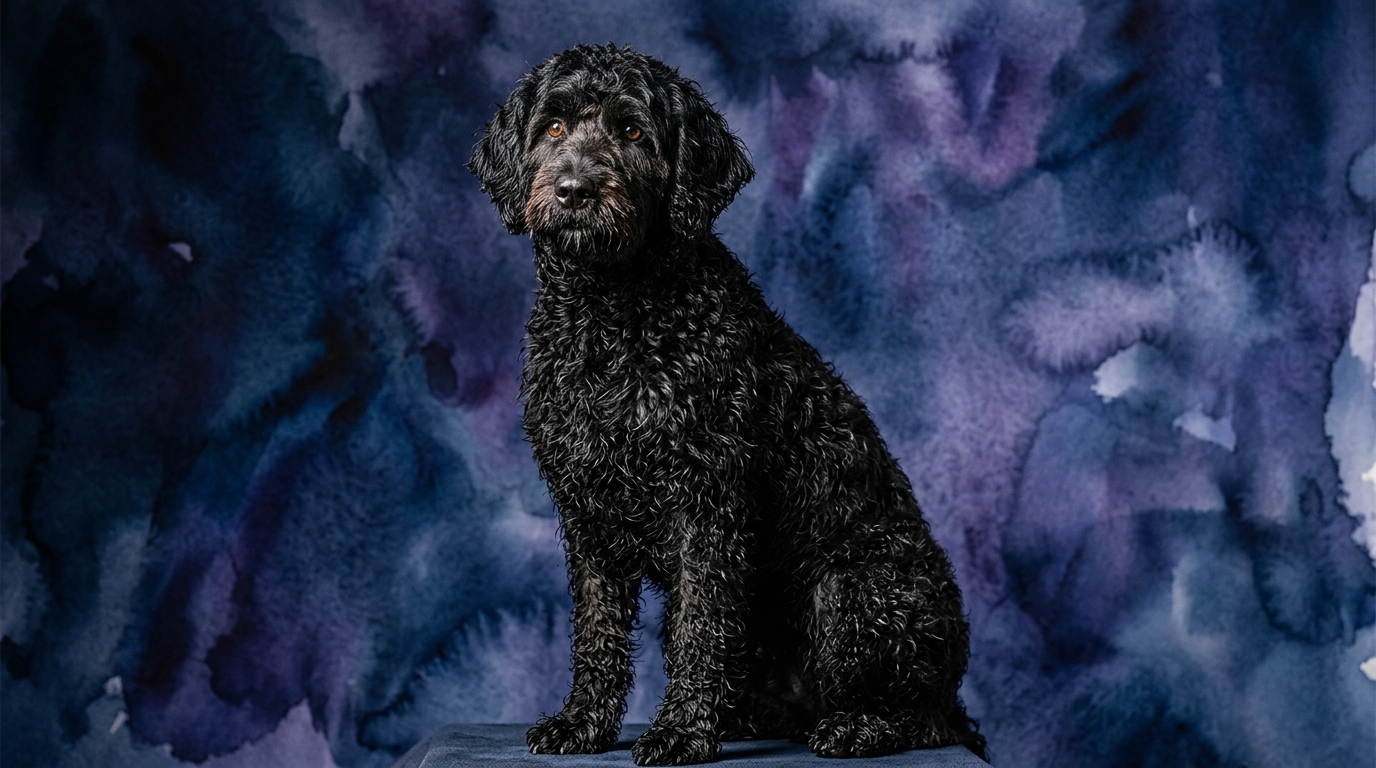
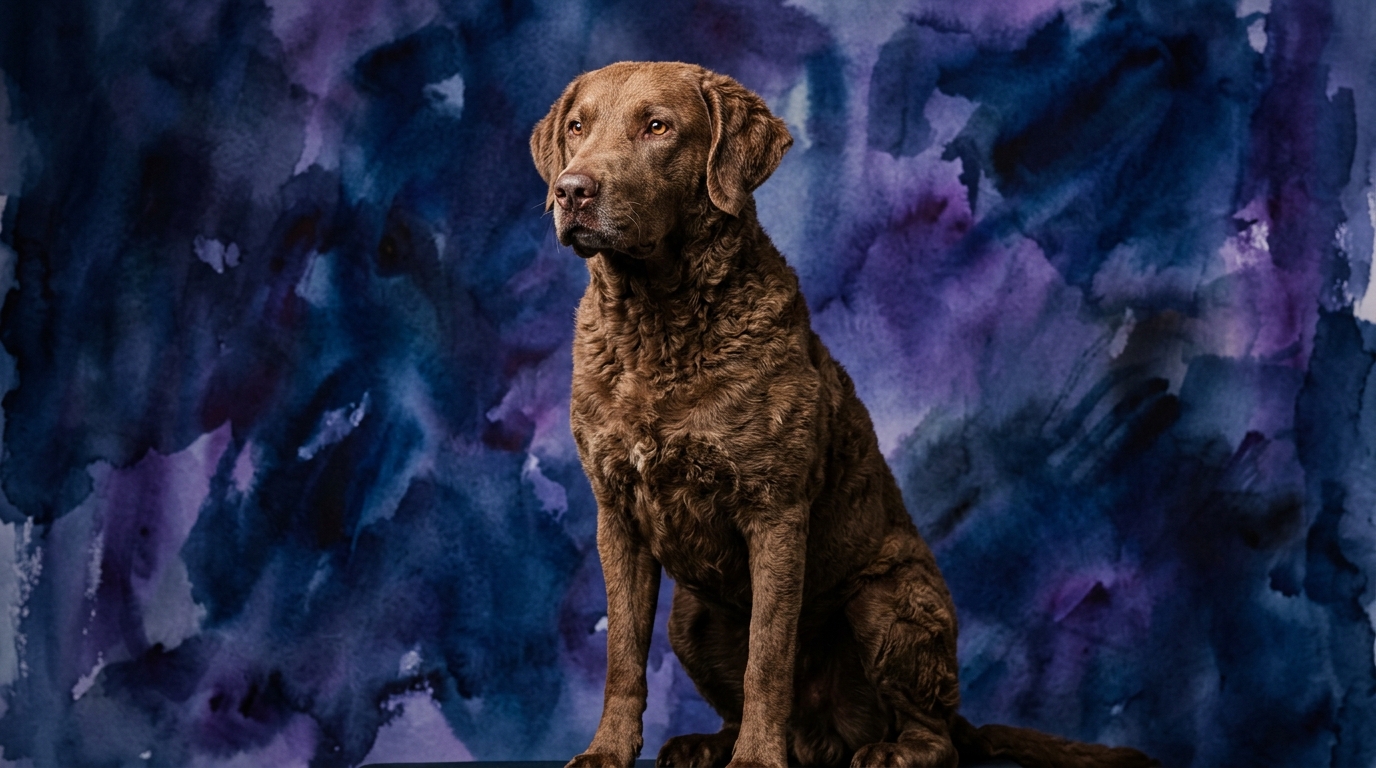
Side-by-Side Cognitive Profile
The Cosmic Pet Pet IQ Lab assesses canine intelligence across five key dimensions, providing a nuanced view beyond simple obedience. For the Portuguese Water Dog and the Chesapeake Bay Retriever, these scores illuminate their inherent aptitudes and tendencies.
The Portuguese Water Dog (PWD) exhibits a Problem Solving score of 3/5, indicating a capacity for independent thought and finding solutions, though perhaps not always with immediate efficiency. Their Training Speed is 3/5, suggesting they learn reliably but may require consistent engagement. Social Intelligence stands at 3/5, reflecting competent understanding of human cues. An Instinctive Drive of 3/5 points to a moderate inclination for their historical working tasks. Finally, their Memory is 3/5, meaning they retain learned information effectively.
In contrast, the Chesapeake Bay Retriever (CBR), with a Coren rank of #27, demonstrates a Problem Solving score of 4/5, indicating a quicker grasp of new challenges and efficient solution-finding. Their Training Speed is 4/5, showing rapid acquisition of commands. Social Intelligence matches the PWD at 3/5, signifying similar aptitude in reading social cues. Instinctive Drive is also 3/5, reflecting a robust inclination for their retrieving heritage. Notably, their Memory score is 4/5, indicating superior long-term retention of complex information.
Where Portuguese Water Dog Excels Cognitively
While the Chesapeake Bay Retriever generally posts higher scores in specific dimensions, the Portuguese Water Dog's cognitive strengths lie in its adaptable and independent problem-solving approach. With a Problem Solving score of 3/5, the PWD is capable of figuring out novel situations without constant human direction, often relying on its own observations and initiative. This isn't about speed, but about self-reliance in navigating varied environments.
Their Social Intelligence of 3/5, combined with this independent streak, means they can integrate well into a family unit while still maintaining a degree of self-sufficiency. They are adept at reading their human companions, but their slightly lower Training Speed (3/5) might suggest a deeper processing of information or a need for more internal justification before committing to a task. This can translate into a more robust, self-driven action once a concept is truly understood and accepted, making them highly capable partners in less structured, dynamic scenarios.
Where Chesapeake Bay Retriever Excels Cognitively
The Chesapeake Bay Retriever clearly demonstrates a cognitive edge in areas demanding rapid acquisition, precise execution, and strong retention. Their Problem Solving score of 4/5 indicates a superior ability to quickly analyze new situations and devise effective solutions. This translates into a dog that can efficiently navigate complex tasks and learn from experiences with remarkable speed.
Complementing this is their Training Speed of 4/5, which means they grasp new commands and routines with impressive swiftness, often requiring fewer repetitions to solidify learning. Their Memory score of 4/5 further reinforces this, allowing them to recall complex sequences and past lessons with notable longevity. The CBR's Coren rank of #27 underscores this capacity for understanding and executing commands with precision and speed, making them exceptionally responsive in structured training and working environments where efficiency and reliability are paramount.
Training Dynamics: PWD vs. CBR
When considering ease of training, the Chesapeake Bay Retriever generally presents a more straightforward path for command acquisition due to its Training Speed score of 4/5 compared to the Portuguese Water Dog's 3/5. CBRs tend to absorb new concepts and cues rapidly, often needing fewer repetitions to ingrain a behavior. Their focused attention and strong desire to perform, often stemming from their inherent retrieving drive, make them highly receptive students in structured training settings.
Portuguese Water Dogs, while certainly capable of learning and retaining information (Memory 3/5), may demand more patience and creative engagement from their trainers. Their Problem Solving score of 3/5, coupled with their independent nature, means they might occasionally 'think' about a command rather than immediately executing it. Trainers often find success by making sessions varied and rewarding to maintain a PWD's interest, understanding that the initial learning phase might be slower, but the eventual understanding is solid.
Matching Breeds to Lifestyles: Active vs. Engaged Owners
Both breeds demand active engagement, but their cognitive profiles suggest different styles of ownership. The Chesapeake Bay Retriever thrives with owners who are committed to structured activities like advanced obedience, competitive dog sports, or serious field work. Their superior Problem Solving and Memory mean they require consistent mental challenges to prevent boredom and channel their intensity. Owners who can provide rigorous, goal-oriented training and engaging, multi-step tasks will find the CBR a highly rewarding partner.
The Portuguese Water Dog also requires significant physical and mental activity, but their adaptable nature and slightly more independent problem-solving (3/5) might make them better suited for active owners whose lifestyle involves more varied, less rigidly structured activities. They excel in environments where their cognitive flexibility can be applied to everyday challenges, like navigating new hiking trails, learning tricks through playful interaction, or adapting to different family routines, rather than solely through repetitive drills. Neither breed is suited for a truly sedentary lifestyle; 'relaxed' in this context means less emphasis on competitive, structured work and more on integrated, active companionship.
The Verdict: When to Choose Each Breed
The Verdict
Choose the Portuguese Water Dog if you seek a water-loving companion with a flexible mind, capable of independent thought and adapting to diverse active lifestyles, and you are prepared for a slightly more patient and creative approach to training.
Choose the Chesapeake Bay Retriever if your ideal companion is a highly trainable, focused, and dedicated partner for structured activities and demanding tasks, eager to learn quickly and retain complex information.
🧠 Find Your Pet's IQ Score
Our Pet IQ Lab assessment covers 25+ tests across 5 cognitive dimensions — personalized to your breed.
Take the Full IQ Test →Frequently Asked Questions
Do Portuguese Water Dogs ever exceed Chesapeake Bay Retrievers in specific cognitive tasks?
While the Chesapeake Bay Retriever generally exhibits faster learning and problem-solving, a Portuguese Water Dog's independent nature might allow it to excel in tasks requiring self-directed initiative or adaptability to unusual, unstructured scenarios where pre-learned commands are less applicable.
How does the Coren rank for the Chesapeake Bay Retriever influence its perceived intelligence?
The Coren rank of #27 indicates the Chesapeake Bay Retriever's strong capacity for understanding new commands in fewer repetitions and obeying them reliably on the first attempt, reflecting a high degree of 'working and obedience intelligence' in a controlled environment.
Are both breeds suitable for first-time dog owners?
Both breeds possess significant energy and strong drives, requiring consistent training and socialization. While a Chesapeake Bay Retriever's higher training speed might seem advantageous, their intensity and cognitive demands can be a lot for a novice; a Portuguese Water Dog's independent streak also requires an experienced hand.