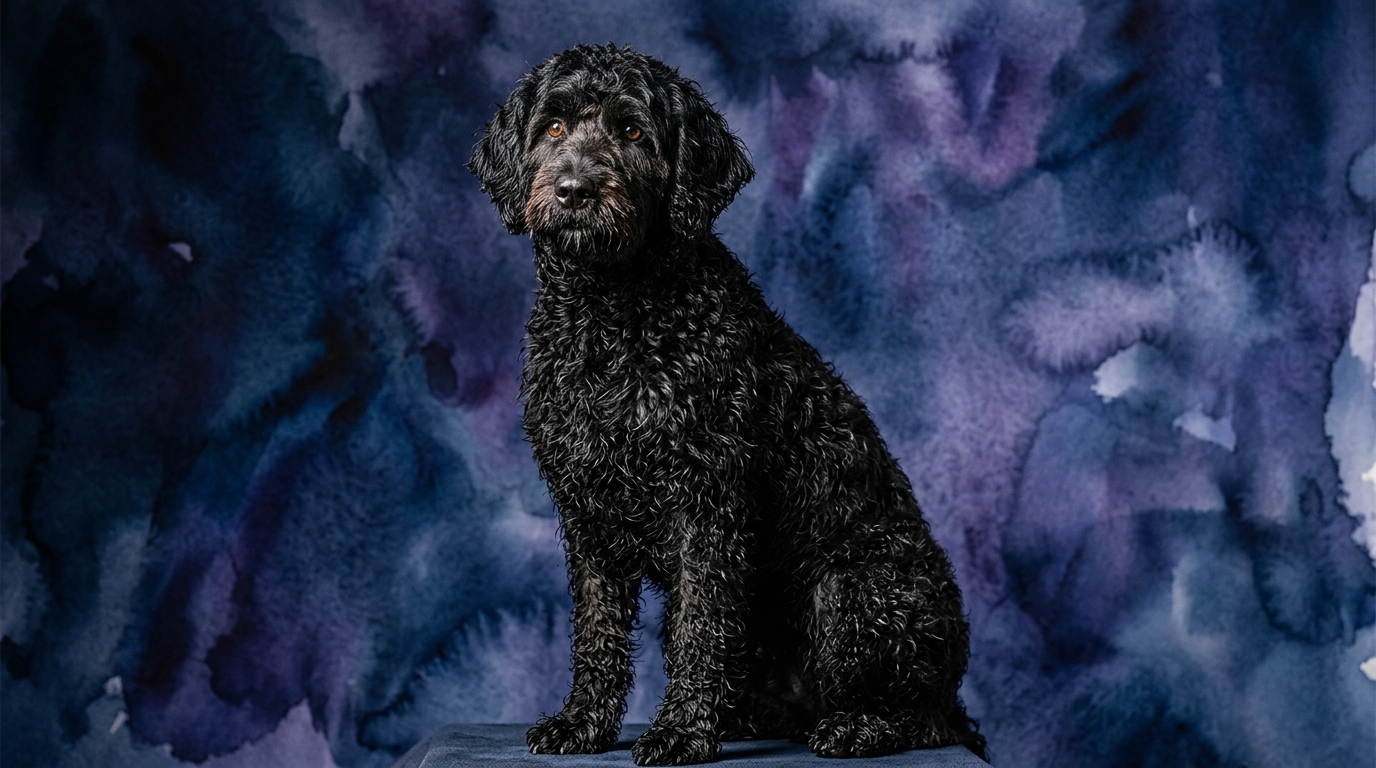
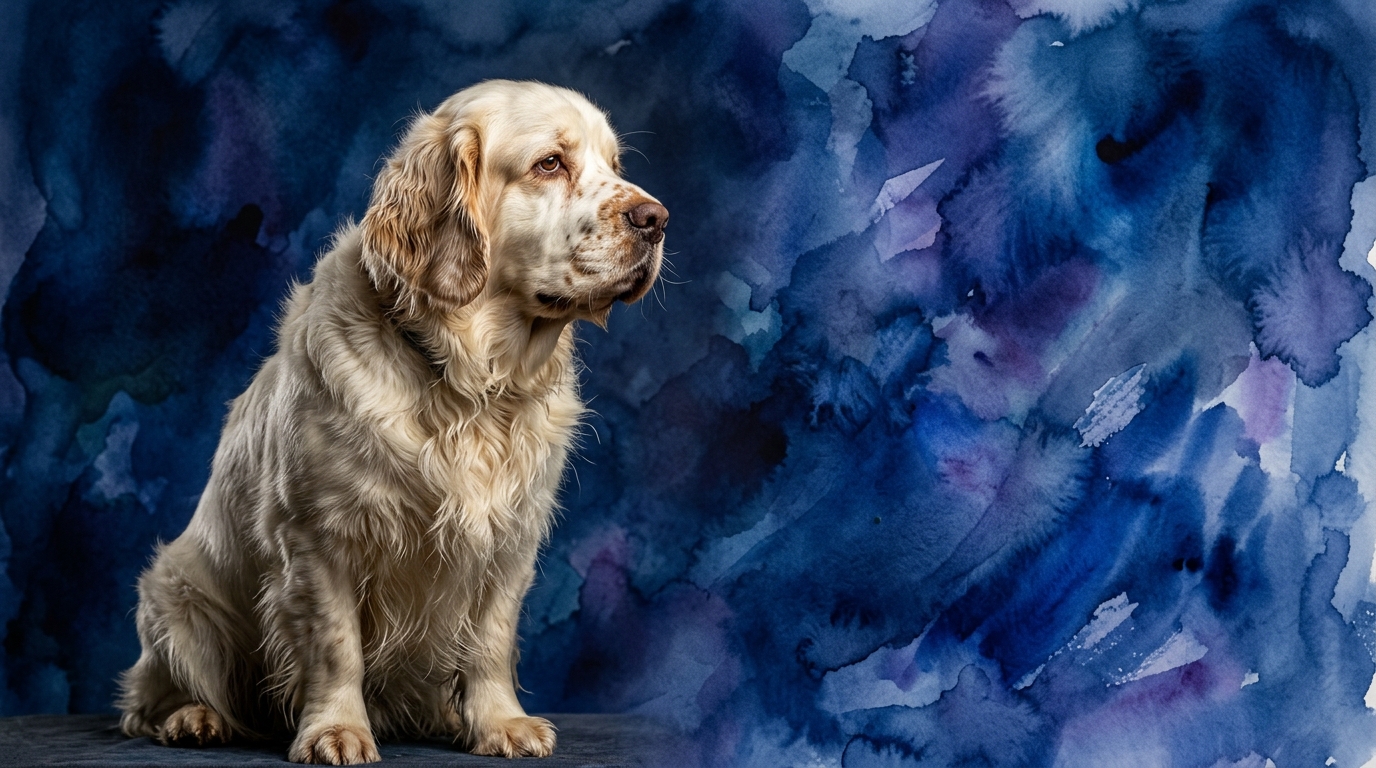
Side-by-Side Cognitive Profiles: Portuguese Water Dog vs. Clumber Spaniel
At first glance, The Cosmic Pet Pet IQ Lab data presents both the Portuguese Water Dog and the Clumber Spaniel with identical scores across five key cognitive dimensions: Problem Solving (3/5), Training Speed (3/5), Social Intelligence (3/5), Instinctive Drive (3/5), and Memory (3/5). However, these numerical equivalencies mask fascinating differences in how each breed applies these cognitive strengths, deeply rooted in their historical purposes and inherent temperaments.
The **Portuguese Water Dog (PWD)**, originally bred to assist fishermen, exhibits a practical, task-oriented approach to Problem Solving (3/5). Their historical role retrieving fishing nets and lost tackle from water demanded a resourceful mind, often involving assessing environmental cues and adapting strategies on the fly. This isn't about complex abstract thought, but rather an efficient, hands-on ability to overcome immediate physical obstacles to achieve a goal, like figuring out how to retrieve a toy from an unusual spot or navigating a complex agility course. Their Training Speed (3/5) reflects an eagerness to learn and pick up new commands with reasonable repetition, driven by their desire to work alongside their human companions. Yet, their independent spirit means they can also test boundaries or find more “efficient” ways to do things if not consistently engaged. Social Intelligence (3/5) in PWDs typically means they are attuned to human emotions and intentions, forming strong bonds and often seeking to please their chosen people, though their exuberance might sometimes override nuanced social signals. Their Instinctive Drive (3/5) is robust and purposeful, centered around retrieving, swimming, and an inherent desire for activity, manifesting as a strong inclination to engage with tasks that mimic their historical functions. Finally, their Memory (3/5) ensures good retention of learned commands, routines, and experiences, as well as spatial memory crucial for navigation in varied environments.
The **Clumber Spaniel**, on the other hand, approaches these same cognitive dimensions with a distinct character. Their Problem Solving (3/5) is marked by a methodical, often slower, but persistent demeanor, reflective of their historical role as a flushing and retrieving gun dog in dense cover. Their problem-solving might involve carefully navigating obstacles in a field to locate game or patiently working to open a puzzle toy, relying on sustained effort rather than immediate insight. Training Speed (3/5) for Clumbers is a moderate pace, preferring a calm, consistent approach; they absorb information steadily but can be independent and deliberate, not always driven by an urgent need to please. Social Intelligence (3/5) manifests as a gentle and loyal nature, exhibiting a quiet sensitivity to their human companions, forming deep attachments and generally being calm observers of social dynamics within their family. Their Instinctive Drive (3/5) is characterized by a strong scenting ability and a methodical desire to flush and retrieve, showing deep focus during walks with their nose to the ground. Their Memory (3/5) supports good long-term recall for established routines, commands, and familiar environments, reliably remembering the steps of a learned task, even if the initial learning process was unhurried.
Where the Portuguese Water Dog Wins Cognitively
Given their working heritage, Portuguese Water Dogs often excel in tasks requiring active assessment of a dynamic environment and rapid, physical adaptation. Their problem-solving at a 3/5 level leans towards agility and resourcefulness in fluid situations, such as navigating complex obstacles in an agility course or spontaneously figuring out how to retrieve an object from a challenging spot in the water. This is complemented by their instinctive drive (3/5) which fuels a persistent, energetic approach to task completion, making them particularly adept at sustained, physically demanding work where quick decisions are beneficial. Their combination of training speed and memory (both 3/5) allows them to quickly integrate new information and recall it efficiently, especially in scenarios that involve a physical component or a changing environment, like learning a new trick that requires a sequence of movements.
Where the Clumber Spaniel Wins Cognitively
Clumber Spaniels often demonstrate a particular cognitive strength in tasks demanding sustained focus, methodical application, and olfactory discrimination. Their 3/5 problem-solving often manifests as a patient, systematic approach, such as meticulously working through a scent puzzle or steadily tracking a scent trail over varied terrain. This is underpinned by their distinctive instinctive drive (3/5), which is less about explosive energy and more about enduring concentration on a specific sensory input, particularly scent. Their social intelligence (3/5) supports their role as a steady companion, allowing them to maintain a calm and focused demeanor even in distracting environments, which is crucial for methodical hunting work. Their memory (3/5) serves them well in recalling complex scent patterns and established search grids, allowing for consistent and thorough performance in their traditional retrieving and flushing roles.
Training Dynamics: PWD vs. Clumber Spaniel
Despite both breeds scoring 3/5 in training speed, their inherent behavioral differences create distinct training experiences. The Portuguese Water Dog, while eager to please and quick to grasp concepts, can also possess an independent streak and a high energy level. This means training needs to be engaging, consistent, and mentally stimulating to prevent boredom or the dog finding its own, potentially undesired, forms of entertainment. Their exuberance might require more effort in impulse control training, as their enthusiasm can sometimes lead to distraction if not managed with clear boundaries and consistent reinforcement. They thrive on variety and challenges, making them responsive to positive reinforcement methods that keep them actively involved.
In contrast, the Clumber Spaniel often requires more patience due to their deliberate nature and slower maturation. They might not respond with the same immediate enthusiasm or quick physical execution as a PWD, and their independence can manifest as a quiet refusal to comply if they don't see the point or are being rushed. Training a Clumber thrives on gentle consistency, positive reinforcement, and allowing them ample time to process commands. They are not easily hurried and respond best to a calm, predictable training environment. This makes them potentially “easier” in the sense of being less demanding of constant, high-octane engagement, but requiring more time for concepts to solidify into reliable behaviors. Their methodical nature means once they learn something, they tend to retain it well, provided the training was patient and clear.
Matching Breeds to Lifestyles: Active vs. Relaxed Owners
The Portuguese Water Dog is clearly suited for active owners. Their 3/5 instinctive drive translates into a significant need for physical exercise and mental stimulation, thriving on activities like swimming, retrieving, agility, or long, vigorous walks. Owners who enjoy outdoor adventures, are prepared to dedicate substantial time daily to engaging their dog, and can provide outlets for their boundless energy and problem-solving aptitude will find a PWD a rewarding companion. Their cognitive profile demands an owner who can channel their drive into productive activities, preventing boredom-induced behaviors and fostering a well-adjusted, fulfilled dog. This breed requires an owner who is as engaged and dynamic as they are.
Conversely, the Clumber Spaniel, with its calmer demeanor and methodical problem-solving (both 3/5), is generally a better fit for more relaxed owners. While they still require regular, moderate exercise—especially walks where they can engage their strong scent drive and enjoy methodical exploration—they are not typically suited for high-impact sports or constant, intense activity. Their preference for a quieter, more predictable environment makes them ideal for individuals or families seeking a devoted companion who enjoys a more leisurely pace of life. They are often content with a good sniff around the yard, a comfortable spot on the couch, and a few focused training sessions. Their cognitive strengths align with an owner who appreciates a steady, loyal presence and can provide consistent, patient engagement without needing to match a high-octane energy level.
The Verdict
Opt for the Portuguese Water Dog if you are an active individual or family seeking an engaged, energetic companion for outdoor adventures and dog sports, valuing a dog that thrives on consistent mental and physical challenges.
Select the Clumber Spaniel if you prefer a calm, devoted companion for a quieter household, appreciating a dog that enjoys methodical activities like scent work and comfortable companionship over high-octane pursuits.
🧠 Find Your Pet's IQ Score
Our Pet IQ Lab assessment covers 25+ tests across 5 cognitive dimensions — personalized to your breed.
Take the Full IQ Test →Frequently Asked Questions
Do Portuguese Water Dogs and Clumber Spaniels have the same problem-solving abilities?
While both are rated 3/5 in problem-solving, their application differs; PWDs tend towards dynamic, agile solutions in varied environments, whereas Clumbers approach problems with methodical persistence, often related to scent work or navigating dense cover.
Which breed learns new tricks faster, the PWD or the Clumber Spaniel?
Both are rated 3/5 for training speed, but PWDs often pick up new concepts with enthusiasm and quick repetition if engaged, while Clumbers learn steadily and require more patience and consistency to solidify new behaviors.
Are Clumber Spaniels less active than Portuguese Water Dogs?
Yes, Clumber Spaniels generally have a lower energy level and prefer moderate exercise and methodical activities like scent walks, in contrast to the high energy and intense activity needs of the Portuguese Water Dog.