
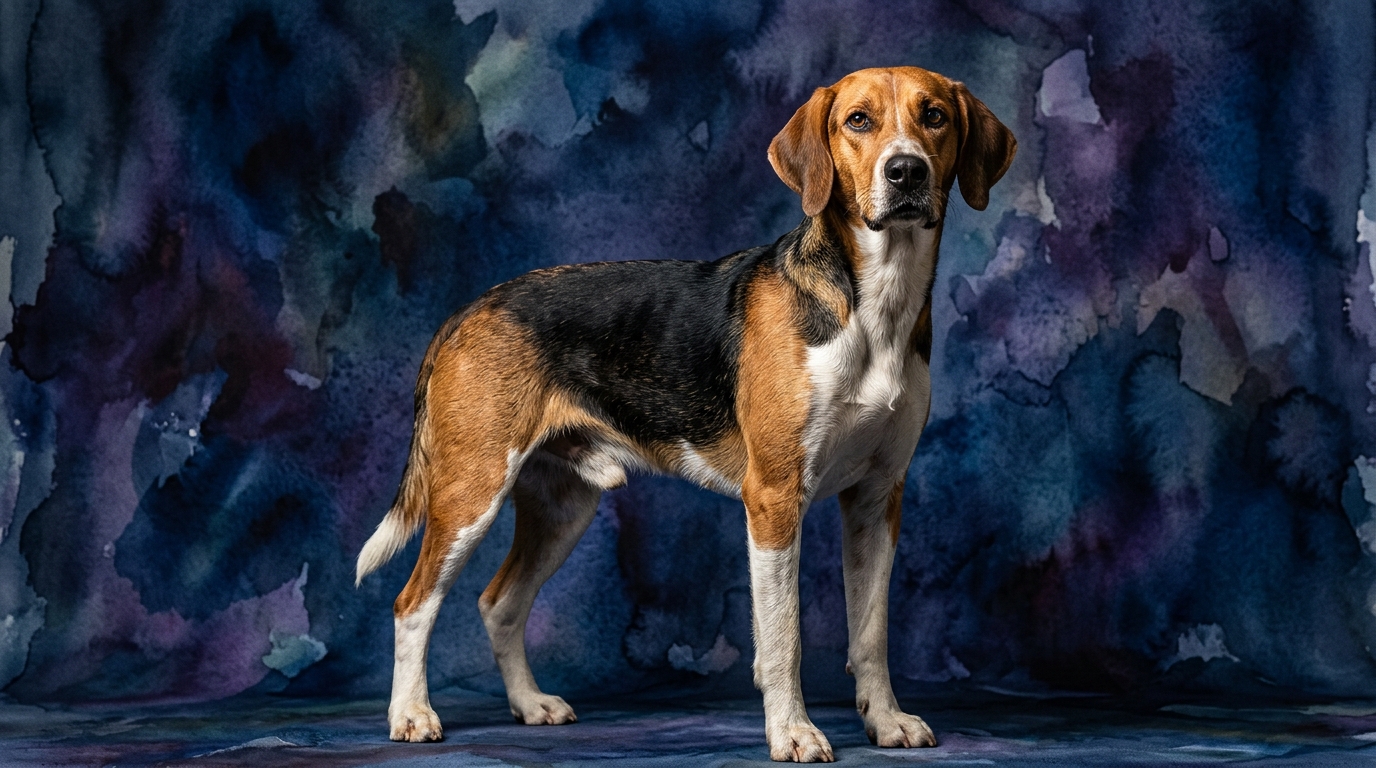
Side-by-Side Cognitive Profiles
**Portuguese Water Dog (Working Group):** The PWD's problem-solving ability is typically observed in their capacity to understand and execute complex multi-step tasks directed by humans, often involving retrieving objects from water or navigating obstacles. Their historical role assisting fishermen required them to adapt quickly to changing conditions, such as retrieving broken nets or herding fish into nets, showcasing an adaptive and context-aware intelligence. They excel at figuring out how to achieve a desired outcome when a direct path isn't obvious, particularly when it involves interaction with their human companion.
These dogs possess a notable quickness in grasping new commands and routines, often showing a keen desire to engage and please their handlers. Their capacity to learn rapidly is balanced by a spirited independence and a playful nature, meaning they might learn a new trick in a few repetitions but also test boundaries or introduce their own flair to a task. Consistency and engaging methods are key to harnessing this learning speed effectively.
Portuguese Water Dogs exhibit a strong capacity for reading human cues and intentions, fostering deep bonds with their family members. They are attuned to the emotional states of their people and can adapt their behavior accordingly, making them highly responsive companions within their trusted circle. While generally friendly, their social intelligence also manifests as a discerning nature, often reserved or observant around strangers until trust is established.
Their instinctive drive is profoundly tied to their heritage as working water dogs, manifesting as a powerful urge to retrieve, swim, and be actively involved in tasks alongside their humans. This drive fuels their need for purposeful activity and engagement, often expressed through energetic play, a love for water, and a natural inclination to 'herd' family members. It's a drive for partnership and utility rather than independent pursuit.
PWDs demonstrate solid memory retention, quickly recalling learned commands, routines, and the consequences of past actions, both positive and negative. This robust memory aids in their trainability and allows them to build complex behavioral repertoires. They remember social interactions and environmental layouts, which contributes to their adaptability and consistent performance in various situations.
**English Foxhound (Hound Group):** The English Foxhound's problem-solving prowess is deeply specialized, centered on the intricate challenge of tracking a scent over vast distances and varied terrain. Their intelligence manifests in deciphering complex scent trails, navigating environmental obstacles to maintain a line, and working cooperatively within a pack to achieve a common goal—the pursuit of quarry. This isn't about human-directed puzzle solving, but rather an innate, self-directed intellectual pursuit driven by olfactory information.
While capable of learning, the English Foxhound's training speed is often influenced by their primary motivation: scent. They can grasp commands, but their focus can be fleeting when a compelling scent presents itself, making consistent compliance a longer process than with breeds primarily motivated by human interaction. Their learning is often more effective when tied to their natural drives, such as scent games or opportunities for structured exploration.
English Foxhounds are inherently social creatures, excelling in pack dynamics and interacting harmoniously with other dogs. Their social intelligence is primarily geared towards understanding and navigating canine hierarchies and communication, making them excellent companions for other canines. With humans, they are generally amiable and tolerant, but their focus on human emotional states or subtle cues is often less pronounced than their focus on their environment or packmates.
The English Foxhound's instinctive drive is overwhelmingly powerful and singularly focused on scent tracking and pursuit. This drive is a core part of their being, demanding significant outlets for long-distance running, sniffing, and exploring. It's an enduring, relentless drive that can override other considerations, making them tireless in their pursuit and intensely motivated by the call of the trail.
English Foxhounds possess an excellent memory for scent trails, geographical layouts encountered during hunts, and the routines associated with their pack life. They can recall specific scents and their associated locations over time, which is critical for their tracking abilities. Their memory for human commands, while present, often takes a backseat to the indelible memory of a rich scent or the path of a previous chase.
Where the Portuguese Water Dog Wins Cognitively
The Portuguese Water Dog's cognitive strengths shine brightest in environments that demand adaptable, human-centric problem solving and a sustained desire for collaborative engagement. Their historical role required them to interpret human commands, make independent decisions to retrieve objects in dynamic water environments, and then return to their handler for the next task. This fosters a cognitive flexibility that allows them to excel in diverse activities beyond their original purpose, from competitive obedience and agility to complex service dog work. Their problem-solving isn't just about reaching a goal, but about understanding the human's intention behind the goal. This means they are often more adept at learning abstract concepts or understanding 'rules' that can be applied across different scenarios, rather than just rote memorization of specific actions. Their capacity to apply learned skills to novel situations within a human household, such as figuring out how to open a cabinet or locate a specific toy on command, demonstrates a practical, interactive intelligence that sets them apart. They thrive on the mental stimulation of learning new things with their person, seeking out challenges that involve both their body and their brain in concert with their handler.
Where the English Foxhound Wins Cognitively
Conversely, the English Foxhound's cognitive superiority lies in its highly specialized, enduring, and independent application of intelligence, particularly concerning scent. Their problem-solving is a masterclass in sustained focus and deductive reasoning through olfactory information. Where a PWD might solve a puzzle box to get a treat, an English Foxhound solves the infinitely more complex puzzle of a scent trail that might be hours old, crisscrossing varied terrain, and contaminated by other smells. This requires an incredible cognitive stamina and an ability to filter out irrelevant information, maintaining singular focus on the target scent. Their pack-oriented social intelligence is also a distinct advantage, allowing for seamless, non-verbal coordination with other dogs during a hunt. This isn't about human cues, but subtle shifts in pace, direction, and vocalizations among pack members. The Foxhound's memory for specific scent profiles and geographical layouts encountered during a chase is phenomenal, allowing them to recall and re-engage with a trail even after a significant break. This highly developed, instinct-driven cognitive suite represents a peak of specialized intelligence for a specific, demanding task.
Which is Easier to Train and Why
When comparing trainability, the Portuguese Water Dog generally presents a more straightforward experience for the average owner due to fundamental behavioral differences. PWDs were bred to work in close partnership with humans, taking direction and responding to commands in real-time. This historical context has imbued them with a natural biddability and a strong desire to engage with and please their human companions. They are often highly motivated by praise, toys, and food, making positive reinforcement training particularly effective. While their intelligence can sometimes manifest as a playful stubbornness or a tendency to get bored if not sufficiently challenged, their inherent willingness to cooperate makes them receptive to a wide range of obedience and trick training. They understand the concept of 'working for a reward' and are keen to figure out what their human wants. The English Foxhound, however, poses a significantly greater training challenge. Their powerful, all-consuming scent drive means that once a compelling smell is detected, their natural inclination is to follow it, often to the exclusion of all human commands. This isn't a lack of intelligence, but a prioritization of an ancient, deeply ingrained instinct over learned obedience. Their independence, honed by generations of hunting with a pack rather than a single handler, means they are less inclined to constantly seek human approval or direction. Recall, in particular, can be extremely difficult to establish reliably with a Foxhound, as the lure of a scent trail often far outweighs any reward an owner can offer. Training an English Foxhound requires immense patience, a deep understanding of hound behavior, and often involves incorporating their scent drive into the training itself, rather than trying to suppress it.
Which Suits Active Owners vs. Relaxed Owners
Neither the Portuguese Water Dog nor the English Foxhound is suitable for a truly relaxed or sedentary owner; both breeds demand substantial commitment to physical and mental activity. However, the nature of that activity differs significantly. The Portuguese Water Dog thrives with an owner who enjoys active participation in their dog's life, engaging in sports like agility, dock diving, obedience, or long, interactive hikes. They require consistent mental stimulation through training, puzzle toys, and varied experiences to prevent boredom and channeling their energy constructively. Their intelligence means they need a 'job,' and if not given one, they are quite capable of inventing their own, which might not always align with human preferences. They are excellent companions for active families who want a dog to join them on adventures and who are prepared to dedicate time to daily training and interactive play. The English Foxhound, on the other hand, demands an owner with an almost unparalleled commitment to vigorous, sustained exercise, ideally in environments that allow for safe, extensive running and scent exploration. Their endurance is legendary, and a simple walk around the block will barely scratch the surface of their physical needs. They are best suited for owners who live in rural settings with large, securely fenced areas, or those dedicated to activities like canicross, bikejoring, or extensive off-leash (in very safe, contained areas) running. Their independent nature and powerful prey drive mean they are not typically content with quiet indoor relaxation for extended periods, and their need for consistent, high-intensity exercise is non-negotiable. For an owner seeking a dog to primarily relax on the couch, both breeds would be a profound mismatch, but the Foxhound's needs are arguably more extreme in their singular focus on physical exertion and scent pursuit.
The Verdict
Choose the Portuguese Water Dog if you are an active, engaged owner seeking a highly interactive companion for diverse activities, enjoy consistent training, and can provide ample mental and physical challenges in a family setting.
Opt for the English Foxhound if you are an exceptionally active owner dedicated to providing vast outlets for their profound scent drive and endurance, ideally in a rural environment conducive to extensive running and specialized scent work, understanding their independent nature.
🧠 Find Your Pet's IQ Score
Our Pet IQ Lab assessment covers 25+ tests across 5 cognitive dimensions — personalized to your breed.
Take the Full IQ Test →Frequently Asked Questions
Do Portuguese Water Dogs shed a lot?
No, Portuguese Water Dogs have a single coat and are considered a low-shedding breed, making them a popular choice for individuals with allergies. However, their curly coat requires regular grooming and brushing to prevent matting.
Are English Foxhounds good with children?
English Foxhounds are generally amiable and tolerant dogs, and their pack nature can make them good companions for older, respectful children. Due to their high energy and independent drive, supervision is always recommended, and they are less suited to very young children who might not understand their boundaries.
Which breed needs more exercise, PWD or English Foxhound?
While both breeds require significant exercise, the English Foxhound typically needs more sustained, high-intensity activity, often involving extensive running and scent work. The Portuguese Water Dog needs ample exercise and mental stimulation, but their activities can be more varied and human-directed.