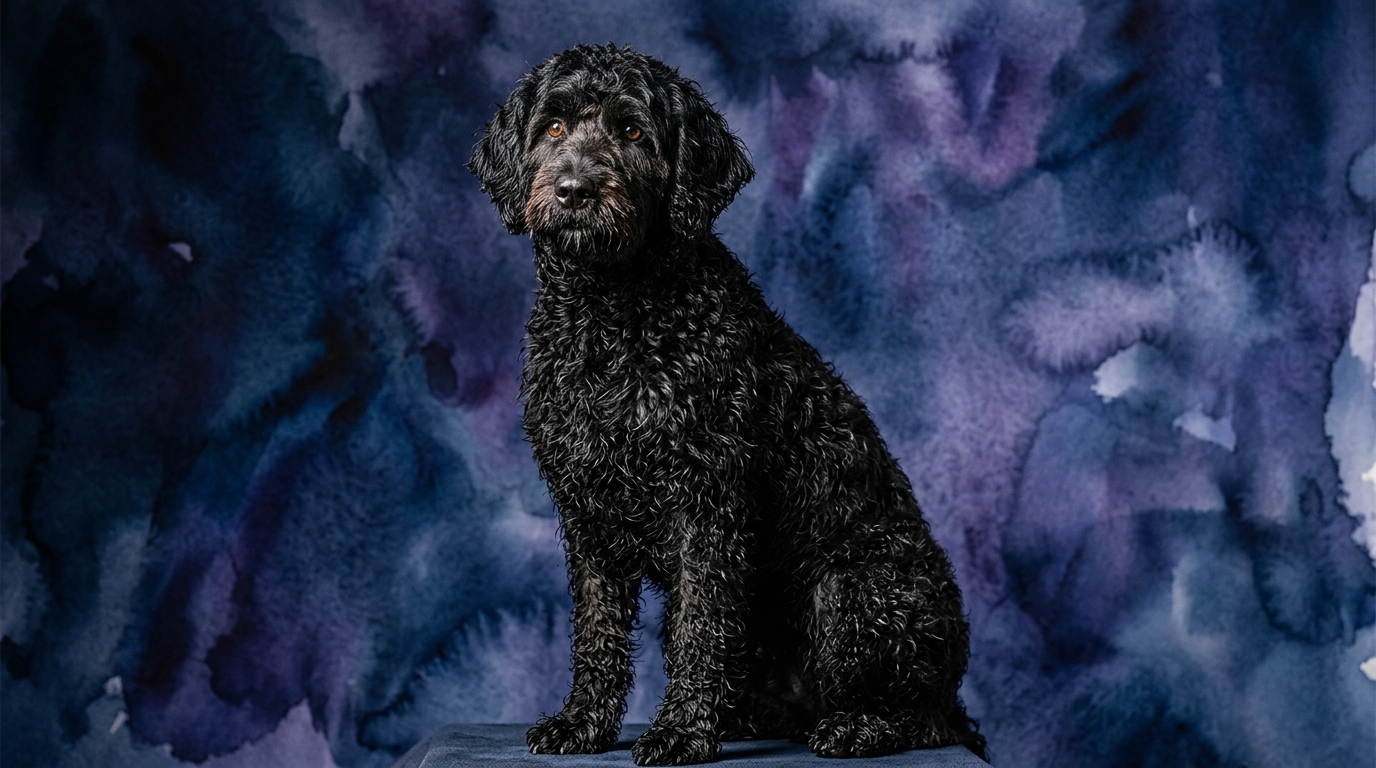
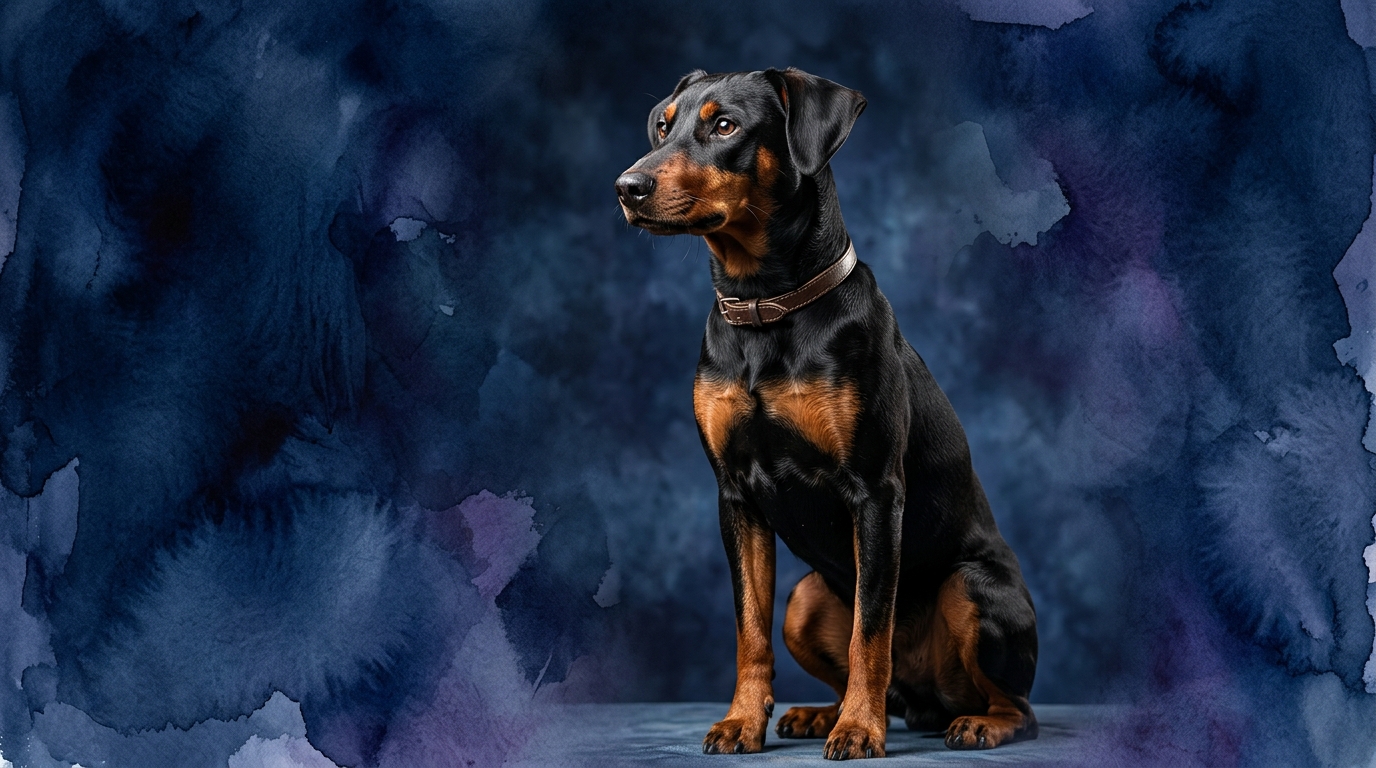
Side-by-Side IQ Profile: Portuguese Water Dog vs. German Pinscher
The Cosmic Pet Pet IQ Lab assesses five crucial dimensions of canine intelligence, providing a comprehensive view of a breed's cognitive strengths. For both the Portuguese Water Dog and the German Pinscher, each dimension scored a 3/5, indicating a solid, capable intellect. However, the *application* of this intelligence is where their paths diverge significantly, reflecting their distinct historical purposes.
**Portuguese Water Dog (PWD):**
**Problem Solving (3/5):** PWDs demonstrate a practical capacity for task-oriented solutions, often involving environmental manipulation or complex sequences. Their intellect is geared towards achieving shared goals, making them adept at methodical puzzle-solving alongside human partners, particularly in water-based scenarios.
**Training Speed (3/5):** A 3/5 training speed highlights their efficient grasp of new commands and routines. PWDs generally respond well to consistent, positive reinforcement, absorbing lessons effectively when training feels like a collaborative game or a meaningful shared activity.
**Social Intelligence (3/5):** This score reflects a good understanding of human cues and a capacity for forming strong bonds. PWDs are attentive, often anticipating their handler's next move, and use their social awareness to integrate seamlessly into family dynamics and understand complex interactions.
**Instinctive Drive (3/5):** The PWD's drive centers on their heritage as water retrievers and herders. This translates into a robust desire for physical activity, especially swimming and retrieving, and an innate tendency to 'gather' or 'manage,' channeled into productive, purposeful tasks.
**Memory (3/5):** A 3/5 memory suggests PWDs retain complex sequences, learned commands, and established routines with good retention. This is crucial for remembering specific retrieval patterns, boat routes, or family members' habits, making them reliable partners in repeated tasks.
**German Pinscher (GP):**
**Problem Solving (3/5):** German Pinschers showcase a capacity for independent, often self-directed solutions. Historically, this meant strategizing to locate vermin, requiring quick thinking and adaptability. Their problem-solving leans towards efficient, autonomous ways to achieve their own objectives.
**Training Speed (3/5):** A 3/5 training speed for GPs indicates they pick up new information readily. However, their independent nature means they often evaluate the 'why' behind a command, learning quickly when motivated by a clear purpose or benefit, particularly for security or boundary commands.
**Social Intelligence (3/5):** GPs possess a 3/5 social intelligence, manifesting as a keen awareness of their family unit and a discerning approach to strangers. They understand social hierarchies and interpret cues from caregivers, but this is often paired with a protective instinct, making them attentive guardians.
**Instinctive Drive (3/5):** The GP's 3/5 instinctive drive is deeply rooted in their ratter and guard dog heritage. This translates into a strong prey drive, making them motivated by small, fast-moving objects, and a pronounced territorial instinct, expressed through vigilance and readiness to act.
**Memory (3/5):** GPs with a 3/5 memory can recall past experiences, learned behaviors, and the layout of their territory with good accuracy. This enables them to remember specific training cues, established boundaries, and patterns relevant to their security and hunting instincts.
Where the Portuguese Water Dog Wins Cognitively
The Portuguese Water Dog often demonstrates a cognitive edge in tasks requiring sustained, cooperative effort and environmental adaptability, particularly in aquatic settings. Their 3/5 problem-solving shines brightest in complex retrieval scenarios, like distinguishing specific items amidst floating debris or navigating currents. This intellect is finely tuned for 'teamwork challenges,' where understanding human intent and executing multi-step instructions collaboratively is paramount. Their social intelligence (3/5) fosters a deeper intuitive connection, allowing them to anticipate handler needs and adjust their approach in dynamic situations, excelling in activities where synchronous action and a desire to please are highly valued. Their memory (3/5) is particularly strong for sequences and patterns directly linked to human interaction and specific, shared objectives.
Where the German Pinscher Wins Cognitively
Conversely, the German Pinscher showcases distinct strengths in areas demanding independent decision-making and rapid, self-initiated action. Their 3/5 problem-solving excels in scenarios requiring quick assessment and intervention, such as strategizing to corner vermin or identifying unusual sounds in their territory. This is about effective, autonomous resolution. Their instinctive drive (3/5) is a powerful cognitive engine, manifesting as hyper-awareness of surroundings and an acute ability to detect subtle changes, making them exceptional natural alarm systems. This drive fuels a focused vigilance, allowing them to process sensory input rapidly and prioritize potential threats. The GP's memory (3/5) is particularly effective for spatial awareness and remembering details related to territory boundaries or past encounters, contributing to their efficacy as guardians.
Which Is Easier to Train and Why
Given their identical 3/5 training speed scores, the 'easier to train' distinction hinges less on raw learning capacity and more on inherent motivations. The Portuguese Water Dog, with its deeply ingrained history of working *with* humans, often approaches training with an eager-to-please attitude. Their social intelligence (3/5) means they are highly attuned to handler feedback and derive satisfaction from successful collaboration, making them generally more amenable to positive reinforcement and complex obedience routines. While they learn quickly, their strong instinctive drive (3/5) for physical and mental engagement means training must remain stimulating to prevent boredom. In contrast, the German Pinscher's 3/5 training speed is coupled with a more independent and sometimes opinionated nature. They learn commands efficiently, but their problem-solving (3/5) often involves an internal evaluation of the command's utility. A GP might challenge a handler who isn't consistently clear, requiring a firm yet fair approach. Their powerful instinctive drive (3/5), particularly prey drive and territoriality, means these drives must be properly channeled. Therefore, PWDs might be perceived as 'easier' for general obedience due to their desire to partner, while GPs require a more assertive and consistent style to harness their independent spirit.
Which Suits Active Owners vs. Relaxed Owners
Neither the Portuguese Water Dog nor the German Pinscher are suitable for truly 'relaxed' owners in the sense of minimal engagement; both are working breeds with substantial cognitive and physical needs. The Portuguese Water Dog, with its 3/5 instinctive drive centered on water work and retrieving, thrives with owners who enjoy outdoor activities like swimming, hiking, and structured dog sports. Their social intelligence (3/5) means they crave human interaction and mental engagement through companionship, making them ideal for active individuals or families who want a dog to be an integral part of their adventures. The German Pinscher, while also requiring an active lifestyle, has a different emphasis for their 3/5 instinctive drive. Their need for exercise is coupled with a strong desire for mental stimulation related to vigilance, patrolling, and independent exploration. Owners suited for a GP are often confident leaders who can provide structured physical activity combined with consistent mental challenges that acknowledge their independent problem-solving (3/5) and guarding instincts. A truly 'relaxed' owner would find both breeds demanding, but the GP's independent nature and strong guarding drives might be more challenging for a passive household.
The Verdict
Choose a Portuguese Water Dog if you seek a highly collaborative canine partner for water sports, obedience, and family adventures, valuing a dog that thrives on shared tasks and human interaction.
Opt for a German Pinscher if you desire an alert, independent guardian with a bold personality, and are prepared to provide confident leadership and channel their strong drives into purposeful activities.
🧠 Find Your Pet's IQ Score
Our Pet IQ Lab assessment covers 25+ tests across 5 cognitive dimensions — personalized to your breed.
Take the Full IQ Test →Frequently Asked Questions
Are Portuguese Water Dogs good at learning tricks?
Yes, with a training speed and memory both rated 3/5, Portuguese Water Dogs generally excel at learning a wide variety of tricks. Their collaborative nature and desire to engage with their handlers make them enthusiastic learners, especially when training is fun and interactive.
Do German Pinschers bark a lot due to their guarding instincts?
German Pinschers, with their 3/5 instinctive drive and social intelligence, are naturally alert and possess strong guarding instincts. While they are not excessive barkers without reason, they will typically use their voice to alert their owners to perceived threats or unusual occurrences in their territory, requiring consistent training to manage appropriately.
Which breed is better for a first-time dog owner?
Neither breed is typically recommended for a completely inexperienced first-time owner due to their working dog needs and strong personalities. However, if committed to extensive training and socialization, a Portuguese Water Dog might be slightly more forgiving for a novice due to their cooperative nature, whereas a German Pinscher requires a more confident and experienced hand.