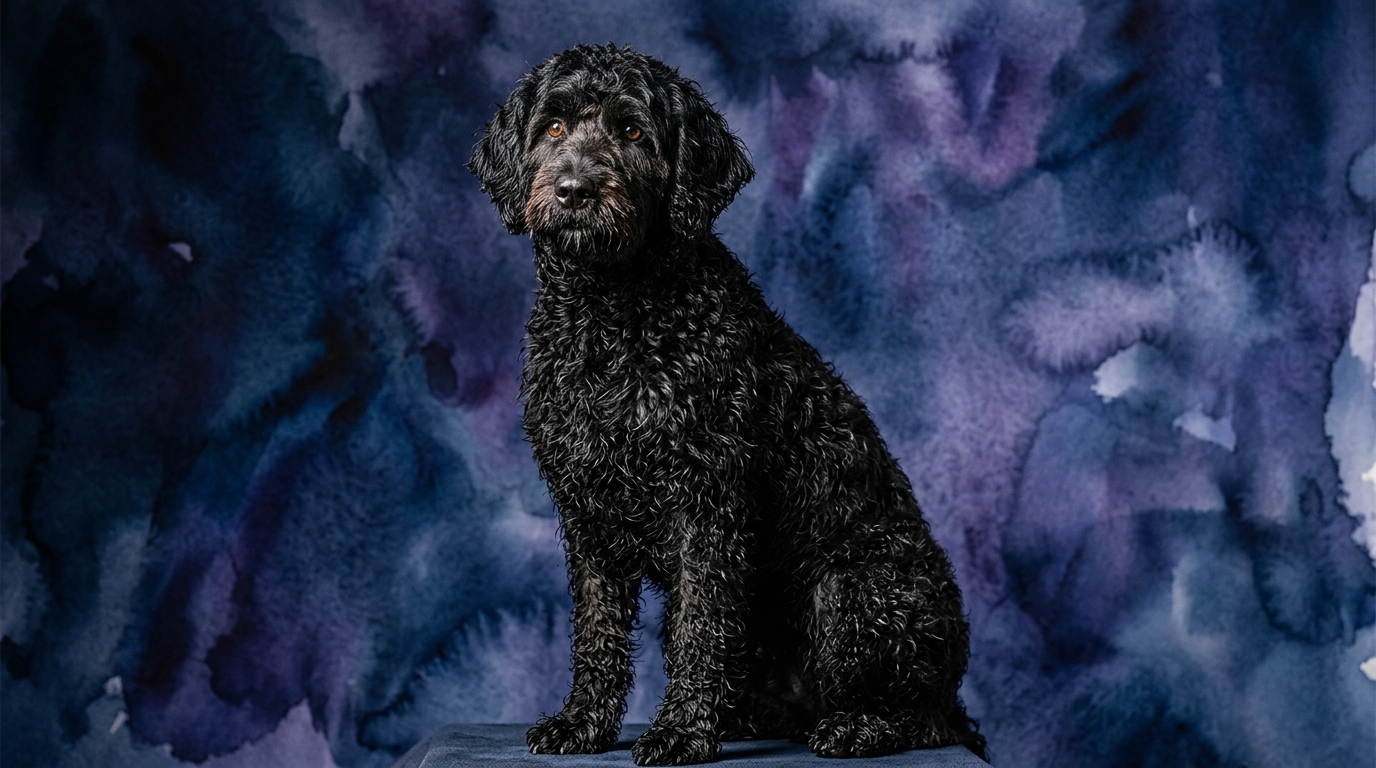
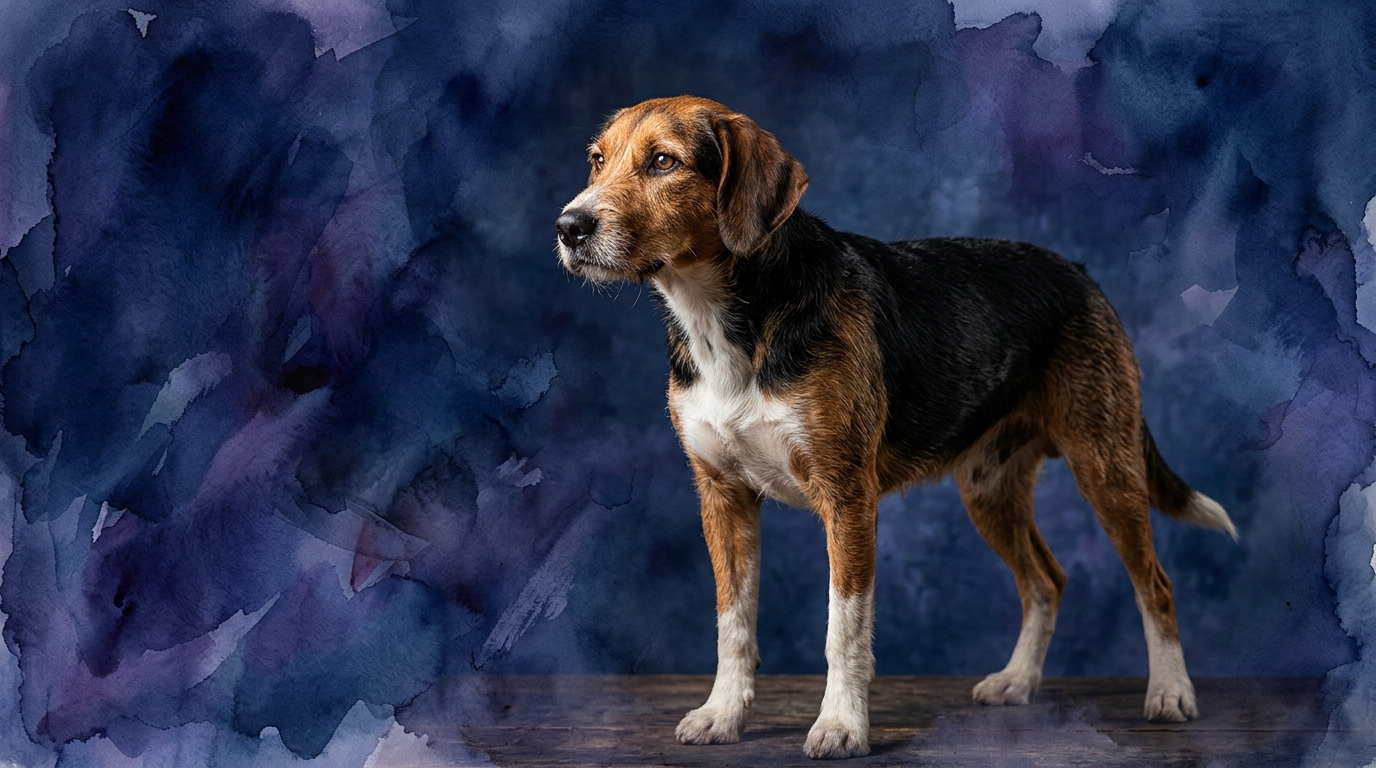
Side-by-Side Cognitive Profiles: Decoding the 3/5 Scores
While both breeds register a 3 out of 5 across the board in our Pet IQ Lab metrics, understanding the nuance behind these scores requires examining their ancestral roles and inherent motivations. A 3/5 score indicates a moderate capacity, but the *application* of that capacity differs significantly between a working water dog and a scent hound.
**Problem Solving 3/5:** The Portuguese Water Dog's 3/5 in 'Problem Solving' indicates moderate ability to navigate novel situations, particularly those tied to their working heritage. They excel at tasks involving object manipulation or strategic movement, often with human collaboration, demonstrating persistent trial-and-error. The Harrier's 3/5 in 'Problem Solving' is uniquely applied to scent work. Their cognition focuses on deciphering complex scent trails and overcoming environmental challenges to follow a lead, an instinct-driven capacity to 'solve' olfactory mysteries with focused persistence.
**Training Speed 3/5:** A 3/5 'Training Speed' for the Portuguese Water Dog signifies they learn new commands moderately quickly, often eager to please. Consistency and clear communication accelerate their learning, and once understood, behaviors are generally well-retained due to their strong associations. The Harrier's 3/5 'Training Speed' is influenced by their strong pack and scenting instincts. They grasp commands moderately well, but execution can be delayed by environmental distractions. Success requires engaging, consistent methods appealing to their natural drives.
**Social Intelligence 3/5:** The Portuguese Water Dog's 3/5 'Social Intelligence' highlights strong bonds with family and adaptability. They moderately read human cues, desiring involvement in activities and demonstrating appropriate interactions in diverse settings, attentive to human partners. For the Harrier, 3/5 'Social Intelligence' reflects effective functioning within a pack. Generally amiable, they show cooperative behavior and attachment to family. Their social awareness leans towards group cohesion, though independent nature may prioritize sensory exploration.
**Instinctive Drive 3/5:** The Portuguese Water Dog's 3/5 'Instinctive Drive' centers on their working role for fishermen, including retrieving (often from water) and purposeful activity. This moderate, collaborative drive thrives on tasks engaging both physical and mental energy with a human partner. A 3/5 'Instinctive Drive' for the Harrier signifies a powerful, unwavering dedication to scenting and pursuit. Their drive is overwhelmingly olfactory, compelling intense focus on trails to the exclusion of other stimuli, a specialized, potent, and persistent instinct.
**Memory 3/5:** The Portuguese Water Dog's 3/5 'Memory' indicates moderate recall of commands, routines, and past experiences. They remember complex action sequences and retain training over time, especially when reinforced, contributing to their trainability and routine adaptation. The Harrier's 3/5 'Memory' is particularly keen for scent patterns and geographical layouts related to hunting. While remembering commands, their memory for human-centric tasks can be overshadowed by immediate sensory input, serving their primary tracking function pragmatically.
Where the Portuguese Water Dog Excels Cognitively
Despite identical numerical scores, the Portuguese Water Dog often demonstrates a cognitive advantage in **versatile task application and collaborative problem-solving.** Their 3/5 problem-solving manifests in a broader array of scenarios beyond their primary instincts, enabling them to adapt more readily to diverse household challenges or dog sports requiring varied skill sets. They are generally more inclined to engage a human partner in finding solutions, leveraging their social intelligence to interpret cues and work together on tasks that aren't directly linked to an innate prey drive. This collaborative approach makes them particularly adept at learning and performing complex, multi-step routines.
Their balanced instinctive drive, while strong, is also more pliable and directed towards human partnership, giving them an edge in **applying their moderate memory and training speed to a wider range of human-directed activities.** Unlike the Harrier, whose drives are intensely specialized, the PWD's working drive encourages them to 'figure out' what their human wants and apply past learning to new contexts, showing a flexible cognitive approach to earning rewards and approval.
Where the Harrier Holds a Cognitive Edge
The Harrier's cognitive strengths lie profoundly in their **specialized sensory processing and unwavering focus on scent detection.** Their 3/5 problem-solving and memory are singularly optimized for intricate olfactory work. While a PWD might solve a puzzle with moving parts, a Harrier excels at 'solving' the invisible puzzle of a scent trail, demonstrating an unparalleled ability to discriminate between faint odors and follow a specific target over challenging terrain and time. This intense, persistent focus on a single sensory input is a remarkable cognitive feat, requiring sustained concentration and memory for subtle olfactory cues.
Their 3/5 instinctive drive, though rated equally, is far more potent and singular in its expression, giving them a distinct advantage in **sustained, independent pursuit driven by instinct.** This means they can maintain focus on a task (tracking) for extended periods without direct human intervention, relying on their internal compass and memory for geographical features and scent patterns. While the PWD thrives on collaboration, the Harrier's cognitive prowess shines when given the freedom to independently pursue a scent, showcasing a different kind of operational intelligence rooted in self-directed purpose.
Training Dynamics: Portuguese Water Dog vs. Harrier
Given their identical 3/5 'Training Speed' scores, comparing their ease of training requires looking beyond the numerical rating to their inherent motivations and cognitive predispositions. The Portuguese Water Dog, with its working background, generally presents as **easier to train for a broad range of obedience and advanced tasks.** Their social intelligence and inherent desire to collaborate mean they are often more attuned to human directives and keen to please. Training a PWD often feels like a partnership; they respond well to positive reinforcement, clear communication, and activities that engage both their physical and mental energy. Their moderate memory allows them to retain complex commands, and their versatile problem-solving helps them adapt to new training scenarios, making them responsive and eager learners in structured environments.
In contrast, while the Harrier also scores 3/5 in 'Training Speed,' their training experience can be **more challenging due to their powerful, specialized instinctive drive.** Their nose often dictates their attention, making it difficult to maintain focus on human commands when a compelling scent is present. A Harrier might learn a command quickly, but consistently executing it in distracting environments requires immense patience and creativity from the trainer. Their social intelligence is geared more towards pack dynamics than individual human-centric tasks, meaning they might require stronger motivation or a 'why' that aligns with their innate drives. Training often involves outsmarting their nose, incorporating scent work into obedience, or providing alternative outlets for their tracking instincts, making it a different kind of cognitive engagement than with a PWD.
Lifestyle Match: Active vs. Relaxed Owners
Both breeds demand active engagement, but the *nature* of that activity differs significantly, making them suitable for different types of active owners. The **Portuguese Water Dog is an excellent match for owners who are actively involved in structured activities, dog sports, or outdoor adventures that involve partnership.** Their 3/5 instinctive drive is channeled effectively into tasks like agility, dock diving, obedience, or hiking. They thrive on having a 'job' and being an integral part of their human's life, requiring owners who can provide consistent mental stimulation through training and physical exercise that involves interaction and collaboration. Their moderate social intelligence means they genuinely enjoy being included in family outings and thrive on shared experiences.
The **Harrier is best suited for owners who are active in a more exploratory, endurance-focused, and perhaps less structured way.** Their 3/5 instinctive drive for scenting means they require extensive opportunities for off-leash exploration (in secure areas), long walks where they can follow their nose, or participation in scent work and tracking sports. They are tireless companions for long hikes or runs, but their activity is often self-directed by their powerful olfactory sense. While they enjoy human company, their primary motivation during activity is often the chase of a scent, not necessarily direct human interaction. Therefore, relaxed owners, or those seeking a true 'couch potato' companion, would find both breeds challenging, but especially the Harrier due to its persistent, independent drive for exploration.
The Verdict
Choose the Portuguese Water Dog if you seek a highly engaged, versatile canine partner eager for collaborative learning and a wide range of structured activities, thriving on being an active, integral part of your family's daily life.
Opt for the Harrier if your lifestyle embraces extensive, independent outdoor exploration, and you value a dog whose cognitive strengths lie in unparalleled scent tracking and enduring, self-directed pursuit.
🧠 Find Your Pet's IQ Score
Our Pet IQ Lab assessment covers 25+ tests across 5 cognitive dimensions — personalized to your breed.
Take the Full IQ Test →Frequently Asked Questions
Are Portuguese Water Dogs good family dogs?
Yes, Portuguese Water Dogs often integrate well into family life due to their moderate social intelligence and desire for companionship. They thrive on being involved in family activities and can be affectionate with all members, though their working drive means they need consistent engagement and mental stimulation to prevent boredom.
Do Harriers bark a lot?
Harriers, as scent hounds, are known for their distinctive baying bark, which they use to communicate during a hunt. While not necessarily incessant, they can be quite vocal, especially when excited, bored, or when they pick up an interesting scent, which is a direct manifestation of their strong instinctive drive.
How much exercise does a Portuguese Water Dog need daily?
Portuguese Water Dogs require a significant amount of daily exercise, typically 60-90 minutes of vigorous activity, including walks, runs, swimming, or active play. Their 3/5 instinctive drive and problem-solving abilities mean they also need mental challenges to prevent boredom and destructive behaviors.