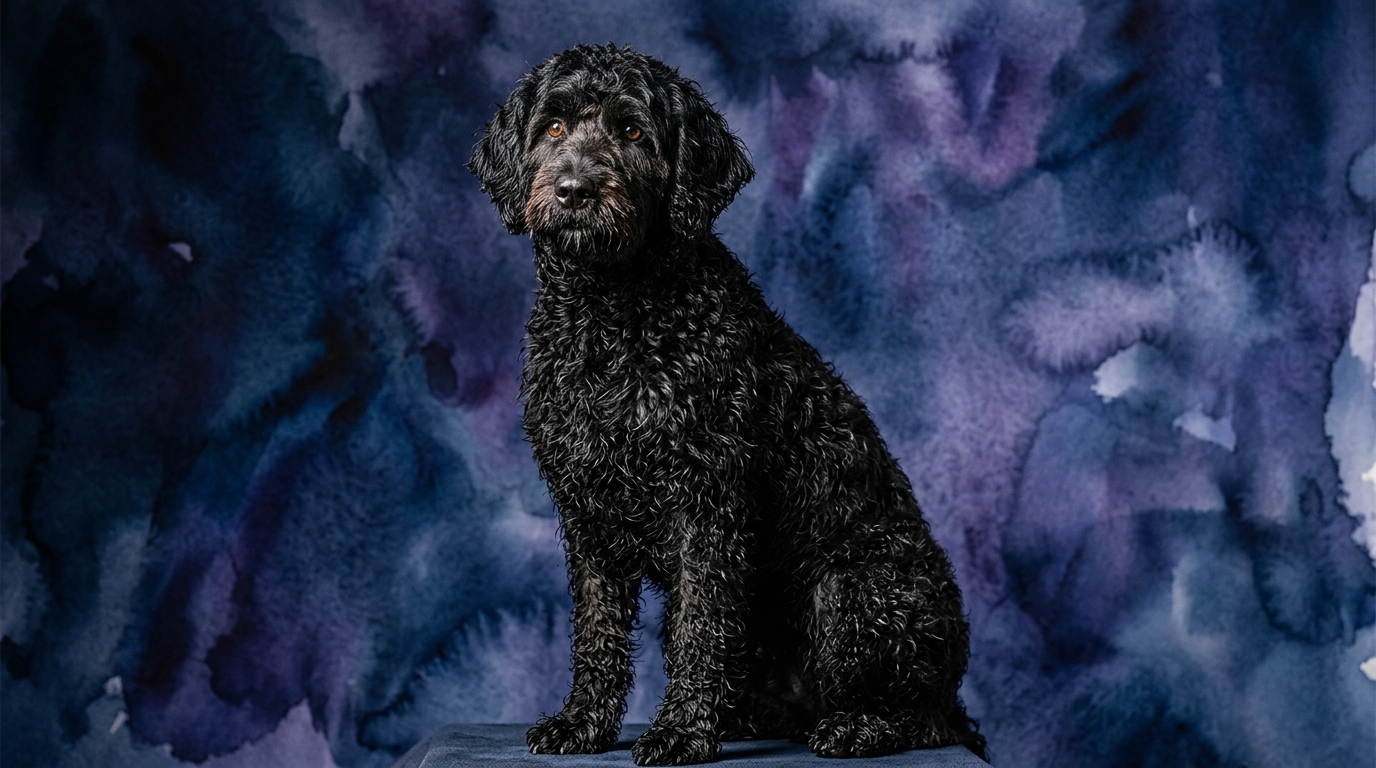
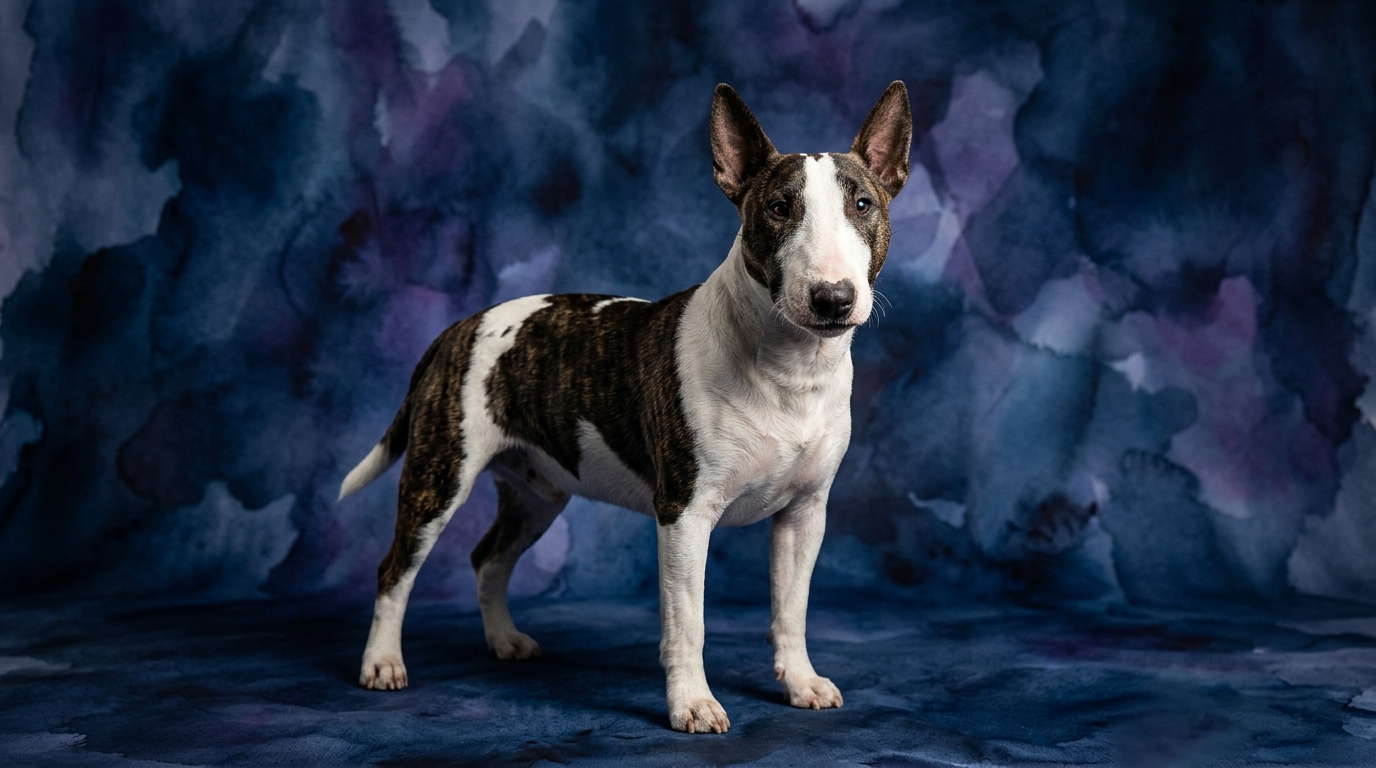
Side-by-Side Cognitive Profile: Identical Scores, Distinctive Manifestations
At first glance, the Pet IQ Lab scores for both the Portuguese Water Dog (PWD) and the Miniature Bull Terrier (Minibull) present an intriguing identical twin scenario: Problem Solving 3/5, Training Speed 3/5, Social Intelligence 3/5, Instinctive Drive 3/5, and Memory 3/5. Yet, these matching numbers do not signify identical minds; rather, they reflect a similar *capacity* for cognitive function that manifests through vastly different lenses, shaped by their breed-specific drives and temperaments. Understanding these nuances is crucial for any prospective owner.
For Problem Solving (3/5), the PWD often applies this capacity to practical, cooperative tasks, such as figuring out the most efficient way to retrieve an object from water, navigating complex agility courses, or understanding multi-step commands. Their solutions are typically goal-oriented and often involve working *with* their human. The Minibull, conversely, might direct its 3/5 problem-solving acumen towards more independent, sometimes mischievous, endeavors. This could involve devising clever strategies to access forbidden treats, figuring out how to open gates, or inventing novel ways to initiate play, often demonstrating a more self-directed, tenacious approach.
When it comes to Training Speed (3/5), both breeds demonstrate a solid ability to learn new commands and routines. The PWD's working heritage means it often learns with an eager desire to please and a focus on task completion, absorbing instructions efficiently when presented with consistent, positive reinforcement. Their quick grasp is often fueled by a drive for purposeful engagement. The Minibull, while equally capable of learning new cues quickly, often filters commands through its independent terrier spirit. They might understand a command immediately but possess a strong will that allows them to *choose* when and if they will comply, making consistency and motivational training paramount.
Social Intelligence (3/5) in the PWD typically manifests as a keen awareness of human emotional states and intentions, facilitating strong bonds and cooperative interactions. They are often adept at reading subtle cues from their family members, making them responsive companions in shared activities. The Minibull's 3/5 social intelligence, while also allowing for deep connections, often includes a discerning assessment of individuals and situations. They can be incredibly affectionate and attuned to their chosen people, but their interactions with others might be more reserved or involve testing boundaries with a playful yet determined spirit, reflecting their robust personality.
Instinctive Drive (3/5) is where the historical purposes of these breeds diverge most clearly. The PWD's drive centers on its heritage as a fisherman's assistant, exhibiting a strong retrieve instinct, an affinity for water, and a general eagerness for purposeful work. This drive is often channeled into constructive activities like dog sports, swimming, or fetching. The Minibull's 3/5 instinctive drive is rooted in its terrier lineage, characterized by a potent prey drive, a propensity for digging, and an independent, tenacious spirit. This drive requires careful management and redirection through structured play and appropriate outlets to prevent less desirable manifestations.
Finally, Memory (3/5) in the PWD is typically robust for retaining complex command sequences, learned routines, and the intricacies of tasks. They remember what is expected of them in various situations, which aids in their reliability as working companions. The Minibull also possesses a strong memory, often recalling past interactions, where forbidden items are hidden, or specific routines. Their memory can extend to remembering perceived injustices or particularly rewarding experiences, contributing to their reputation for both loyalty and a certain clever stubbornness.
Where the Portuguese Water Dog Excels Cognitively
While both breeds share identical IQ scores, the Portuguese Water Dog often demonstrates a particular cognitive advantage in areas demanding sustained, cooperative focus and practical application of intellect. Their 3/5 in Problem Solving is frequently applied to intricate, multi-step tasks, where they excel at understanding and executing sequences required in dog sports like agility, obedience, or advanced retrieving. This isn't just about learning speed; it's about their willingness to engage deeply with a human partner to achieve a shared objective, often showing remarkable persistence and strategic thinking within a structured framework. Their strong working drive, also rated 3/5, underpins this, providing the motivation to apply their mental faculties consistently.
Furthermore, the PWD's Social Intelligence (3/5) often translates into a superior capacity for anticipating human needs and intentions within a cooperative context. They are adept at reading subtle cues and adjusting their behavior to align with their owner's goals, making them highly responsive and intuitive partners. This facilitates a smoother, more collaborative training experience, as their memory (3/5) allows them to retain complex instructions and routines with precision, building on past successes to tackle new challenges.
Where the Miniature Bull Terrier Shines Cognitively
The Miniature Bull Terrier, with its identical 3/5 cognitive scores, often shines in areas demanding independent thought, cleverness, and a unique brand of tenacious problem-solving. Their Problem Solving (3/5) is frequently characterized by ingenuity in navigating their environment to satisfy their own curiosity or desires. This can manifest as outsmarting barriers, devising creative ways to access interesting objects, or finding loopholes in household rules. Their solutions might not always be cooperative, but they are undeniably clever and often humorous, showcasing a mind that thrives on independent exploration and experimentation.
The Minibull's Instinctive Drive (3/5), deeply rooted in its terrier heritage, fuels a remarkable mental resilience and determination. This translates into a focused intensity when pursuing something they desire, whether it's a favored toy, a scent trail, or a game of chase. While their Training Speed is 3/5, their unique application of Social Intelligence (3/5) allows them to understand human intentions, often using this knowledge to engage in playful challenges or to test boundaries, demonstrating a nuanced understanding of social dynamics from an independent perspective. Their memory (3/5) is particularly strong for past interactions and the consequences of their actions, both positive and negative, shaping their future choices with a distinct self-awareness.
Which is Easier to Train and Why
Despite identical Training Speed scores of 3/5, the Portuguese Water Dog is generally considered easier to train for the average owner compared to the Miniature Bull Terrier. This distinction doesn't lie in their inherent capacity to learn, but rather in their fundamental motivations and behavioral predispositions. The PWD, with its working dog background, possesses a strong innate desire to please its human and thrives on having a job to do. Their Instinctive Drive (3/5) is channeled into cooperative tasks like retrieving and water work, making them naturally inclined to engage in training as a partnership. They respond well to positive reinforcement and consistency, often viewing training as a rewarding and engaging activity.
The Miniature Bull Terrier, while equally capable of learning quickly (3/5 Training Speed), brings a robust terrier independence and a mischievous streak to the training arena. Their Instinctive Drive (3/5) is often directed towards more self-serving pursuits like digging or chasing, and their Problem Solving (3/5) can be applied to outsmarting commands rather than strictly adhering to them. Training a Minibull requires an owner with exceptional patience, creativity, and a consistent, firm yet positive approach. They need training to be highly engaging and fun to maintain their interest, as their strong will means they might choose to ignore commands if they find something more stimulating. It's not that they *can't* learn; it's that they often *decide* when and if they will comply, making the training journey more of a negotiation than a straightforward instruction process.
Which Suits Active Owners vs. Relaxed Owners
Neither the Portuguese Water Dog nor the Miniature Bull Terrier is well-suited for truly relaxed, sedentary owners. Both breeds demand significant mental and physical engagement, though the *nature* of that engagement differs. The Portuguese Water Dog is an ideal companion for active owners who enjoy purposeful outdoor activities. Their strong Instinctive Drive (3/5) for work, water, and retrieving means they thrive on structured exercise like swimming, hiking, dock diving, agility, or long, vigorous walks. They need a job to do, and without sufficient mental and physical stimulation, their Problem Solving (3/5) and Memory (3/5) can be redirected towards less desirable behaviors, such as excessive chewing or barking. Owners must be prepared to integrate their PWD into a dynamic, active lifestyle where the dog is a true partner in adventure.
The Miniature Bull Terrier also requires active owners, but their activity needs are often characterized by bursts of intense play, mental challenges, and consistent, engaging interaction rather than sustained, repetitive tasks. Their 3/5 Instinctive Drive fuels a playful, often boisterous energy that needs regular outlets through secure off-leash play, interactive games, and puzzle toys. While they can enjoy walks, their mental stimulation often comes from varied experiences and opportunities to problem-solve independently. Owners who appreciate a spirited, sometimes clownish companion and are willing to invest time in varied play sessions, consistent training, and robust socialization will find a Minibull a rewarding, albeit demanding, partner. Owners seeking a truly relaxed couch potato will find either breed overwhelming.
The Verdict
Choose the Portuguese Water Dog if you seek a highly cooperative, task-oriented companion eager to participate in structured activities and water sports, valuing a partner who thrives on consistent engagement and a clear purpose.
Opt for the Miniature Bull Terrier if you appreciate a spirited, independent, and often humorous companion with a strong will, and are prepared to invest in creative, consistent training and varied enrichment to channel their tenacious intellect.
🧠 Find Your Pet's IQ Score
Our Pet IQ Lab assessment covers 25+ tests across 5 cognitive dimensions — personalized to your breed.
Take the Full IQ Test →Frequently Asked Questions
Are Portuguese Water Dogs good family pets?
Yes, Portuguese Water Dogs can be excellent family pets, known for their loyal and affectionate nature towards their human family. They generally get along well with children, especially when raised with them and properly socialized, thriving on being an integral part of family activities.
Do Miniature Bull Terriers get along with other pets?
Miniature Bull Terriers can coexist with other pets, particularly if raised with them from a young age and properly socialized. However, their strong terrier prey drive (3/5 Instinctive Drive) means they require careful supervision around smaller animals and consistent training to ensure harmonious multi-pet households.
What are the key differences in their grooming needs?
Portuguese Water Dogs have a single, non-shedding coat that requires regular brushing and professional grooming every 6-8 weeks to prevent matting. Miniature Bull Terriers have a short, flat coat that sheds moderately and requires minimal grooming, typically just weekly brushing to remove loose hair.