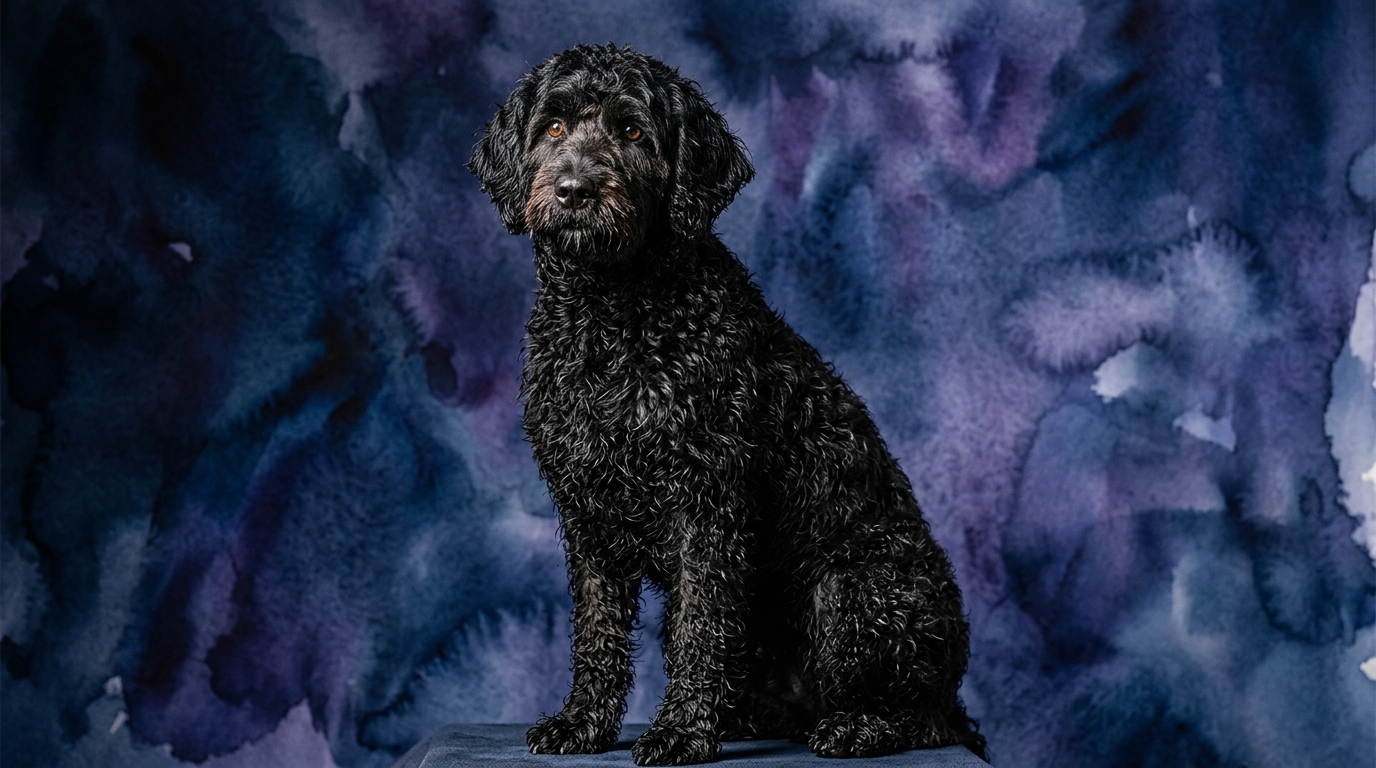

Side-by-Side IQ Profile: Understanding the 3/5 Score
A 3/5 score across the Pet IQ Lab's five dimensions signifies a solid, capable level of cognitive function, indicating these dogs learn new tasks at an average pace, can solve moderately complex problems, and possess a good foundation for social understanding and memory retention. It suggests a dog that is reliably competent, adaptable, and responsive without being exceptionally quick or particularly slow in its cognitive processing. This consistency across the board for both breeds invites a deeper look into the nuances of how these foundational abilities are applied.
The Portuguese Water Dog (PWD), a working breed, applies its Problem Solving (3/5) to practical, often water-related tasks, such as retrieving fishing nets or navigating complex aquatic environments. Their solutions tend to be methodical and task-oriented, driven by a desire to complete a job. Training Speed (3/5) is good, with PWDs demonstrating a solid capacity for learning new commands and routines, often showing eagerness to engage with their handlers. Their Social Intelligence (3/5) ensures a robust understanding of human cues and social dynamics within their family, forming strong bonds. The PWD's Instinctive Drive (3/5) is primarily focused on working, retrieving, and herding, reflecting their heritage as aquatic helpers and manifesting as a desire for purposeful activity. Memory (3/5) is reliable for learned commands, routines, and significant experiences, aiding in long-term training retention.
The Rat Terrier (RT), a terrier breed, typically directs its Problem Solving (3/5) towards strategy and persistence, particularly when overcoming obstacles to reach a target, such as a hidden toy or simulated 'prey.' Their solutions can be clever and resourceful, often involving quick assessment. Training Speed (3/5) is consistent, though their independent terrier spirit means they thrive with engaging, varied training that holds their attention and prevents boredom. Their Social Intelligence (3/5) allows them to display good social awareness, often reading intentions and moods within their immediate circle, though their interactions can sometimes be colored by their assertive nature. The Rat Terrier's Instinctive Drive (3/5) is strongly geared towards hunting and chasing small prey, exhibiting the classic terrier tenacity and focus when engaged in these activities. Memory (3/5) is good for places, people, and routines, remembering past training and experiences effectively, which aids in their adaptability and household integration.
Where the Portuguese Water Dog Wins Cognitively
While both breeds score identically, the Portuguese Water Dog's cognitive strengths shine particularly in sustained, complex task completion that requires sequential problem-solving and physical endurance. Their 3/5 problem-solving score is often applied to multi-stage activities like retrieving objects from water, navigating currents, or assisting in fishing operations, where a keen understanding of environmental factors and handler instructions is paramount. This breed's 3/5 instinctive drive is channeled into purposeful work, making them adept at learning and executing roles that demand focus and dedication over extended periods. Their social intelligence, also a 3/5, often manifests as a deep cooperative bond with their human partners, allowing them to anticipate and respond to subtle cues during demanding tasks. This cooperative spirit, coupled with their reliable memory, makes them excel in roles requiring consistent performance and detailed recall and makes them excellent candidates for advanced obedience or service work.
Where the Rat Terrier Wins Cognitively
Conversely, the Rat Terrier's identical 3/5 cognitive scores translate into a different kind of operational excellence, particularly in rapid assessment and agile, independent action. Their problem-solving at 3/5 is often quicker and more reactive, focused on immediate challenges like outsmarting small critters or finding novel ways to access confined spaces. This reflects their history as pest control specialists, where ingenuity and speed are vital. The Rat Terrier's 3/5 instinctive drive is intensely focused on pursuit and discovery, leading to a tenacious exploration of their environment and a determined approach to overcoming obstacles, often with a mischievous flair. Their social intelligence, while equally rated at 3/5, can lean towards an assertive independence, allowing them to make quick decisions without constant human oversight when engaged in their driven tasks. This blend of quick wit and self-reliance makes them particularly effective in scenarios demanding swift, decisive action and makes them agile competitors in dog sports.
Which is Easier to Train and Why
Despite both breeds having a training speed score of 3/5, the *experience* of training can differ due to underlying behavioral tendencies. The Portuguese Water Dog, with its working breed background and strong cooperative drive, often approaches training with an eagerness to please and a desire for partnership. Their social intelligence fosters a strong bond, making them highly receptive to positive reinforcement and clear guidance, leading to relatively smooth progress through obedience and complex task learning. They thrive on having a 'job' and genuinely enjoy the process of learning alongside their human, making them generally compliant and focused learners.
The Rat Terrier, while equally capable of learning at a 3/5 pace, often brings a characteristic terrier independence and spirited determination to the training ring. Their problem-solving often involves finding the most efficient path, which might not always align with the handler's intended method, requiring more creative and engaging training techniques to maintain focus. While they learn quickly, their strong instinctive drive for chasing and exploring means trainers must be adept at channeling this energy and ensuring consistency to prevent distractions. Neither is 'hard' to train, but the PWD typically offers a more compliant and partnership-oriented training journey, while the Rat Terrier demands a more inventive and patient approach to harness its independent spirit and prevent boredom-induced mischief.
Which Suits Active Owners vs. Relaxed Owners
For owners with an active lifestyle, both breeds can be excellent companions, but their energy outlets differ. The Portuguese Water Dog thrives on purposeful activity: long hikes, swimming, dog sports like agility, obedience, or dock diving, and engaging in brain games that challenge their problem-solving and memory. Their need for physical and mental engagement is substantial and consistent, making them ideal for individuals or families who enjoy including their dog in daily adventures and structured activities. A relaxed owner, however, might find the PWD's consistent demand for stimulation overwhelming, potentially leading to boredom-driven behaviors.
The Rat Terrier also possesses considerable energy, particularly for bursts of activity, chasing, and exploring. They excel in dog sports like earthdog trials, agility, and flyball, which tap into their instinctive drive and quick problem-solving. While they can enjoy periods of relaxation, their innate curiosity and drive for discovery mean they need regular opportunities to explore and engage their senses, often preferring shorter, more intense play sessions over sustained, methodical work. A relaxed owner might find the Rat Terrier's persistent investigative nature and need for mental engagement challenging if not properly channeled, as boredom can quickly lead to undesirable, self-directed 'projects'.
The Verdict
Choose the Portuguese Water Dog if you seek a highly cooperative, task-oriented companion eager to engage in sustained, complex activities and form a deep working partnership.
Choose the Rat Terrier if you value an agile, independent, and quick-witted companion who excels in rapid problem-solving and spirited, focused bursts of activity.
🧠 Find Your Pet's IQ Score
Our Pet IQ Lab assessment covers 25+ tests across 5 cognitive dimensions — personalized to your breed.
Take the Full IQ Test →Frequently Asked Questions
Are Portuguese Water Dogs good with children?
Portuguese Water Dogs, with their 3/5 social intelligence and cooperative nature, often form strong bonds with family members, including children, when properly socialized. Their robust build and playful energy make them good companions for active families, though supervision is always recommended to guide interactions.
Do Rat Terriers need a lot of exercise?
Yes, Rat Terriers require regular exercise to satisfy their 3/5 instinctive drive and high energy levels. While they can adapt to apartment living, daily walks, vigorous play sessions, and opportunities for mental stimulation are crucial to keep them content and prevent boredom-induced behaviors.
How do these breeds compare in terms of shedding?
The Portuguese Water Dog has a single coat of hair that sheds minimally, often considered hypoallergenic, requiring regular grooming to prevent matting. The Rat Terrier has a short, smooth coat that sheds moderately year-round, requiring less intensive grooming but still contributing to household hair.