Side-by-Side Cognitive Profiles
At The Cosmic Pet Pet IQ Lab, we assess canine intelligence across five critical dimensions: problem solving, training speed, social intelligence, instinctive drive, and memory. Intriguingly, both the Portuguese Water Dog (PWD) and the Sealyham Terrier score a consistent 3/5 in each of these categories, suggesting a baseline of competent and adaptable cognitive function. However, the true distinction lies in the context and expression of these capabilities, deeply rooted in their breed histories and purposes.
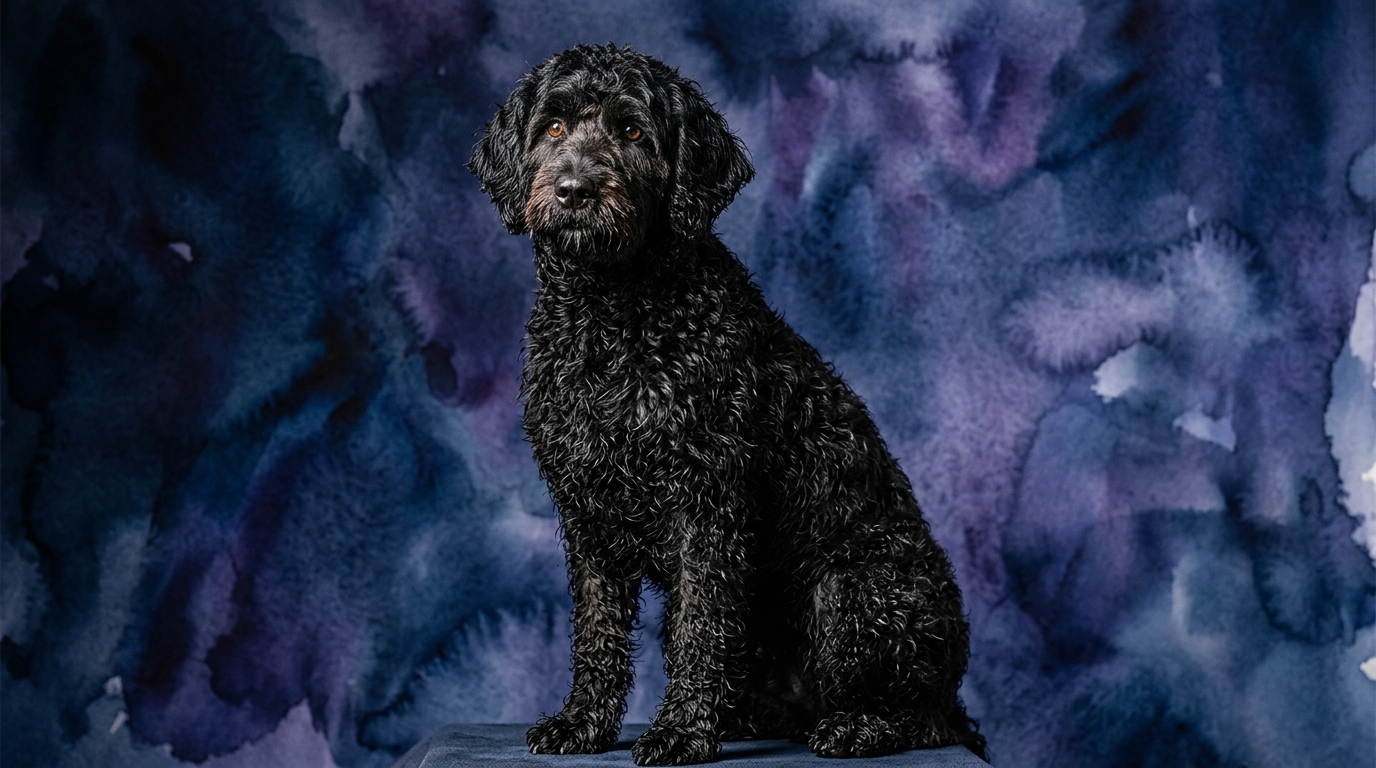
The Portuguese Water Dog, a member of the Working Group, developed its cognitive abilities assisting fishermen along the Portuguese coast. Their problem-solving (3/5) often involves navigating dynamic, three-dimensional spaces like water, requiring adaptability to currents and changing conditions to retrieve items or assist with nets. This cognitive flexibility is key to their success in tasks demanding real-time environmental assessment and strategic movement. Their training speed (3/5) reflects an eagerness to engage and learn new commands, though their independent spirit means consistency and engaging methods are crucial for solidifying learned behaviors. PWDs are attentive learners, quick to associate actions with rewards, making them responsive to varied training paradigms. Social intelligence (3/5) in PWDs manifests as a keen ability to read human social cues and emotions, forming strong, intuitive bonds with their families. They are generally adept at understanding intentions and adjusting their behavior accordingly, which contributes to their reputation as responsive and empathetic companions. Their instinctive drive (3/5) is powerfully centered on water work, retrieving, and partnering with humans, channeling into purposeful activities like dock diving or water rescue simulations. Memory (3/5) allows PWDs to recall complex sequences of tasks, remember the location of favorite objects, and retain training over long periods, indicating a robust capacity for information storage and retrieval essential for their working roles.
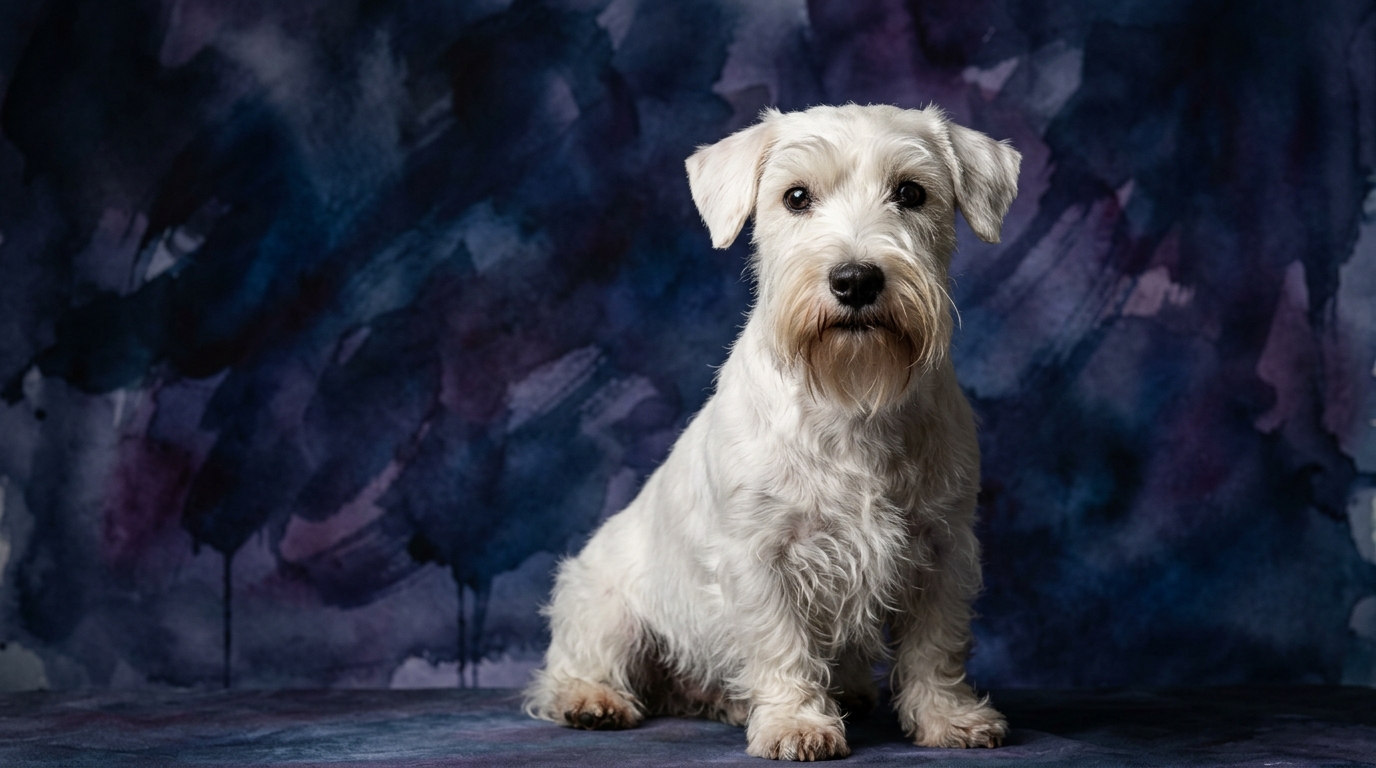
The Sealyham Terrier, a Terrier Group member, was bred in Wales for hunting small game like badgers and otters. Their problem-solving (3/5) skills shine in confined, often dark, environments, where they must mentally map tunnels and anticipate prey movements. This requires a tenacious, focused approach to overcoming physical barriers and deducing the location of quarry, often relying on scent and sound in intricate subterranean networks. Their training speed (3/5) indicates they learn new commands at a moderate pace, but their inherent terrier tenacity means compliance is often tied to their perceived value of the task or the reward. Engaging, varied training sessions that appeal to their natural drives are most effective in harnessing their learning potential. Social intelligence (3/5) for Sealyhams means deep devotion to their families, often being quite perceptive of their owners' moods and forming affectionate bonds within their immediate 'pack.' While they might be more reserved with strangers, they are keenly aware of their human companions' emotional states. Their instinctive drive (3/5) is intensely geared towards hunting, digging, and scenting, manifesting as a formidable prey drive. This drive is often self-rewarding, directing them towards exploring scents and tunneling behaviors reminiscent of their badger-hunting heritage. Memory (3/5) aids Sealyhams in recalling specific locations where prey was encountered, remembering training cues, and retaining routines, particularly those related to their instinctual pursuits, indicating a reliable capacity for remembering relevant environmental and experiential information.
Where the Portuguese Water Dog Excels Cognitively
Despite identical scores, the Portuguese Water Dog often demonstrates a nuanced cognitive advantage in tasks requiring collaborative problem-solving with a human partner in dynamic, open environments. Their historical role demanded not just independent action but also a sophisticated understanding of human signals and intentions, allowing them to anticipate and react in fluid situations. This means a PWD might more readily adapt to complex multi-step commands or agility courses that require continuous communication and adjustment based on handler cues.
Their social intelligence, while rated 3/5, often presents as a more overt desire to please and connect, which subtly enhances their training responsiveness for cooperative tasks. This 'people-oriented' aspect means they are frequently more attuned to subtle shifts in human body language and vocal tone, making them exceptionally perceptive partners in activities that rely on shared focus and mutual understanding. This translates into a smoother learning curve for activities where the human is a central part of the 'puzzle' to be solved.
Furthermore, the PWD's instinctive drive, while strong, is inherently directed towards working *with* humans. This collaborative instinct means their drive can be more easily channeled into structured activities like competitive obedience, rally, or even service work, where their natural inclinations align seamlessly with human-directed tasks. Their memory is particularly strong for sequences and patterns related to these collaborative efforts, enabling them to execute complex routines with impressive recall.
Where the Sealyham Terrier Excels Cognitively
The Sealyham Terrier, with its identical 3/5 scores, truly shines in cognitive tasks demanding independent, tenacious problem-solving within confined or challenging spaces. Their unique historical purpose as a 'badger dog' forged a mind that excels at self-directed exploration and persistent strategizing to overcome obstacles, often without direct human intervention. A Sealyham might display a superior ability to figure out how to access a hidden toy in a complex puzzle feeder or to navigate a dense brush to track a scent, relying purely on their own keen senses and determination.
Their instinctive drive, though also a 3/5, is a powerful engine for self-motivated exploration and pursuit. This translates into a remarkable focus and persistence when engaged in activities that tap into their prey drive, such as earthdog trials or scent work. While they might not be as overtly 'eager to please' as a PWD, their dedication to a self-assigned task, especially one involving scent or digging, is unparalleled, demonstrating a formidable inner cognitive compass.
The Sealyham's memory, while generally good, is particularly sharp for spatial awareness and the recollection of successful hunting or tracking strategies. They can vividly remember the layout of a challenging tunnel system or the specific path that led to a successful 'catch,' allowing them to refine their approach in subsequent similar situations. This memory is less about recalling human commands and more about retaining environmental data crucial for their independent pursuits, showcasing a different facet of cognitive strength.
Which is Easier to Train and Why
When considering ease of training, the distinction between these breeds, despite their matching 3/5 training speed scores, lies in *how* they respond to different training approaches and *what* they are being trained for. The Portuguese Water Dog, with its inherent desire to collaborate and its focus on human interaction, often appears 'easier' to train for general obedience and cooperative sports. Their social intelligence and eagerness to engage mean they are generally more amenable to following cues and performing tasks that directly involve their handler, especially when training is made fun and rewarding.
However, the Sealyham Terrier's independent streak and strong, self-directed instinctive drives can make traditional obedience training more challenging, even if they learn commands at a similar pace. A Sealyham might understand a command perfectly but choose not to comply if a more interesting scent or perceived 'prey' distracts them. Training a Sealyham requires more patience, creativity, and a deep understanding of their terrier mentality, focusing on positive reinforcement and making training sessions incredibly engaging to compete with their natural urges. While they learn, their compliance is often more selective, making consistency and high-value rewards paramount to maintain their focus.
Active Owners vs. Relaxed Owners
For active owners seeking a dynamic partner, the Portuguese Water Dog is often the more suitable choice. Their robust build, boundless energy, and strong retrieving drive make them ideal companions for hiking, swimming, jogging, and participating in dog sports like agility, flyball, and dock diving. Their cognitive profile, particularly their problem-solving and social intelligence, thrives on mental stimulation that comes from learning new tasks and engaging in interactive play with their human companions. A PWD requires significant daily exercise and mental challenges to prevent boredom and channel their energy constructively.
The Sealyham Terrier, while certainly not a couch potato, is generally better suited for owners who appreciate a more moderate activity level, albeit with bursts of intense engagement. Their energy is often expressed in shorter, focused bursts of activity, such as vigorous play sessions in the yard, structured walks, or engaging in scent work or earthdog trials that satisfy their instinctive drives. Relaxed owners who can still provide consistent mental stimulation through puzzle toys, training games, and opportunities for 'hunting' around the house or garden will find a Sealyham a delightful companion. Their independent nature also means they are content with periods of self-entertainment, though daily interaction and mental engagement are still vital.
The Verdict: When to Choose Each Breed
The Verdict
Choose the Portuguese Water Dog if you seek a highly engaged, collaborative canine partner for an active lifestyle, thriving on complex, cooperative tasks and water-based activities. They excel with owners who can provide consistent mental stimulation and physical exercise, appreciating a dog that is deeply attuned to their human companions.
Opt for the Sealyham Terrier if you appreciate an independent, tenacious companion with a charmingly stubborn streak, perfect for an owner who enjoys focused, instinct-driven activities like scent work or earthdog. They suit those who can provide engaging mental challenges and understand the unique drive of a terrier, without necessarily requiring constant high-impact exercise.
🧠 Find Your Pet's IQ Score
Our Pet IQ Lab assessment covers 25+ tests across 5 cognitive dimensions — personalized to your breed.
Take the Full IQ Test →Frequently Asked Questions
Do Portuguese Water Dogs get along with other pets?
Portuguese Water Dogs generally exhibit good social intelligence and can coexist peacefully with other pets, especially if introduced properly and socialized from a young age. Their adaptable nature allows them to integrate well into multi-pet households, often forming playful bonds with canine companions.
Are Sealyham Terriers good apartment dogs?
Sealyham Terriers can adapt to apartment living if their exercise and mental stimulation needs are met. Despite their strong instinctive drives, their moderate size and capacity for independent entertainment make them suitable, provided they receive daily walks and engaging indoor activities.
What kind of grooming do these breeds require?
The Portuguese Water Dog requires regular grooming, including brushing several times a week and professional clipping every 6-8 weeks to prevent matting and maintain their non-shedding coat. Sealyham Terriers need weekly brushing and regular hand-stripping or professional grooming to maintain their distinctive harsh coat and prevent matting.