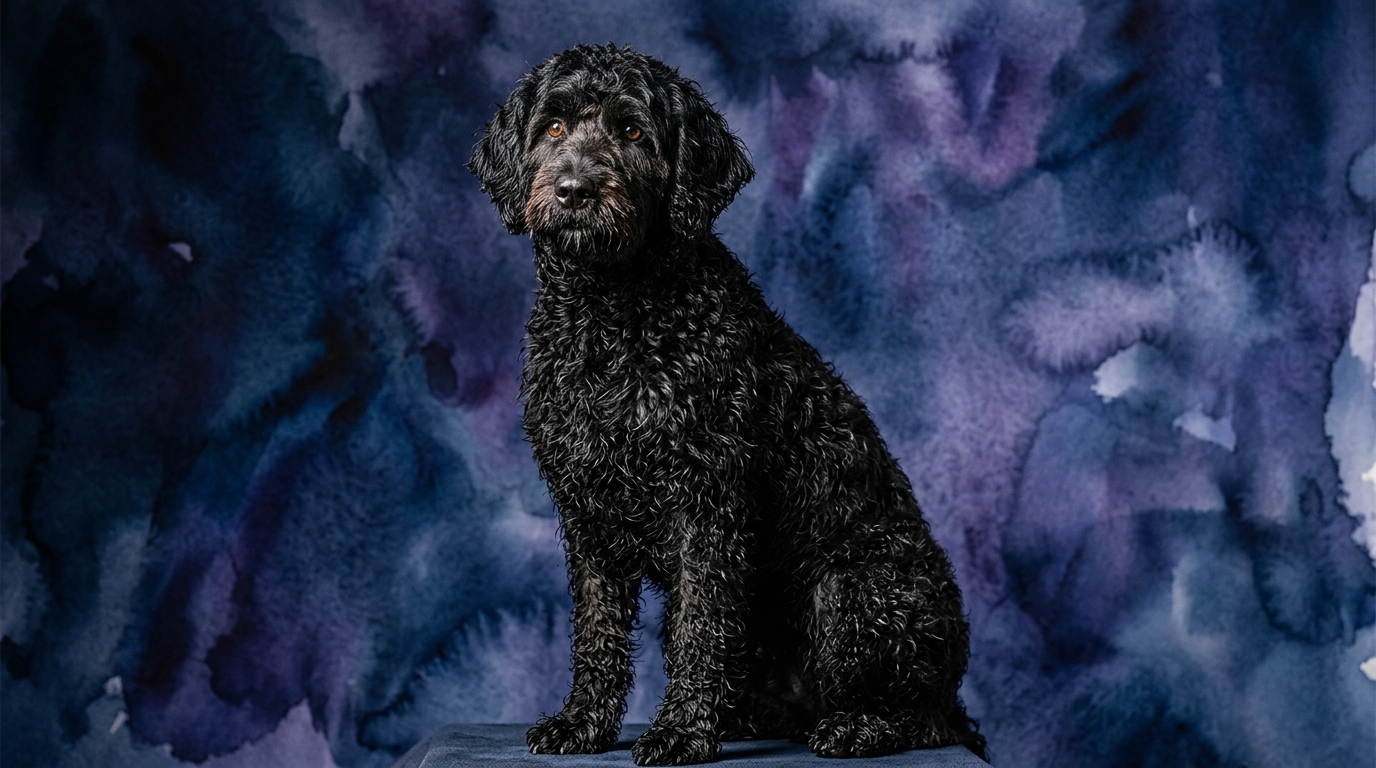
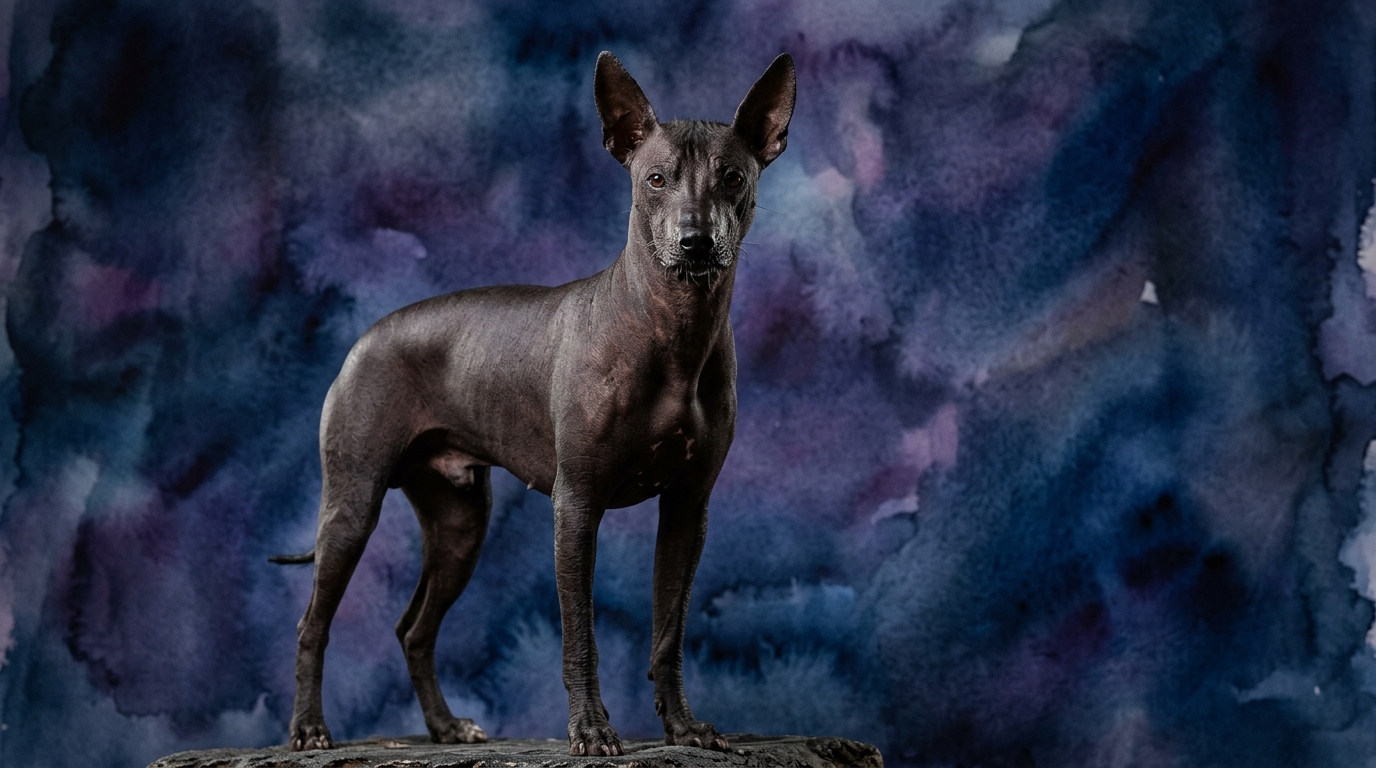
Side-by-Side IQ Profile: Portuguese Water Dog vs. Xoloitzcuintli
At first glance, the IQ profiles of the Portuguese Water Dog (PWD) and the Xoloitzcuintli (Xolo) appear identical, with both breeds scoring 3/5 across all five dimensions: Problem Solving, Training Speed, Social Intelligence, Instinctive Drive, and Memory. However, a deeper examination reveals how these moderate scores translate into distinct behavioral and cognitive tendencies, shaped by their evolutionary paths and breed purposes.
For the **Portuguese Water Dog**, a 3/5 in **Problem Solving** signifies a moderate capacity for independent thought and finding solutions, often applied in practical, task-oriented ways. Historically assisting fishermen, this ability frequently surfaces in their knack for adapting to dynamic situations, such as navigating water or retrieving objects from complex environments. Their approach to challenges is typically steady and methodical when a clear objective is presented. Their **Training Speed** at 3/5 indicates they absorb new commands and routines at a reasonable pace, benefiting from consistent, positive reinforcement. They are generally cooperative learners, retaining what they've learned with practice. A 3/5 in **Social Intelligence** means these dogs exhibit a moderate understanding of human emotional states and social cues, forming strong bonds and seeking involvement in family activities, though they may also possess a discerning nature with newcomers. Their **Instinctive Drive** at 3/5 is moderately strong, rooted in their working heritage, manifesting as a natural inclination towards retrieving, swimming, and an active lifestyle, requiring appropriate outlets to channel their inherent desire for purpose. Lastly, their **Memory** score of 3/5 enables them to recall learned commands, routines, and past experiences effectively, contributing to their reliability as working partners and companions.
The **Xoloitzcuintli**, conversely, applies its identical 3/5 scores through a lens of ancient companionship and guardianship. Their **Problem Solving** at 3/5 is often more independent and self-reliant, geared towards personal comfort or security, like strategically finding the warmest spot or creatively communicating a need. Their solutions are practical and often reflective of their role as a watchful household member. A 3/5 in **Training Speed** means Xolos learn new tasks at a moderate rate, yet their willingness to perform can be influenced by their independent spirit and their perception of the task's value. Effective training relies on patience, consistency, and highly motivating rewards. Their **Social Intelligence** at 3/5 is moderately developed but often selectively expressed; they are deeply devoted to immediate family, keenly aware of their owners' moods, but typically reserved or aloof with strangers, prioritizing their inner circle. The Xolo’s **Instinctive Drive** at 3/5 is moderately developed, often expressed as a strong protective instinct towards their home and family, and a moderate prey drive. This drive is less about complex tasks and more about maintaining comfort, security, and connection within their social unit. Finally, their **Memory** at 3/5 allows them to retain information about their environment, routines, and interactions, contributing to their consistent behavior and shaping future responses based on past experiences.
Where the Portuguese Water Dog Wins Cognitively
Despite identical numerical scores, the Portuguese Water Dog's cognitive strengths distinctly lean into its historical role as a collaborative working partner. Their 3/5 problem-solving and instinctive drive are often channeled into purposeful tasks, meaning they tend to excel in scenarios requiring sustained focus on a job and an ability to adapt within a structured framework. For instance, a PWD might more readily devise a strategy to retrieve a specific floating object from a difficult spot, demonstrating an applied intelligence tied to a clear objective rather than purely independent exploration. Their social intelligence, though rated similarly, often translates to a more overt eagerness to engage in shared activities and respond directly to human instruction, making them particularly adept at learning complex sequences of commands for performance or work.
Where the Xoloitzcuintli Wins Cognitively
In contrast, the Xoloitzcuintli's cognitive strengths often manifest in a more independent and observational manner, befitting their ancient role as a companion and guardian. Their 3/5 problem-solving frequently involves navigating their immediate environment for comfort or security, such as figuring out how to create the warmest sleeping spot or subtly communicating a need to their owner. The Xolo’s social intelligence, while also a 3/5, often expresses itself as a profound sensitivity to their family's emotional landscape and routines, allowing them to anticipate needs or respond to unspoken cues. This often results in a dog who is deeply attuned to the nuances of their household, capable of independent decision-making that benefits their own well-being and that of their immediate human pack, even if it doesn't always align with explicit human commands.
Which is Easier to Train and Why
Evaluating ease of training between these two breeds requires looking beyond identical training speed scores and considering their inherent motivations and behavioral differences. The Portuguese Water Dog, with its working background, generally approaches training with an intrinsic desire to partner and perform tasks alongside its human. Their 3/5 instinctive drive often includes a strong 'work ethic' and a natural inclination to please, making them typically more amenable to structured training sessions and repetitive drills. They are often eager to engage, finding satisfaction in mastering commands and receiving positive feedback for a job well done. This isn't to say they are always effortless, but their foundational disposition leans towards cooperation and shared activity.
The Xoloitzcuintli, conversely, while also scoring 3/5 in training speed, often brings a more independent and self-possessed demeanor to the training ring. Their 3/5 instinctive drive is less about collaborative tasks and more about personal comfort, security, and family bonding. A Xolo might quickly grasp a command but may not always see the immediate value in performing it repeatedly unless highly motivated, or if it aligns with their own agenda. Their historical role as a more primitive companion means they often learn by observation and through establishing a deep, respectful bond, rather than simply for the sake of 'pleasing.' Training a Xolo requires exceptional patience, creativity, and a profound understanding of their unique personality, focusing on building trust and making training intrinsically rewarding rather than relying solely on their desire to obey. Therefore, for most owners seeking a straightforward training experience focused on obedience and task performance, the Portuguese Water Dog is generally considered easier to train due to their cooperative temperament and inherent drive to collaborate.
Suitability for Active vs. Relaxed Owners
The cognitive and temperamental profiles of these breeds offer clear distinctions for owner lifestyles. The Portuguese Water Dog, with its 3/5 instinctive drive and problem-solving geared towards activity, thrives with active owners who can provide consistent engagement and purpose. Their moderate energy levels and desire for mental stimulation mean they are best suited for individuals or families who enjoy outdoor activities like hiking, swimming, or dog sports. They benefit immensely from having a 'job,' whether it's retrieving, agility, or advanced obedience, which channels their cognitive abilities productively. A relaxed owner might find a PWD's need for engagement overwhelming, potentially leading to boredom-induced behaviors.
The Xoloitzcuintli, while not a sedentary breed, generally suits owners with a more relaxed yet attentive lifestyle. Their 3/5 instinctive drive and problem-solving are often focused on their immediate family and home environment rather than strenuous outdoor work. They are content with moderate exercise, such as daily walks, and prefer to spend significant time closely bonded with their humans indoors. Their social intelligence, while strong within the family, means they are not typically gregarious, making them less suited for owners seeking a dog for extensive public outings or dog park adventures with many strangers. Owners who appreciate a sensitive, loyal, and somewhat reserved companion, and who can provide a calm, consistent home environment, will find a Xolo a deeply rewarding fit.
The Verdict
Choose the Portuguese Water Dog if you are an active owner seeking a cooperative, engaging partner for structured activities, dog sports, or a 'job' that leverages their moderate problem-solving and collaborative spirit. They thrive with consistent mental and physical engagement, finding satisfaction in working alongside their human.
Opt for the Xoloitzcuintli if you value a deeply loyal, sensitive, and observant companion who thrives on close family bonds and a more relaxed home environment, appreciating their independent problem-solving and profound social intelligence within their inner circle.
🧠 Find Your Pet's IQ Score
Our Pet IQ Lab assessment covers 25+ tests across 5 cognitive dimensions — personalized to your breed.
Take the Full IQ Test →Frequently Asked Questions
Do Portuguese Water Dogs need a lot of grooming?
While their coat is non-shedding, Portuguese Water Dogs require regular grooming to prevent matting, typically involving brushing several times a week and professional clipping every 6-8 weeks. Their coat texture needs consistent care to remain healthy and comfortable.
Are Xoloitzcuintli good with children?
Xoloitzcuintli can be excellent family dogs, forming strong bonds with children when raised together and properly socialized. However, their sensitive and sometimes reserved nature means interactions should always be supervised, especially with younger children, to ensure respect for the dog's boundaries.
What are the main health concerns for these breeds?
Portuguese Water Dogs can be prone to hip dysplasia, progressive retinal atrophy, and juvenile dilated cardiomyopathy. Xoloitzcuintli are generally robust but can have skin issues related to their hairless nature, and some lines may carry risks for hip dysplasia or patellar luxation.