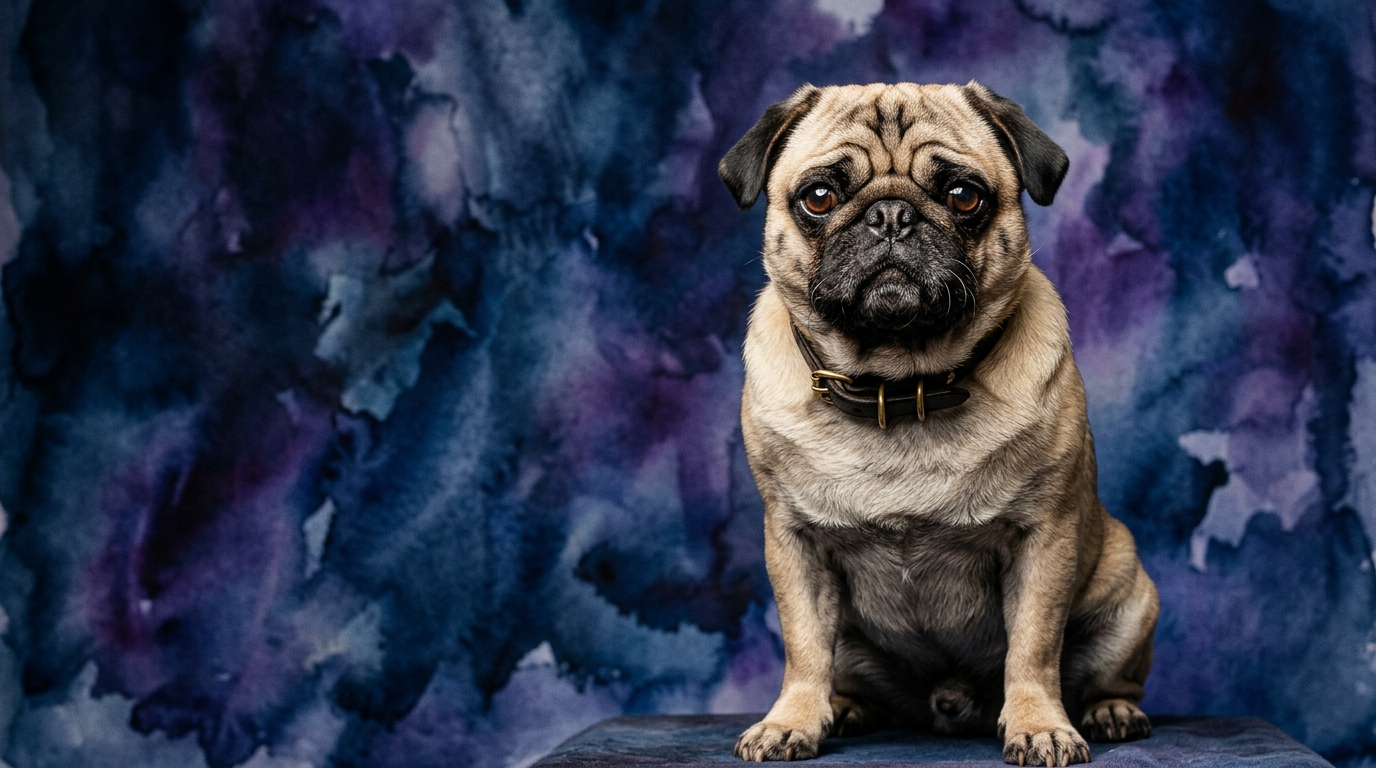
Side-by-Side IQ Profile: The Pug
The Pug, classified as a Toy breed with a Coren rank of #57, presents a cognitive profile deeply rooted in companionship and social interaction. Their IQ scores from The Cosmic Pet Pet IQ Lab paint a picture of a dog whose strengths lie less in independent problem-solving and more in their profound connection with humans.
A Pug's Problem Solving ability scores 2/5, suggesting they are less inclined to independently figure out complex situations and often look to their owners for guidance. Training Speed, also at 2/5, indicates that Pugs require patience and consistent, positive reinforcement to grasp new commands, processing information at a more leisurely pace. However, their Social Intelligence shines brightest with a perfect 5/5, showcasing an exceptional capacity to read human emotions, respond to social cues, and form deep, empathetic bonds. Instictive Drive is low at 2/5, meaning they possess minimal prey drive or independent working instincts, preferring proximity to their people. Their Memory, rated 3/5, is moderate, allowing them to recall routines and learned behaviors, though perhaps not extensive sequences with high precision.
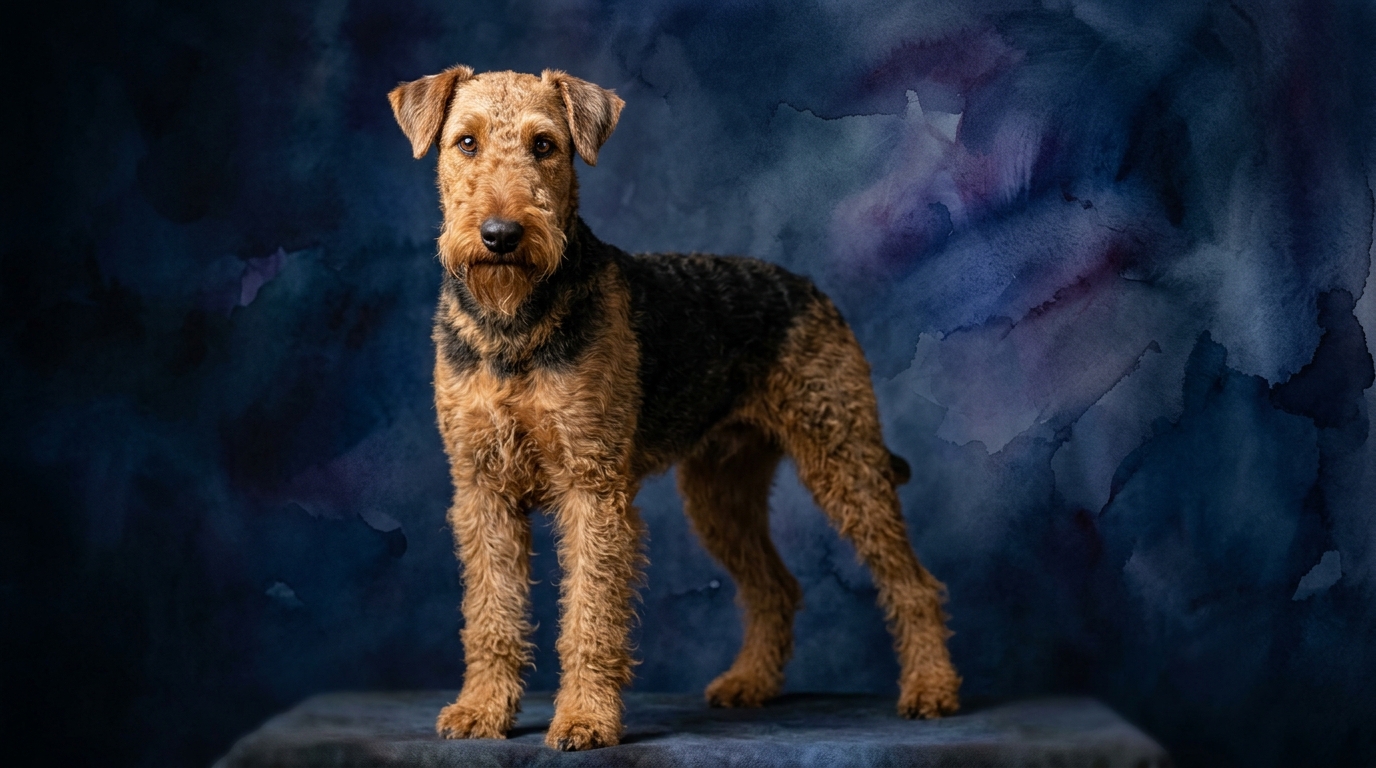
Side-by-Side IQ Profile: The Airedale Terrier
The Airedale Terrier, a member of the Terrier group with a Coren rank of #29, offers a contrasting cognitive blueprint, reflecting its heritage as a versatile working dog. Its IQ scores from The Cosmic Pet Pet IQ Lab reveal a dog built for engagement, independent thought, and a willingness to learn and execute tasks.
An Airedale's Problem Solving ability scores a commendable 4/5, indicating a strong capacity for independent thought and figuring out how to achieve objectives, even without direct human intervention. Their Training Speed, also 4/5, suggests they are quick learners, capable of picking up new commands and complex tasks with relative ease and enthusiasm, provided the training is stimulating. Social Intelligence is solid at 3/5; while they form strong bonds, they possess a more independent streak than the Pug, not always prioritizing human emotional states above their own interests. Instictive Drive is moderate at 3/5, reflecting their terrier heritage with a natural inclination to chase and explore, requiring outlets for this energy. Their Memory is robust at 4/5, allowing for excellent retention of commands, experiences, and learned behaviors over time.
Where the Pug Shines Cognitively
The Pug's undisputed cognitive strength lies in its unparalleled Social Intelligence, scoring a perfect 5/5. This isn't merely about affection; it's a deep-seated ability to perceive and respond to human emotional nuances. A Pug can often anticipate their owner's mood, offering comfort or seeking interaction precisely when it seems most needed, making them exceptional emotional support animals and devoted companions. Their attentiveness to human cues means they thrive on interaction and connection, making every shared moment a rich emotional exchange.
Furthermore, the Pug's lower scores in Problem Solving (2/5) and Instinctive Drive (2/5) paradoxically contribute to their unique charm. Without a strong urge for independent exploration or complex task management, Pugs are content to remain close, deriving satisfaction from companionship rather than challenging their environment. This cognitive makeup translates into a dog that is less prone to destructive behaviors born from boredom or a need to 'figure things out' independently, instead seeking out human presence and gentle interaction as their primary form of engagement.
Where the Airedale Terrier Excels Cognitively
The Airedale Terrier truly excels in the realm of practical intelligence, evidenced by its strong Problem Solving score of 4/5. This capacity for independent thought means an Airedale isn't just following commands; it's often assessing situations, strategizing, and making decisions. This can manifest as cleverly figuring out how to open a gate, retrieve a hidden toy, or navigate a complex obstacle course, showcasing a proactive and adaptive mind that enjoys a mental challenge.
Coupled with their high Training Speed (4/5) and robust Memory (4/5), Airedales are formidable learners. They quickly grasp new concepts and retain them, making them excellent candidates for advanced obedience, agility, tracking, or even specific working roles. An Airedale thrives on mental stimulation, enjoying training sessions that are varied and engaging, offering them opportunities to utilize their capacity for quick learning and strong recall. Their cognitive strengths make them partners in activities rather than mere followers, eager to participate in complex tasks and learn new skills.
Training Dynamics: Which is Easier and Why?
When it comes to training, the Pug and Airedale Terrier present distinct challenges and rewards. The Pug, with its Training Speed of 2/5, requires significant patience and a gentle, positive approach. They are not quick to pick up new commands and can become easily discouraged or distracted. Training sessions should be kept short, fun, and heavily reliant on positive reinforcement, leveraging their high social intelligence by making training feel like an extension of social interaction and praise rather than a strict task. Their low instinctive drive means fewer distractions from independent pursuits, but their processing speed requires consistency.
The Airedale Terrier, boasting a Training Speed of 4/5, learns quickly and retains information well, making them generally easier to train in terms of command acquisition. However, their independent nature and moderate Instinctive Drive (3/5) mean they require an engaging and varied training regimen to prevent boredom and stubbornness. An Airedale might quickly understand a command but choose not to execute it if a more interesting scent or sight captures their attention. Successful training involves consistent boundaries, mental challenges, and making learning a stimulating partnership, respecting their problem-solving abilities rather than just demanding rote memorization.
Lifestyle Match: Active Owners vs. Relaxed Owners
For the relaxed owner seeking a constant, affectionate presence, the Pug is an ideal match. Their low Instinctive Drive (2/5) means they have minimal exercise requirements, often content with short strolls and extensive cuddle sessions on the sofa. Their high Social Intelligence (5/5) means they thrive on close human interaction, preferring to be a shadow to their owner rather than embarking on independent adventures. A Pug's cognitive profile aligns perfectly with a calm, home-centric lifestyle where companionship and emotional connection are prioritized over strenuous physical or mental activity.
Conversely, the Airedale Terrier is best suited for active owners who can provide consistent mental and physical stimulation. Their strong Problem Solving (4/5) and Training Speed (4/5) indicate a dog that needs a 'job' or regular engaging activities to channel its cognitive energy. Without adequate outlets for their intelligence and moderate Instinctive Drive (3/5), Airedales can become bored, potentially leading to undesirable independent behaviors like digging or excessive barking. They thrive in environments where they can participate in family activities, learn new skills, and receive structured exercise that challenges both their bodies and minds.
The Verdict
Opt for a Pug if your primary desire is an unwavering, emotionally attuned companion who thrives on close human connection and requires minimal independent mental or physical exertion.
Select an Airedale Terrier if you are an active individual or family seeking a capable, spirited partner for engaging activities, training challenges, and a dog that enjoys solving problems alongside you.
🧠 Find Your Pet's IQ Score
Our Pet IQ Lab assessment covers 25+ tests across 5 cognitive dimensions — personalized to your breed.
Take the Full IQ Test →Frequently Asked Questions
Is a Pug difficult to train?
Pugs aren't inherently 'difficult,' but their training speed of 2/5 means they require significant patience and positive reinforcement. They respond best to training that feels like a social game, leveraging their high social intelligence rather than relying on complex problem-solving or strict obedience drills.
Can an Airedale Terrier be a good family dog?
Absolutely, Airedale Terriers can be wonderful family dogs, especially for active families. Their problem-solving and memory scores mean they enjoy engaging with their people in activities, though their moderate instinctive drive requires consistent training and outlets to prevent independent mischief.
How do the Coren ranks reflect their daily behavior?
Coren ranks broadly categorize breeds by working and obedience intelligence, with the Airedale (29) indicating quicker command acquisition and retention compared to the Pug (57). This generally translates to the Airedale being more readily trainable for complex tasks, while the Pug excels in social responsiveness and companionship, which isn't fully captured by traditional obedience ranks.