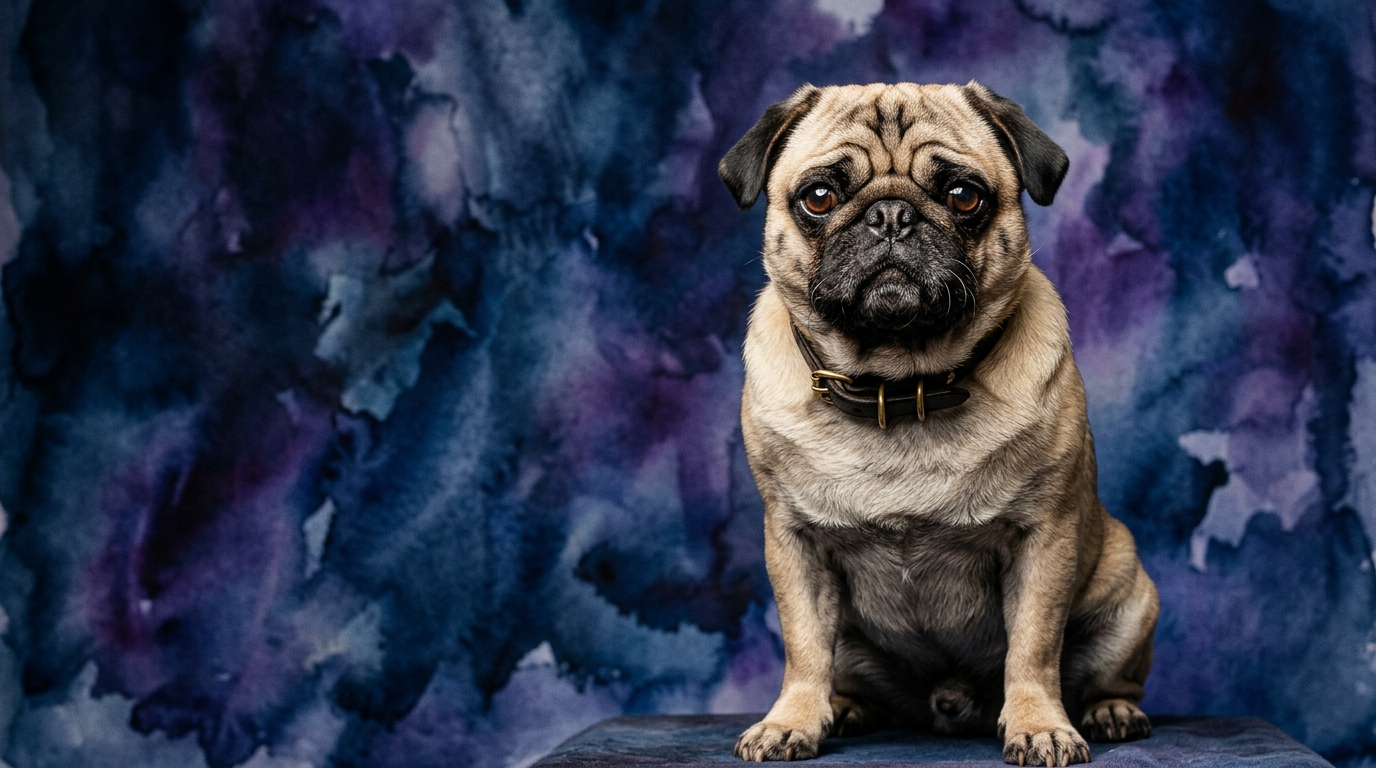
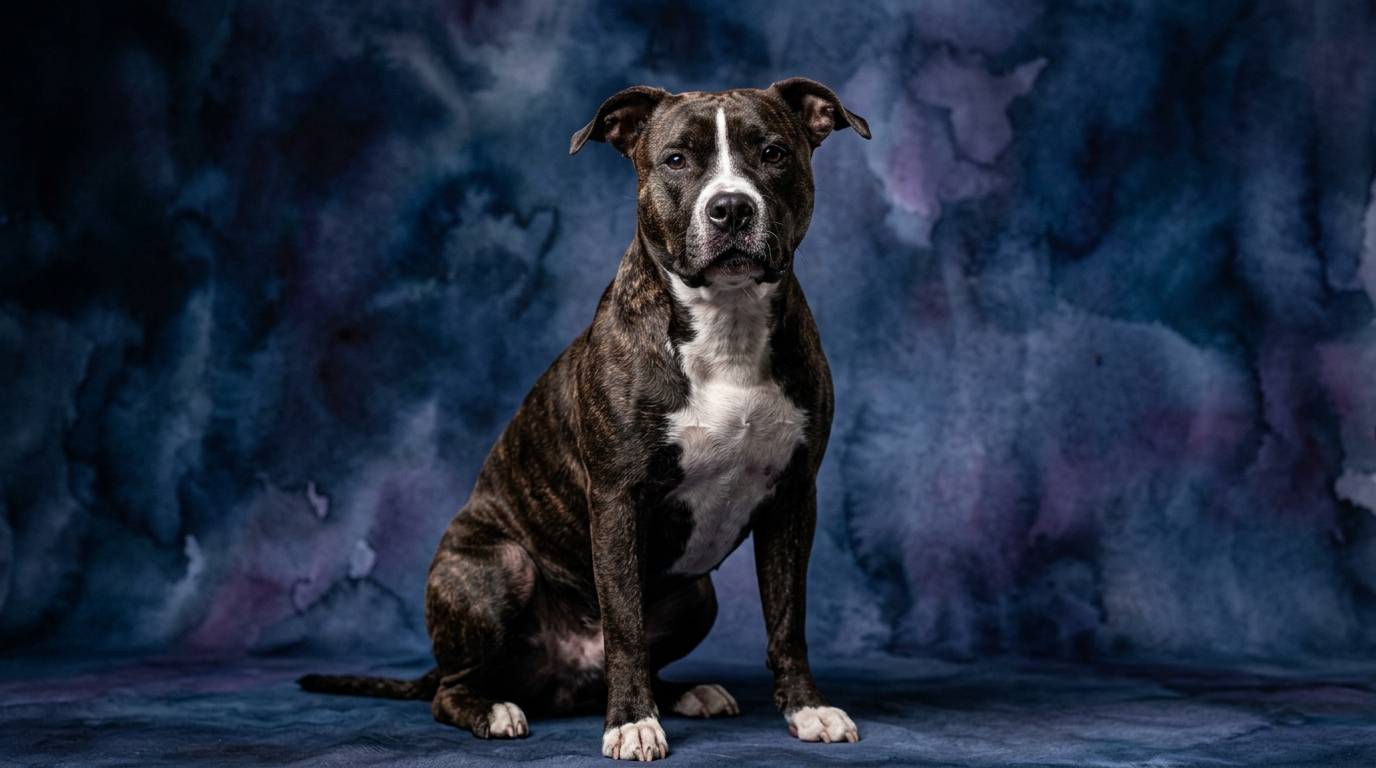
Side-by-Side Cognitive Profiles: Pug vs. American Staffordshire Terrier
Our Cosmic Pet Pet IQ Lab's assessment reveals distinct cognitive landscapes for these two breeds, with the Pug registering a Coren rank of #57 and the American Staffordshire Terrier at #48. While Coren's ranking offers a broad measure of working intelligence, our granular IQ metrics provide a deeper understanding of specific cognitive aptitudes.
The Pug's intellectual profile emphasizes social connection, with a Problem Solving score of 2/5, indicating a preference for less complex, human-directed solutions rather than independent environmental manipulation. Their Training Speed, also at 2/5, suggests they learn new commands at a moderate pace, often requiring patience and consistent, positive reinforcement.
Where the Pug truly shines is in Social Intelligence, scoring a perfect 5/5. This reflects an exceptional capacity for understanding human emotions, subtle cues, and integrating seamlessly into family dynamics as a devoted companion. Their Instinctive Drive, at 2/5, signifies a low innate compulsion for hunting, herding, or guarding tasks, making them content with domestic life.
Finally, the Pug's Memory score of 3/5 suggests a reasonable ability to retain learned behaviors and routines, though perhaps not with the precision required for intricate, multi-step tasks over long periods. They remember their people and favorite spots with endearing consistency.
Turning to the American Staffordshire Terrier, their cognitive profile suggests a more task-oriented and physically engaged intellect. Their Problem Solving score of 3/5 indicates a moderate aptitude for figuring out puzzles or navigating novel situations, often employing physical solutions.
With a Training Speed of 3/5, the AmStaff generally picks up new commands and routines more readily than the Pug, demonstrating a capacity for structured learning when properly motivated. This moderate pace allows for the development of a diverse skill set.
The American Staffordshire Terrier’s Social Intelligence is rated at 3/5, meaning they are capable of forming strong bonds and understanding social cues, though perhaps not with the same profound intuitive empathy seen in the Pug. Their social interactions are often more direct and less nuanced.
Their Instinctive Drive, at 3/5, points to a moderate inherent desire for activity, problem-solving, and engagement, often manifesting as a need for regular physical and mental stimulation. This drive is a foundational aspect of their personality and training potential.
The AmStaff's Memory score of 4/5 stands out, indicating a strong ability to recall commands, routines, and experiences over extended periods. This robust memory serves them well in advanced training, sports, and maintaining consistent behavior patterns.
Where the Pug's Cognition Excels
The Pug's paramount cognitive strength lies in their exceptional Social Intelligence. A score of 5/5 signifies an unparalleled ability to read human emotions, offering comfort and companionship with an intuitive understanding of their owner's mood. They excel at emotional attunement, making them masters of subtle communication within a family unit.
Their lower Instinctive Drive (2/5) and Problem Solving (2/5) scores, while not indicative of intellectual deficit, actually contribute to their cognitive wins in specific contexts. This profile means Pugs are less prone to developing complex behavioral issues stemming from boredom or an unmet need for 'work,' and are content in environments where their primary role is that of a cherished companion. They are cognitively primed for domestic tranquility.
Where the American Staffordshire Terrier's Cognition Shines
The American Staffordshire Terrier's cognitive advantages are most evident in their superior Memory (4/5) and balanced Problem Solving (3/5) and Training Speed (3/5). This combination allows them to learn and retain a broader repertoire of complex commands and sequences, making them adept at various canine sports or intricate obedience tasks. Their strong recall is a significant asset in consistent training.
Their moderate Instinctive Drive (3/5) provides a healthy internal motivation for engagement and purposeful activity. Unlike breeds with lower drives, AmStaffs possess an inherent curiosity and desire to interact with their environment in a structured way, which can be channeled into productive intellectual pursuits. This drive, combined with their problem-solving ability, makes them effective at navigating challenges that require more than simple social cues.
Training Dynamics: Pug vs. American Staffordshire Terrier
When considering ease of training, the distinction between these two breeds is significant, largely due to their differing Training Speed and Instinctive Drive scores. The Pug, with a Training Speed of 2/5, often requires more repetition and patience to grasp new commands. Their motivation is heavily tied to social interaction and positive reinforcement like praise or treats, but they may not be driven by the inherent desire to 'work' or solve a puzzle.
Pugs can be charmingly stubborn, a trait often stemming from their low instinctive drive rather than a lack of understanding. They learn best in short, fun sessions that prioritize connection over demanding performance, and their social intelligence means they respond well to gentle, consistent guidance and emotional encouragement.
The American Staffordshire Terrier, with a Training Speed of 3/5, generally learns commands more quickly and with fewer repetitions. Their moderate Instinctive Drive (3/5) means they often possess a greater eagerness to engage in structured activities and mentally stimulating tasks. This drive, if properly harnessed, makes them highly responsive to training that incorporates purpose and challenge.
AmStaffs benefit from clear, consistent leadership and a training approach that challenges their problem-solving abilities. While they are socially intelligent enough to work cooperatively, their motivation often extends beyond mere affection to include the satisfaction of completing a task. Early socialization and consistent training are crucial to channel their energy and intelligence effectively.
Matching Canine Intellect to Owner Lifestyles
The cognitive profiles of the Pug and American Staffordshire Terrier naturally align with different owner lifestyles. For relaxed owners who cherish quiet companionship and intimate social interaction, the Pug is an ideal match. Their high social intelligence and low instinctive drive mean they thrive in environments where their primary role is a beloved family member, content with moderate activity and ample lap time. Their cognitive strengths are best appreciated in a calm, emotionally rich home.
Pugs do not typically seek out complex challenges or demanding physical tasks, making them suitable for individuals or families whose daily routines are less active. Their cognitive needs are met through consistent social engagement, gentle play, and the comfort of routine. They are partners in relaxation, offering intuitive emotional support.
Conversely, the American Staffordshire Terrier is better suited for active owners who desire a more engaged and physically capable canine partner. Their moderate problem-solving ability, faster training speed, and stronger instinctive drive mean they require regular mental and physical stimulation to prevent boredom and channel their energy constructively. They thrive on having a 'job,' whether it's learning new tricks, participating in dog sports, or engaging in consistent outdoor adventures.
Owners who enjoy structured training, active outdoor pursuits, or have the time to dedicate to consistent mental enrichment will find the AmStaff's cognitive profile rewarding. They are partners in activity, offering enthusiasm and a robust capacity for learning and executing tasks.
The Verdict
Choose a Pug if you prioritize an exceptionally socially intelligent companion who excels at emotional attunement and thrives in a relaxed, affectionate home environment with moderate activity needs. Their cognitive strengths lie in companionship and emotional support.
Opt for an American Staffordshire Terrier if you seek a capable, trainable dog with good memory and problem-solving skills, eager to engage in structured activities and physical challenges. They are best suited for active owners committed to consistent training and mental stimulation.
🧠 Find Your Pet's IQ Score
Our Pet IQ Lab assessment covers 25+ tests across 5 cognitive dimensions — personalized to your breed.
Take the Full IQ Test →Frequently Asked Questions
Do Pugs have difficulty learning new commands?
Pugs have a Training Speed of 2/5, indicating they may learn new commands at a slower pace compared to some other breeds. They generally respond well to positive reinforcement and short, engaging training sessions focused on social reward and connection.
Are American Staffordshire Terriers good at problem-solving?
American Staffordshire Terriers score 3/5 in Problem Solving, suggesting they possess a moderate capacity to figure out puzzles or navigate new situations. This makes them capable of learning complex tasks and benefiting from mentally stimulating activities.
Which breed is more attuned to human emotions?
The Pug, with a Social Intelligence score of 5/5, is exceptionally attuned to human emotions and subtle social cues, making them highly intuitive companions. The American Staffordshire Terrier, while socially capable at 3/5, does not exhibit the same level of profound emotional empathy.