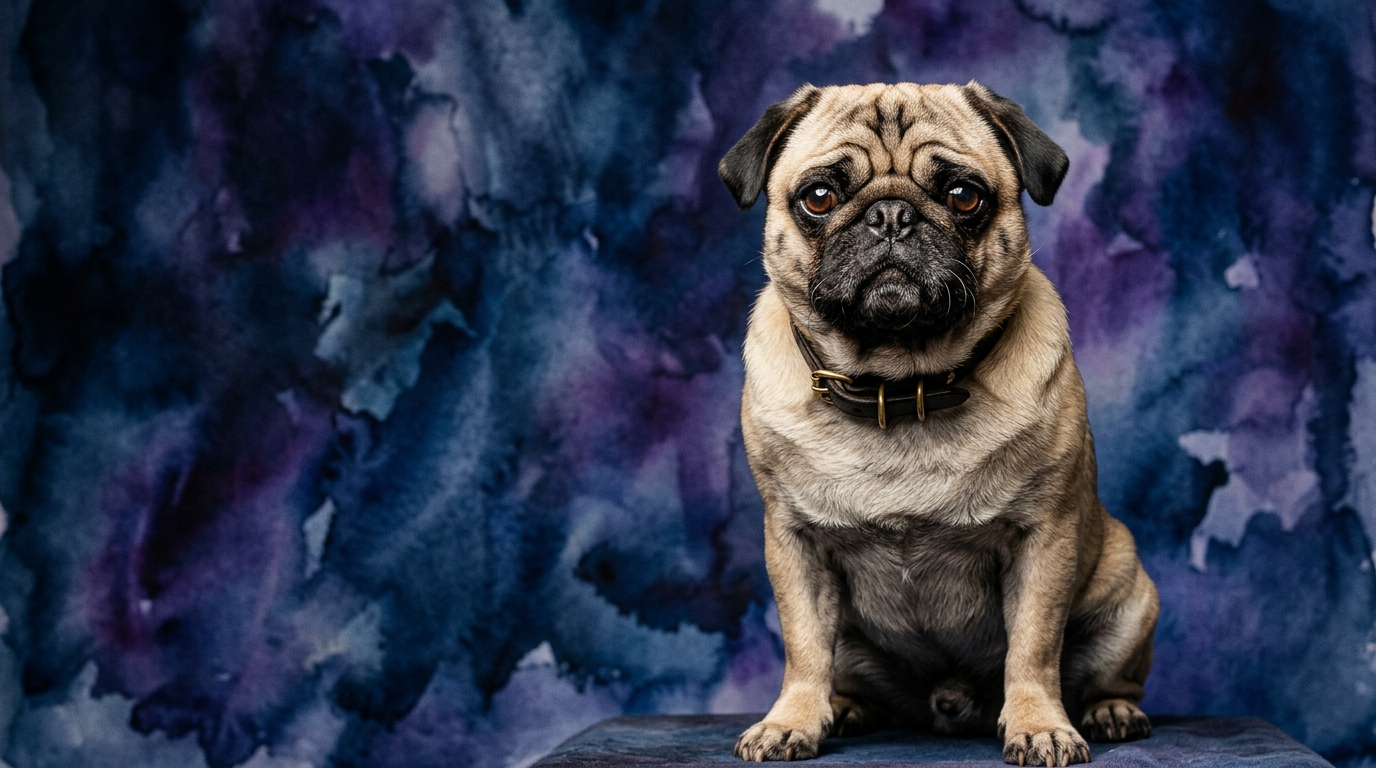
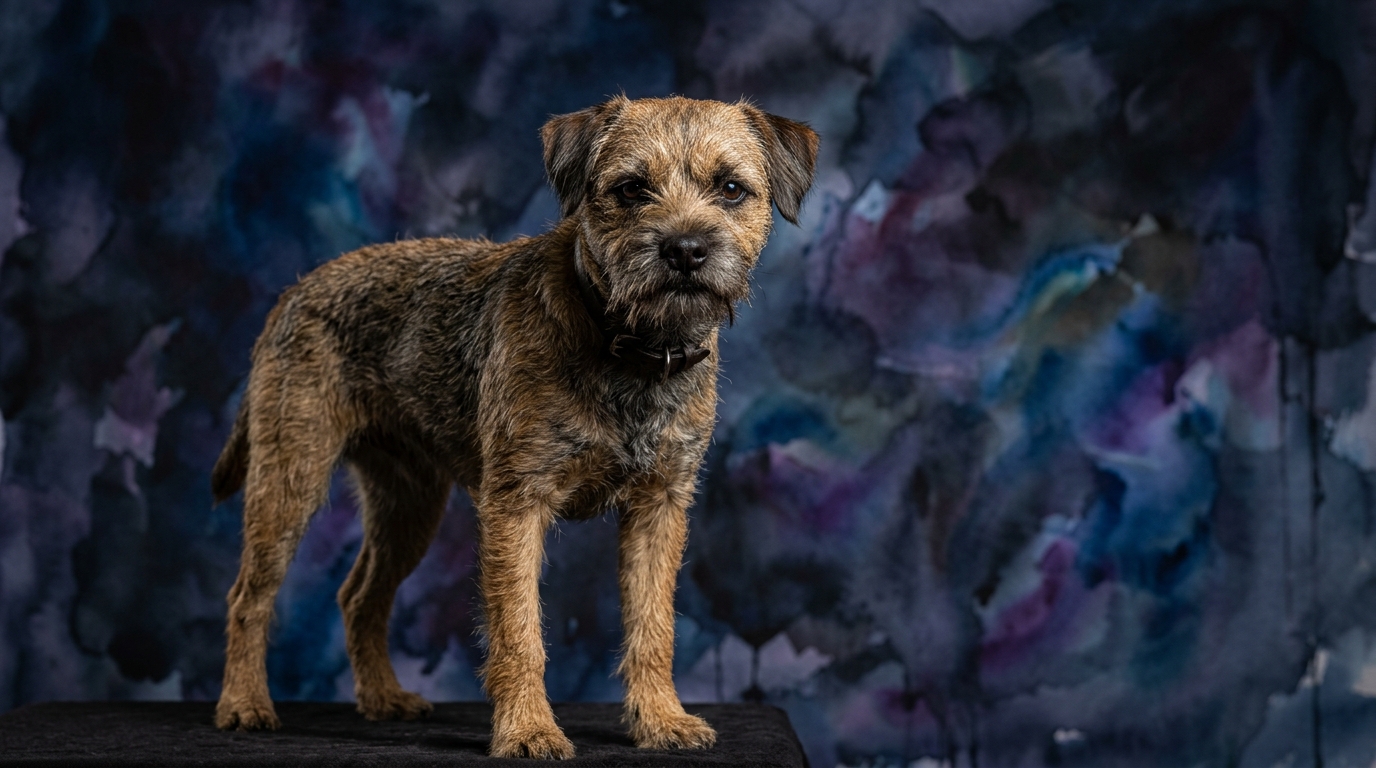
Side-by-Side IQ Profile: Pug vs. Border Terrier
The Cosmic Pet Pet IQ Lab assesses canine intelligence across five crucial dimensions, offering a nuanced understanding of each breed's cognitive strengths. For the Pug, with a Coren rank of #57, and the Border Terrier, ranked #30, these dimensions paint a clear picture of their distinct intellectual landscapes.
**Problem Solving**: The Pug, with a 2/5 rating, typically approaches challenges with less independent strategy, often relying on human intervention or simple trial-and-error. They may find complex puzzle toys frustrating rather than engaging. In contrast, the Border Terrier, scoring 4/5, exhibits a strong aptitude for navigating obstacles and deciphering puzzles, often demonstrating a persistent and methodical approach to reach a goal. Their terrier heritage equips them with a natural curiosity to investigate and resolve novel situations.
**Training Speed**: Pugs register a 2/5 in training speed, indicating they generally require more repetition and patience to grasp new commands and behaviors. Their motivation often stems from comfort and companionship rather than the thrill of mastering a task. The Border Terrier, with a 4/5 rating, typically picks up new cues and routines with commendable swiftness. Their eagerness to engage and their capacity to connect actions with outcomes make them quicker learners in structured training environments.
**Social Intelligence**: Here, the Pug shines with a perfect 5/5, demonstrating an exceptional ability to read human emotions, respond to subtle cues, and form deep, empathetic bonds. They are profoundly attuned to their family's mood and often seek to comfort or entertain. The Border Terrier, at 3/5, possesses solid social skills but typically exhibits a more independent and less overtly expressive social demeanor than the Pug. They appreciate companionship but may not be as instinctively driven to mirror human emotional states.
**Instinctive Drive**: The Pug's instinctive drive is rated 2/5, reflecting a generally low prey drive and a lesser inclination towards traditional “dog work” like hunting or guarding. Their drives are primarily centered around companionship and comfort. The Border Terrier, with a 3/5, carries a moderate but distinct instinctive drive rooted in its terrier lineage, including a natural inclination to chase small animals and explore. This drive, while manageable, requires appropriate outlets to prevent boredom or unwanted behaviors.
**Memory**: Pugs show a 3/5 memory score, meaning they retain learned information and experiences reasonably well, especially those associated with positive reinforcement and routine. They remember familiar faces and places with ease. The Border Terrier, scoring 4/5, generally exhibits a stronger and more enduring memory for commands, routes, and past events. This enhanced recall contributes significantly to their quicker training speed and ability to navigate complex environments.
Where the Pug Wins Cognitively
The Pug's preeminent cognitive strength lies in its profound social intelligence, achieving a perfect 5/5 in this dimension. This isn't just about being friendly; it's a sophisticated ability to interpret human body language, vocal inflections, and emotional states with remarkable accuracy. A Pug can often sense a shift in its owner's mood and respond by offering gentle comfort or playful distraction, demonstrating a deep empathetic capacity. They excel at forging incredibly strong, intuitive bonds, making them masters of companionship. Their cognitive processing is finely tuned to human interaction, allowing them to anticipate needs and integrate seamlessly into family dynamics, often becoming the emotional anchor of a household. This exceptional social acumen means they learn rapidly what behaviors elicit positive human responses, leveraging their charm to achieve desired outcomes, from an extra treat to a comforting lap cuddle.
Where the Border Terrier Wins Cognitively
The Border Terrier's cognitive advantages span several key areas, particularly in problem-solving (4/5), training speed (4/5), and memory (4/5). Their elevated problem-solving skills mean they aren't content to simply wait for solutions; they actively engage with their environment to figure things out, whether it's opening a cabinet or navigating a new trail. This intrinsic curiosity and drive to understand their surroundings make them adept at learning complex tasks and adapting to varied situations. Their superior training speed is a direct result of their quick grasp of concepts and their ability to associate commands with actions efficiently, often requiring fewer repetitions than many other breeds. Coupled with a strong memory, they retain these lessons over time, building a robust repertoire of learned behaviors. This combination makes them highly responsive to consistent training and capable of excelling in various dog sports that demand both mental agility and recall.
Which is Easier to Train and Why
When considering ease of training, the Border Terrier generally presents a more straightforward experience due to its higher scores in training speed and problem-solving. Their readiness to engage with new information and their capacity to quickly form associations between commands and actions means they often pick up new skills with fewer repetitions. They possess a natural working drive that makes them more receptive to task-oriented learning and mental challenges. In contrast, the Pug, with its 2/5 training speed, requires a more patient and consistent approach. While Pugs are eager to please their beloved humans, their motivation often centers on comfort and affection rather than the inherent joy of mastering a complex command. They may exhibit a charming stubbornness, preferring to conserve energy or solicit attention rather than diligently practicing a new trick. Training a Pug often involves finding highly motivating rewards and breaking tasks into very small, manageable steps, appealing to their desire for positive interaction rather than their drive for independent accomplishment.
Which Suits Active Owners vs. Relaxed Owners
The choice between a Pug and a Border Terrier often comes down to an owner's lifestyle and energy levels. The Border Terrier, with its moderate instinctive drive and higher problem-solving capacity, thrives with active owners who can provide consistent mental and physical stimulation. They are excellent companions for hiking, agility, or engaging in scent work, requiring regular outlets for their inquisitive nature and boundless energy. Owners who enjoy teaching new tricks and participating in dog sports will find the Border Terrier a willing and capable partner. Conversely, the Pug is an ideal match for more relaxed owners. Their lower instinctive drive and moderate energy requirements mean they are content with shorter walks and prefer spending quality time napping on the couch or engaging in gentle play. Their exceptional social intelligence makes them perfect lap companions, providing constant, low-key affection. They are well-suited for individuals or families seeking a devoted, easygoing pet whose primary joy comes from close human companionship rather than demanding physical exertion.
The Verdict
Choose a Pug if your priority is an exceptionally socially intelligent companion who excels at emotional connection, thrives on close human interaction, and requires less intensive physical or mental exertion.
Opt for a Border Terrier if you seek a more independent, problem-solving partner eager for mental challenges and physical activity, capable of learning quickly and adapting to varied adventures.
🧠 Find Your Pet's IQ Score
Our Pet IQ Lab assessment covers 25+ tests across 5 cognitive dimensions — personalized to your breed.
Take the Full IQ Test →Frequently Asked Questions
Do Pugs truly understand human emotions better than Border Terriers?
Yes, Pugs score 5/5 in social intelligence, indicating a superior capacity to read and respond to human emotions and subtle cues compared to the Border Terrier's 3/5. This makes them highly empathetic and attuned companions.
Which breed is better for complex training tasks like agility or advanced obedience?
The Border Terrier, with its 4/5 problem-solving and training speed, is generally better suited for complex training tasks like agility or advanced obedience, as they learn quickly and enjoy mental challenges. Pugs, at 2/5 for both, would find such tasks significantly more challenging.
How do their instinctive drives impact daily life for owners?
The Pug's low instinctive drive (2/5) means they are generally less prone to chasing or digging, making them easier to manage in urban environments. The Border Terrier's moderate drive (3/5) means they may exhibit more natural terrier behaviors like hunting small prey or exploring, requiring consistent training and appropriate outlets to channel these instincts constructively.