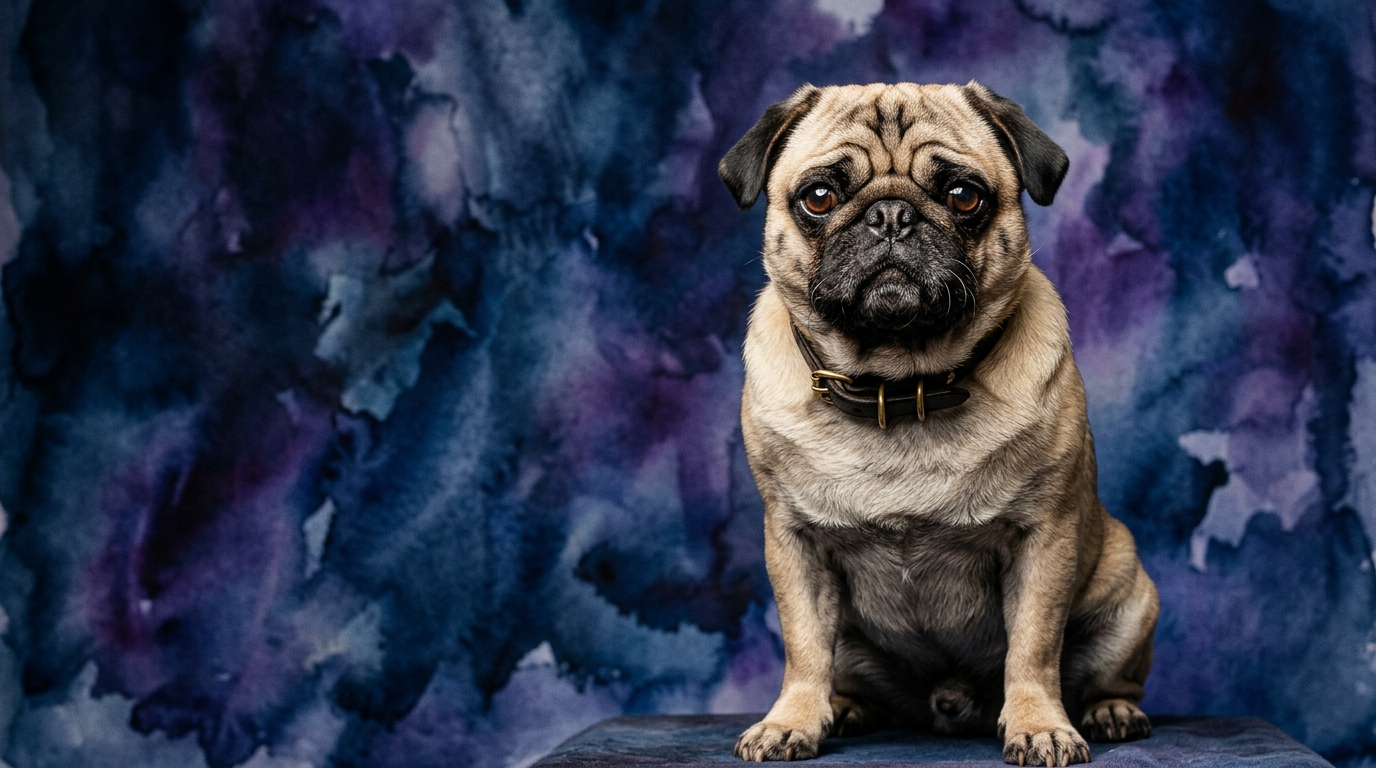
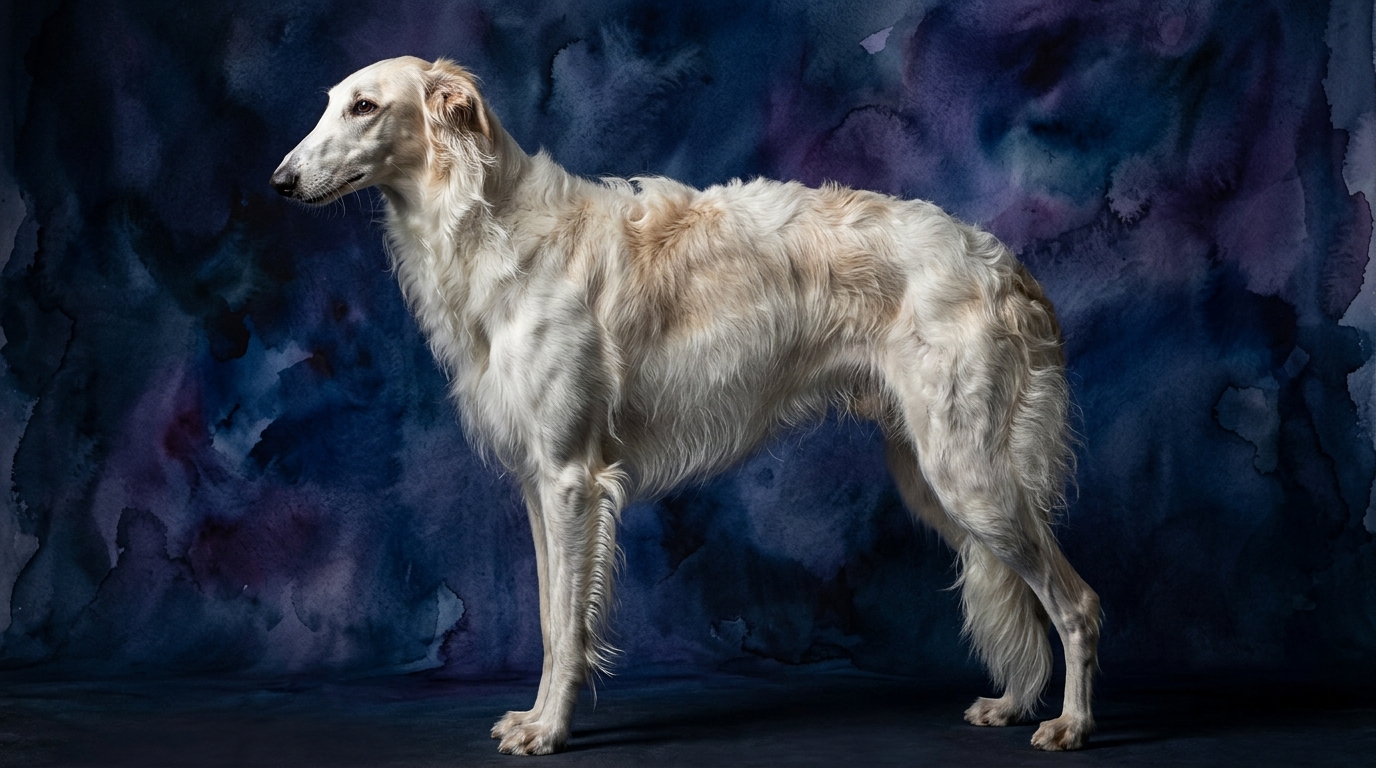
Side-by-Side IQ Profile
To truly appreciate the cognitive differences between the Pug and the Borzoi, we refer to The Cosmic Pet Pet IQ Lab's five core dimensions of intelligence, alongside their respective Coren rankings for working and obedience intelligence.
The Pug, with a Coren rank of #57, demonstrates a unique cognitive makeup. Their Problem Solving is rated 2/5, indicating they typically approach novel situations with less independent strategic thought, often relying on learned routines or human guidance rather than complex, spontaneous solutions. Training Speed is 2/5; while eager to please, Pugs can exhibit a slower pace in grasping new commands or intricate sequences, requiring consistent, patient repetition to solidify learning. Their Social Intelligence, however, is a perfect 5/5, signifying a profound capacity for connection and adapting their behavior to foster social harmony within the household by reading human emotional cues. Instinctive Drive is low at 2/5, meaning their innate drives like hunting or herding are generally subdued, making them less prone to independent pursuits driven by ancient instincts. Finally, their Memory is 3/5, an average recall for learned behaviors and routines, capable of retaining information over time, especially when associated with positive reinforcement and comfort.
The Borzoi, holding a Coren rank of #75, presents a contrasting cognitive profile. Their Problem Solving is 3/5, demonstrating a moderate capacity for independent thought, capable of devising solutions to immediate environmental challenges, particularly those related to their prey drive or navigating obstacles. Training Speed is 3/5; they learn at an average pace and can pick up commands, but their independent nature often means they require motivation that aligns with their inherent interests rather than rote repetition. Social Intelligence is 3/5; Borzoi form deep bonds with their families but might not display the same overt enthusiasm or constant engagement as more socially demonstrative breeds, often exhibiting a quiet dignity in their interactions. Their Instinctive Drive is 3/5, a notable aspect of their sighthound heritage that imbues them with a strong impulse to chase, which significantly influences their focus and responsiveness. Like Pugs, their Memory is 3/5, capable of recalling training and experiences, though their independent streak can sometimes make it seem as though they've 'forgotten' a command if there's no immediate reward or interest.
Where Pug Wins Cognitively
The Pug clearly stands out in the realm of social intelligence, scoring a perfect 5/5. This isn't merely about being affectionate; it signifies a deep, innate ability to interpret human emotions, body language, and vocal tones, allowing them to adapt their behavior to maintain household harmony and seek connection. A Pug's cognitive strength lies in their profound empathy and their skill at being an intuitive companion, often anticipating a handler's mood or desire for comfort. Their cognitive processing is heavily geared towards social interaction and bonding, making them exceptional emotional support animals who thrive on reciprocal attention and understanding subtle social cues that other breeds might miss. This high social aptitude also translates into a lower instinctive drive, meaning their mental energy is less diverted by independent pursuits and more focused on their human family.
Where Borzoi Wins Cognitively
The Borzoi’s cognitive strengths are rooted in their ancestral purpose as sighthounds, giving them an edge in problem-solving and instinctive drive, both rated 3/5 compared to the Pug’s 2/5. Their problem-solving capabilities often manifest in their ability to independently strategize during a chase, navigating complex terrain or anticipating prey movements with remarkable agility and foresight. This breed's mind is wired for observation, quick decision-making, and executing actions based on visual stimuli, demonstrating a more self-directed form of intelligence. Their instinctive drive, while sometimes challenging in a domestic setting, represents a powerful cognitive tool for independent action and sustained focus on a perceived goal. This translates into a dog that can assess situations and act without constant human direction, particularly when their innate drives are engaged, showcasing a different kind of mental processing that prioritizes autonomy and environmental awareness over social compliance.
Which is Easier to Train and Why
When evaluating trainability, it’s crucial to consider both the Coren ranking and the individual IQ dimensions. The Pug, with a Coren rank of #57, is generally considered more amenable to obedience training than the Borzoi at #75. This aligns with the Pug's higher social intelligence (5/5) and lower instinctive drive (2/5). Pugs are typically motivated by pleasing their human companions and thrive on positive reinforcement and attention. Their cognitive wiring makes them highly receptive to social feedback, meaning a happy tone of voice or a gentle praise can be a powerful motivator. While their training speed is 2/5, indicating they may take more repetitions to learn a new command, their willingness to engage and their focus on their handler makes the process consistent and rewarding.
The Borzoi, on the other hand, presents a different training landscape. Their independent nature, stemming from their sighthound heritage and moderate instinctive drive (3/5), means they often require training methods that appeal to their self-interest or innate motivations. While their training speed is 3/5, suggesting they can grasp commands at an average pace, their social intelligence is 3/5, indicating they are less inherently driven to constantly please. A Borzoi might understand a command perfectly but choose not to execute it if there isn't a compelling reason or if an environmental distraction (like a squirrel) captures their attention. Training a Borzoi requires creativity, patience, and a deep understanding of their independent spirit, often utilizing lure training or high-value rewards to keep them engaged, rather than relying solely on social approval. Therefore, for most owners seeking a straightforward training experience, the Pug tends to be easier due to their inherent desire for social compliance and lower distraction threshold.
Which Suits Active Owners vs Relaxed Owners
Considering their cognitive and physical predispositions, the Borzoi is generally better suited for active owners, while the Pug aligns more with relaxed owners. The Borzoi, despite its elegant appearance, possesses a moderate instinctive drive (3/5) and a problem-solving capacity (3/5) that often manifests in bursts of speed and a need for mental engagement related to their sighthound heritage. Active owners who can provide opportunities for safe, off-leash running in securely fenced areas, or engage in activities like lure coursing, will find a Borzoi thrives. Their independent problem-solving mind benefits from varied environments and tasks that allow them to utilize their natural instincts, even if it’s just observing their surroundings from a vantage point. An active owner understands that a Borzoi’s mental well-being is tied to fulfilling their innate need to stretch their legs and engage their keen senses, preventing boredom and potential destructive behaviors that can arise from under-stimulation.
Conversely, the Pug, with its lower instinctive drive (2/5) and profound social intelligence (5/5), is an ideal match for more relaxed owners. Their cognitive focus is on companionship and comfort, thriving in environments where they can be close to their human family. Pugs are content with short, leisurely walks and ample cuddle time, preferring mental stimulation that involves interaction with their people rather than strenuous physical challenges. Their strong social aptitude means they are happiest when integrated into daily household life, observing, and participating in a gentle, companionable manner. A relaxed owner appreciates a dog whose primary cognitive demand is social engagement and whose physical needs are easily met, making the Pug a perfect fit for a quiet home life.
The Verdict
Choose a Pug if your priority is a deeply empathetic companion who excels in social interaction and thrives on being an intuitive, constant presence, and you prefer a dog that is generally more straightforward to motivate in training through social praise.
Opt for a Borzoi if you appreciate a noble, independent spirit with a moderate capacity for self-directed problem-solving and a need for regular, vigorous exercise, and you are prepared for a training approach that respects their sighthound instincts and discerning nature.
🧠 Find Your Pet's IQ Score
Our Pet IQ Lab assessment covers 25+ tests across 5 cognitive dimensions — personalized to your breed.
Take the Full IQ Test →Frequently Asked Questions
Do Pugs enjoy learning tricks?
Pugs certainly enjoy learning tricks, especially when it involves positive reinforcement and interaction with their beloved human. While their training speed is 2/5, meaning they might take more repetitions, their high social intelligence (5/5) means they are motivated by praise and the joy of engaging with you. Keep sessions short, fun, and treat-motivated.
How does a Borzoi's prey drive impact their daily life?
A Borzoi's moderate instinctive drive (3/5), particularly their prey drive, significantly impacts their daily life. This means they possess a strong impulse to chase moving objects, requiring secure fencing and leash walks in unfenced areas to ensure their safety. It's a fundamental part of their cognitive makeup, influencing their focus and requiring owners to be vigilant and manage environments appropriately.
Which breed is more adaptable to apartment living?
The Pug is generally more adaptable to apartment living due to their smaller size, lower exercise requirements, and profound social intelligence (5/5) that makes them content with indoor companionship. While a Borzoi can adapt to apartments if their significant exercise needs are met, their larger size and higher instinctive drive for running make a home with a securely fenced yard more ideal.