Side-by-side IQ profile
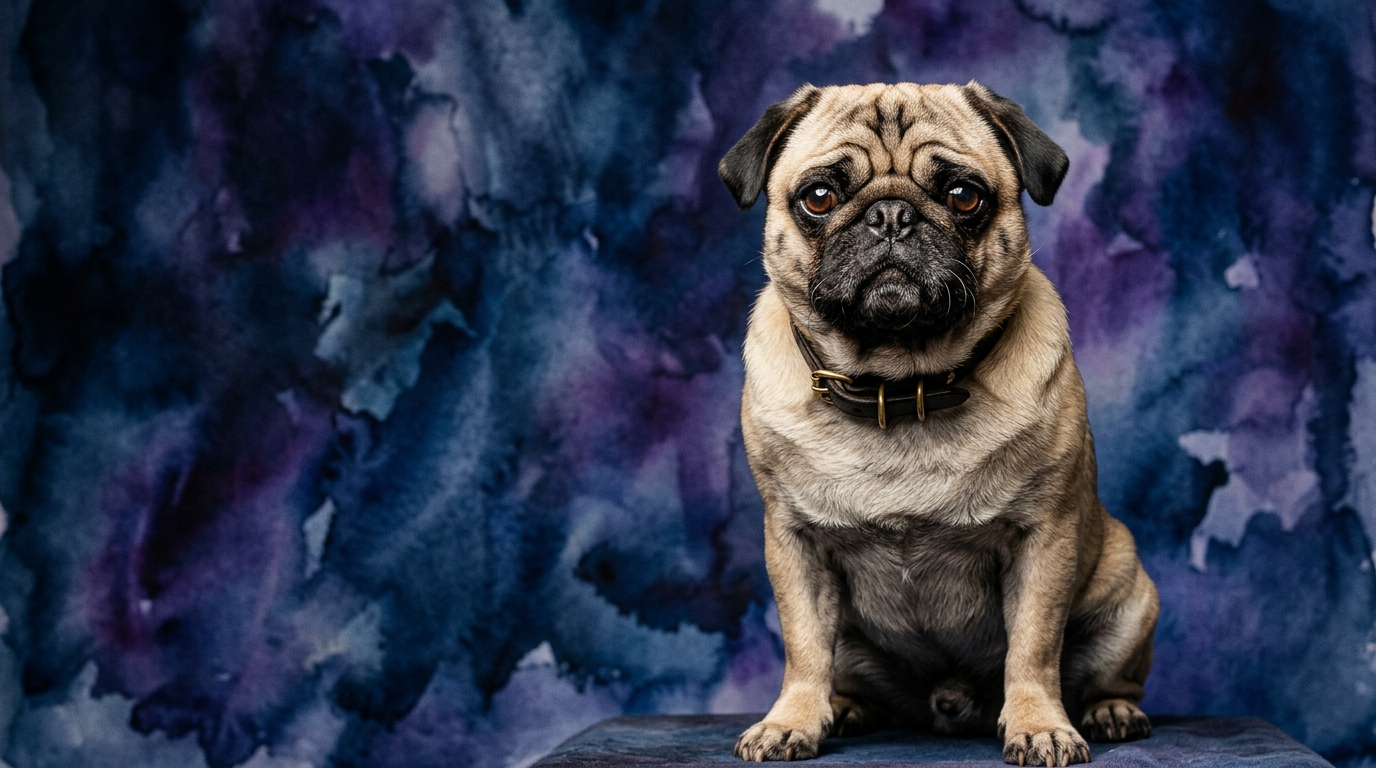
The Cosmic Pet Pet IQ Lab provides a unique framework for understanding canine cognition across five key dimensions. For the Pug, a Toy breed, its Coren rank of #57 out of 79 breeds positions it towards the lower end for traditional working and obedience intelligence, a specific measure that doesn't encompass its full cognitive breadth. In terms of Problem Solving, the Pug scores 2/5, indicating a preference for relying on human guidance over independent strategizing, often showing less persistence with complex tasks. Its Training Speed is also 2/5, meaning new commands may require more repetitions and patience, as their attention span can be shorter for repetitive drills. However, the Pug achieves a remarkable 5/5 in Social Intelligence, demonstrating an exceptional ability to read human emotions, adapt to social cues, and integrate seamlessly into family dynamics with profound empathy. Their Instinctive Drive is a low 2/5, reflecting minimal inclination for activities like hunting or guarding, favoring a relaxed, companion-centric existence. Lastly, the Pug possesses an average Memory of 3/5, capable of recalling learned commands and routines.
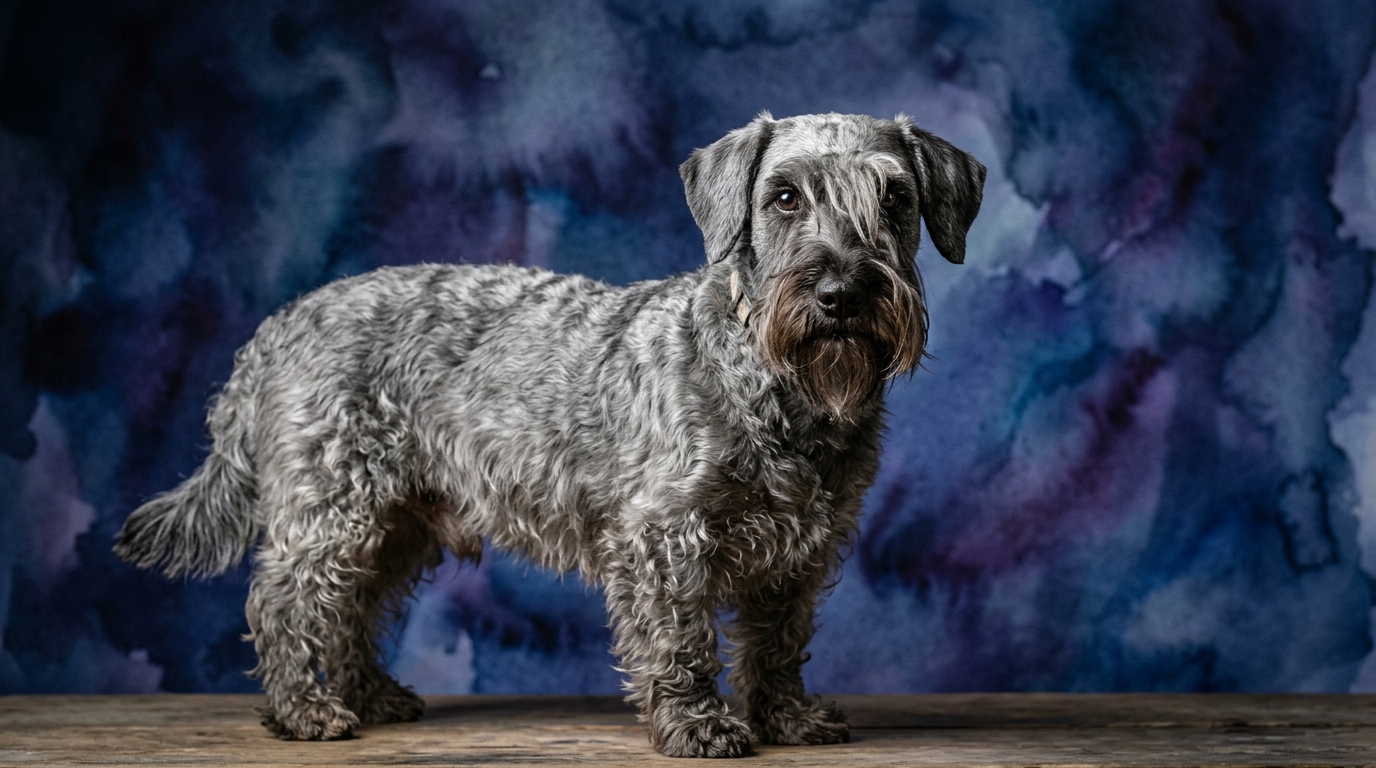
The Cesky Terrier, a less common Terrier breed, is not Coren-ranked, meaning its specific 'working and obedience intelligence' hasn't been formally categorized in that system. Across the board, the Cesky Terrier exhibits a more balanced cognitive profile, starting with a 3/5 in Problem Solving, suggesting a moderate capacity for independent thought and navigating challenges. Its Training Speed is also 3/5, indicating an average pace for learning new commands and a receptiveness to consistent instruction. In Social Intelligence, the Cesky scores 3/5; while affectionate and family-oriented, they may not possess the same profound emotional attunement as the Pug, generally being polite but not overly effusive with strangers. Reflecting its terrier heritage, its Instinctive Drive is a moderate 3/5, meaning it retains some natural inclinations for digging or exploring, but these drives are typically manageable. Like the Pug, the Cesky Terrier also has an average Memory of 3/5, reliably remembering commands, routines, and significant experiences.
Where Pug wins cognitively
The Pug's undisputed cognitive strength lies in its exceptional Social Intelligence, scoring a perfect 5/5. This isn't merely about being friendly; it reflects a profound capacity for emotional resonance and social adaptation. Pugs are masters at reading subtle human cues, often anticipating their owner's needs or mood shifts with remarkable accuracy. They exhibit a high degree of empathy, frequently offering comfort when sensing distress or mirroring their human's joyful expressions. This sharp social acumen allows them to integrate seamlessly into diverse family structures, adapt to household routines with minimal fuss, and navigate complex social dynamics within a home environment. Their entire cognitive framework seems geared towards fostering deep, intuitive companionship, making them incredibly perceptive and responsive partners in daily life. This acute awareness of their social world far surpasses the Cesky Terrier's more moderate 3/5 in this domain, making the Pug uniquely adept at forming profound emotional bonds and understanding the nuances of human interaction.
Where Cesky Terrier wins cognitively
The Cesky Terrier's cognitive advantages stem from its balanced and practical intelligence, particularly its superior Problem Solving and Training Speed compared to the Pug. With a 3/5 in Problem Solving, Ceskies are more inclined to independently assess and navigate their environment. This means they are more likely to figure out how to access a desired toy, bypass an obstacle, or even learn the mechanics of a puzzle toy without constant human intervention. Their 3/5 Training Speed indicates a quicker grasp of new commands and a greater capacity for retaining complex sequences, making them generally more responsive to structured obedience and task-oriented training. Unlike the Pug, whose lower instinctive drive (2/5) means less intrinsic motivation for exploration or task engagement, the Cesky's moderate instinctive drive (3/5) provides a natural curiosity and a willingness to engage with their surroundings. This combination of practical problem-solving, efficient learning, and a moderate drive allows the Cesky to be more adaptable in varied situations and more independently capable of interacting with its physical environment, making it a more versatile learner for a broader range of activities.
Which is easier to train and why
When evaluating ease of training, the Cesky Terrier generally holds an advantage over the Pug, primarily due to its higher scores in Training Speed (3/5 vs. 2/5) and Problem Solving (3/5 vs. 2/5). Ceskies are typically more eager to engage in structured learning sessions and can grasp new commands with fewer repetitions. Their moderate problem-solving ability means they are more likely to understand the 'why' behind a task or to try different approaches when learning, which can accelerate the training process. They respond well to positive reinforcement, and their innate terrier curiosity means they can be motivated by engaging tasks and challenges.
Pugs, while deeply desirous of pleasing their owners (a facet of their high social intelligence), score lower in Training Speed. This doesn't mean they are untrainable, but rather that they often require more patience, consistency, and shorter, highly positive training sessions. Their lower problem-solving drive means they might not independently connect cause and effect as quickly, needing more explicit guidance. Furthermore, their low instinctive drive (2/5) means they might not be as motivated by 'work' or task-oriented rewards as much as by simple affection or food. While Pugs can certainly learn a wide array of commands and good manners, the journey might be slower and require more creative methods to maintain their interest, making the Cesky Terrier the more straightforward choice for owners prioritizing efficient and rapid command acquisition.
Which suits active owners vs relaxed owners
The Pug is an ideal companion for relaxed owners or those with a quieter lifestyle, perfectly aligning with its cognitive profile. Their low instinctive drive (2/5) and preference for social interaction over strenuous activity mean they thrive in environments where companionship is paramount. They are content with moderate daily walks and extensive cuddle sessions, making them excellent apartment dwellers or partners for individuals who enjoy a calm, home-centric existence. Their exceptional social intelligence ensures they are always attuned to their owner's presence, providing a constant, empathetic connection without demanding extensive physical or mental exertion.
Conversely, the Cesky Terrier, with its balanced 3/5 scores across most cognitive dimensions, is better suited for moderately active owners. While not requiring extreme athleticism, their average instinctive drive means they appreciate purposeful activities like engaging walks, exploring new scents, or participating in dog sports that involve problem-solving, such as agility or obedience. Their higher problem-solving and training speed scores mean they benefit from mental stimulation that goes beyond simple companionship. Owners who enjoy consistent training, interactive play, and providing opportunities for their dog to utilize its moderate drive and curiosity will find a more fulfilling partnership with a Cesky Terrier. They are not built for sedentary lives and will be happiest when their cognitive and physical needs are met through regular engagement.
The Verdict
Choose a Pug if you prioritize deep emotional connection, an empathetic companion attuned to your moods, and a dog content with a relaxed, social lifestyle.
Opt for a Cesky Terrier if you seek a versatile, moderately active dog capable of quicker learning and independent problem-solving, thriving with engaging training and purposeful activities.
🧠 Find Your Pet's IQ Score
Our Pet IQ Lab assessment covers 25+ tests across 5 cognitive dimensions — personalized to your breed.
Take the Full IQ Test →Frequently Asked Questions
Are Pugs difficult to train because of their low training speed score?
Pugs are not inherently difficult to train, but their 2/5 training speed means they require more patience and consistency. They learn best with short, positive reinforcement sessions, focusing on their desire to please their beloved humans rather than complex, repetitive drills.
What kind of activities do Cesky Terriers enjoy given their balanced IQ profile?
Cesky Terriers enjoy activities that engage both their moderate physical energy and their problem-solving skills. This includes regular walks with opportunities for scent exploration, interactive puzzle toys, and participation in dog sports like obedience, rally, or even moderate agility.
How does a Pug's 5/5 social intelligence manifest in daily life?
A Pug's high social intelligence means they are exceptionally attuned to human emotions and social cues. They often anticipate needs, offer comfort when sensing distress, adapt quickly to household routines, and form incredibly strong, empathetic bonds, making them highly intuitive companions.