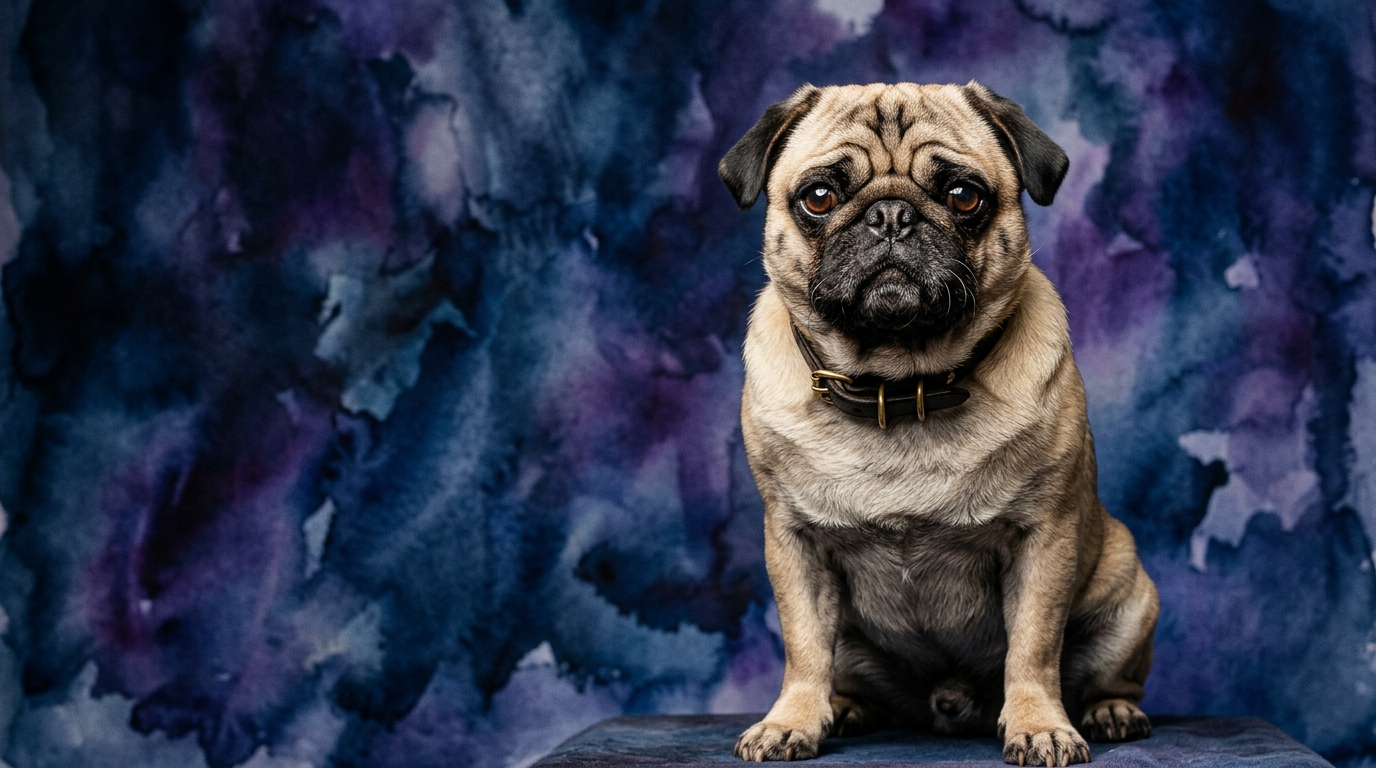
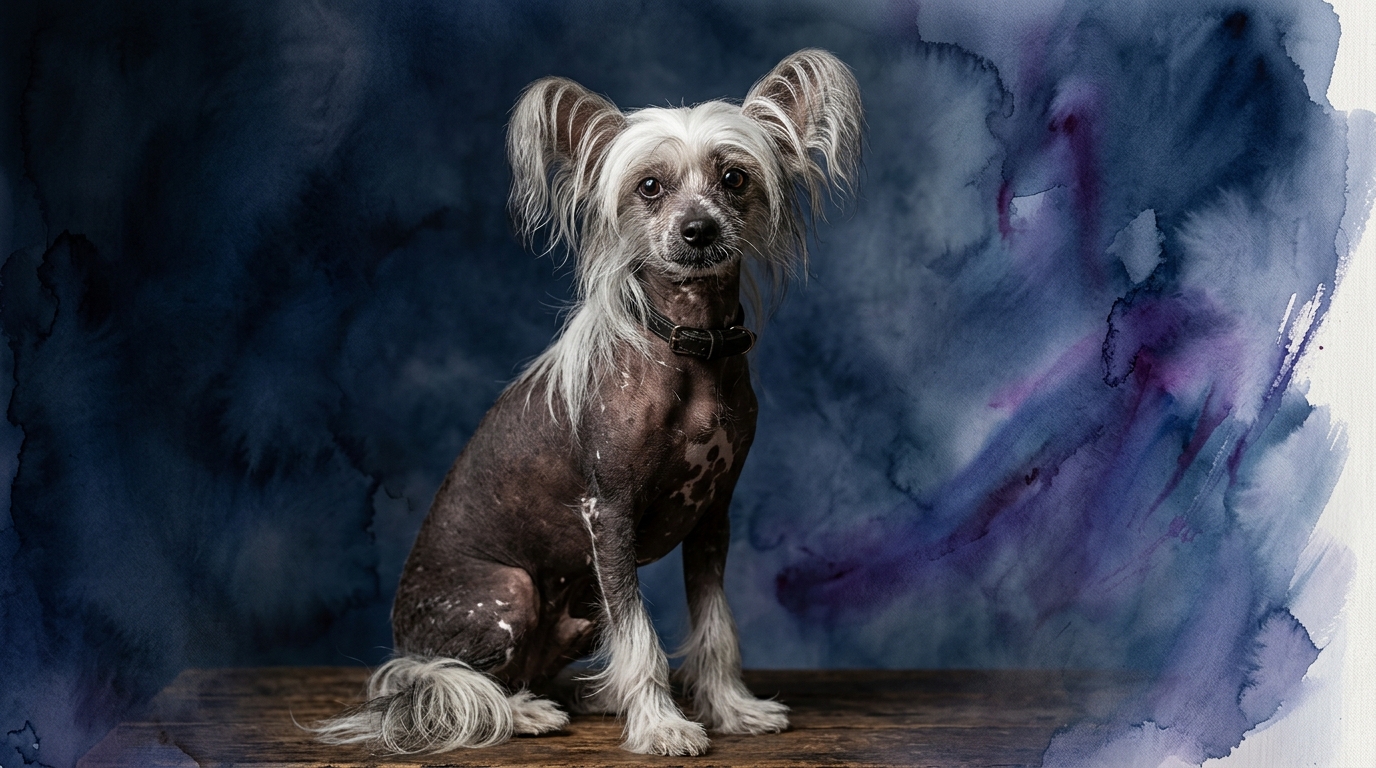
Side-by-Side IQ Profile: Pug vs. Chinese Crested
To understand the unique cognitive landscapes of the Pug and Chinese Crested, The Cosmic Pet Pet IQ Lab has broken down their intelligence into five specific dimensions.
**Pug IQ Profile:**
**Problem Solving (2/5):** Pugs typically approach new challenges with less independent strategizing, often relying on learned routines or human assistance rather than complex, spontaneous solutions. They might look to their owner for guidance rather than attempting multiple approaches themselves when faced with a novel obstacle, preferring familiar patterns over independent experimentation.
**Training Speed (2/5):** Their training progress can be quite deliberate, requiring consistent repetition and high-value motivation to solidify commands and behaviors. Owners often find that patience and positive reinforcement are key, as Pugs can sometimes be easily distracted or require more reinforcement cycles to achieve mastery.
**Social Intelligence (5/5):** Pugs excel in understanding and responding to human emotions and social cues, demonstrating a profound capacity for connection and companionship. They are often highly attuned to their family's moods, offering comfort or seeking interaction based on subtle non-verbal signals, making them exceptionally empathetic companions.
**Instinctive Drive (2/5):** Their innate drives for hunting, herding, or guarding are generally low, focusing instead on comfort and social interaction within their human family. This means they are typically not driven by strong urges to chase, dig, or protect territory, preferring a calm, domestic existence.
**Memory (3/5):** Pugs possess a moderate memory, capable of retaining familiar routines, commands, and the identities of their family members over time. While they won't remember every single event, they are reliable in recalling important daily rituals and the people they love.
**Chinese Crested IQ Profile:**
**Problem Solving (3/5):** Chinese Cresteds show a moderate aptitude for figuring out novel situations, often employing a degree of independent thought to navigate obstacles or achieve goals. They might experiment with different approaches to retrieve a hidden toy or find a way around a closed door, demonstrating a certain curiosity and resourcefulness.
**Training Speed (3/5):** They tend to pick up new commands and routines at a reasonable pace, responding well to clear communication and positive reinforcement. Their willingness to engage in structured learning sessions often makes training a more straightforward process than with some other Toy breeds.
**Social Intelligence (3/5):** Their social understanding is balanced, allowing them to form strong bonds with their primary caregivers while also being capable of independent activity. They enjoy companionship but can also be content entertaining themselves for periods, striking a middle ground between constant need and aloofness.
**Instinctive Drive (3/5):** Chinese Cresteds exhibit a moderate level of instinctive behaviors, which can manifest as curiosity, a playful chase drive, or a desire to explore their surroundings. This drive means they appreciate opportunities for mental engagement and can be quite agile and inquisitive when given an appropriate outlet.
**Memory (3/5):** Similar to Pugs, Chinese Cresteds have a moderate memory, enabling them to remember learned behaviors, people, and places with reasonable consistency. They can recall training cues and the layout of their familiar environment effectively.
Where the Pug's Cognition Excels
Pugs shine brightest in the realm of social intelligence, scoring a perfect 5/5 in The Cosmic Pet Pet IQ Lab. This isn't about being 'smart' in an academic sense, but rather an exceptional ability to read and respond to human emotional states and social cues. A Pug will often intuitively understand when their owner is sad, offering a gentle nudge, or when it's time for a cuddle without being explicitly told, demonstrating profound empathy. Their capacity for connection makes them unparalleled companions for individuals seeking a deeply attuned canine presence, as they prioritize relational harmony above almost all else.
This strong social drive fuels their desire to be near their people, resulting in a dog that is incredibly sensitive to the nuances of family life. They thrive on interaction and affection, often mirroring the emotional atmosphere of their home. This cognitive strength means a Pug can be an incredibly comforting and emotionally supportive pet, forming bonds that feel almost telepathic in their depth.
Where the Chinese Crested's Cognition Stands Out
The Chinese Crested demonstrates a cognitive edge in problem-solving, scoring 3/5 compared to the Pug's 2/5 in our assessment. This manifests as a slightly greater capacity for independent thought when faced with new challenges, such as figuring out how to retrieve a toy from under furniture or navigating a novel environment. While not master strategists, they often exhibit more initiative in exploring solutions rather than immediately deferring to their owner, showcasing a curious and experimental mindset. This resourcefulness makes them intriguing to observe as they interact with their surroundings.
Furthermore, their training speed and instinctive drive both register a 3/5, suggesting a slightly more adaptable and self-directed approach to learning and interaction with their environment. They often enjoy the process of learning new tricks and can be quite agile, utilizing their physical capabilities to engage with challenges. This combination of moderate problem-solving and drive indicates a dog that appreciates mental engagement and can be quite responsive to varied forms of stimulation.
Training Dynamics: Which Breed is Easier?
Based on The Cosmic Pet Pet IQ Lab data, the Chinese Crested (training speed 3/5) generally presents as slightly easier to train than the Pug (training speed 2/5). The Crested's moderate problem-solving and instinctive drive contribute to a quicker grasp of new commands, as they often show more engagement in the learning process itself. For example, a Chinese Crested might more readily connect a verbal cue with an action and repeat it with fewer repetitions, often enjoying the mental exercise. Their slightly more independent nature means they can focus on the task at hand with less potential for social distraction.
Pugs, while eager to please their beloved humans due to their high social intelligence, can sometimes be more easily distracted by their desire for affection or less inherently motivated by the *task* of learning itself. This requires more patience, consistency, and consistent, high-value rewards to maintain their focus and solidify new behaviors. Their strong social bond means they learn best when training is framed as a positive interaction and a means to spend quality time with their owner, rather than a demanding intellectual exercise, which can make progress feel slower but no less rewarding.
Lifestyle Match: Active vs. Relaxed Owners
The Pug, with its low instinctive drive (2/5) and profound social intelligence (5/5), is an ideal match for relaxed owners who prioritize companionship and indoor comfort. Their primary desire is often to be near their human, content with moderate, leisurely walks and plenty of couch time, often preferring a cozy lap to strenuous activity. They thrive in environments where their emotional needs for constant connection and reassurance are met, making them perfect for those seeking a devoted, low-key presence that offers deep emotional support.
The Chinese Crested, exhibiting a moderate instinctive drive (3/5) and balanced social intelligence (3/5), offers a bit more versatility for owners who enjoy a slightly more active lifestyle. While still a Toy breed, their slightly higher problem-solving and instinctive drives mean they appreciate opportunities for exploration, engaging with puzzle toys, and participating in short bursts of playful activity. They can adapt well to both relaxed and moderately active households, provided their need for mental stimulation and companionship is addressed through varied interactions and consistent attention.
The Verdict
Choose a Pug if your primary desire is an exceptionally devoted companion whose world revolves around shared affection and intuitive emotional connection, and you prefer a dog with lower independent drive and activity needs.
Opt for a Chinese Crested if you appreciate a slightly more independent and mentally curious companion who enjoys moderate engagement in activities and shows a balanced approach to social interaction and problem-solving.
🧠 Find Your Pet's IQ Score
Our Pet IQ Lab assessment covers 25+ tests across 5 cognitive dimensions — personalized to your breed.
Take the Full IQ Test →Frequently Asked Questions
Does Coren ranking impact these IQ scores?
Coren ranking primarily measures "working and obedience intelligence," focusing on trainability. Our IQ Lab scores delve deeper into specific cognitive dimensions like social intelligence and instinctive drive, offering a more nuanced view beyond just obedience.
Are Pugs truly less "smart" than Chinese Cresteds?
"Smart" is a broad term. Pugs excel in social intelligence, demonstrating deep emotional understanding. While Chinese Cresteds show a slight edge in problem-solving and training speed, both breeds possess unique cognitive strengths suited to different lifestyles and owner expectations.
What's the best way to mentally stimulate a Pug or Chinese Crested?
For Pugs, focus on interactive games that strengthen your bond, like hide-and-seek with treats, and gentle obedience work. For Chinese Cresteds, puzzle toys, short training sessions involving new tricks, and supervised exploration in safe environments can effectively engage their moderate problem-solving and instinctive drives.