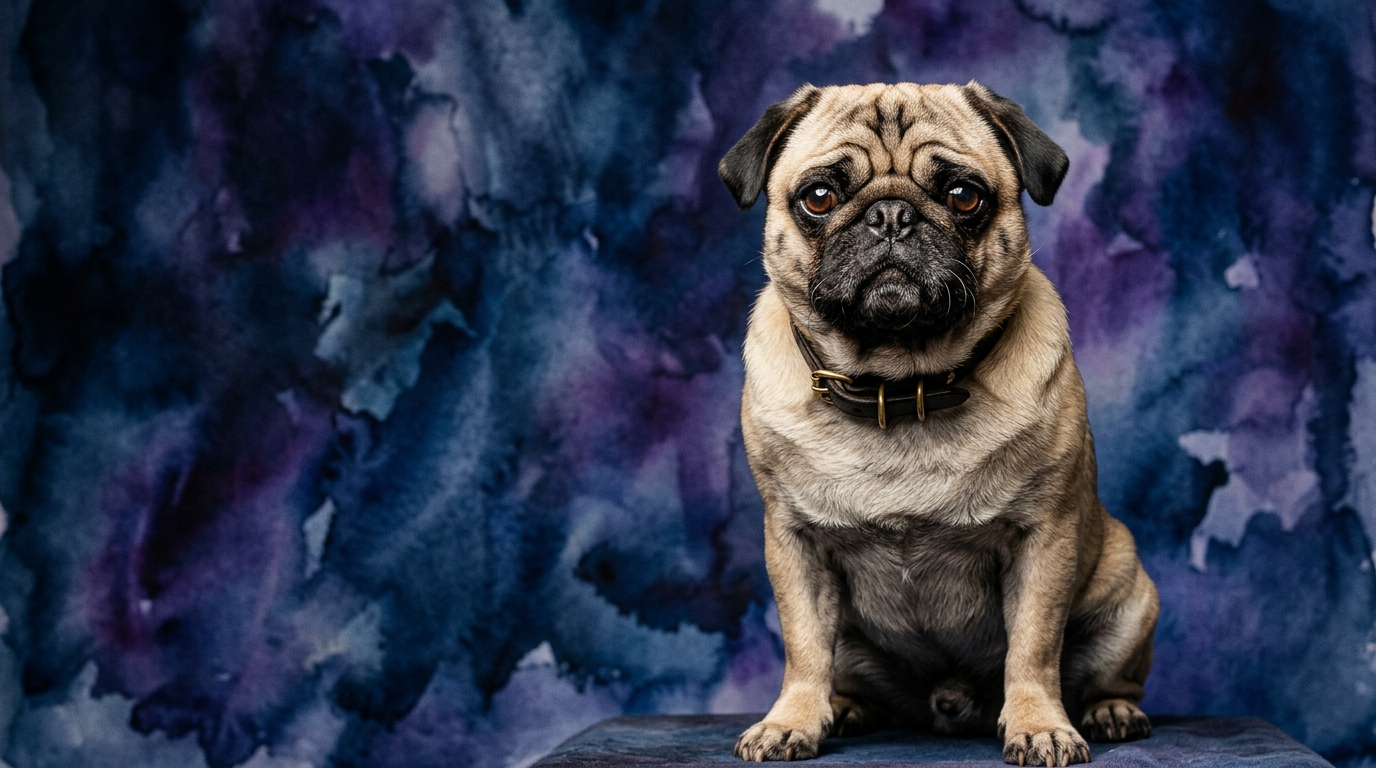
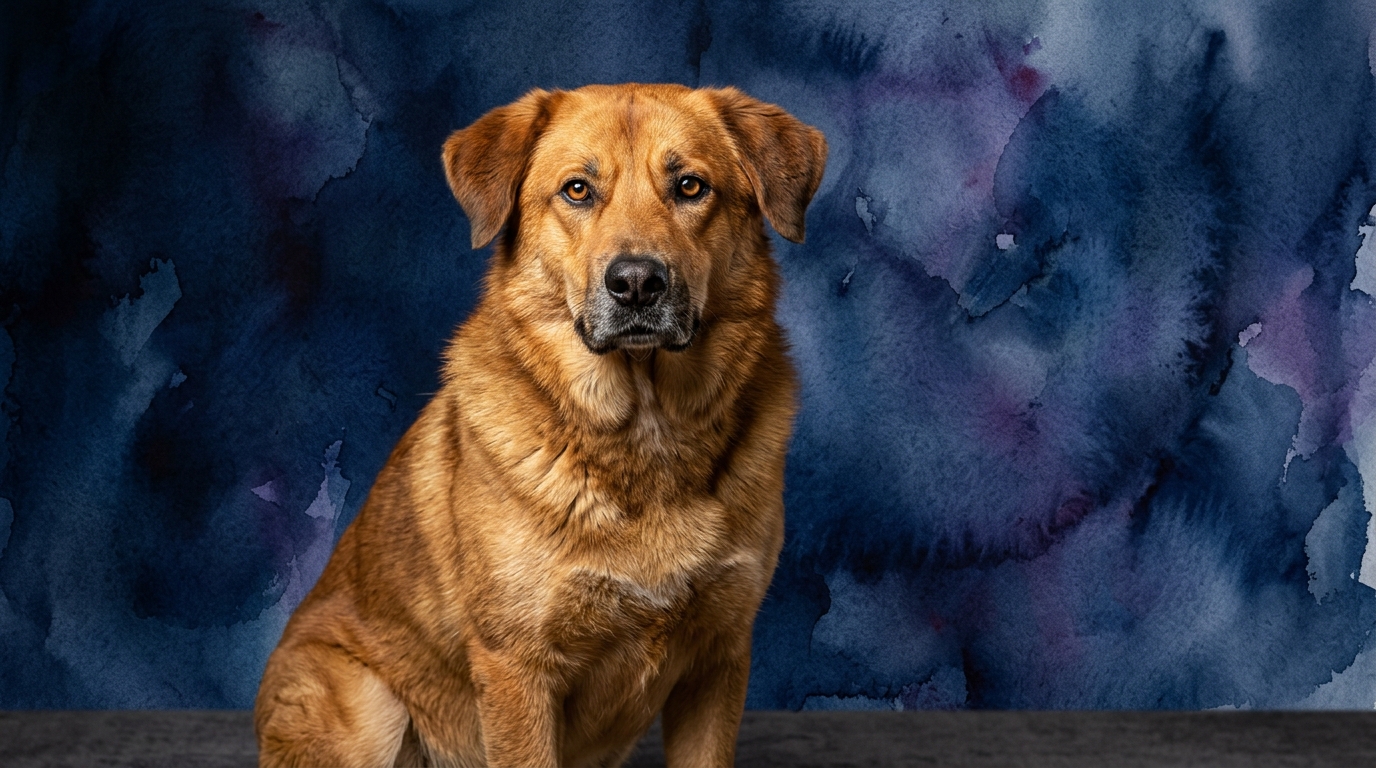
Side-by-Side IQ Profile: Pug vs. Chinook
The Cosmic Pet Pet IQ Lab employs a five-dimensional framework to assess canine intelligence, offering a nuanced view beyond simple obedience. Let's explore how the Pug and Chinook stack up across Problem Solving, Training Speed, Social Intelligence, Instinctive Drive, and Memory.
The Pug, classified as a Toy breed and holding Coren rank #57, presents a distinct cognitive signature. Their Problem Solving is rated 2/5, indicating they typically approach novel challenges with a more direct, often trial-and-error method, rather than intricate strategic thinking. Their compact build and historical role as companions didn't necessitate complex problem-solving for survival or work. Training Speed for the Pug is 2/5; while capable of learning, they often require more repetition and patience in training sessions. Their independent streak and preference for comfort over strict obedience can make initial learning slower. Where Pugs truly shine is Social Intelligence, scoring an exceptional 5/5. They possess an unparalleled ability to read and respond to human emotions and social cues, masters of companionship who understand subtle shifts in mood and adapt their behavior to maintain harmony and affection. Instinctive Drive is 2/5, generally low and focusing primarily on comfort, food, and human interaction rather than strong prey drive, herding, or guarding instincts. Memory is 3/5, demonstrating a moderate capacity for retaining learned behaviors and routines, remembering familiar people and places well, and recalling commands, though perhaps not with the precision of breeds bred for complex tasks.
The Chinook, a Working breed not yet Coren-ranked, offers a different cognitive blueprint. Their Problem Solving is 3/5, exhibiting a moderate aptitude for figuring out practical solutions to environmental challenges or simple puzzles. Their working dog heritage endows them with a degree of resourcefulness. Training Speed for the Chinook is 3/5; they generally learn new commands and routines at a moderate pace, responding well to consistent, positive reinforcement, with their desire to please and working drive contributing to their trainability. Social Intelligence is 3/5, indicating a solid understanding of social dynamics, able to form strong bonds with their human family and interact appropriately in various social settings. While not as overtly demonstrative as a Pug, they are attuned to their pack. Instinctive Drive is 3/5, balanced and including a moderate prey drive, a desire to work, and an innate sense of companionship; these drives are manageable and can be channeled into constructive activities. Memory is 3/5, reflecting a reliable capacity for training, routines, and experiences, retaining learned skills over time and recalling specific locations or individuals, aiding in their roles as capable working companions.
Where the Pug Wins Cognitively
The Pug's undisputed cognitive strength lies in their extraordinary Social Intelligence, scoring a perfect 5/5 compared to the Chinook's 3/5. This isn't merely about being friendly; it signifies an unparalleled ability to perceive, interpret, and respond to human emotional states and social cues with remarkable sensitivity. Pugs are masters of non-verbal communication, often seeming to anticipate their owner's needs for comfort or amusement. Their entire existence is finely tuned to the nuances of human interaction, making them exceptional emotional support animals and dedicated companions. This intense focus on human connection means they excel at forming deep, intuitive bonds, often acting as a mirror to their owner's mood. Their low instinctive drive and moderate problem-solving capacity likely free up cognitive resources to dedicate almost entirely to this complex social decoding, allowing them to truly integrate into the fabric of a human family with a profound understanding of their role as cherished confidantes.
Where the Chinook Wins Cognitively
The Chinook demonstrates a more robust and balanced cognitive profile across several dimensions, particularly in areas requiring practical application and engagement with the environment. Their Problem Solving (3/5 vs. Pug's 2/5) indicates a greater capacity for independent thought when faced with obstacles, allowing them to navigate novel situations with a bit more ingenuity or strategic planning. This isn't about outsmarting their owners, but rather a greater aptitude for figuring things out in their surroundings. Similarly, their Training Speed (3/5 vs. Pug's 2/5) reflects a quicker grasp of new commands and routines, often coupled with a stronger intrinsic motivation to participate in structured learning. This makes them more receptive to progressive training and the acquisition of a wider range of skills. Furthermore, the Chinook's balanced Instinctive Drive (3/5 vs. Pug's 2/5) means they possess a manageable level of natural inclinations towards activities like exploring, retrieving, or even simple scent work, making them more adaptable for various purposeful activities beyond pure companionship. These combined strengths suggest a breed that is more self-reliant in certain cognitive aspects and better equipped for engaging with the world in a more active, task-oriented manner.
Which is Easier to Train and Why
When it comes to ease of training, the Chinook generally holds an advantage over the Pug. This difference stems directly from their respective cognitive profiles. The Chinook's Training Speed of 3/5, coupled with a moderate Instinctive Drive of 3/5, means they are often more eager to engage in structured learning and possess a clearer sense of purpose during training sessions. They frequently find satisfaction in working alongside their owner, making them more receptive to commands and consistent routines. Their moderate social intelligence also means they are attentive without being overly distracted by purely seeking affection.
The Pug, on the other hand, can present more challenges in training, primarily due to their lower Training Speed (2/5) and a powerful Social Intelligence (5/5) that can sometimes work against structured learning. Pugs often prioritize charming their way out of a command or seeking affection and comfort over strict adherence to instructions. Their low Instinctive Drive (2/5) means they aren't naturally motivated by tasks or work for their own sake, requiring owners to employ more creative motivation, typically food rewards or enthusiastic praise, to overcome their independent, comfort-seeking nature. While Pugs are capable of learning, their performance might be inconsistent if a command doesn't align with their immediate desire for comfort or attention, requiring significant patience and consistency from the trainer to achieve reliable results.
Suitability for Active vs. Relaxed Owners
The cognitive and physical makeup of these two breeds clearly delineates their suitability for different lifestyles. For active owners who enjoy regular outdoor adventures, dog sports, or a partner for consistent physical and mental engagement, the Chinook is the more fitting choice. Their balanced instinctive drive (3/5) means they thrive on purpose and activity, whether it's hiking, jogging, or participating in obedience trials. Their moderate problem-solving and training speed allow them to engage in more complex activities and learn new skills relevant to an active lifestyle. Chinooks benefit significantly from a routine that includes both physical exertion and mental stimulation, making them ideal companions for those who lead a dynamic life.
Conversely, the Pug is an exemplary match for relaxed owners seeking a devoted, low-key companion. Their low instinctive drive (2/5) means they are perfectly content with shorter, leisurely walks and prefer spending the majority of their time in close proximity to their humans, ideally on the couch. Their primary 'activity' is social interaction and providing emotional comfort. Their exceptional social intelligence (5/5) ensures they are highly attuned to their owner's presence and mood, making them ideal for individuals or families who prioritize a deep, affectionate bond over strenuous physical demands. Pugs are masters of companionship in a quiet, domestic setting, thriving when their human is readily available for cuddles and gentle attention.
FAQs
The Verdict
If your primary desire is an unparalleled emotional connection and a companion who lives to adore you, providing constant, nuanced social support with minimal demands for complex activity, the Pug is an ideal choice.
If you seek a capable, adaptable partner for outdoor adventures and structured activities, one who learns readily and possesses a balanced cognitive toolkit for a variety of tasks, the Chinook will thrive by your side.
🧠 Find Your Pet's IQ Score
Our Pet IQ Lab assessment covers 25+ tests across 5 cognitive dimensions — personalized to your breed.
Take the Full IQ Test →Frequently Asked Questions
Are Pugs stubborn?
Pugs can exhibit an independent streak, sometimes perceived as stubbornness, especially during training. Their strong social intelligence means they might try to charm their way out of commands, prioritizing comfort or affection over strict obedience.
Do Chinooks need a lot of mental stimulation?
Yes, Chinooks benefit from regular mental stimulation to keep their moderate problem-solving and instinctive drives engaged. Activities like puzzle toys, obedience training, or scent work can help satisfy their need for purpose and prevent boredom.
How do their memory scores impact daily life?
Both breeds have a 3/5 memory, meaning they reliably recall routines, commands, and familiar people. This allows for consistent training and predictable home life, though neither breed is likely to perform complex, multi-step tasks requiring exceptional long-term recall like some specialized working breeds.