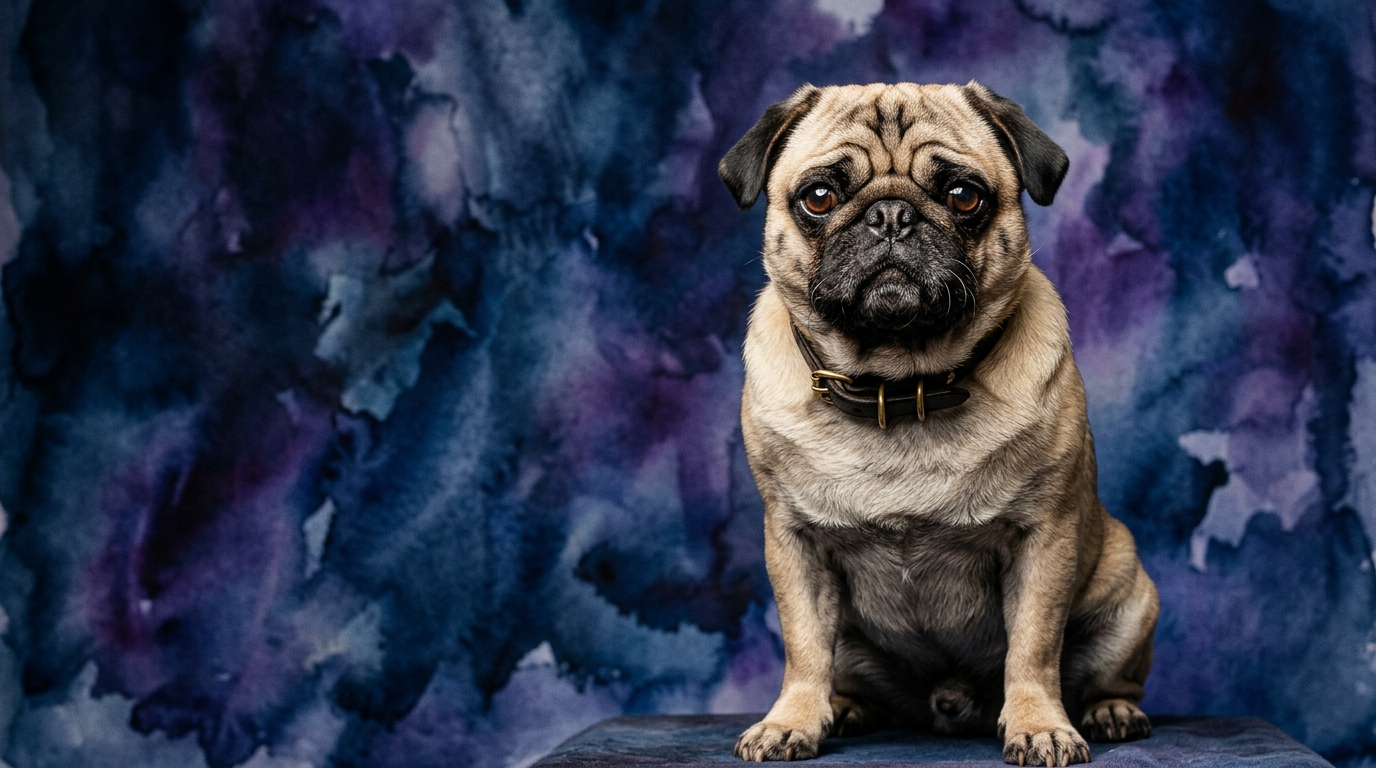
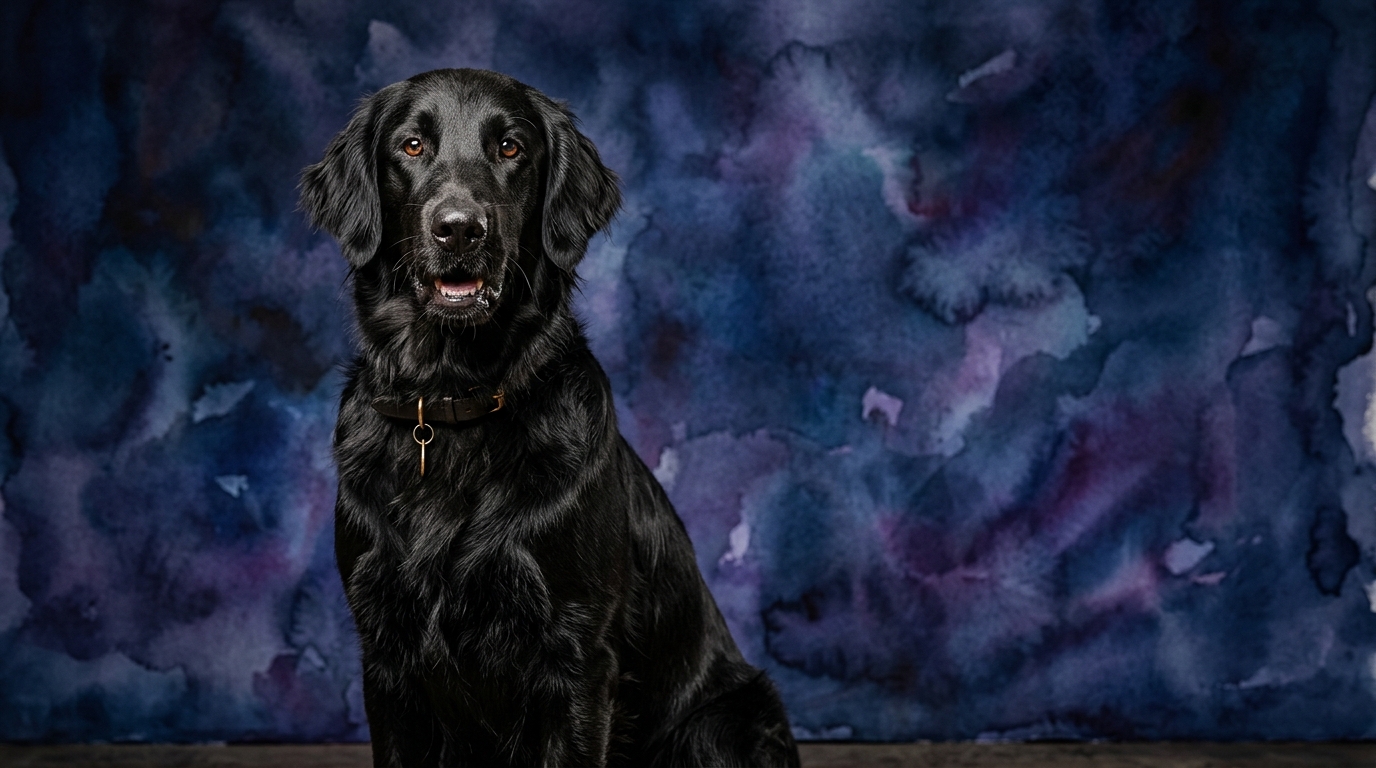
Side-by-Side IQ Profile: Pug vs. Flat-Coated Retriever
At The Cosmic Pet Pet IQ Lab, we evaluate canine cognition across five distinct dimensions, offering a nuanced understanding beyond simple obedience rankings. For the Pug (Coren rank #57) and the Flat-Coated Retriever (Coren rank #17), these dimensions paint pictures of two very different cognitive landscapes.
The Pug's IQ Profile:
Problem Solving (2/5): Pugs typically approach novel situations with less emphasis on independent reasoning to overcome obstacles. Their preferred method for resolving challenges often involves soliciting human assistance or simply waiting for a solution to present itself, rather than complex trial-and-error.
Training Speed (2/5): While capable of learning, Pugs often require more repetition and patience during training sessions. Their motivation is frequently tied to social interaction and food rewards, and they can sometimes exhibit a stubborn streak, making rapid acquisition of new commands a slower process.
Social Intelligence (5/5): This is where the Pug shines. They possess an exceptional ability to read human emotions, understand subtle cues, and adapt their behavior to maintain harmonious social connections. Their deep understanding of human companionship makes them highly attuned to their owners' moods and intentions.
Instinctive Drive (2/5): The Pug's instinctive drives, particularly those related to traditional working or hunting tasks, are generally low. Their focus has long been on companionship, and pursuits like retrieving, herding, or guarding are not strong innate motivators for the breed.
Memory (3/5): Pugs demonstrate a moderate capacity for memory, capable of retaining learned commands and routines over time, especially when these are consistently reinforced. They remember people and places well, contributing to their strong bonds, though their recall for complex sequences might be less robust.
The Flat-Coated Retriever's IQ Profile:
Problem Solving (4/5): Flat-Coated Retrievers exhibit a robust capacity for independent problem-solving. They are often observed strategizing to achieve goals, such as figuring out how to open a gate or retrieve a toy from a tricky spot, demonstrating adaptability and persistence.
Training Speed (4/5): These retrievers are quick studies, often grasping new commands and concepts with fewer repetitions than many other breeds. Their inherent eagerness to please and high motivation, particularly for interactive and reward-based training, contributes to their swift learning curve.
Social Intelligence (3/5): Flat-Coated Retrievers possess good social intelligence, capable of forming strong bonds and understanding human intentions. While they are affectionate and responsive, their primary focus is often on engaging in activities *with* their humans, rather than the Pug's nuanced emotional mirroring.
Instinctive Drive (3/5): With their heritage as gundogs, Flat-Coated Retrievers retain a strong instinctive drive for retrieving, sniffing, and exploring. This drive translates into a natural inclination for activities that simulate their original purpose, making them enthusiastic participants in outdoor adventures and games.
Memory (5/5): The memory of a Flat-Coated Retriever is exceptional. They can recall complex sequences of commands, remember the location of multiple retrieved items, and retain intricate training protocols over extended periods, making them excellent candidates for advanced obedience or scent work.
Where the Pug Wins Cognitively
The Pug's cognitive strength undeniably lies in its profound social intelligence. Scoring a perfect 5/5, they are masters of human-canine communication, adept at reading subtle shifts in tone, body language, and facial expressions. This allows them to forge remarkably deep emotional connections, often anticipating their owner's needs for comfort or interaction. Their ability to subtly manipulate situations through charm and understanding of human emotional responses is a cognitive feat, ensuring they remain central to family life and receive ample attention. They don't just react to humans; they interpret and respond on a sophisticated emotional plane, making them unparalleled companions for those seeking a highly attuned emotional bond.
Where the Flat-Coated Retriever Wins Cognitively
Conversely, the Flat-Coated Retriever's cognitive prowess is most evident in its problem-solving abilities and exceptional memory. With a 4/5 in problem-solving, they demonstrate a capacity for independent thought and strategy formulation, readily tackling challenges that require more than simple learned responses. Their 5/5 memory is a cornerstone of their working capabilities, allowing them to recall intricate multi-step commands, remember the precise locations of objects, or navigate complex environments efficiently. This combination of robust memory and strategic thinking makes them highly adaptable to new situations and quick to master complex tasks, far surpassing the Pug's more indirect approach to problem resolution.
Which Is Easier to Train and Why?
When evaluating ease of training, the Flat-Coated Retriever holds a clear advantage. Their 4/5 training speed and strong problem-solving skills mean they typically grasp new commands and behaviors much faster, often with fewer repetitions. This breed possesses an innate eagerness to engage in structured activities and a desire to work alongside their human, which translates into higher motivation during training sessions. Their excellent memory further solidifies learned behaviors, leading to reliable recall and execution. In contrast, the Pug, with a 2/5 training speed, requires more patience and consistency. While they are intelligent, their motivation is often more centered on social interaction and comfort rather than task completion. They can exhibit a charming stubbornness, and their lower instinctive drive means they might not see the inherent value in certain 'tasks,' making training a more protracted, albeit rewarding, endeavor focused on positive reinforcement and engagement.
Which Suits Active Owners vs. Relaxed Owners?
The cognitive profiles of these two breeds align distinctly with different owner lifestyles. The Flat-Coated Retriever, with its higher problem-solving aptitude, instinctive drive, and superb memory, thrives with active owners who can provide consistent mental stimulation and physical outlets. Their need for engaging tasks, whether it's retrieving, advanced obedience, or exploring new environments, is significant. Owners who enjoy long walks, hikes, or dog sports will find a highly cooperative and enthusiastic partner in a Flat-Coat. On the other hand, the Pug's exceptional social intelligence and lower instinctive drive make it an ideal companion for more relaxed owners. Their primary need is for close companionship and emotional connection, rather than demanding physical or mental challenges. While they enjoy short strolls, their cognitive strengths are best appreciated in quiet moments of shared understanding and affection, fitting perfectly into a more sedentary or home-centric lifestyle.
The Verdict
Choose a Pug if your priority is an emotionally intuitive companion who thrives on close social connection and provides unwavering affection, fitting seamlessly into a more relaxed home environment.
Opt for a Flat-Coated Retriever if you seek an active, intelligent partner eager to learn, excel at complex tasks, and join you on adventures requiring both physical and mental engagement.
🧠 Find Your Pet's IQ Score
Our Pet IQ Lab assessment covers 25+ tests across 5 cognitive dimensions — personalized to your breed.
Take the Full IQ Test →Frequently Asked Questions
Are Pugs difficult to train?
Pugs are not inherently difficult, but their training speed is slower (2/5), requiring more patience and consistent positive reinforcement. They respond best to engaging, reward-based methods, and their social intelligence means they pick up on human cues well, even if task-oriented learning takes time.
What kind of activities do Flat-Coated Retrievers enjoy most?
Flat-Coated Retrievers, with their strong instinctive drive and excellent memory, excel in activities like retrieving games, scent work, agility, and advanced obedience. They thrive on tasks that challenge their problem-solving skills and allow them to work cooperatively with their owners, making them ideal for active pursuits.
Does Coren rank directly correlate with general intelligence?
Coren rank primarily reflects a breed's 'working and obedience intelligence,' which is one facet of overall canine cognition. While it indicates trainability and understanding of human commands, it doesn't fully encompass other dimensions like social intelligence or independent problem-solving, as highlighted by our IQ Lab profiles.