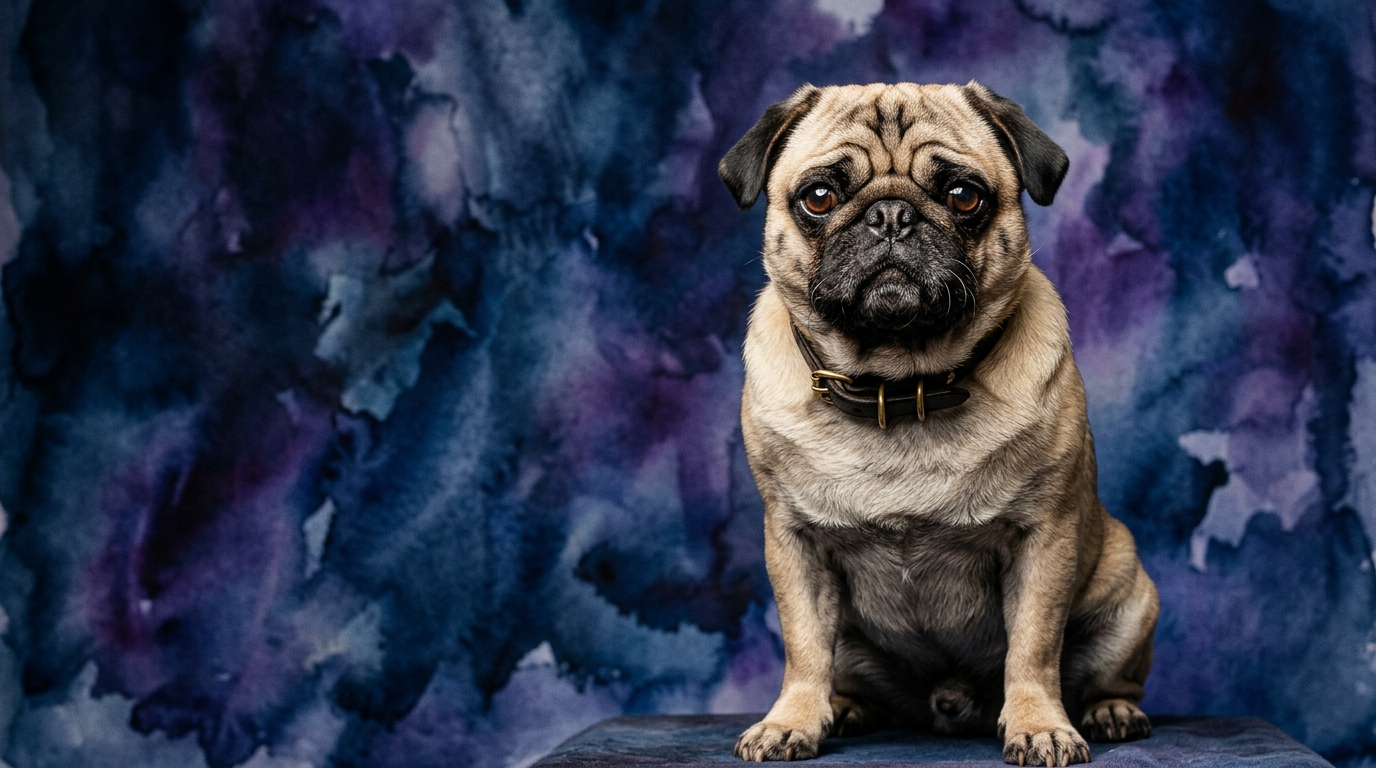
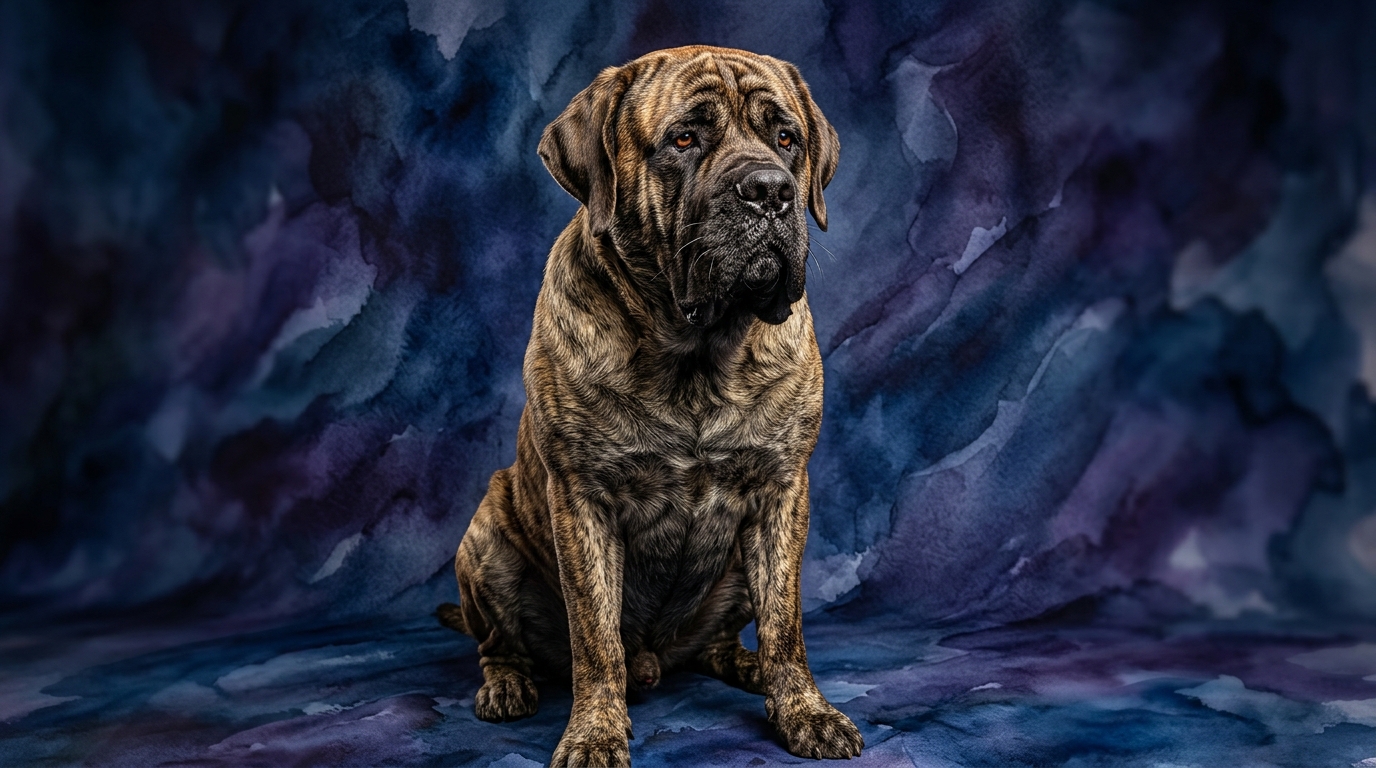
Side-by-Side Cognitive Profiles: Pug vs. Mastiff
The Cosmic Pet Pet IQ Lab provides a comprehensive framework to dissect the cognitive landscape of our canine companions. For the Pug, a Toy breed ranked #57 by Coren, its Problem Solving ability stands at 2/5, indicating a preference for human intervention over independent puzzle-solving. Its Training Speed is also 2/5, suggesting a charming but sometimes unhurried approach to learning new commands. Where the Pug truly shines is in Social Intelligence, scoring a perfect 5/5, a testament to its profound connection with people. Instinctive Drive is low at 2/5, reflecting its role primarily as a companion, while Memory is an average 3/5, suitable for daily routines.
In contrast, the Mastiff, a Working breed with a Coren rank of #72, presents a different cognitive blueprint. Its Problem Solving ability is a more robust 3/5, demonstrating a greater capacity for independent thought and resolution. Training Speed also registers at 3/5, indicating a steady, if not rapid, grasp of instructions. Social Intelligence for the Mastiff is 3/5, reflecting a discerning loyalty rather than the Pug's universal affection. Its Instinctive Drive is 3/5, hinting at a moderate natural inclination for tasks like guarding without being overly prey-driven. Like the Pug, its Memory is a solid 3/5, capable of retaining commands and experiences.
Where the Pug Truly Shines Cognitively
The Pug's undisputed cognitive strength lies in its exceptional social intelligence. With a perfect 5/5, this breed possesses an uncanny ability to read human emotions, understand subtle cues, and adapt its behavior to elicit desired responses. This isn't just about being affectionate; it's a sophisticated form of emotional communication and manipulation, allowing them to integrate seamlessly into family dynamics and become masters of charming their way through life. Their success isn't typically through complex problem-solving, but rather through their adeptness at forming deep bonds and leveraging their endearing personality to get their needs met, often inspiring their humans to solve problems for them. This high social IQ makes them incredibly attuned companions who thrive on interaction and can offer immense emotional support.
Where the Mastiff's Cognitive Prowess Takes the Lead
The Mastiff's cognitive advantages are evident in its superior Problem Solving and Training Speed, both rated 3/5, surpassing the Pug's 2/5 in these areas. While not a lightning-fast learner, the Mastiff demonstrates a more consistent ability to process information and apply solutions to new situations independently. This means they are more likely to figure out how to open a gate or navigate a novel environment on their own, rather than waiting for human direction. Their moderate instinctive drive, also 3/5, combined with their problem-solving skills, allows them to be more effective in roles requiring measured judgment and a steady application of learned behaviors, such as guarding or protection, without being overly reactive. Their cognitive profile supports a more self-reliant and task-oriented approach to their surroundings.
Training: Pug's Charm vs. Mastiff's Steadiness
When it comes to training, the behavioral differences between these two breeds become quite clear. The Mastiff, with a Training Speed of 3/5 and Problem Solving at 3/5, generally proves easier to train for obedience and specific tasks. They possess a more consistent willingness to engage in structured learning and can grasp complex commands with steady reinforcement. Their moderate instinctive drive can be effectively channeled into desired behaviors, making them capable of performing roles that require discipline and focus. While not as flashy as some working breeds, their biddability and thoughtful approach make them receptive students.
The Pug, on the other hand, with its 2/5 Training Speed and Problem Solving, requires a different training methodology. Their high social intelligence means they are eager to please and love attention, but their lower scores in other cognitive areas can manifest as a charming stubbornness or a short attention span for repetitive drills. Pugs often respond best to positive reinforcement, short, engaging sessions, and a trainer who understands their motivation is often rooted in companionship and play rather than a strong drive to master tasks. They might learn tricks more slowly, often relying on their human to make the learning process fun and rewarding, sometimes using their social charm to avoid less appealing aspects of training.
Matching Breeds to Owner Lifestyles: Active vs. Relaxed
Considering their cognitive and behavioral profiles, these breeds naturally align with different owner lifestyles. For the relaxed owner who prioritizes companionship, affection, and a relatively low-maintenance cognitive load, the Pug is an ideal match. Their perfect 5/5 Social Intelligence means they thrive on human interaction and are content to be a loving presence, often happy with moderate exercise and ample lap time. Owners who enjoy a dog that communicates primarily through charm and emotional connection, and who are patient with training that might proceed at a leisurely pace, will find the Pug deeply rewarding. They don't demand complex mental challenges but rather consistent social engagement.
Conversely, the Mastiff is better suited for owners who appreciate a calm, steady presence but can also provide a structured environment and consistent training. While not requiring intense physical activity, their moderate Problem Solving and Training Speed mean they benefit from regular mental engagement, even if it's just practicing obedience or learning new household routines. Owners who enjoy the process of deliberate training, value a discerning companion with a protective instinct, and have the space to accommodate a larger dog will find the Mastiff an excellent fit. They offer a deep, quiet loyalty and a sense of security, asking for consistent guidance and inclusion in return.
The Verdict
If you seek an unparalleled companion master of social dynamics, thriving on affection and charming interaction, and you prioritize emotional connection over task-oriented intelligence, choose the Pug.
Opt for the Mastiff if you desire a steady, thoughtful companion capable of moderate problem-solving and consistent training, offering a calm, protective presence and discerning loyalty.
🧠 Find Your Pet's IQ Score
Our Pet IQ Lab assessment covers 25+ tests across 5 cognitive dimensions — personalized to your breed.
Take the Full IQ Test →Frequently Asked Questions
Are Pugs truly stubborn during training?
Pugs aren't necessarily stubborn in a defiant sense; their lower training speed and problem-solving, combined with a strong social drive, often mean they respond best to engaging, positive reinforcement. They might seem resistant if tasks aren't made fun, preferring to charm their way out of repetitive drills.
Do Mastiffs require significant mental stimulation?
Mastiffs benefit from consistent mental engagement through regular training sessions, puzzle toys, and social interaction to prevent boredom and maintain their cognitive sharpness. While not needing constant complex challenges, they appreciate learning and having a "job" to do, even if it's just being a well-behaved family member.
Which breed is better at adapting to new environments?
The Mastiff, with a 3/5 problem-solving score, might adapt more readily to new environments by figuring out novel situations independently. Pugs, with their 2/5 problem-solving, tend to rely more on their human companions for guidance and reassurance in unfamiliar settings.