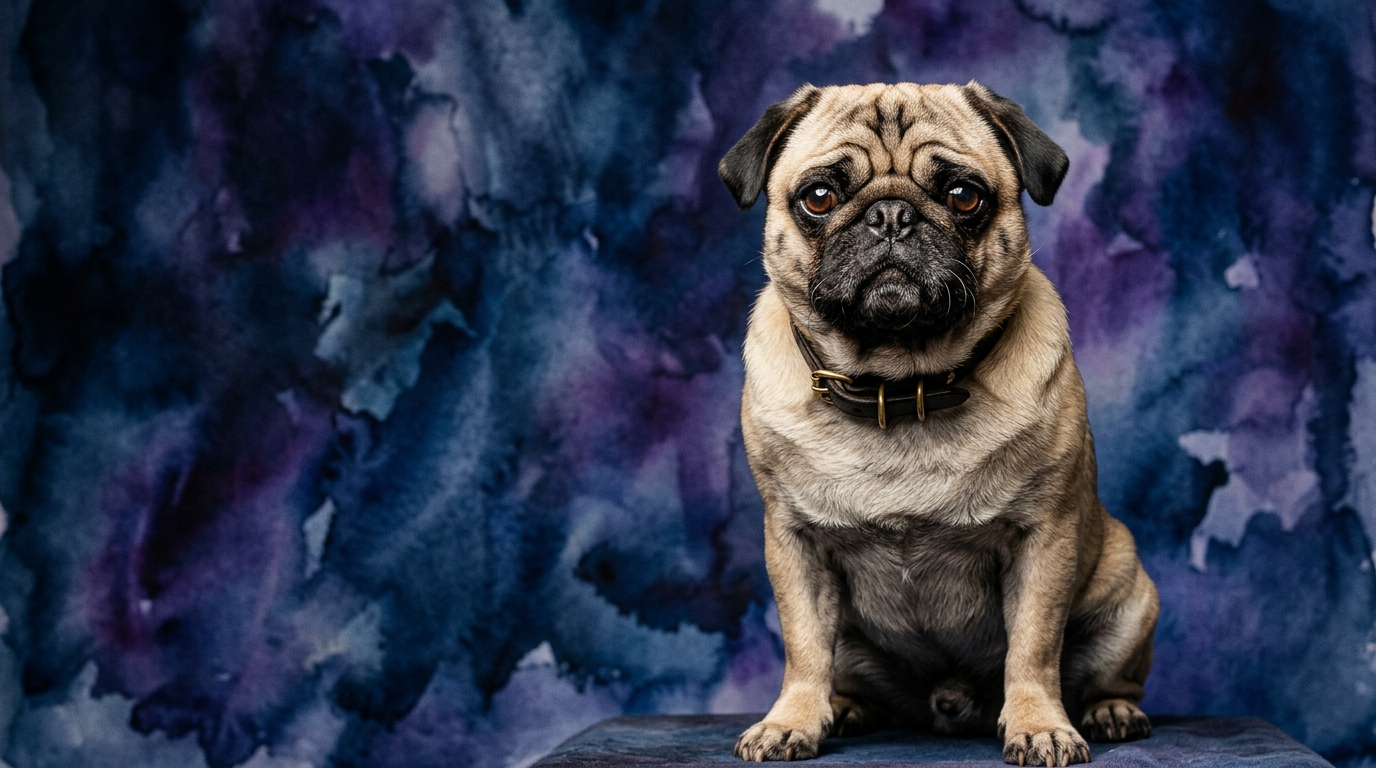
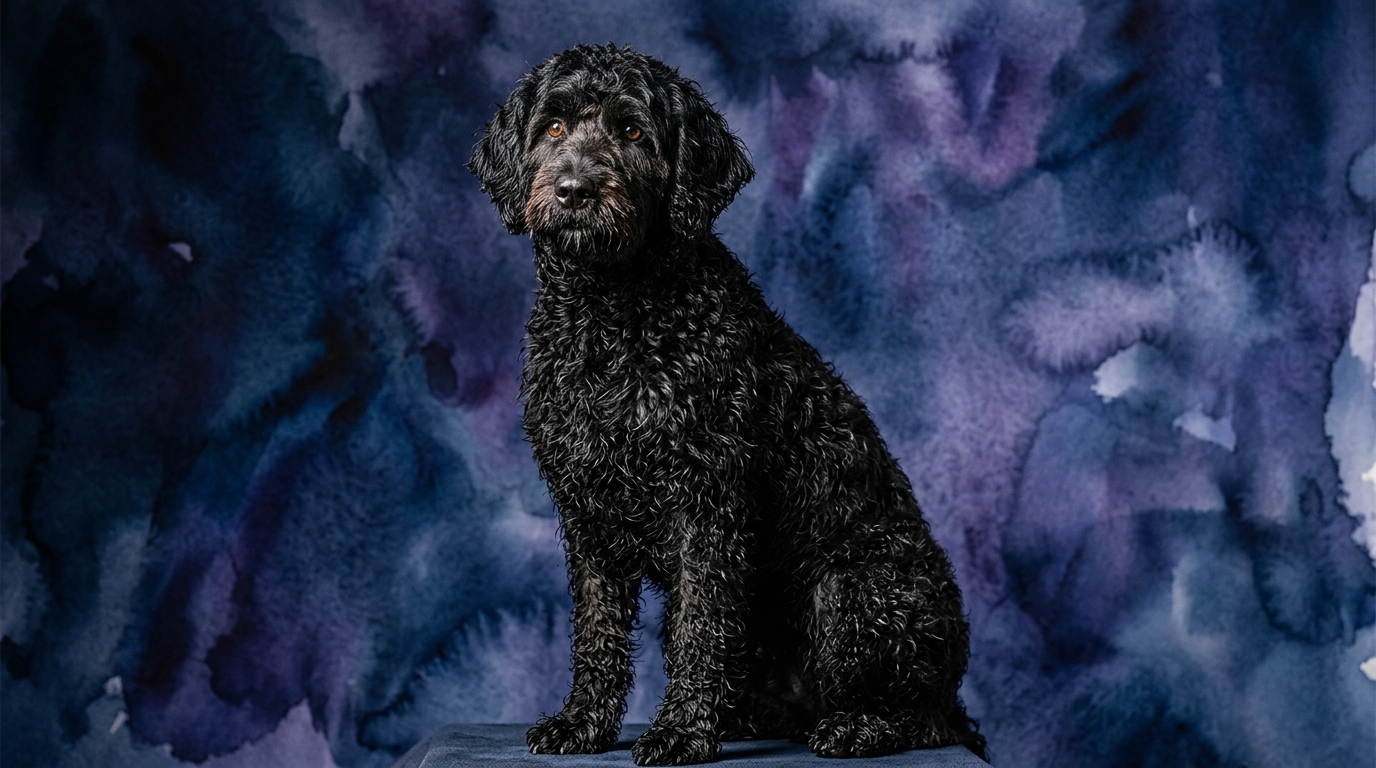
Side-by-Side IQ Profile: Pug vs. Portuguese Water Dog
Our Cosmic Pet Pet IQ Lab assessment breaks down canine intelligence into five core dimensions, offering a granular view of how Pugs and Portuguese Water Dogs approach the world cognitively. These dimensions, ranging from problem-solving to social acumen, provide a framework for understanding their inherent mental strengths and inclinations.
**Pug Cognitive Profile (Coren rank #57):**
**Problem Solving (2/5):** Pugs typically approach novel challenges with less independent initiative, often preferring to observe or seek human assistance. They tend to rely on established routines rather than persistently experimenting with solutions to complex puzzles.
**Training Speed (2/5):** While capable, Pugs often require more repetitions and patience during training. Their motivation centers more on comfort or social interaction than rapid skill acquisition, making quick mastery of new commands less common.
**Social Intelligence (5/5):** Pugs excel here, possessing an exceptional ability to read human emotions, respond to subtle social cues, and integrate seamlessly into family dynamics. Their cognitive framework prioritizes harmonious companionship and understanding their human counterparts.
**Instinctive Drive (2/5):** Pugs generally exhibit minimal drive for tasks rooted in ancestral working instincts like hunting or guarding. They prefer leisure and proximity to their human companions over independent, task-oriented pursuits.
**Memory (3/5):** Pugs demonstrate a moderate capacity for recalling learned behaviors, routines, and specific people or places. They can remember commands and house rules, but might not retain complex sequences or detailed environmental layouts with high precision.
**Portuguese Water Dog Cognitive Profile (Not Coren-ranked):**
**Problem Solving (3/5):** PWDs show a solid capacity for problem-solving, often approaching new situations with curiosity and willingness to experiment. They can figure out how to manipulate objects or navigate obstacles, demonstrating moderate independent thought in novel scenarios.
**Training Speed (3/5):** These dogs possess a good aptitude for learning new commands and behaviors at a moderate pace. They respond well to consistent, positive reinforcement, enjoying the mental engagement of training and acquiring various skills.
**Social Intelligence (3/5):** PWDs have a balanced social intelligence, forming strong bonds and understanding human cues, though with some independent tendencies. They thrive on interaction and integrate well into a family, valuing connection but also personal space.
**Instinctive Drive (3/5):** Reflecting their working heritage, PWDs have a moderate instinctive drive, manifesting in enjoyment of water-based activities, retrieving, and physical tasks. They are motivated by purpose and often seek opportunities to "work."
**Memory (3/5):** PWDs have a good memory for commands, routines, and favored objects or people. They can retain complex sequences of learned behaviors, contributing to their effectiveness in dog sports and working roles.
Where the Pug Wins Cognitively
The Pug's standout cognitive advantage lies squarely in its extraordinary social intelligence. With a perfect 5/5 rating, their ability to interpret human emotional states and intentions is unparalleled in this comparison. They excel at reading subtle shifts in tone, body language, and facial expressions, often preempting a human's needs or moods with uncanny accuracy. This makes them profoundly empathetic companions, deeply attuned to the emotional landscape of their household, creating a unique bond of understanding through nuanced social processing. Their cognitive strength isn't about complex tasks, but about mastering the art of companionship.
Where the Portuguese Water Dog Wins Cognitively
The Portuguese Water Dog demonstrates superior cognitive strengths in areas requiring independent action and environmental interaction. Their problem-solving capacity (3/5) surpasses the Pug's, reflecting a greater inclination to tackle novel challenges without constant human direction. This manifests in their ability to figure out puzzle toys, navigate complex environments, or even devise creative ways to achieve goals. Coupled with a moderate instinctive drive (3/5), PWDs are more likely to initiate exploratory behaviors and engage with their surroundings in a purposeful, self-directed manner, a clear cognitive edge for active, task-oriented living.
Which is Easier to Train, and Why?
Determining which breed is "easier" to train depends heavily on the training goals and methods. For basic obedience and house manners, both breeds are trainable, but their approaches differ. The Pug, with its 2/5 training speed, often requires more patience and repetition. They can be motivated by food and praise, and their strong social intelligence means they are highly motivated by pleasing their human and maintaining harmony, especially if training feels like a social game.
The Portuguese Water Dog, rated 3/5 for training speed, typically picks up commands more readily. Their moderate problem-solving and instinctive drive mean they often enjoy the mental engagement of learning and performing tasks. They are eager to please and appreciate having a "job," making them receptive to structured training sessions and complex sequences. However, their independent streak means consistency is paramount; they might test boundaries if not given clear guidance.
For a casual owner seeking a well-mannered companion, the Pug's social motivation can make basic training enjoyable, albeit slower. For owners with ambition for more complex skills, dog sports, or working roles, the PWD's cognitive profile makes them generally more adaptable and quicker to excel, provided their energy and drive are appropriately channeled.
Which Suits Active Owners vs. Relaxed Owners?
The cognitive profiles of these two breeds clearly delineate their suitability for different owner lifestyles. The Pug, with its lower problem-solving (2/5), training speed (2/5), and instinctive drive (2/5), coupled with its peak social intelligence (5/5), is an ideal match for relaxed owners. They thrive in environments where companionship, comfort, and close human interaction are prioritized over strenuous physical activity or complex mental tasks. A Pug's contentment often stems from being near their people, engaging in gentle play, or simply observing household activities. Their cognitive strengths are geared towards reciprocal affection and emotional connection, making them perfect for those seeking a devoted, low-key companion.
Conversely, the Portuguese Water Dog, with its balanced 3/5 scores across problem-solving, training speed, social intelligence, and instinctive drive, is a better fit for active owners. Their moderate drive means they require regular physical and mental stimulation to prevent boredom and channel their energy constructively. These dogs enjoy learning new skills, participating in dog sports, going on adventures, and engaging in activities that tap into their natural retrieving and water instincts. An active owner who can provide consistent training, varied experiences, and opportunities for their PWD to use its working intelligence will find a highly engaged and fulfilling partner. Their cognitive makeup demands an outlet for their curiosity and purposeful action.
The Verdict
Choose the Pug if you prioritize unparalleled social connection, a deeply empathetic presence, and a companion whose greatest joy is simply being with you in a relaxed, low-activity setting.
Opt for the Portuguese Water Dog if you are an active individual or family seeking a mentally engaged, physically capable partner eager for training challenges, outdoor adventures, and a purposeful role in your life.
🧠 Find Your Pet's IQ Score
Our Pet IQ Lab assessment covers 25+ tests across 5 cognitive dimensions — personalized to your breed.
Take the Full IQ Test →Frequently Asked Questions
Do Pugs enjoy learning tricks?
Pugs can certainly learn tricks, though their 2/5 training speed means it might take more repetition and patience than with some other breeds. They are often motivated by treats and praise, and enjoy the social interaction involved in training sessions, making it a fun bonding activity.
How does the Portuguese Water Dog's instinctive drive manifest?
The PWD's 3/5 instinctive drive often manifests as a strong affinity for water, a desire to retrieve objects, and an eagerness to participate in activities that mimic their historical role as fishermen's aids. This drive means they benefit from outlets like swimming, fetch, and scent work.
Is a Pug's high social intelligence a benefit for first-time dog owners?
A Pug's 5/5 social intelligence can be a significant benefit for first-time dog owners, as they are exceptionally attuned to human emotions and cues, fostering a strong bond. Their empathetic nature often makes them very forgiving of owner learning curves, providing a comforting and responsive presence.