Side-by-Side Cognitive Profile: Pug vs. Puli
The Cosmic Pet Pet IQ Lab employs a multi-dimensional framework to assess canine intelligence, looking beyond simple obedience to encompass problem-solving, social acumen, training speed, instinctive drives, and memory. Let's examine how the Pug and Puli stack up across these five crucial cognitive dimensions.
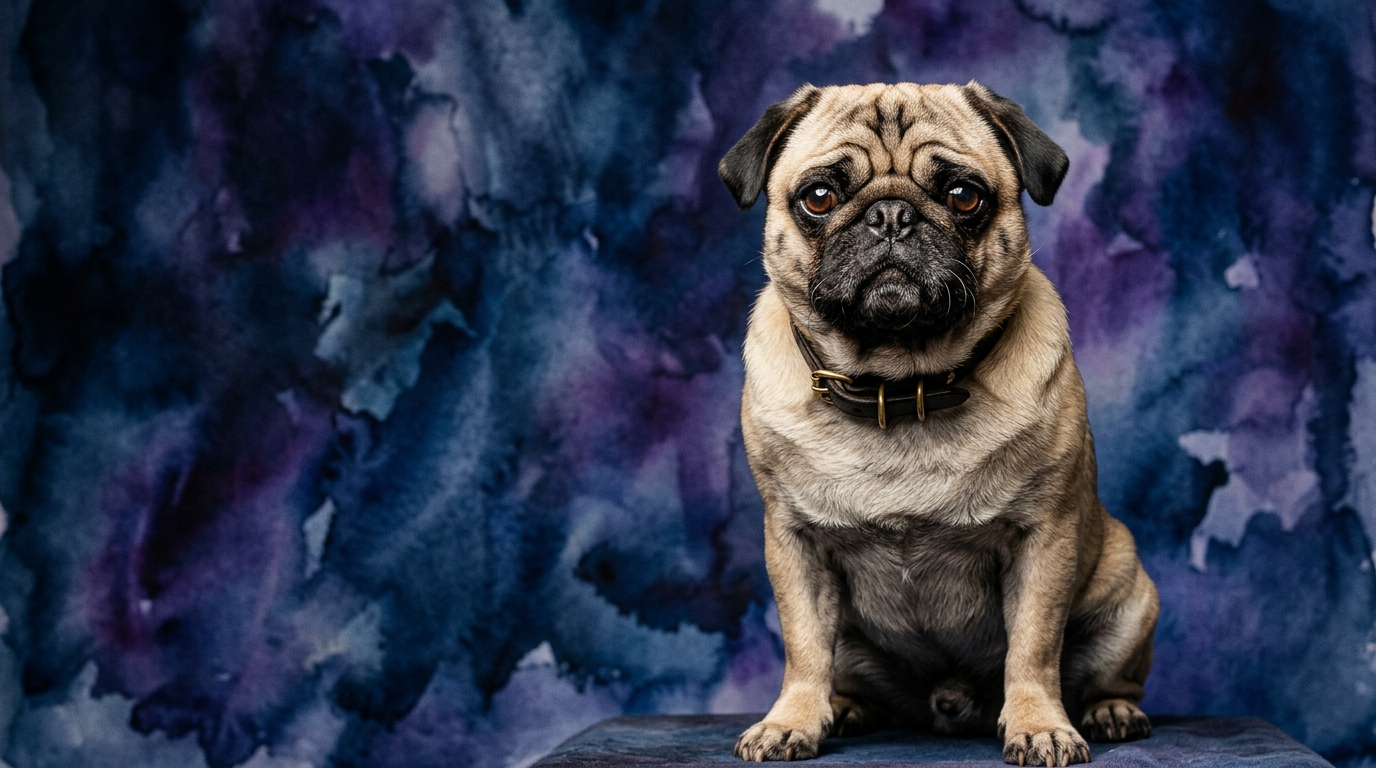
The Pug, a member of the Toy group, holds a Coren rank of #57, reflecting a specific set of cognitive strengths. Their Problem Solving score of 2/5 indicates they may not be inclined to independently figure out complex puzzles or intricate escape routes, often preferring to rely on human intervention or simpler, less effortful solutions. Training Speed for Pugs is rated at 2/5, suggesting they typically require numerous repetitions and consistent positive reinforcement to master new commands, sometimes appearing easily distracted or simply choosing not to engage if the reward isn't immediately apparent. However, where Pugs truly shine is in Social Intelligence, scoring a perfect 5/5; they are exceptionally attuned to human emotions, body language, and routines, making them masterful communicators of their needs and desires. Their Instinctive Drive is low at 2/5, meaning they possess minimal prey drive, herding urges, or guarding tendencies, aligning with their role as dedicated companions. Finally, their Memory at 3/5 allows them to retain basic commands and household routines effectively, though complex sequences might fade without regular practice.
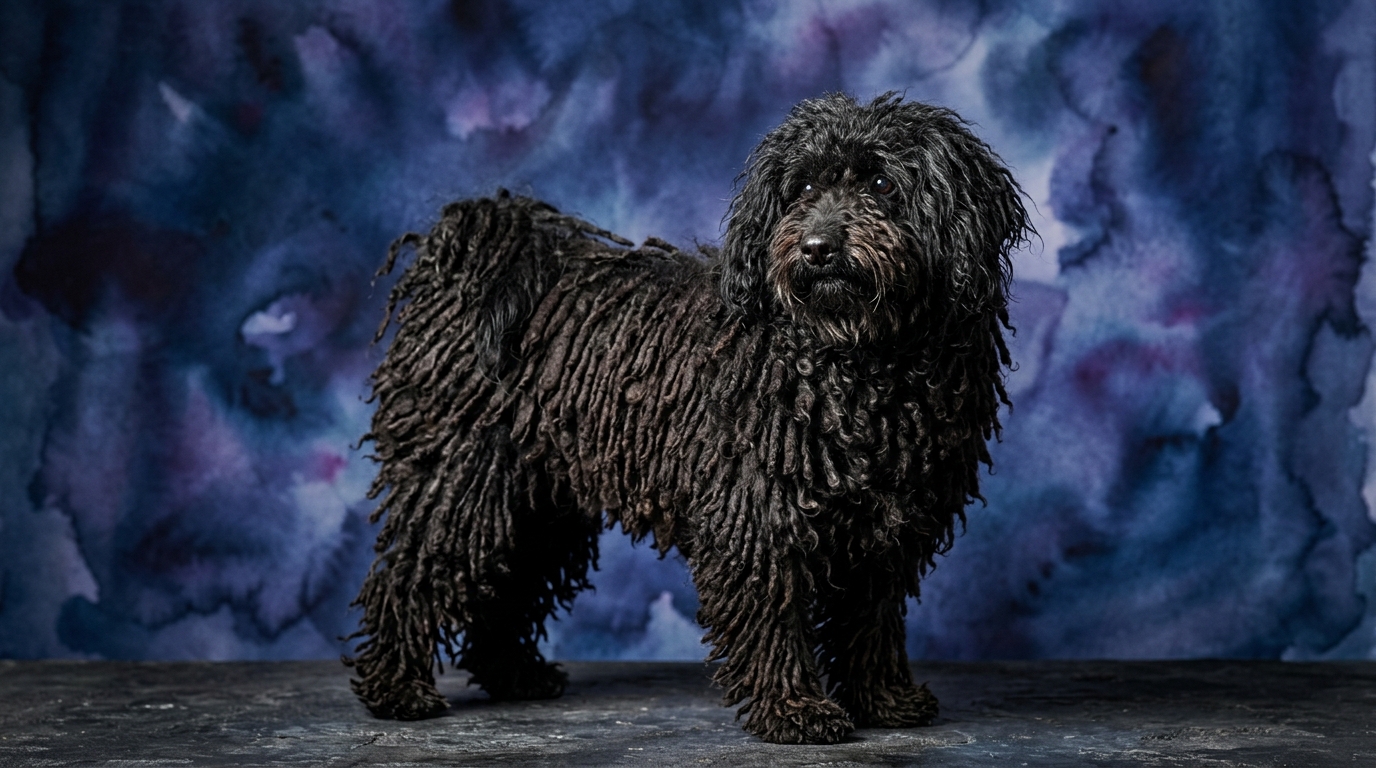
In stark contrast, the Puli, a Herding group dog, boasts a Coren rank of #25, reflecting a more task-oriented cognitive profile. Their Problem Solving ability is strong at 4/5; Pulis are adept at assessing situations, devising strategies, and executing solutions, a trait vital for their historical role in managing livestock. This breed's Training Speed is also impressive at 4/5, as they typically grasp new commands and concepts with fewer repetitions and display a keen eagerness to learn, often finding mental stimulation itself rewarding. While still socially aware, their Social Intelligence is rated 3/5, indicating they understand human cues but might exhibit more independence and a less overtly people-pleasing demeanor compared to a Pug. Their Instinctive Drive scores 3/5, reflecting a moderate herding instinct, a natural inclination to organize and control, and sometimes a protective streak towards their family or territory. Pulis also possess a strong Memory at 4/5, allowing them to recall intricate command sequences, navigate complex environments, and retain learned behaviors over extended periods, crucial for sophisticated tasks.
Where the Pug Excels Cognitively
The Pug's primary cognitive advantage lies in its profound social intelligence. Scoring 5/5 in this dimension, Pugs are unparalleled in their ability to integrate seamlessly into human family dynamics, reading subtle shifts in mood or routine with remarkable accuracy. This isn't about complex logical deduction, but rather an intuitive understanding of social cues and emotional states. A Pug can often sense when their human needs comfort, offering a gentle nudge or a quiet presence without explicit instruction. Their cognitive energy is largely directed towards fostering companionship, understanding the nuances of household life, and eliciting affection. They excel at adapting their behavior to maintain harmony and maximize their comfort within the family unit, demonstrating a sophisticated form of emotional intelligence that underpins their popularity as devoted companions.
Where the Puli Excels Cognitively
The Puli’s cognitive strengths are rooted in their working heritage, particularly in problem-solving and efficient learning. With a 4/5 in Problem Solving, a Puli is adept at navigating novel situations, such as figuring out how to open a gate or retrieve a toy from an inaccessible spot, often employing a sequence of actions to achieve their goal. This breed’s cognitive processes are geared towards analysis and execution, demonstrating an independent thought process crucial for herding tasks where they might need to make decisions autonomously. Their high Training Speed (4/5) and strong Memory (4/5) mean they absorb and retain complex information quickly, allowing them to master intricate multi-step commands or agility courses with relative ease. The Puli's mind is built for engagement and challenge, thriving on opportunities to apply their intellect to specific tasks and learn new skills.
Ease of Training: Puli's Focus vs. Pug's Charm
When it comes to formal training, the Puli generally presents an easier experience for owners seeking obedience and complex skill acquisition. Their higher scores in problem-solving and training speed mean they grasp new commands quickly and are often eager to engage in structured learning. A Puli's background in herding predisposes them to respond to direction and to enjoy having a 'job,' making them highly receptive to training that provides mental stimulation and purpose. They learn and retain commands with fewer repetitions, often motivated by the satisfaction of a task well done, alongside typical rewards.
The Pug, conversely, can be more challenging for traditional obedience training due to their lower training speed and problem-solving scores. While they are certainly capable of learning, they require more patience, consistency, and a highly motivating reward system. A Pug might try to charm their way out of a training session, or simply disengage if they find the task repetitive or uninteresting. Their motivation is primarily social interaction and comfort, not necessarily the completion of a complex task. Owners need to understand that a Pug’s cognitive focus is on companionship, meaning training often needs to be framed as a fun, interactive game that strengthens the bond, rather than a rigorous academic exercise.
Matching Canine Cognition to Owner Lifestyles
Understanding these cognitive differences is essential for matching a dog to an owner's lifestyle. The Puli, with its drive for problem-solving and engagement, is an excellent fit for active owners who relish providing consistent mental and physical stimulation. They thrive in environments where they can participate in dog sports like agility, obedience, or even mock herding, which tap into their instinctive drives and cognitive capabilities. Owners who enjoy teaching complex tricks or engaging in structured training sessions will find the Puli a rewarding and responsive partner, preventing boredom and potential destructive behaviors that can arise from an under-stimulated mind.
The Pug, on the other hand, is perfectly suited for more relaxed owners whose primary desire is a devoted, low-maintenance companion. Their high social intelligence means they are content with being close to their human, participating in daily routines, and offering emotional support. While they benefit from walks and playtime, their cognitive needs are largely met through social interaction, cuddles, and consistent, predictable home environments. Owners who appreciate a dog that is happy to lounge on the sofa, requires less formal training, and excels at simply 'being there' will find the Pug’s cognitive makeup aligns perfectly with their less demanding lifestyle.
The Verdict
Choose a Pug if you prioritize an emotionally intuitive, low-maintenance companion who excels at social bonding and thrives in a relaxed, affectionate home environment.
Opt for a Puli if you are an active owner seeking a responsive, problem-solving partner eager for mental challenges, structured training, and engaging activities.
🧠 Find Your Pet's IQ Score
Our Pet IQ Lab assessment covers 25+ tests across 5 cognitive dimensions — personalized to your breed.
Take the Full IQ Test →Frequently Asked Questions
Do Pugs understand human emotions well?
Yes, Pugs score exceptionally high in social intelligence (5/5), making them very adept at reading human emotions and subtle social cues. They often provide comfort or adjust their behavior based on their owner's mood, showcasing a deep emotional connection.
Are Pulis good at learning complex tasks?
Absolutely, Pulis excel at learning complex tasks due to their strong problem-solving ability (4/5), fast training speed (4/5), and excellent memory (4/5). They enjoy mental challenges and can master intricate sequences required for dog sports or advanced obedience.
Which breed needs more mental stimulation?
The Puli generally requires significantly more mental stimulation than the Pug. Their herding background and higher problem-solving drive mean they thrive on tasks, training, and activities that challenge their intellect, whereas a Pug's needs are often met through social interaction and routine.