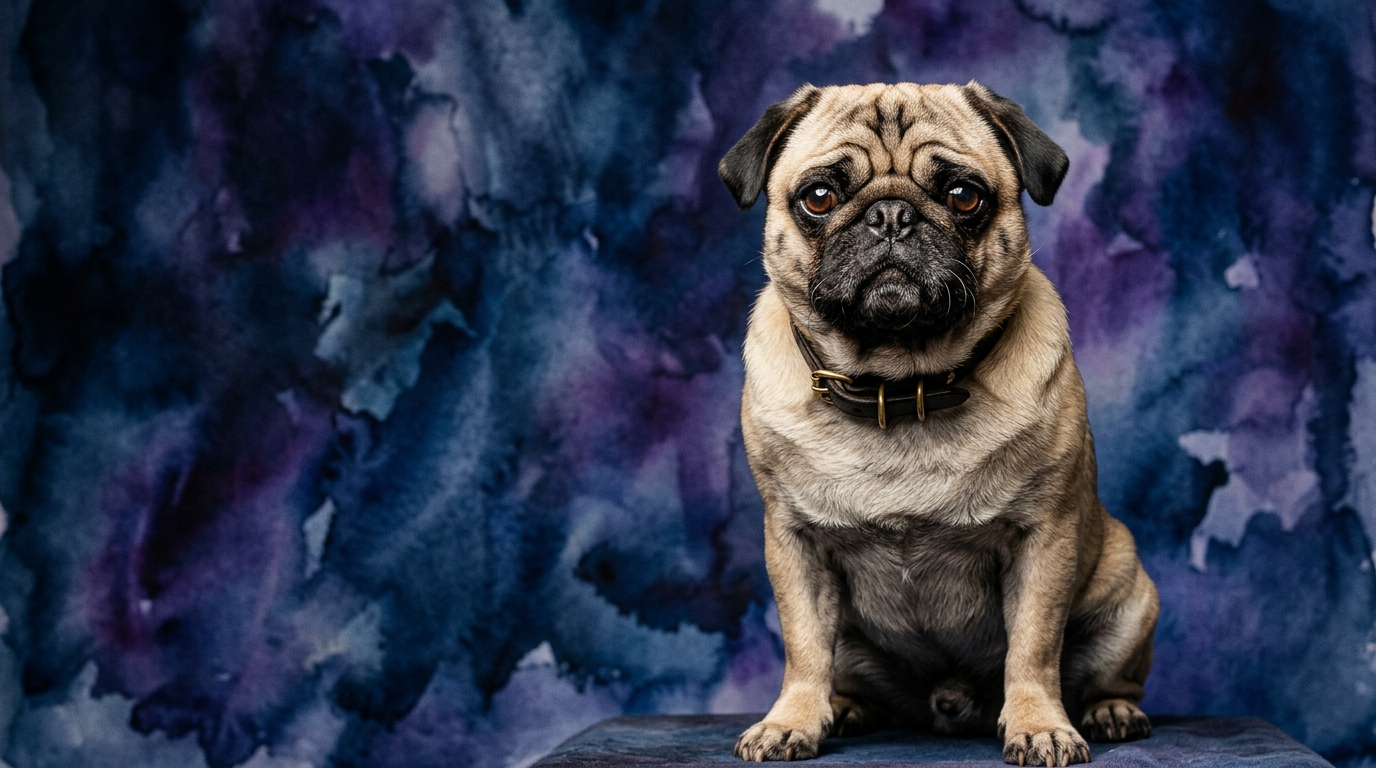
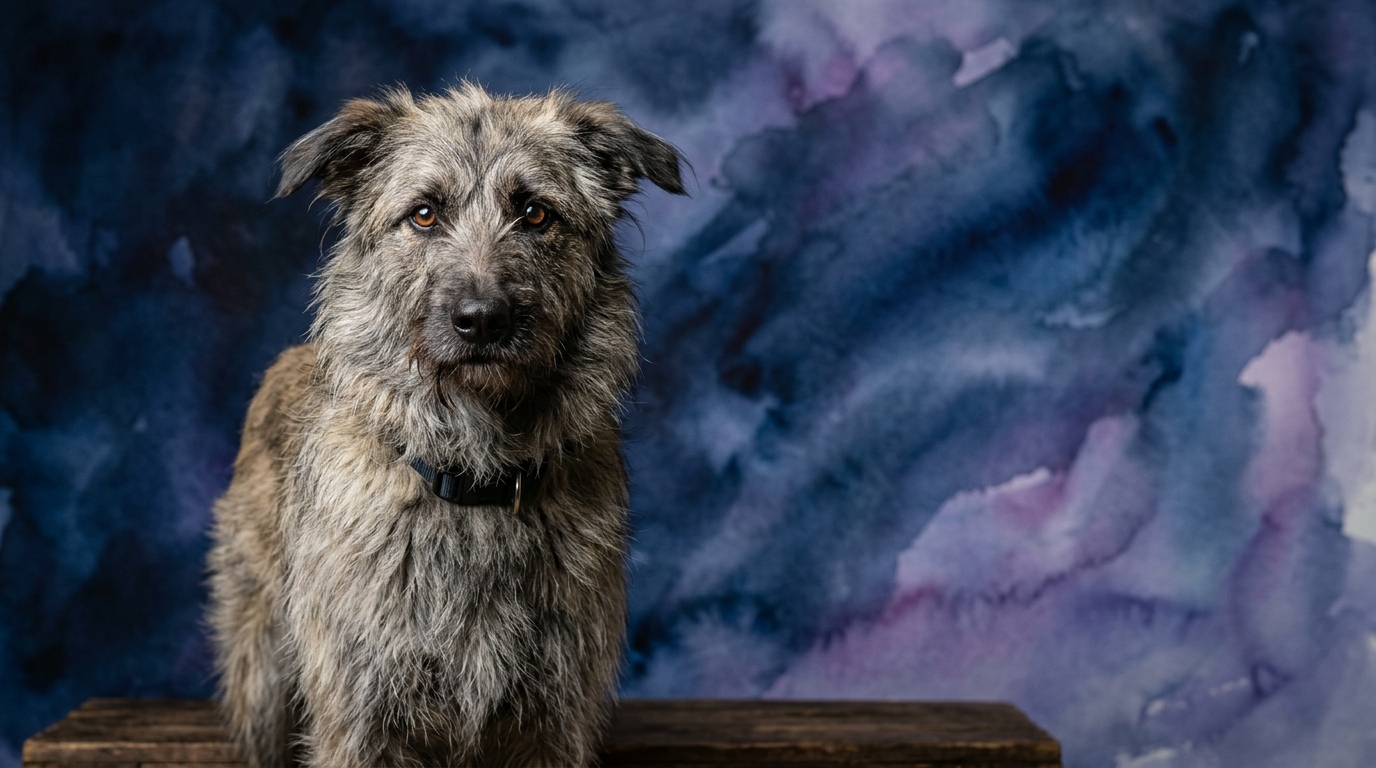
Side-by-Side IQ Profile: Pug vs. Pyrenean Shepherd
The Cosmic Pet Pet IQ Lab employs five key dimensions to evaluate canine intelligence, offering a nuanced understanding beyond simple obedience. For the Pug, we observe a Problem Solving score of 2/5, indicating they typically prefer human guidance over independent strategizing for novel challenges. Their Training Speed also stands at 2/5, suggesting that learning new commands requires consistent repetition and strong motivation, often linked to immediate rewards or the desire for interaction. However, the Pug truly excels in Social Intelligence, earning a perfect 5/5 for their exceptional ability to read human emotions, respond to subtle cues, and integrate seamlessly into family dynamics as masters of companionship. Their Instinctive Drive is 2/5, reflecting a historical role focused on comfort and close proximity to people rather than independent tasks. Finally, their Memory at 3/5 ensures solid retention of routines, familiar faces, and positive experiences, contributing to their consistent daily habits.
In contrast, the Pyrenean Shepherd, a breed with a distinct working heritage, presents a different cognitive profile. Their Problem Solving capability is rated 3/5, demonstrating a moderate resourcefulness when faced with obstacles, particularly in situations requiring quick thinking or adaptation in a working context. Correspondingly, their Training Speed is 3/5, meaning they tend to grasp new commands and routines at a moderate pace, often displaying a keenness to learn when engaged in purposeful activities. The Pyrenean Shepherd's Social Intelligence also scores 3/5; they form strong bonds and are attuned to their handler’s directions, integrating well within a family unit once trust is established, though not with the same overt focus as a Pug. Their Instinctive Drive, a moderate 3/5, reflects their natural inclination for herding, vigilance, and activity, translating into a desire for engagement and purpose. Lastly, their Memory, like the Pug's, is a reliable 3/5 for learned tasks, commands, and environmental layouts, essential for their practical roles.
Where the Pug Wins Cognitively
The Pug's standout cognitive strength lies unequivocally in its social intelligence, scoring a perfect 5 out of 5. This isn't merely about being friendly; it reflects an advanced capacity to perceive and interpret human emotional states and intentions. A Pug often seems to anticipate its owner's needs, offering comfort during sadness or joining in moments of joy with an almost intuitive understanding. They excel at mirroring human moods and adapting their behavior to fit the social atmosphere of a home, making them exceptional emotional support animals and deeply integrated family members. This sophisticated social acumen allows them to navigate complex household dynamics with grace, becoming adept at reading even subtle shifts in vocal tone or body language, and responding in ways that reinforce the human-canine bond. Their ability to "just be" with their people, providing silent companionship, stems directly from this deep social perception, allowing them to form profound, empathetic connections that many other breeds might not prioritize.
Where the Pyrenean Shepherd Wins Cognitively
The Pyrenean Shepherd's cognitive advantages are rooted in its working heritage, manifesting across problem-solving, training speed, and instinctive drive, all scoring 3 out of 5. Their moderate problem-solving ability means they are more likely to independently assess a situation and devise a solution, such as figuring out how to retrieve a toy from a tricky spot or navigating an unfamiliar trail without constant direction. This self-reliance is coupled with a respectable training speed, indicating they can grasp new concepts and commands relatively efficiently, especially when the training involves practical, engaging tasks. Their instinctive drive, also rated 3 out of 5, is a key component here, providing the inherent motivation and focus needed for sustained engagement in activities like herding, agility, or advanced obedience. This combination of cognitive traits makes them highly capable partners in activities that require both mental and physical engagement, allowing them to learn complex sequences and apply their understanding in dynamic, real-world scenarios. They thrive when given a job to do, demonstrating a practical intelligence geared towards action and purpose.
Which is Easier to Train and Why
When evaluating ease of training, the Pyrenean Shepherd generally offers a more direct path for responsive learners, owing to its higher scores in Training Speed (3/5) and Problem Solving (3/5) compared to the Pug's 2/5 in both. Pyrenean Shepherds often exhibit a natural eagerness for structured activities, quickly connecting commands with actions and demonstrating a capacity for understanding complex sequences. Their moderate instinctive drive means they are motivated by purpose, allowing for efficient teaching of multi-step tasks like agility or advanced retrieves, as they are inherently built for work and mental engagement.
In contrast, the Pug's Training Speed of 2/5 necessitates more patience, repetition, and creative motivation. While Pugs are eager to please their beloved humans (thanks to their 5/5 Social Intelligence), their lower Problem Solving (2/5) and Instinctive Drive (2/5) mean they might not grasp the 'why' behind a command as quickly or maintain focus for extended periods. Training success with a Pug relies heavily on making lessons fun, short, and highly rewarding, leveraging positive reinforcement and their strong desire for human approval. Thus, while both breeds are trainable, the Pyrenean Shepherd typically offers a quicker learning curve for practical commands, while training a Pug requires a more companionship-driven, play-based approach.
Which Suits Active Owners vs. Relaxed Owners
The choice between a Pug and a Pyrenean Shepherd largely hinges on an owner's lifestyle and energy levels. For the active owner, the Pyrenean Shepherd is an ideal match. Their moderate instinctive drive (3/5) means they thrive on regular physical exercise and mental stimulation, eagerly participating in activities like hiking, agility, herding trials, or long, engaging walks. These dogs require an outlet for their energy and their problem-solving abilities (3/5), making them superb companions for those who enjoy outdoor adventures and structured training sessions. They are not content to be couch potatoes; their temperament calls for a purposeful existence, and an active owner can fulfill this need, preventing potential boredom or destructive behaviors that can arise from under-stimulation.
Conversely, the Pug is perfectly suited for the relaxed owner or those seeking a devoted, low-key companion. With an instinctive drive of 2/5, Pugs are generally content with shorter walks, indoor play, and extensive cuddle sessions. Their unparalleled social intelligence (5/5) means their primary desire is to be close to their human family, observing and participating in daily life from a comfortable spot nearby. They do not demand intense physical activity or complex mental challenges, preferring instead the warmth of companionship and the predictability of a settled routine. A relaxed owner who values quiet devotion and an ever-present, affectionate shadow will find the Pug to be an utterly charming and perfectly aligned companion, requiring minimal high-octane engagement but endless affection.
The Verdict
Choose a Pug if your lifestyle is relaxed and you seek a supremely affectionate, socially astute companion whose greatest joy is simply being by your side and providing emotional comfort.
Opt for a Pyrenean Shepherd if you are an active individual or family looking for an engaged, intelligent partner eager for purposeful activities, outdoor adventures, and structured training challenges.
🧠 Find Your Pet's IQ Score
Our Pet IQ Lab assessment covers 25+ tests across 5 cognitive dimensions — personalized to your breed.
Take the Full IQ Test →Frequently Asked Questions
Do Pugs enjoy learning tricks?
While Pugs have a training speed of 2/5, they absolutely can learn tricks, especially those that involve positive reinforcement and interaction with their beloved humans. Success often comes from short, fun sessions focused on treats and praise, tapping into their high social intelligence.
Are Pyrenean Shepherds good family dogs despite their working background?
Yes, Pyrenean Shepherds can be excellent family dogs with a social intelligence of 3/5, forming strong bonds and being protective of their loved ones. However, they do require consistent socialization and mental stimulation to ensure they are well-adjusted and comfortable in a home environment.
How do their memory scores impact daily life?
Both breeds score 3/5 in memory, meaning they reliably remember routines, commands, and people. A Pug will remember its favorite nap spot and treat time, while a Pyrenean Shepherd will recall complex training sequences and the layout of its territory, contributing to their respective predictable behaviors.