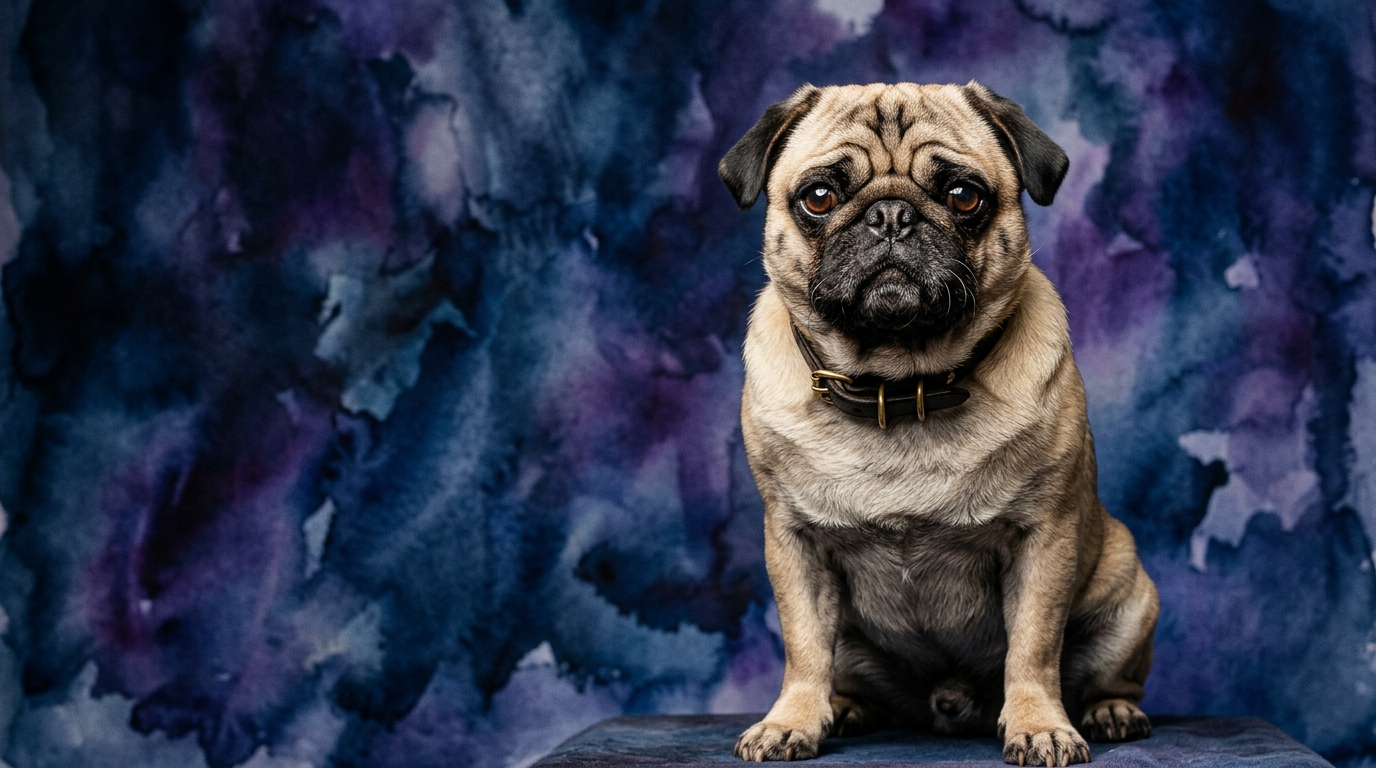

The Cosmic Pet IQ Lab: Pug vs. Russian Toy Cognitive Profiles
The Cosmic Pet IQ Lab dissects canine intelligence across five dimensions. The Pug, Coren rank #57, shows Problem Solving at 2/5, indicating a deliberate approach. Training Speed is 2/5, requiring patient repetition. Its strength is Social Intelligence, a perfect 5/5, reflecting exceptional human emotion interpretation. Instinctive Drive is 2/5, modest for tasks, while Memory is a solid 3/5, aiding routine retention.
The Russian Toy, not Coren-ranked, presents a distinct profile. Problem Solving is 3/5, suggesting a more adaptive, resourceful approach than the Pug. Training Speed is 3/5, indicating quicker command grasp and responsive learning. Social Intelligence is 3/5, forming strong bonds but with less overt emotional mirroring. Instinctive Drive is 3/5, suitable for moderate activities, and Memory matches the Pug’s at 3/5 for consistent recall.
Pug's Cognitive Edge: Unrivaled Social Connection
The Pug's preeminent cognitive strength lies in its extraordinary Social Intelligence, rated 5/5. This is a profound ability to connect emotionally, reading subtle human cues and adapting behavior to companion moods. A Pug excels at interpreting body language and tone, making them intuitively empathetic pets. They anticipate needs, offering comfort or gentle play. Their cognitive wiring is finely tuned for harmonious cohabitation, mastering emotional rapport within a family, often content just being near their person.
Russian Toy's Cognitive Strengths: Mental Agility and Responsiveness
The Russian Toy demonstrates a broader cognitive advantage. Problem Solving at 3/5, surpassing the Pug’s 2/5, indicates greater independent thought in novel situations, like figuring out puzzle toys. Training Speed at 3/5 also exceeds the Pug’s, signifying quicker command absorption and eagerness for structured learning. Furthermore, Instinctive Drive at 3/5, against the Pug’s 2/5, suggests a greater innate desire to perform tasks or engage in activities tapping natural canine behaviors.
Training Pathways: Pug's Patience vs. Russian Toy's Responsiveness
For ease of training, the Russian Toy generally offers a more direct path. Their higher Training Speed (3/5) means quicker command grasp, often needing fewer repetitions. This is bolstered by superior Problem Solving (3/5), allowing them to understand the 'why' and apply principles. Eager to please, they are receptive to positive reinforcement, learning a wide range of tricks and obedience commands with relative ease. Their moderate Instinctive Drive also enhances motivation.
The Pug, while trainable, demands patience and consistency. Lower Training Speed (2/5) means new commands take longer to embed, necessitating frequent, short, repetitive sessions. Problem Solving at 2/5 means less independent 'figuring out,' relying more on direct instruction. Despite high Social Intelligence, their independent streak can manifest as charming stubbornness. Training a Pug is a gentle negotiation, emphasizing positive reinforcement and celebrating small, consistent progress.
Lifestyle Match: Aligning Cognitive Profiles with Owner Activity
For active owners seeking a companion for diverse endeavors, the Russian Toy often proves more suitable. Their moderate Instinctive Drive (3/5) inclines them towards engagement beyond companionship, apt for short walks, exploring, or beginner dog sports like agility. Superior Problem Solving (3/5) and Training Speed (3/5) make them adaptable students for new tricks, easily integrated into an active routine. They thrive on mental stimulation and enjoy a 'job,' ideal for those enjoying interactive play and mental challenges.
Conversely, the Pug's profile aligns with owners preferring a relaxed pace, prioritizing comfort and companionship. Exceptional Social Intelligence (5/5) means their primary 'activity' is human interaction. Lower Instinctive Drive (2/5) and less emphasis on complex problem-solving mean Pugs are content with moderate walks, indoor play, and napping. They aren't driven by strenuous physical or intense mental challenges, finding fulfillment in human connection and routine. Superb companions for seniors or anyone desiring a devoted, empathetic, low-maintenance emotional support animal.
The Verdict
Choose the Pug if your priority is an exceptionally empathetic, devoted companion whose greatest joy is social connection and quiet companionship, requiring patience in training but rewarding with unparalleled emotional rapport.
Opt for the Russian Toy if you desire a more mentally agile, responsive companion keen on learning and moderate activity, offering a quicker training curve and suitability for engaging in diverse interactive pursuits.
🧠 Find Your Pet's IQ Score
Our Pet IQ Lab assessment covers 25+ tests across 5 cognitive dimensions — personalized to your breed.
Take the Full IQ Test →Frequently Asked Questions
Are Pugs difficult to train because of their problem-solving score?
Pugs are not inherently difficult to train, but their lower problem-solving and training speed scores mean owners should approach training with extra patience and consistency. Focus on positive reinforcement, short sessions, and repetition to help them grasp commands effectively.
Can a Russian Toy be a good emotional support animal despite its lower social intelligence score?
Absolutely. While the Russian Toy's social intelligence is rated 3/5 compared to the Pug's 5/5, they still form strong, loving bonds with their owners. Their intelligence and responsiveness can make them very attuned to their person, providing excellent emotional support through companionship and interaction.
How much mental stimulation does a Russian Toy need compared to a Pug?
A Russian Toy generally requires more consistent mental stimulation due to its higher problem-solving and instinctive drive. They benefit from puzzle toys, learning new tricks, and varied activities. Pugs are content with less intense mental challenges, finding fulfillment primarily through social interaction and routine.